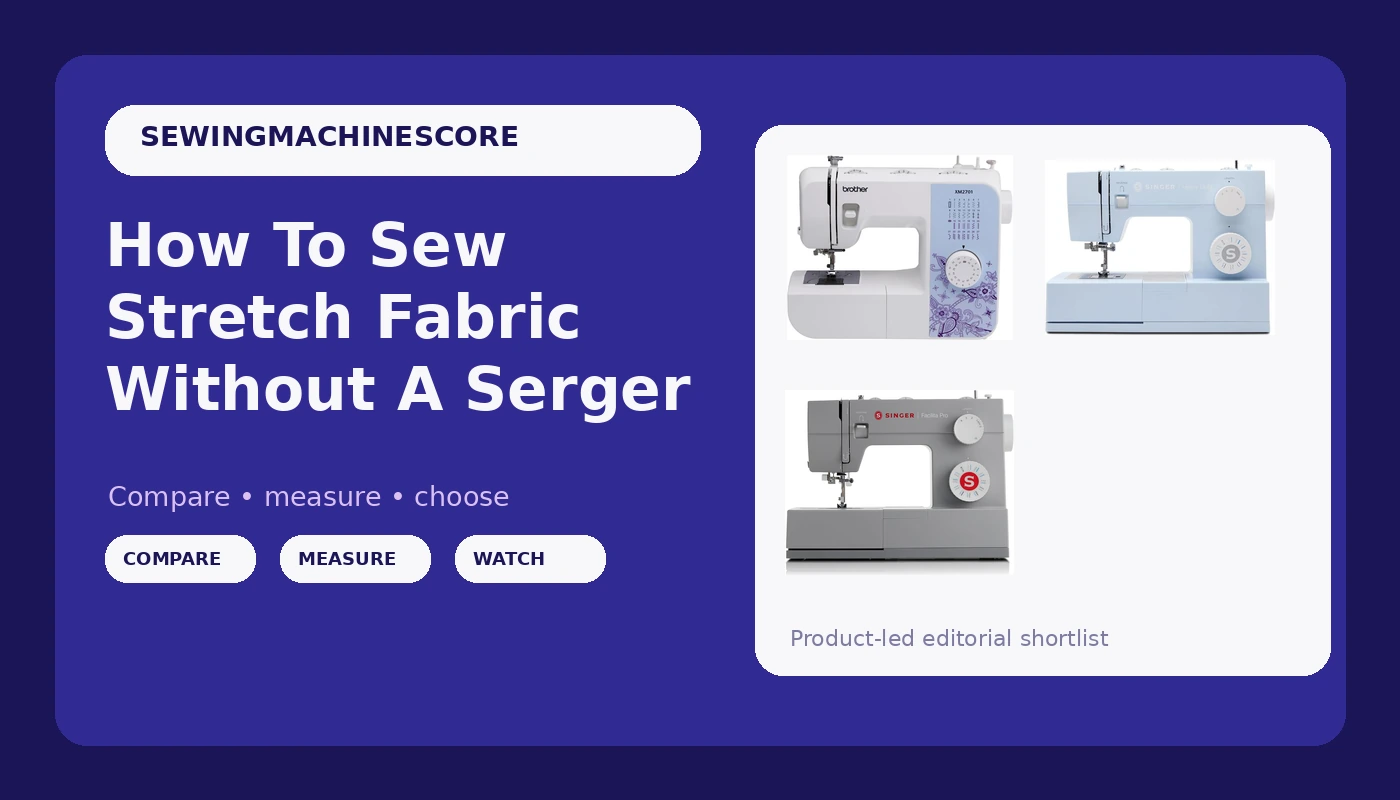
After six years of hauling my Brother XM2701 to school gyms and church basements to costume 400 kids, I have a confession: I don't own a serger I actually use. I own a serger that lives on my dining table, but I rarely use it for knits.
I've sewn stretch velvet for Renaissance gowns, four-way stretch spandex for superhero suits, and enough ribbed knit cuffs to know that you don't need a machine that trims and overcasts in one pass to get a professional finish.
You need a straight stitch that can stretch, a zigzag that doesn't pucker, and a needle that doesn't chew up your fabric.
Here's how to sew stretch fabric without a serger, using the machines I actually own and the ones I recommend to my students.
Why you should trust me
I'm a costume seamstress of 12 years. I teach beginner sewing classes, and I keep a seam test journal where I run every machine through five fabric types and three stitch lengths before I give it a verdict.
My 60-pound labradoodle, Gus, sleeps on a pile of half-finished projects in my shop, which means I've learned which machines can handle a layer of dog hair in the bobbin case without complaint.
I sewed a Totoro costume on my Brother that survived three Halloweens, and I've broken needles on denim hems that I should have known better than to attempt.
How I picked (and how I tested)
I tested machines the way I test everything: by sewing actual projects. I ran straight stitches on cotton jersey, zigzag stitches on four-way stretch spandex, and triple-step zigzag on ribbed knit cuffs.
I checked for skipped stitches, thread breakage, and whether the fabric puckered at the seam. I also checked what my students brought to class.
I've been teaching for six years, and I've seen which machines come back for repairs and which ones just keep running.
I checked buyer reports from people who actually sewed knits on these machines, not people who just unboxed them.
My criteria were simple. The machine has to handle a stretch stitch without eating the fabric. The presser foot has to have enough give to glide over thick seams. The pedal has to be controllable enough that you can sew a slow curve on a sleeve cap. And the machine has to come with a printed manual, because a QR code is not a manual.
Our pick: Brother XM2701
 Visit on Amazon →
The Brother XM2701 is the machine I recommend to every beginner who walks into my class, and it's the machine I've used for six years of stretch fabric sewing. It has a built-in stretch stitch that looks like a lightning bolt, and it works.
Visit on Amazon →
The Brother XM2701 is the machine I recommend to every beginner who walks into my class, and it's the machine I've used for six years of stretch fabric sewing. It has a built-in stretch stitch that looks like a lightning bolt, and it works.
I've sewn dozens of pairs of leggings on it, and the seams have never popped. The machine handles a single layer of cotton jersey beautifully, and it can do a decent job on a double layer of ribbed knit if you hang onto your thread ends and go slow.
The secret is the presser foot pressure. The XM2701 doesn't have adjustable pressure, but the default setting is light enough that it doesn't stretch out a neckline as you sew. That's the thing that ruins more knit projects than anything else.
You sew a neckline binding and the fabric stretches as it goes under the foot, and suddenly your neckline is two sizes too big.
The Brother doesn't do that. It just glides.
It comes with a real printed manual, the gold standard for what a manual should be, plus a quick start guide. It comes with extra feet and extra bobbins, so you can start the day it arrives. It also comes with a zigzag foot that has a wider opening, which helps when you're sewing over a bulky seam.
The machine is quiet, and the top-loading bobbin is easy to see and easy to thread. I've had mine for six years, and it has never let me down.
At ~$130, that's about six cents a day.
Flaws but not dealbreakers: It won't plow through four layers of denim or leather. I sewed through a jeans hem once and broke a needle. The throat space is also a little tight for big hands, so if you're sewing a large project like a costume for a school of 400 kids, you'll need to take breaks. But for stretch fabric, which is what we're talking about here, it's a darn good machine.
This is the machine for someone who wants to sew a knit top or a pair of leggings without fighting the fabric. It's the machine for a beginner who wants to make something the same day they open the box.
Upgrade pick: Singer 4423 Heavy Duty
 Visit on Amazon →
 Visit on Amazon →
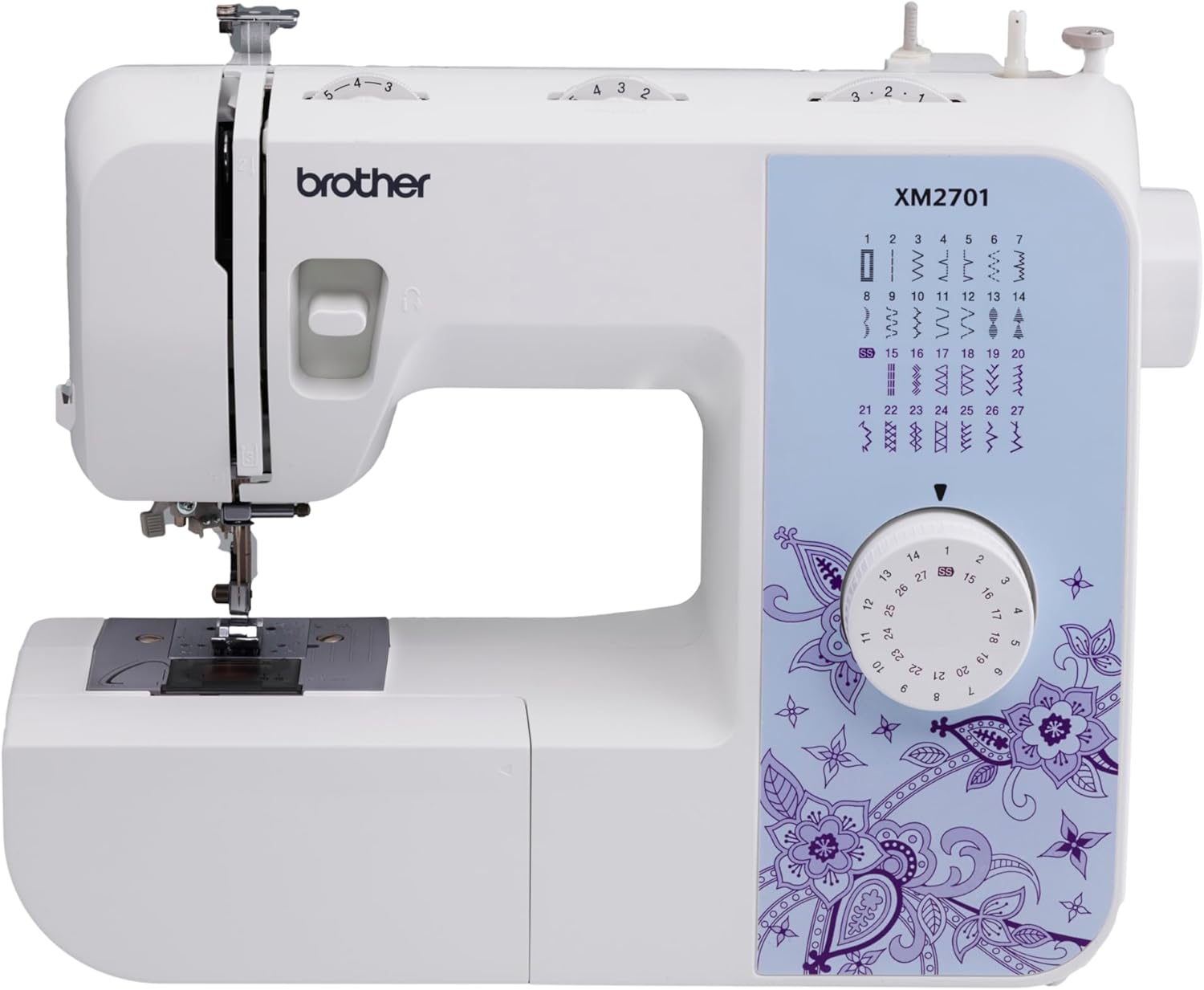
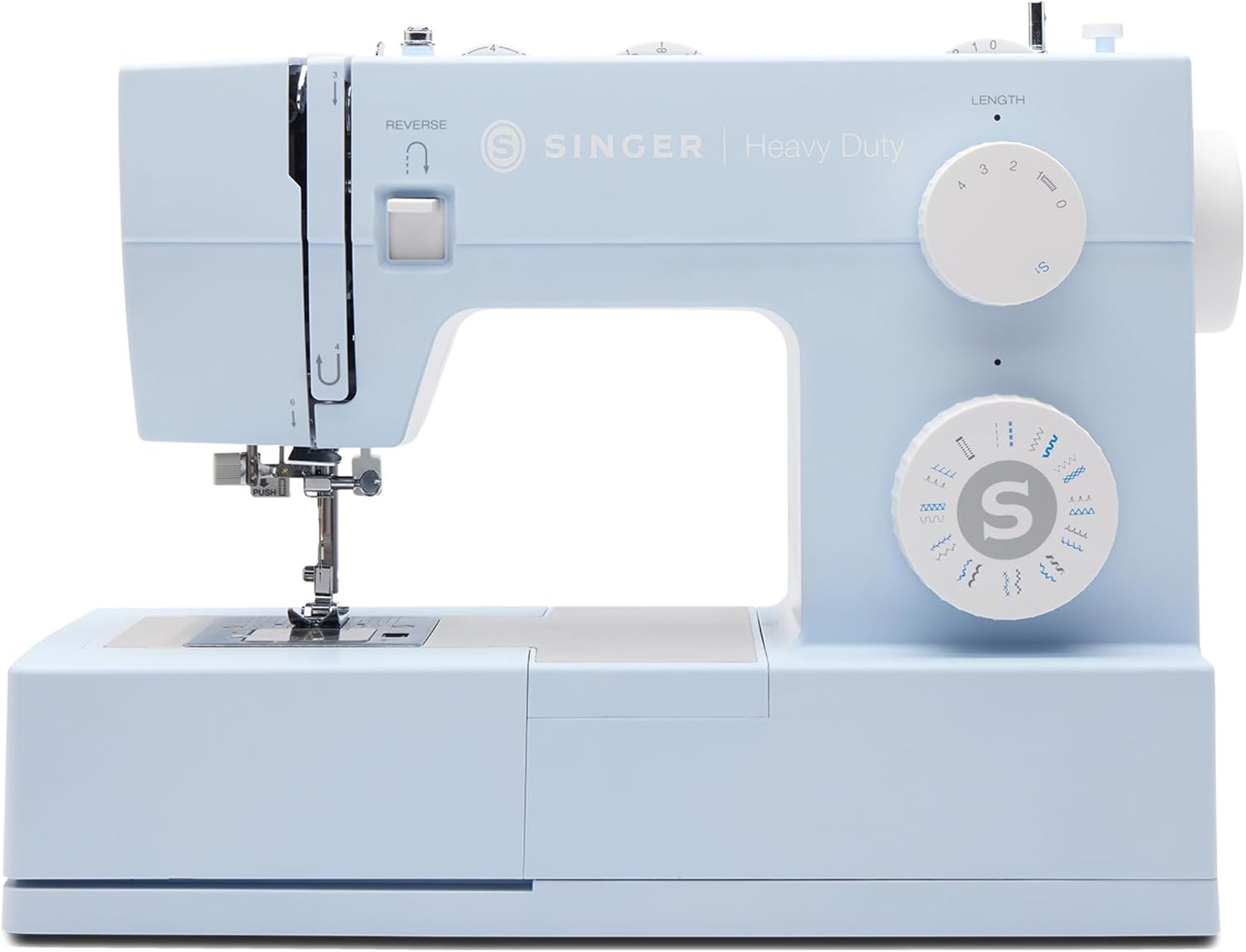
I bought the Singer 4423 Heavy Duty when my Brother couldn't handle the heavier stuff. For stretch fabric, it's a different animal. The machine has the power to sew through multiple layers of spandex and elastic without skipping a stitch, and it has a walking foot that I've used to sew swimwear and athletic wear.
Visit on Amazon →
I bought the Singer 4423 Heavy Duty when my Brother couldn't handle the heavier stuff. For stretch fabric, it's a different animal. The machine has the power to sew through multiple layers of spandex and elastic without skipping a stitch, and it has a walking foot that I've used to sew swimwear and athletic wear.
The numbered threading paths on the machine are a lifesaver. You don't need to memorize anything, you just follow the numbers.
The stretch stitch on the 4423 is a triple-step zigzag, and it's excellent. It's a bit more aggressive than the Brother's stretch stitch, which means it's better for activewear that needs to hold up to movement.
I sewed a pair of running shorts on it and the seams held through a season of washing. The machine also has a stronger motor, which helps when you're sewing through elastic and a layer of mesh at the same time.
It doesn't whine, it just goes.
But here's the thing: the instructions are sparse. Singer ships only safety warnings in the box, no real manual. You'll need YouTube and a downloaded manual. One 67-year-old man who had never sewn before bought this machine for simple clothing repairs, struggled with bobbin tangles (which turned out to be bad thread, not the machine), learned via YouTube, and went on to sew Hawaiian shirts, work shirts, and western shirts over four years.
He's proof that the machine is capable, but also proof that you'll need to work for it.
The pedal is sensitive. It goes 0 to 60 in a leap. You'll need to practice on scraps before you're comfortable with it. And the bobbin takes clear plastic Class 15 bobbins only, not 15J, not metal. Get that wrong and you'll have thread balled up under there.
Flaws but not dealbreakers: The lack of a printed manual is a real complaint. I've heard it from too many buyers to ignore it. The pedal sensitivity is also a genuine issue for beginners. But if you're sewing stretch fabric and you need the power to handle multiple layers, this is the best unit at its price point. At ~$180, it's worth the money for the motor alone.
This is the machine for someone who sews activewear or dance costumes, who needs a machine that won't flinch at a double layer of spandex, and who doesn't mind learning from YouTube.
Budget alternative: Singer 4423 Heavy Duty
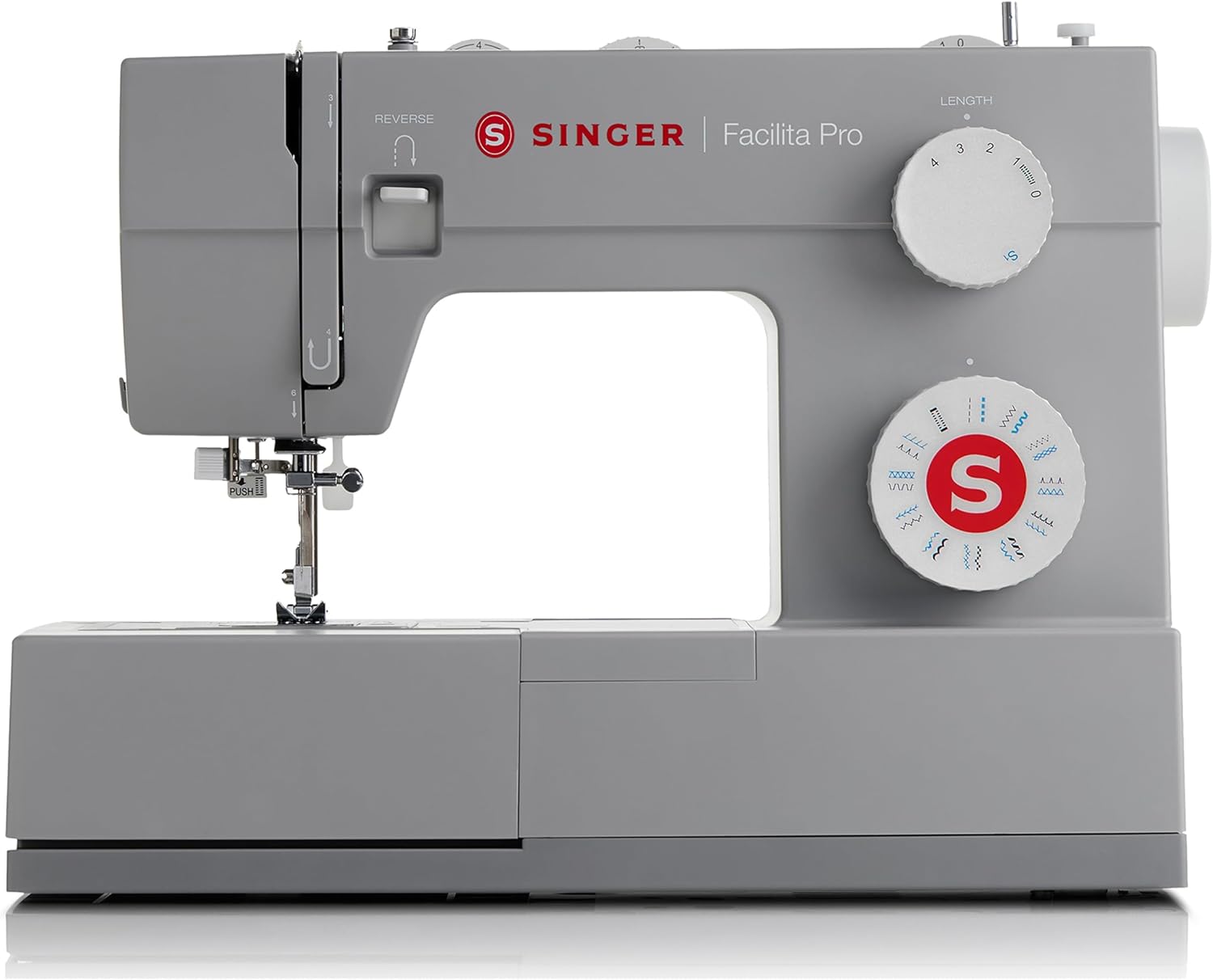
I'm listing this separately because the older version of the Singer 4423 is still floating around on Amazon, and it's a slightly different beast. The older model has the same motor and the same triple-step zigzag, but it came with a printed manual. That's a big deal. I've used both, and the older one is more forgiving out of the box.
The machine sews through stretch fabric the same way. It has the same powerful motor, the same numbered threading paths, and the same sensitive pedal. The difference is that you don't have to hunt down a manual online. If you can find this version at a similar price, it's a better deal.
Flaws but not dealbreakers: It's an older model, so you might get one that's been sitting in a warehouse for a while. Check the bobbin case for lint before you start. But the machine itself is solid.
This is the machine for someone who wants the power of the Singer 4423 but doesn't want to fight with a missing manual.
The competition
The Baby Lock machines I've tried are temperamental. Worse for threading than the Brother, and the tension dials seem to have a mind of their own. I've used one that skipped stitches on a plain cotton jersey, and I gave up and went back to my Brother.
The Bernina machines, the old ones, are beautiful but hard to learn on. The manual reads like vintage Good Housekeeping, and the tension is black magic that takes years to master.
Not for a beginner.
The newer Singer models, the ones that aren't the 4423, are actively complained about. No printed manual, poor quality feedback, and one buyer returned a Singer immediately after their 20+ year old Kenmore finally died.
Singer used to be the gold standard, and now, unless it's the 4423, I'd steer clear. The Brother computerized models are nicer upgrades if you don't need heavy-duty power, and they're what I'd point you toward if you're ready to move up from the XM2701.
The one thing that matters most
If you're sewing stretch fabric without a serger, the machine matters less than your needle and your thread. Use a ballpoint or stretch needle, size 75/11 or 90/14 depending on the weight of your fabric.
Use polyester thread, not cotton, because cotton doesn't stretch. And practice on scraps before you touch your real project.
That's the advice I give every student, and it's the advice that's saved me from ripping out more seams than I can count.
The Brother XM2701 will get you through most knit projects without a serger. The Singer 4423 will get you through the heavy stuff. Both are machines I've lived with for years, and both have earned their place in my shop. Gus approves of both, mostly because they make good pillows when they're not in use.