I have taught beginner sewing in Portland for a long time now, and every class ends with the same two questions. Which machine do I buy, and do I need a serger too. This beginner sewing machine comparison is the answer I give when nobody is rushing me out the door, because the four items below keep landing in the same shopping cart and they are not interchangeable. Two of them are sewing machines aimed at people who have never wound a bobbin. One is a serger. One is a box of needles, which is the least exciting purchase on this page and the one I would not skip.
Related: Serger vs Sewing Machine: Which Do You Need First
For most beginners the SINGER M1500 is the machine to buy first, the SINGER S0100 serger is a second machine you earn, the portable machine with the fabric kit is the cheapest way to find out whether you enjoy this at all, and the 50-piece needle box belongs in the cart no matter which machine you choose.
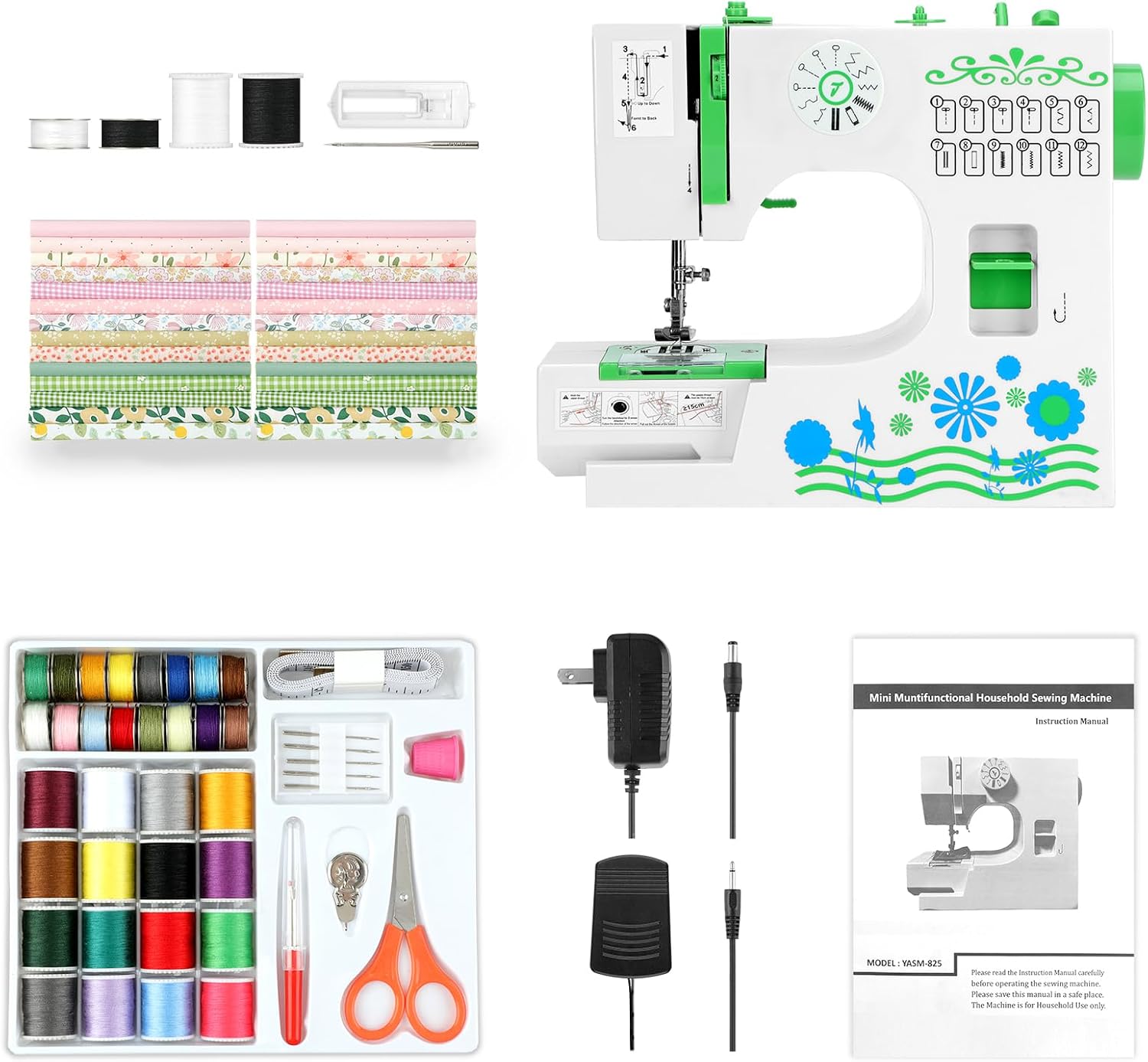
Sewing Machine Portable with 28pcs Fabric Kit for Beginners DIY
Lowest commitment way to start sewing this week, and the bundled kit means you are not hunting for fabric and notions before your first seam
There is no long brand history behind it, so parts, feet, and replacement bobbins are a question mark you have to answer before you buy
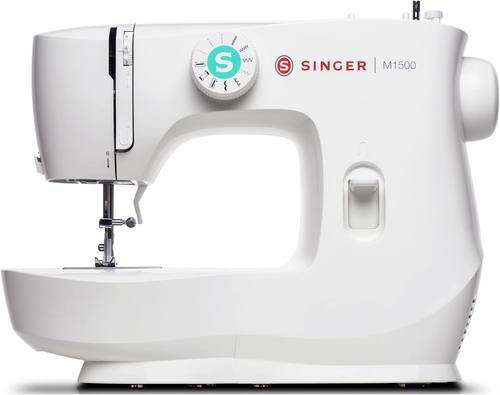
SINGER M1500 Lightweight and Portable Sewing Machine with Accessory Kit
Singer ecosystem means needles, feet, and bobbins are easy to source, and the accessory kit covers basic garment work
Lightweight cuts both ways: less mass on the table means more machine walk when you push heavy fabric through it
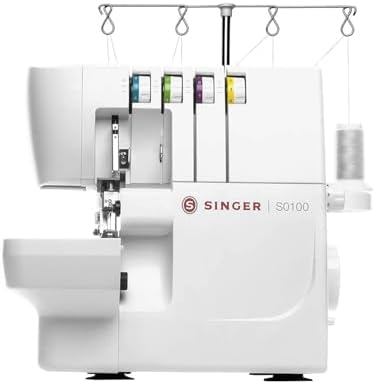
SINGER S0100 High Speed Serger Overlock Machine, 2-3-4 Thread Capability
The 2-3-4 thread range covers edge finishing and rolled hems, which is the difference between homemade and handmade
It is not a sewing machine. No buttonholes, no zippers, no topstitching, and it takes real practice to thread

Sewing Machine Needles 50 PCS HAX1 Universal 5 Sizes Compatible with Singer
Five sizes in one box means you can match the needle to the fabric instead of forcing one needle through everything
It is a consumable, not an upgrade. Nobody feels excited opening this box, and that is exactly why beginners skip it
Prices and availability were captured from Amazon Creators API and may change.
Two sewing machines, two different jobs
The portable machine with the 28-piece fabric kit and the SINGER M1500 are both aimed at beginners, but they are solving different problems, and I want to be clear about which problem each one solves.
The kit machine is a commitment question. If you are not sure whether you will still want to sew in March, buying a machine that arrives with fabric and notions already in the box means you can sit down and make something on day one. That matters more than people admit. The cost of getting started is not the machine, it is the pile of small purchases you do not know you need yet. A bundle removes that friction.
What the bundle does not remove is the support question. Before you buy any machine without a long history behind it, check three things: what needle system it takes, what bobbins it uses, and whether you can buy replacement presser feet for it. If a machine takes a standard flat-shank needle and a bobbin you can find at any fabric store, you are fine. If it takes something proprietary, you are one lost part away from a paperweight. That is the whole risk with an off-brand starter machine, and it is a real risk, not a snobbery thing.
The SINGER M1500 is the other path. It is lightweight and portable, it comes with an accessory kit, and it carries a name that means needles, feet, and bobbins are everywhere. I have been hard on modern Singer in this space and I stand by that, because the vintage 1962 machine my grandmother sewed on for four decades is a different animal from what the brand sells today. But I judge a lightweight portable as a lightweight portable. As a first machine that lives in a closet and comes out on the kitchen table, that trade is reasonable. It is not a workhorse, and I would not pretend it is.
The honest trade-off with any lightweight machine is mass. A heavy machine stays put. A light one skips and walks when you feed denim or several layers of costume fabric through it. You manage that with a slower foot, a fresh needle, and a non-slip mat under the machine, but you cannot engineer it away. If you plan to sew heavy fabric regularly, you want mass, and you should be shopping in a different category.
The serger is a second machine, not a first one
I want to kill one argument before it starts. A serger and a sewing machine are not competitors. They are different tools, and I refuse to gatekeep one against the other.
The SINGER S0100 is a serger with 2-3-4 thread capability, and that range is the whole story. A four-thread configuration is what you use for strong overlock seams on knits and stretch fabric. Three threads finishes an edge and is the workhorse setting for most garment work. Two threads is for rolled hems and narrow edge finishes, the kind of thing that makes a hem look like it came off a rack.
Here is what a serger will not do: buttonholes, zippers, topstitching, a seam that holds a garment together on its own. It trims and it wraps. That is it. If you buy a serger as your first machine, you will own a very fast edge finisher and no way to make a shirt.
Where it earns its place is costume work, which is what I do. When you are building a Renaissance gown or forty Halloween costumes, the inside of a garment matters as much as the outside, because raw seams fray and scratch. A serger turns raw edges into finished ones in seconds. It is also loud and it eats table space. Mine lives on the dining table, which is a permanent negotiation in my house.
One warning from teaching: sergers are fussy about thread. They want cones, not spools, and the tension on four threads has to be balanced or you get a rolled edge or a loopy mess. Budget a full afternoon to learn to thread it, and do not attempt it thirty minutes before you need the garment.
The needle box is the upgrade everybody skips
Fifty HAX1 universal needles in five sizes is the least glamorous item on this page and the one that fixes the most problems.
Needles are not one thing. A size matched to your fabric is the difference between a clean stitch and skipped stitches, popped thread, or a machine that sounds like it is in pain. Fine fabric wants a small needle. Denim and canvas want a large one. Knits want a ballpoint, and universal needles will fight you on stretchy fabric. Five sizes in one box means you stop forcing one needle through everything because it is the only one you have.
The HAX1 designation matters too, because it is the standard flat-shank system, and the box is listed as compatible with Singer. If you are buying the M1500 or any Singer-compatible machine, that is the needle family you want. Check your manual anyway. It takes ten seconds and saves a broken needle and a bent hook.
My rule: a fresh needle for every new project, and a new one immediately after sewing anything heavy. A dull needle does not just sew badly, it damages fabric. When a beginner tells me their machine is broken, I ask two questions first. When did you last change the needle, and when did you last clean the bobbin area. Those two answers solve more problems than any repair shop.
What I check in the first week with any beginner machine
I keep a seam test journal. Five fabric types, three stitch lengths, and a verdict on every machine that crosses my table. That habit is how I judge machines, so here is the version you can run at home in your first week.
Run a straight stitch on quilting cotton, then on a medium denim, then on a knit. Same stitch length. Watch the fabric, not the needle. If the seam puckers on cotton and skips on denim, the machine is telling you something about its tension range, and you have not even touched the dial yet.
Then turn the tension dial and see whether anything actually changes. The dial should mean something. On a good machine you can feel and see the difference across a few numbers. On a bad one you can turn it three clicks and nothing happens until it snaps out of balance entirely.
Then do a buttonhole on scrap. Buttonholes tell you more about a machine than stitch count ever will. A machine that makes a clean, consistent buttonhole on a scrap of the fabric you actually plan to use is a machine that will not embarrass you.
Finally, wind a bobbin and check the wind. Uneven bobbins cause more "my tension is wrong" complaints than anything else on the machine. Half of what people blame on tension is a bobbin wound loose on one side.
Trade-offs nobody puts on the box
Bundled fabric is for practice, not for garments. The 28-piece kit is a way to learn the machine without cutting into good fabric, and that is a real value. But practice cotton is not the same as the fabric you will actually sew, and your first real project should use fabric you chose.
Lightweight machines move. Covered above, but it belongs in the trade-offs section too, because it is the number one complaint I hear from people who bought portable machines and then tried to hem jeans.
Consumables add up. Needles, bobbins, and presser feet are not a one-time purchase. A walking foot or a zipper foot changes what a machine can do more than a higher stitch count does.
Computerized features are a gamble. A mechanical machine with a good straight stitch will outlive a computerized machine with a hundred stitches, because the circuit board is the part that dies and the repair can cost half of what you paid. Stitch count marketing works because a hundred-stitch machine uses about ten, and you will use four.
Who should buy what
If you have never sewn and you want to find out whether you like it, buy the portable machine with the fabric kit. Lowest risk, everything in the box, and you learn the vocabulary before you spend real money.
If you know you want to sew garments and you want a machine that will still be repairable in three years, buy the SINGER M1500 and a box of needles. Add a walking foot when you start quilting or working with layers.
If you are already finishing garments and you hate how raw seams look on the inside, buy the serger. Do not buy it before you can sew a straight seam, because it will not teach you that.
What is on my bench right now
I am partway through a tension stability test on five 2026 beginner machines, two hundred yards of test fabric each, plus a buttonhole marathon on every one of them. The pattern so far is familiar: machines that hold tension across fabric types are rare in the budget tier, and the ones that do are almost never the ones with the biggest stitch count on the box. The needle box on this page is the same one I keep restocking for my classes, and the serger advice is the same speech I give every student who asks me whether they need one in month one. They do not. They need one in month six, when the seams start to bother them.
Start with the machine that makes you want to sew tomorrow. That is the real spec, and everything else is convenience stacked on top of it.