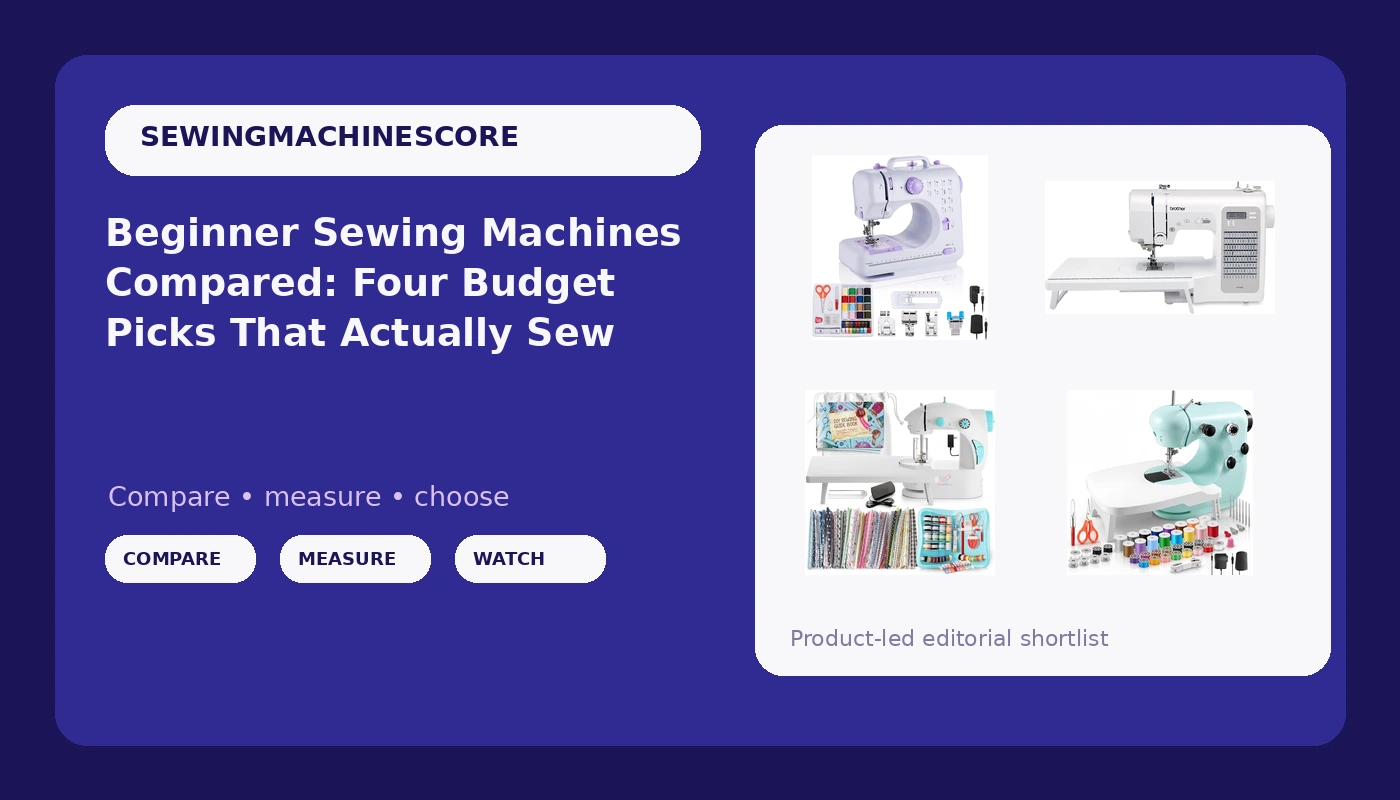
Twelve years in a costume shop taught me that the machine matters less than the person running it, right up until the moment it matters a lot. I teach a beginner class in Portland twice a month, and the question that comes up in every session is whether a fifty-dollar machine from Amazon is worth the cardboard it ships in. So I built this comparison of beginner sewing machines around the four models my students ask about most: three minis and one computerized machine that costs roughly four times as much.
I have not run these four side by side on my bench, and I am not going to pretend otherwise. What I can do is read the specifications the way a teacher reads them, tell you which features survive contact with a real project, and be honest about the line where a mini stops being a sewing machine and becomes a toy with a needle.
The best beginner sewing machine in this group for most people is the Brother CP100X Computerized Sewing and Quilting Machine. It is the only one of the four I would expect to still be earning its keep in year three. The three minis are genuinely useful for repairs, hems, and crafts, and two of them cost less than a good pair of shears, but they are not the machine you learn on if you plan to keep sewing.
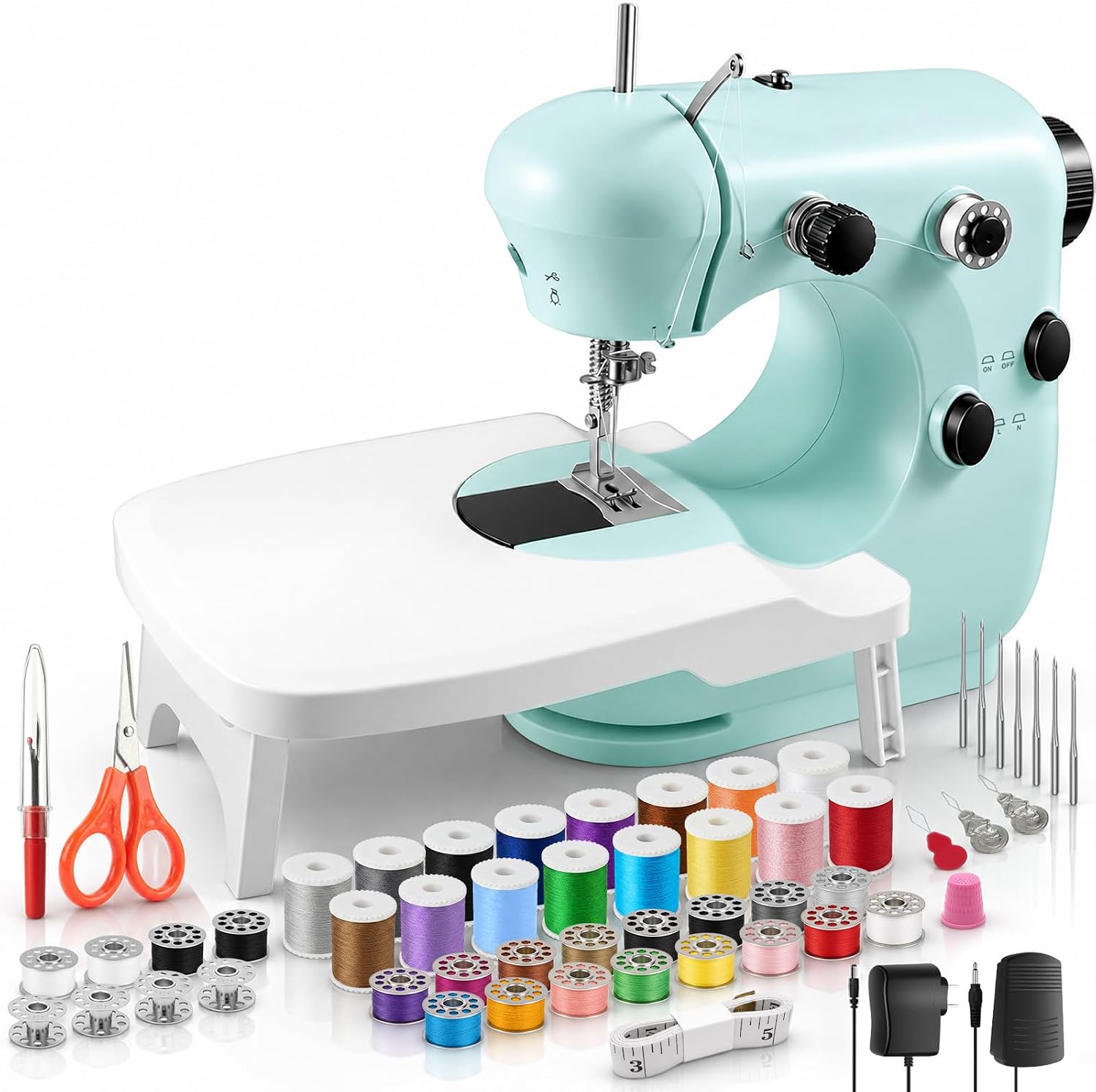
Sewing Machine for Beginners, Portable Mini Sewing Machine with 57-Piece Kit, 2-Speed Electric Sewing Machine with Foot Pedal & Extension Table for DIY Crafts, Home Sewing and Clothing Repairs
The biggest accessory bundle here, plus a foot pedal, two speeds, and an extension table that adds usable surface
Still a mini body, so throat space is tight and the tension adjustment is minimal
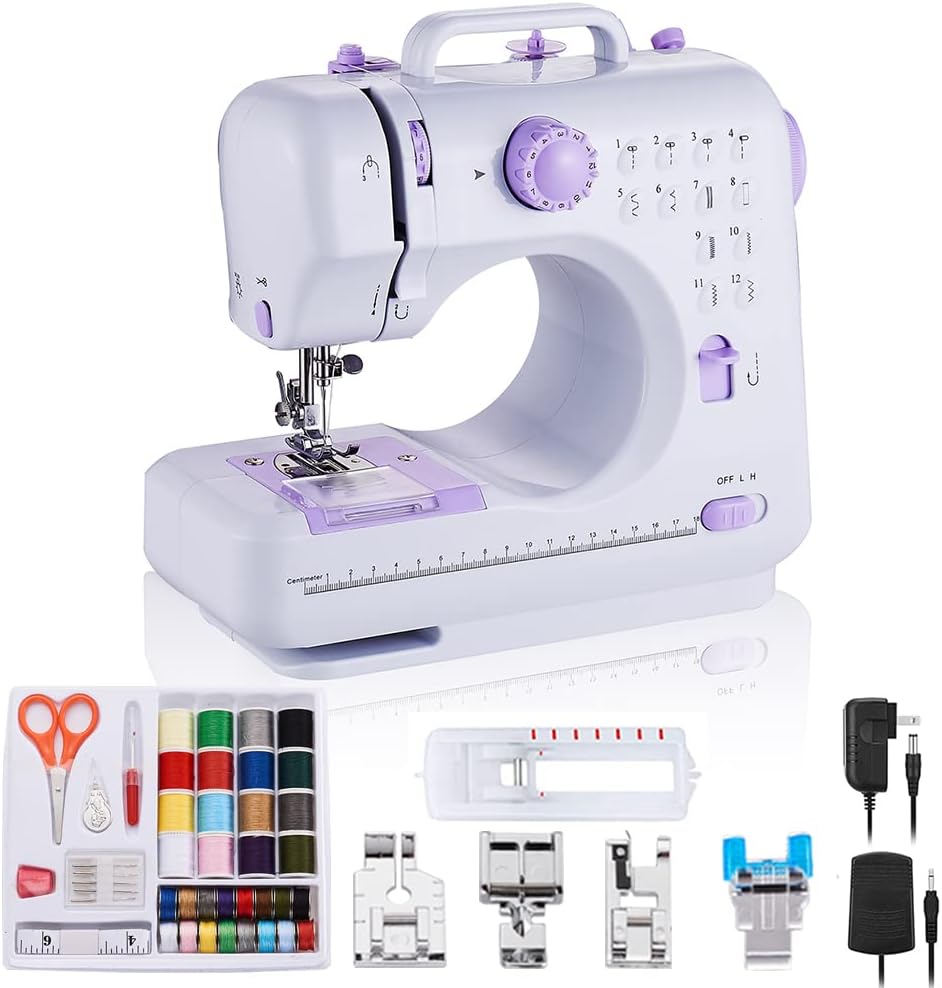
Rxmeili Portable 12-Stitch Sewing Machine, 42-Pc Sewing Kit for Beginners
Twelve built-in stitches in a portable package, the widest stitch menu of the three minis
No extension table, and the kit is smaller than the one bundled with the other mini
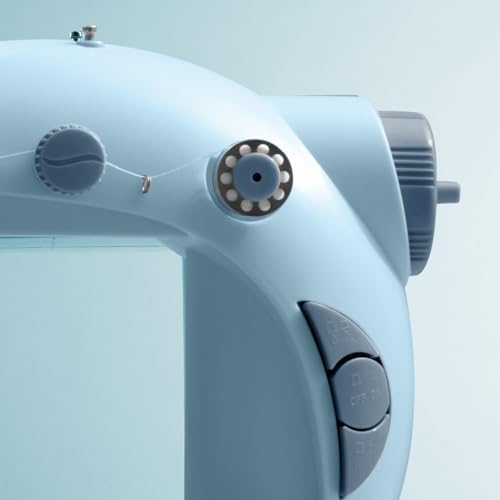
CraftBud Mini Sewing Machine for Beginners, Adults and Kids Sewing Machine
The most kid-friendly framing of the group, light enough for a child to move and simple enough to start on
A mini with the same limitations as the rest, and it is not the machine a serious beginner grows into
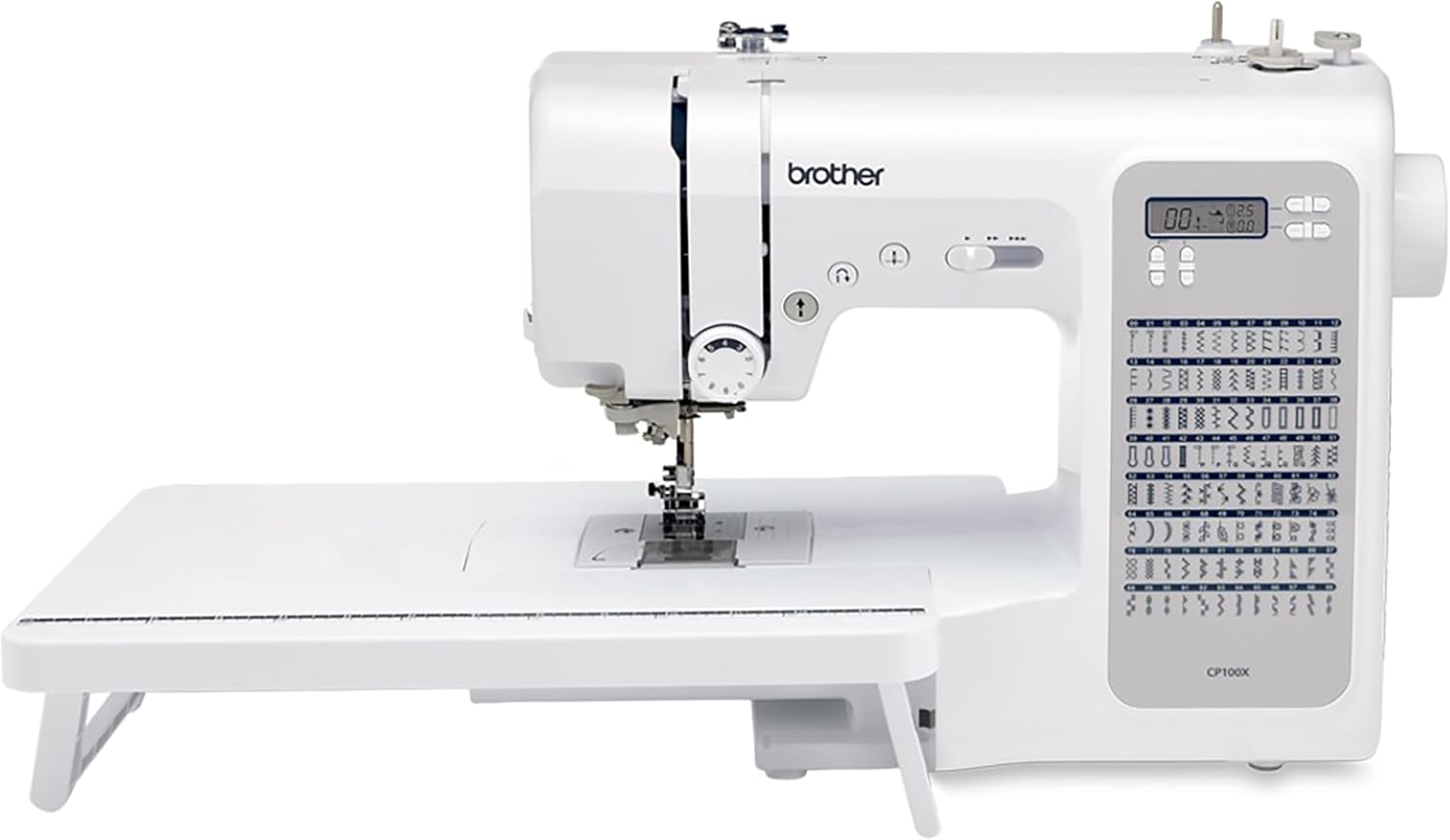
Brother CP100X Computerized Sewing and Quilting Machine
A full-size computerized machine with real tension control, a proper presser foot system, and quilting capability
Costs several times what the minis do, and it is the only one here that asks you to read a manual
Prices and availability were captured from Amazon Creators API and may change.
How I compare these four
My method starts with one question: what will this machine be asked to do in month six? A machine that only has to hem curtains and patch jeans can be small, cheap, and simple. A machine that has to set a sleeve, topstitch a collar, and quilt a baby blanket needs throat space, consistent tension, and a presser foot that can be swapped.
The three minis here share a basic architecture. They are compact, light, and built around a fixed or nearly fixed needle position. The Brother is a different category of tool entirely: full size, computerized, with the stitch selection and tension hardware you find on machines sold to people who sew weekly.
The second question is what comes in the box. Two of these listings bundle accessory kits, and for a true beginner that matters more than it sounds. A kit with bobbins, needles, a seam ripper, and a tape measure saves you a second order and a week of waiting before your first project.
The two fifty-dollar minis
The Sewing Machine for Beginners with the 57-piece kit is the one I would hand to a student who wants to fix clothes and make small crafts without spending real money. Two speeds and a foot pedal are the two features I care about most at this price. Speed control matters because a beginner on a single fast setting tends to sew through her own fingers metaphorically before she learns to guide fabric. The foot pedal matters because it teaches the same muscle memory as a full-size machine.
The extension table is the quiet win here. Mini machines have a tiny bed, and anything wider than a placemat wants to dive off the edge. An extension table does not fix the throat space problem, but it does keep a hem from dragging. You can Visit on Amazon → to see the kit contents before you decide.
The Rxmeili Portable 12-Stitch is the more interesting machine on paper because of the stitch count. Twelve stitches in a mini body is unusual, and the 42-piece kit covers the essentials. What it does not include is an extension table, which is the accessory I would miss most. If you are choosing between these two, the decision comes down to whether you want more stitch variety or more usable surface. For repairs and crafts, I would take the surface.
Both of these are the machines I recommend for a teenager, a dorm room, or a sewing-curious adult who is not ready to commit a table to the hobby. They are honest little tools. They are not, and never will be, the machine you make a coat on.
The CraftBud Mini
The CraftBud Mini Sewing Machine is the one in this group explicitly marketed to kids and adults together, and that framing is accurate. It is light, it is simple, and it is the least intimidating machine here to switch on for the first time.
Here is my honest read as a teacher: kid-friendly and beginner-friendly are not the same thing, and a machine that is easy to start is not always the machine that teaches good habits. A child learning on a mini learns that fabric must be pushed through. A child learning on a full-size machine learns that the feed dogs do the work and her hands only steer. That distinction is the single biggest thing I correct in adult students who learned on minis.
If the goal is a first taste of sewing with low stakes, this one does that job and does it at a price that will not hurt. If the goal is a kid who is going to stick with it, I would rather see the money go toward the Brother. You can Visit on Amazon → to compare the included accessories against the other two minis.
The Brother CP100X
The Brother CP100X Computerized Sewing and Quilting Machine is the outlier and the recommendation. It is full size, it is computerized, and it is built for both garment sewing and quilting, which is a wider brief than any mini can accept.
Three things earn it the top spot in this comparison. First, it is a real Brother, which means parts, feet, and bobbins are widely available and inexpensive, and the manual is written for people who have never threaded a machine. Second, the computerized stitch selection gives you consistent stitch patterns without a mechanical dial to drift. Third, it is a quilting machine as well as a garment machine, which means it has the throat space and the accessory ecosystem for both.
The trade-off is real and I will not soften it. This machine costs several times what the minis cost, and a beginner who is not sure she will stick with the hobby is buying capability she may never use. I have watched that happen. I have also watched beginners quit in week two because a mini fought them on every seam, and that is the more expensive outcome.
Computerized machines carry one more risk worth naming: the electronics. When a circuit board fails on a computerized machine, the repair can approach the price of a new machine. That is the honest cost of the convenience. On a mechanical machine, a repair is usually a belt, a gear, or a cleaning. If you want the reliability argument, it favors mechanical. If you want the sewing experience, it favors the Brother. You can Visit on Amazon → to check the current configuration.
Straight stitch and tension are the whole game
Everything else on a sewing machine is convenience layered on top of two things: the quality of the straight stitch and the behavior of the tension.
On a mini, the tension is usually set at the factory and adjustable only within a narrow band, if at all. That is fine for cotton and terrible for anything with stretch or bulk. On the Brother, the tension is a real adjustment with real range, which is what lets the same machine handle quilting cotton and a knit without a fight.
When you evaluate any beginner machine, ignore the marketing language and ask one question: can I adjust the tension, and does the dial do something when I turn it? A tension dial that does nothing is worse than no dial, because it teaches you that the machine is unpredictable when the real problem is the hardware.
Stitch count, buttonholes, and what actually matters
Stitch count is the most oversold number in sewing. A machine with a hundred decorative stitches uses maybe ten of them in normal life. The three minis here range from a handful of stitches to twelve, and the difference in daily use is smaller than the numbers suggest.
What matters more is whether the machine can make a buttonhole, and how it makes it. A four-step buttonhole that you guide yourself is honest and works. A one-step buttonhole is faster and depends on the machine's internal timing being right. For a beginner, a machine that can produce a clean, consistent buttonhole is a machine that can finish a garment, and finishing a garment is what turns a hobby into a habit.
The Brother is the only machine in this group I would trust with a buttonhole on a paid project. That is not a knock on the minis, it is a statement about what a mini is for.
Throat space, feed dogs, and fabric
Throat space is the distance from the needle to the upright arm, and it is the spec nobody mentions until they are trying to quilt. A mini has almost none. That means a quilted tote bag is possible and a quilted throw is not, no matter how patient you are.
Feed dogs matter for the same reason. The feed dogs are the teeth under the presser foot that pull fabric through. On a full-size machine they are strong and predictable, and you learn to let them work. On a mini they are weaker, which is why beginners on minis develop the habit of pulling fabric, which causes bent needles and wavy seams.
If you sew garments, quilts, or anything with layers, throat space and feed dogs are the two specs that decide whether the machine is a tool or a toy. If you sew repairs, hems, and flat crafts, they barely come up.
Which one to buy
Buy the Brother CP100X if you are serious about learning to sew, if you want to quilt, or if you have a specific garment project in mind. It is the only machine here that grows with you, and the accessories and parts situation makes it the safest long-term purchase of the four.
Buy the Sewing Machine for Beginners with the 57-piece kit if you want a low-cost machine for repairs, crafts, and small projects, and you value the foot pedal and extension table. It is the most complete starter package of the minis.
Buy the Rxmeili Portable 12-Stitch if stitch variety matters more to you than surface area, and you want a compact machine with the largest built-in stitch menu in the mini group.
Buy the CraftBud Mini if you are shopping for a child or for a first taste of sewing where the stakes are low and the budget is fixed.
What I tell my students
Your first machine should make you want to sew tomorrow. That is the real specification, and it beats stitch count, price, and brand every time. A machine that fights you on a straight seam teaches you to dread the table. A machine that cooperates teaches you to plan the next project.
The minis in this comparison are good at exactly one thing: removing the cost barrier so you can find out whether you like sewing at all. The Brother is good at the thing that keeps people sewing for thirty years. Both answers are legitimate. Just be honest with yourself about which one you are actually buying.