I have taught beginner sewing classes in Portland for twelve years, and the last ten minutes of every session turn into the same conversation: three students, three different projects, one question. Which machine should I buy? My answer changes depending on whether they are hemming curtains, patching a school backpack, or building a Renaissance fair bodice, and it has changed over the years as budget machines got better and the labels on the boxes got louder. This comparison of the best beginner sewing machines covers the four models my students ask about most, and it is organized around the two things that actually decide whether you keep sewing: how the machine feeds fabric, and what its buttonhole looks like when it is finished.
Related: How to Read a Sewing Pattern Without Losing Your Mind
The best beginner sewing machine for most people in this group is the Brother XM2701, because its 27 stitches cover garments, mending, and crafts, and the machine is built around a straight stitch you can actually control. The SINGER 4423 is the one to pick if you already know you will be sewing denim, canvas, or costume layers. The SINGER M3330 is a gentler version of the same idea, and the compact portable machine is for a crafter or a kid who needs a first machine that fits on a shelf.
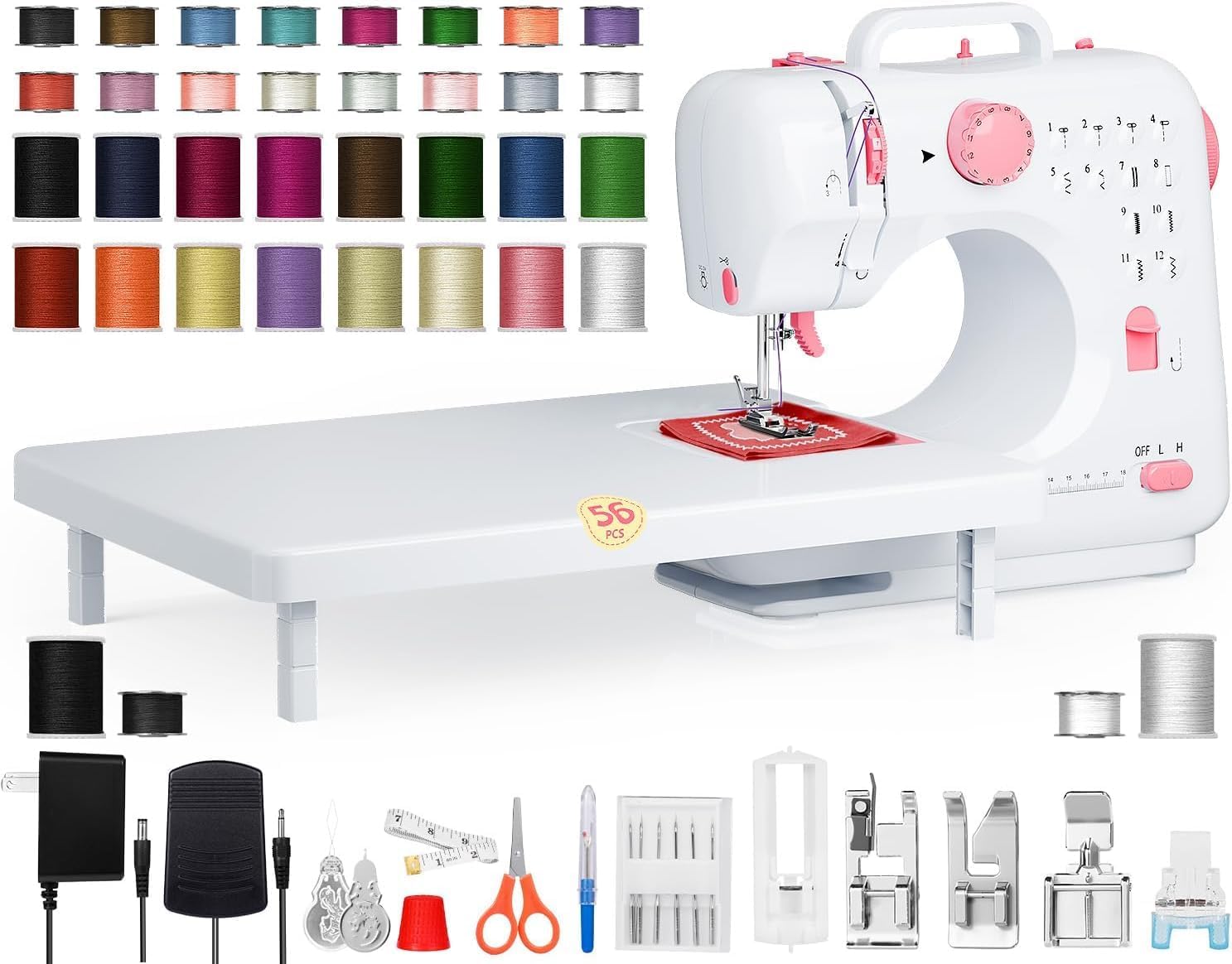
Portable Sewing Machine for Beginners (12 stitches)
Smallest footprint of the four, and it ships with an extension table and a 32-color thread kit, so a beginner can start a project the day it arrives
12 stitches and a light body keep it in craft territory; it will not enjoy denim or a lined bodice
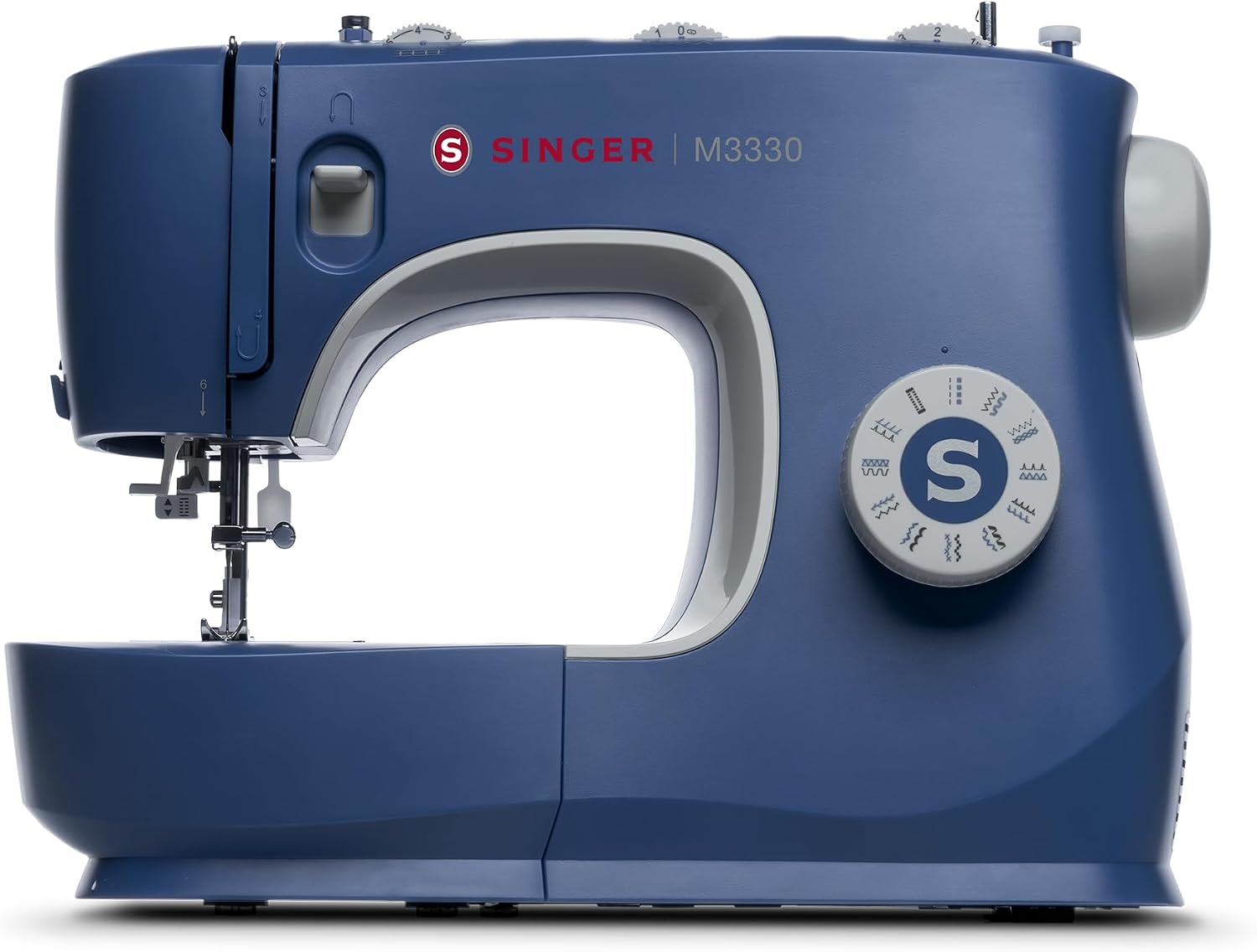
SINGER M3330 (Navy Blue)
Beginner-friendly layout and a full accessory set; the gentlest step up from a toy machine
Sits between the portable machine and the faster Singer without a specialty of its own
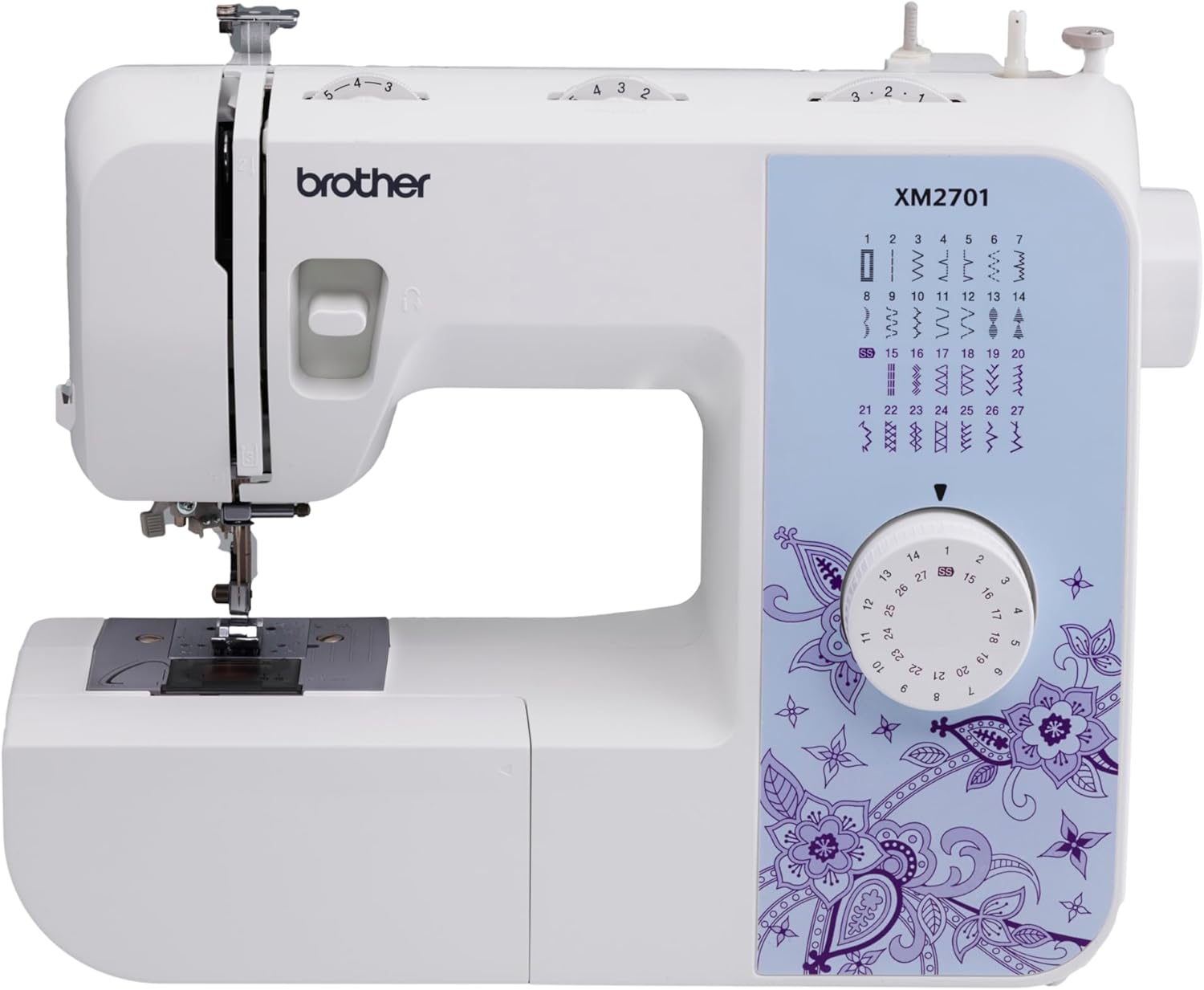
Brother XM2701 (27 stitches)
Best stitch set here for garment, craft, and mending work, in a portable body that stores easily
Not a heavy-fabric machine, and the included accessories are basic next to the Singer kits
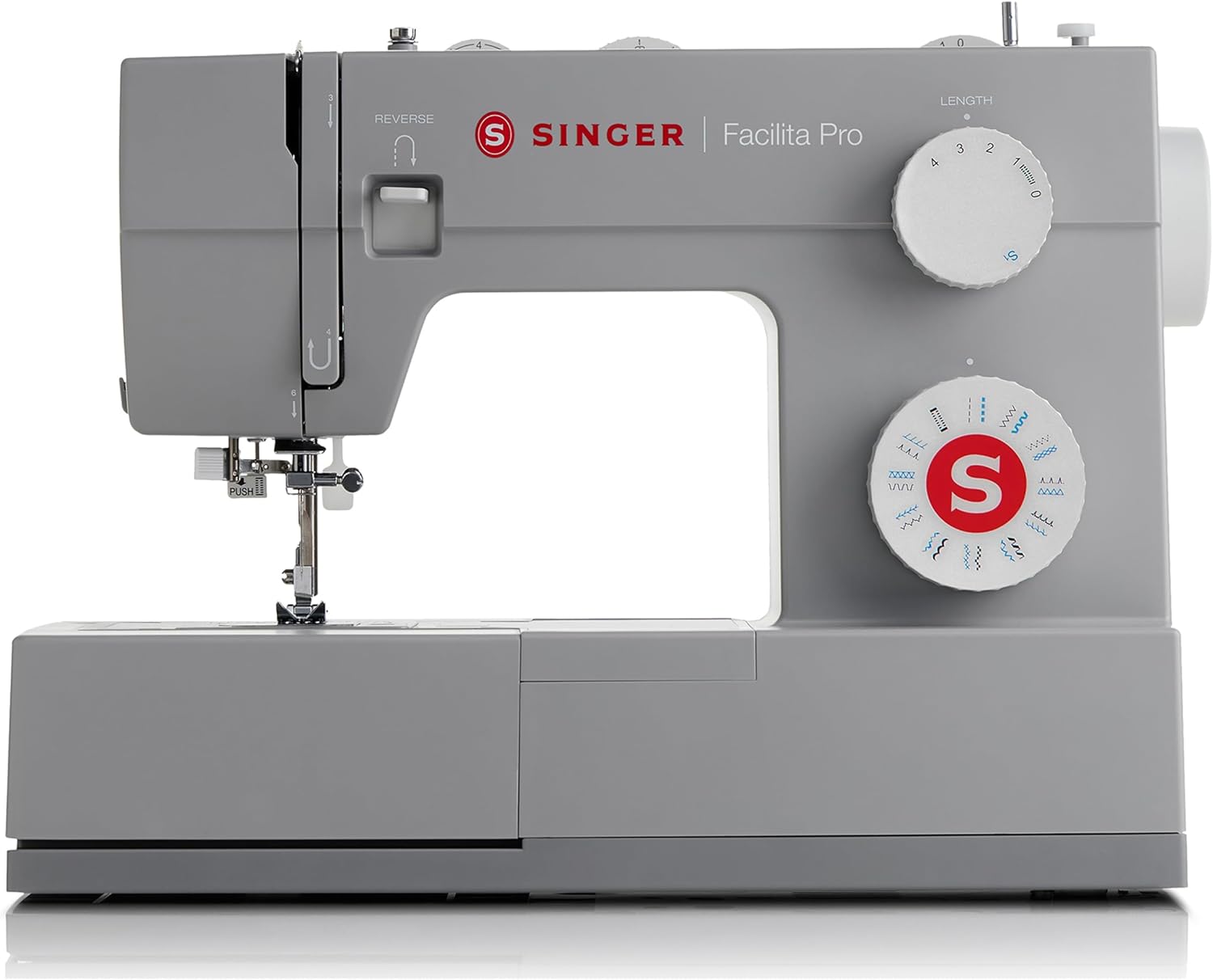
SINGER 4423 (Grey, High Speed Heavy Duty)
The most capable machine of the four for long seams and thicker fabric, and it arrives with an accessory kit
Heaviest and least forgiving for a first project, and you pay for capability a beginner may not use
Prices and availability were captured from Amazon Creators API and may change.
How I judge a beginner machine
Twelve years of paid costume work taught me that straight stitch quality is the whole game. Everything else, the decorative stitches, the automatic threader, the LED light, is convenience layered on top of a foundation. So when a beginner machine lands on my table, it goes through the same routine as everything else: five fabric types, three stitch lengths, and a written verdict in my seam test journal. Cotton, denim, jersey, satin, and a scrap of upholstery, at two, two and a half, and three millimeter stitches. If a machine cannot hold a consistent stitch on cotton at 2.5 mm, nothing else it does matters.
The second test is the buttonhole. A machine's buttonhole tells you more about its brain than its stitch count ever will, because it requires the feed dogs, the tension, and the timing to work together in one motion. If the buttonholes come out uneven, the machine is guessing.
The third question is whether a beginner can thread it and set the tension without reading the manual twice. That one is not a measurement. It is a prediction about whether you will want to sew tomorrow, and it is the reason I recommend machines by person rather than by ranking.
The compact starter: a portable machine with 12 stitches
The portable machine at the bottom of this list is the one I see in the hands of crafters and parents, and its spec sheet explains why: 12 built-in stitches, reverse sewing, an LED light, an extension table, and a 32-color thread kit in the box. That thread kit matters more than it sounds. Half of the reason a new machine sits unused is that the owner has one spool of white thread and no idea what to buy next.
Twelve stitches is not the limitation it sounds like. It usually means straight, zigzag, a blind hem, a couple of decorative options, and a buttonhole. That is enough for pillows, tote bags, simple skirts, Halloween capes, and every mending job in the house.
What it is not is a garment workhorse. The body is light, the extension table is there because the bed is small, and the machine is aimed at home crafts for adults and kids. Treat it as a first machine, or a second machine for small projects, and it will do its job well. Expect it to power through a denim hem and you will hear it complain.
Visit the portable 12-stitch machine on Amazon
Brother XM2701: the safest first machine
The Brother XM2701 is the machine I recommend most often to students who want one machine for everything. Twenty-seven stitches covers the practical range: straight, zigzag, stretch stitches for knits, a blind hem, decorative options, and a buttonhole. The body is portable without feeling disposable, and the layout is the one beginners figure out fastest, which is a real feature even though no spec sheet lists it.
Where it wins is consistency. Brother's beginner machines are built around a simple hook and a straightforward feed, and simple is exactly what you want when you are learning to guide fabric instead of fighting it. The tension dial on a machine like this does something visible, which is more than I can say for a lot of budget machines with a decorative dial and a mind of its own.
Where it loses is heavy material. This is not the machine for a wool coat, a denim jacket, or anything with four layers of canvas. It will sew a hem on jeans if you go slowly and use the right needle, but it will not enjoy it, and neither will you. It is also not a quilting machine; the throat space and the feed are set up for garments and crafts.
Visit the Brother XM2701 on Amazon
SINGER M3330: beginner-friendly in the literal sense
Singer labels the M3330 as beginner-friendly, and for once the marketing is accurate about the audience, if not about the ceiling. The machine is navy blue, comes with an accessory set, and is designed around the assumption that the person using it has never wound a bobbin. That is a real design goal, and it shows in the layout.
Here is my honest position on the brand, because you will see it argued about in every sewing forum. Singer's modern machines are not the machines our grandmothers wore out. The vintage 401 and 500 series are tanks, and I have restored two of them. The current lineup is lighter, more plastic, and more variable in quality. That does not make the M3330 a bad first machine. It makes it a machine to buy with realistic expectations: it is a beginner machine, not an heirloom.
For a student who wants a recognizable brand, a friendly layout, and accessories in the box, this is a reasonable middle choice. It handles cotton, jersey, and light home decor fabric, and it will teach you the basics without much drama.
Visit the SINGER M3330 on Amazon
SINGER 4423: the one for heavy fabric
The Singer 4423 is the machine on this list with the most capability and the highest speed, and it comes with an accessory kit that covers most of what a new sewist needs for the first year. High speed matters more than beginners expect. Long seams, curtain hems, and costume skirt panels are where a slow machine turns a project into an afternoon, and the 4423 is built to run.
It is also the machine here that will handle thicker fabric with the least complaint, which is why it is my pick for anyone who already knows their projects involve denim, canvas, or multiple costume layers. If you are making a Renaissance fair gown with a boned bodice and heavy skirt panels, this is the tool that will not fight you.
Two honest warnings. First, this is the least forgiving of the four for a first project, because more speed and more power mean mistakes happen faster. Second, and this is one of my standing complaints about the industry, the phrase heavy duty on a home machine means sturdier than the cheapest option, not industrial. This machine is a hobby machine with a stronger motor and metal where it counts. That is a good thing. Just do not buy it expecting to sew leather.
Visit the SINGER 4423 on Amazon
Stitch count is marketing. Buttonholes are not.
I want to say this clearly, because it will save you money. A machine with 100 stitches uses about ten of them. The rest are variations a beginner will never open, and some of them are the same stitch with a different width. When you compare these four machines, do not sort them by stitch count. Sort them by the stitch set: does it include a straight stitch, a zigzag, a stretch stitch, a blind hem, and a buttonhole? Every machine here does, and the rest is decoration.
The buttonhole is where the machines actually separate. A four-step buttonhole requires you to work in stages and remember which stage you are in. A one-step buttonhole does it in a single pass. Neither is automatically better for a beginner, but the quality of the result tells you whether the feed and the tension are working together. If you can, test one buttonhole on scrap fabric before you commit. That single test predicts more about your first year of sewing than the whole spec sheet.
What to check before you buy any of them
Four things, in order.
- Can you thread it and wind a bobbin without frustration? If not, the machine will live in a closet.
- Does the tension dial change the stitch visibly? You should see the difference between a 3 and a 5 on scrap fabric.
- Does it hold a straight stitch on cotton at 2.5 mm? That is your baseline for everything else.
- Does the accessory set include the feet you need? A zipper foot and a buttonhole foot matter more than a decorative stitch library.
For a beginner, I would add one more: buy for the fabric you actually sew, not the fabric you imagine sewing. A quilting machine frustrates a garment sewer and the reverse is true. If your projects are pillowcases and Halloween costumes, the compact 12-stitch machine or the M3330 is plenty. If they are garments in woven fabric, the Brother XM2701 covers the most ground. If they are heavy layers and long seams, the 4423 is the answer.
Which of the four I would tell a student to buy
If you are buying your first machine and you want one that will not limit you in six months, the Brother XM2701 is the recommendation. Twenty-seven stitches, a portable body, and a straight stitch you can trust.
If your projects are already heavy, or you know you will be sewing costume layers and denim, skip past the starter machines and go to the SINGER 4423. Paying for capability once is cheaper than buying twice, which is the pattern I see most in my classes.
If you want the lowest-risk way to find out whether you enjoy sewing, or you are buying for a child or a crafter who works on small projects, the compact portable machine with the thread kit is the sensible first step.
And if you want a recognizable brand with a beginner-friendly layout and you mostly sew cotton and jersey, the SINGER M3330 does the job.
Whichever you choose, budget for thread, a pack of fresh needles, and a seam ripper. The machine is only half the kit.
What I am working on next
I am partway through a tension stability test on a batch of 2026 beginner machines, with a buttonhole marathon at the end of every one. The early pattern is familiar: the machines that hold a consistent straight stitch across five fabric types are rarely the ones with the biggest stitch count. I will publish the seam test results when the fabric runs out.
If you are choosing your first machine right now, the four above are the ones I get asked about, and every one of them can teach you to sew. The question is which one will still be on your table in a year.