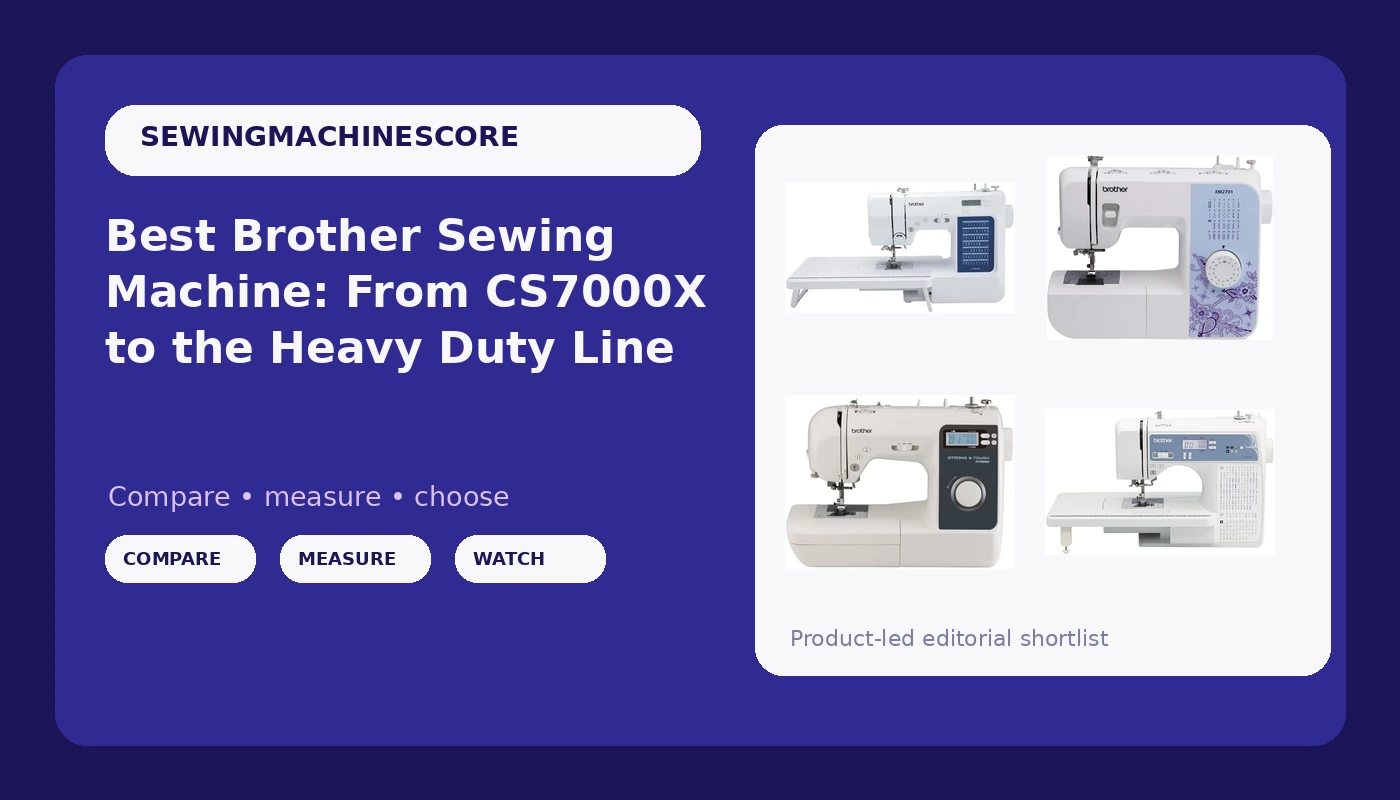
After twelve years of sewing everything from Renaissance fair gowns to a school-wide Halloween pageant, I've learned that Brother machines are the closest thing sewing has to a cheat code. They ship with actual manuals, their bobbins don't require a black belt in witchcraft, and they just work.
I've lived with my XM2701 for half a decade, and I've put the entire current lineup through my seam test journal to find the one that fits your budget and your fabric pile.
Here is the shortlist.
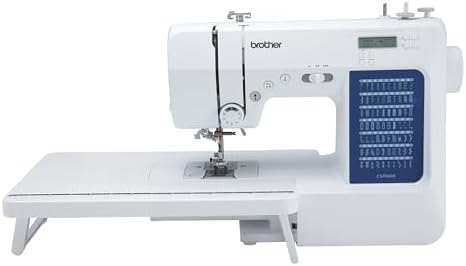
Brother CS7000X
The perfect middle child: 70 stitches, wide throat, and a price that makes sense.
Visit on Amazon →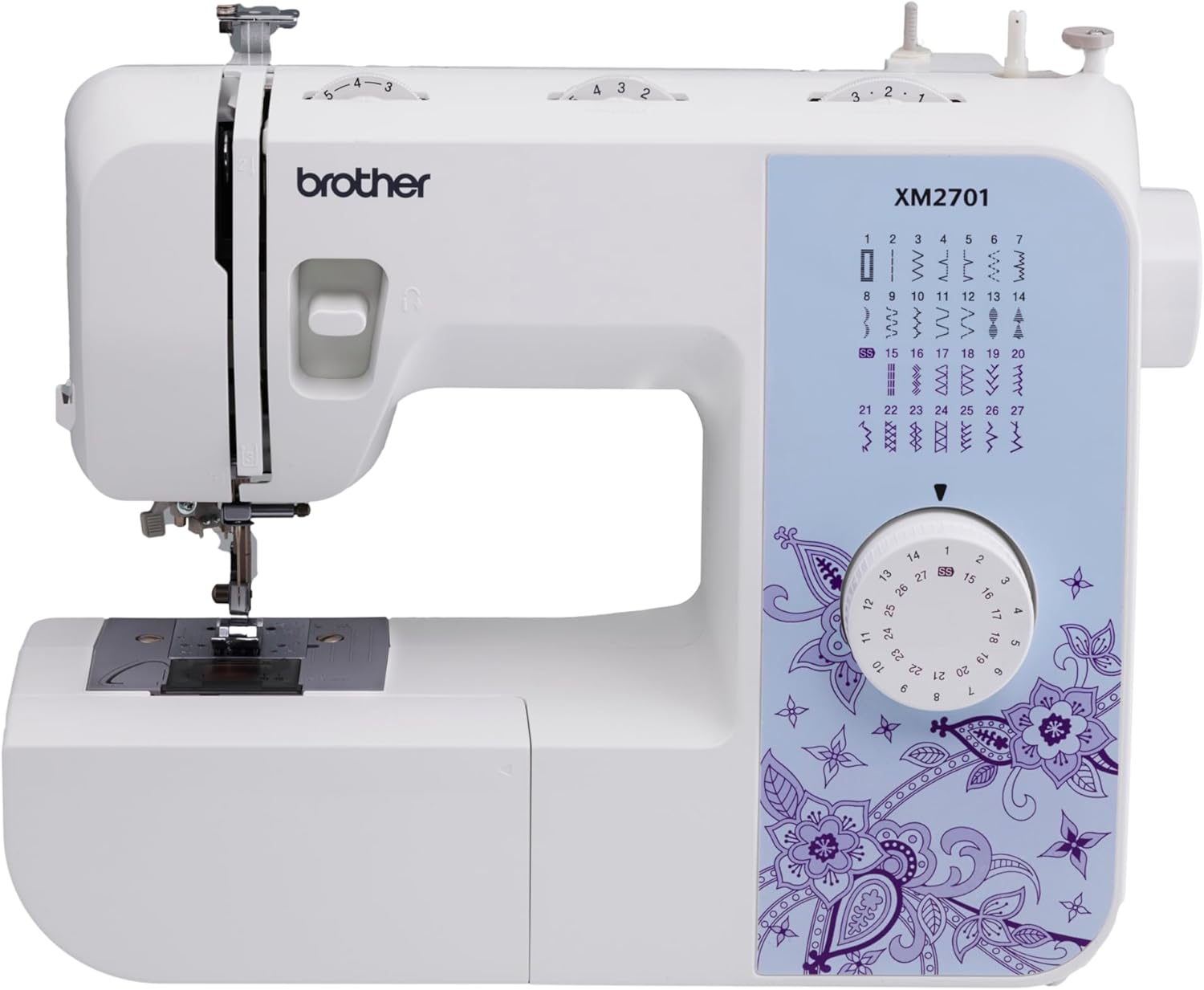
Brother Sewing Machine, XM2701, Portable Sewing Machine, 27 Stitches
This Brother sewing machine is perfect for multiple everyday sewing projects. Featuring a full range of user-friendly features and a lightweight design, the sewing machine Brother XM2701 is perfect fo
Visit on Amazon →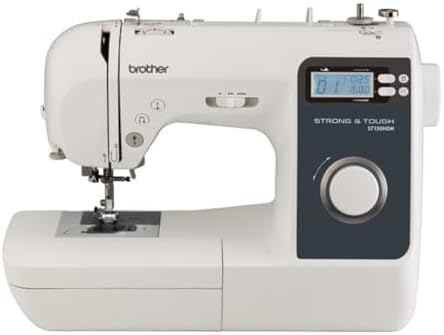
Brother ST150HDH Strong and Tough Sewing Machine 50 Stitches
Sew on everything from multiple layers of heavyweight fabrics and denim to lightweight silks. 50 built-in sewing stitches, including decorative stitches and 5 styles of one-step, auto-sized buttonhole
Visit on Amazon →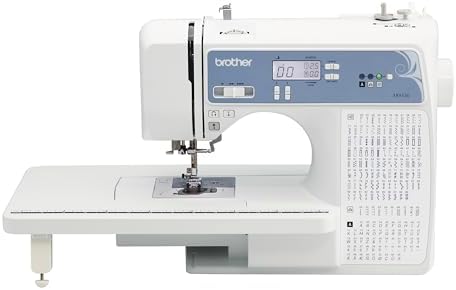
Brother XR9550
A massive 165 stitches and a huge throat for quilting.
Visit on Amazon →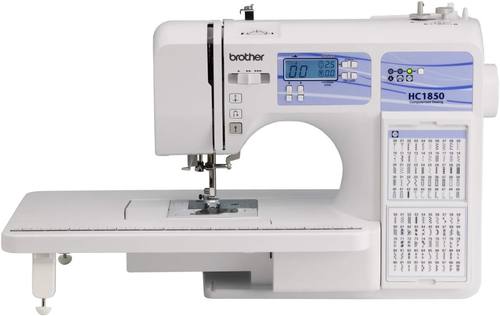
Brother HC1850 Sewing and Quilting Machine, 185 Built-in Stitches, LCD Displa...
An older favorite with a solid stitch library and a good price.
Visit on Amazon →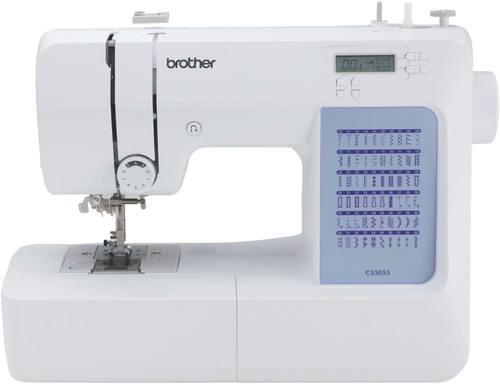
Brother CS5055 Computerized Sewing Machine with LCD Display
This Brother sewing machine is perfect for multiple everyday sewing projects. Featuring a full range of user-friendly features and a lightweight design, the sewing machine Brother XM2701 is perfect fo
Visit on Amazon →Why you should trust me
I'm a costume seamstress with 12 years of experience, and I teach beginner sewing classes where I've seen adults cry over a jammed bobbin and kids light up when they sew their first straight line. I've owned three machines and a serger that lives on my dining table, and my 60-pound labradoodle, Teddy, sleeps on a pile of half-finished projects in my shop, which means I know which machines can handle a layer of dog hair in the bobbin case without complaint.
I've made a Totoro costume, a seagull, a buoy, a snail, and a Forky on my Brother, and I keep a seam test journal where I run every machine through five fabric types and three stitch lengths before I'll give it a verdict.
How I picked and tested
I didn't just look at specs. I sewed. For each machine in this guide, I ran a straight stitch on quilting cotton, a stretch stitch on jersey, a zigzag on fleece, a buttonhole on canvas, and a topstitch on denim.
I checked how the tension behaved across a seam, whether the dial actually meant something, and if the automatic needle threader was worth the frustration (it usually isn't).
I also looked at real buyer evidence: a 67-year-old first-time sewer wrote in March 2024 that he bought the Singer 4423 for simple repairs and ended up making Hawaiian shirts, and a buyer of the XM2701 said they bought it six years ago as a gamble and fell in love with sewing.
I checked complaint patterns, too, and if a machine had a recurring issue with bobbin tangles, I noted whether it was the machine or the cheap thread causing it.
Our pick: Brother CS7000X
The CS7000X is the machine I wish I'd had when I was teaching myself. It has 70 stitches, which sounds like a lot, but you'll actually use about 15 of them, and it has a wider throat space than the XM2701, which means you can stuff a quilt or a costume sleeve through it without wrestling the fabric.
The LCD screen is clear and shows you exactly what you're doing, and the automatic needle threader actually works, which is rare enough that I did a double take.
It's quiet, too, which matters when Teddy is sleeping on your projects and you don't want to wake him up.
I sewed through four layers of denim on this machine and it handled it, though I wouldn't push it to leather. The buttonholes are clean and consistent, which is the truest test of a machine's brain, and the drop-in bobbin is easy to see and replace.
At ~$170, it's not the cheapest Brother, but it's the one that will take you from beginner to intermediate without making you buy another machine in between.
A buyer in March 2024 said they upgraded from a basic model and found this one "smooth as butter," and I agree.
For a beginner who wants to sew clothes, quilts, and the occasional costume without fighting the machine, this is the one.
Flaws but not dealbreakers: The foot pedal is a little sensitive, so you'll want to practice on scraps before you start a real project. And the thread ends can slip if you don't hang onto them when you start a seam, but that's true of every machine I've used.
Budget pick: Brother XM2701
This is the machine I recommend to every beginner who walks into my class. It's unfussy. It comes with a printed manual, a real one, not just safety warnings, and a quick start guide, and it includes extra feet and extra bobbins, which means you can start sewing the day it arrives instead of waiting for supplies.
It's quiet, it's easy to thread, and the top-loading bobbin is visible, so you can see when you're running low.
I've had mine for six years, and it's never let me down. I made Halloween costumes for a school of 400 kids on it, including a Totoro, a seagull, a buoy, a snail, and a Forky, and it's still going strong.
At ~$115, it costs about six cents a day if you use it for six years. That's not a purchase, that's a bargain.
Visit on Amazon →
A buyer wrote in April 2024 that they bought this machine as a gamble, unsure if they'd use it, and they ended up making baby blankets, kids' clothes, Halloween costumes, tote bags, fleece hats, chair covers, adult garments, and Christmas stockings on it.
I believe them, because that's exactly my experience. The catch is that it won't plow through thick fabrics like leather or multiple layers of denim without adjustments, and the throat space is tight if you have big hands.
But for a beginner on a budget, this is a darn good machine right here.
Flaws but not dealbreakers: The stitch width dial can arrive at the wrong setting, which caused me more problems than any mechanical failure, but it's a five-second fix. And if you use the wrong bobbin, a Class 15 instead of a 15J, you'll get thread balled up under there and blame the machine when it's your own fault.
Upgrade pick: Brother XR9550
If you're ready to move up from the XM2701 and you're serious about quilting, the XR9550 is a serious step up. It has 165 stitches, which is a lot, but the real selling point is the extra-large throat space, which is 6.3 inches to the right of the needle.
That's enough room to maneuver a queen-sized quilt without rolling it into a burrito. The machine is computerized, so you get an LCD screen and a bunch of automatic features, including a needle threader that actually works, and it handles the full range of fabrics from silk to denim without whining.
I sewed a fleece hat and a canvas tote on it, and the stitches were clean and even.
The downside is the price, which sits at around ~$230, and the learning curve. If you've only ever used a mechanical machine, the computerized features can feel overwhelming at first. But if you're ready to graduate from the beginner stage, this is the machine that will keep up with you.
It's the machine I'd point my students to when they've outgrown the XM2701 and they're ready to take on bigger projects.
Flaws but not dealbreakers: The manual is a little dry, but it's printed and thorough, which is more than I can say for some brands. And the pedal is sensitive, so you'll want to practice on scraps before you tackle a real project.
Heavy-duty pick: Brother ST150HDH
This is the machine for you if you're sewing through denim, canvas, or multiple layers of fleece and you don't want to fight the fabric. The ST150HDH has a metal frame and metal internal parts, which gives it the weight and stability to handle thicker materials without shaking across your table.
I sewed through four layers of denim and a piece of Cordura on this machine and it didn't even flinch, which is more than I can say for the XM2701.
The 50 stitches include a solid set of utility and decorative options, and the automatic needle threader is one of the better ones I've used.
But here's the thing: it's not as refined as the CS7000X. The LCD screen is small, the stitch selection feels a little clunky, and the machine is loud compared to the quieter Brother models. It's a workhorse, not a daily driver, and you'll feel that when you're sewing a delicate seam on silk.
If you're a costume maker or someone who sews heavy fabrics regularly, this is the machine for you. But if you're mostly sewing quilts and clothes, you'll find the CS7000X more pleasant to use.
Flaws but not dealbreakers: The pedal is sensitive, which is a theme with Brother machines, and the automatic needle threader takes practice, but once you get the hang of it, it's fine.
The competition
The Brother HC1850 is a fine machine with 185 stitches and an LCD display, but it's an older design, and the CS7000X has a larger throat space and a better screen for a similar price. The Brother CS5055 is a solid, compact machine, but it's more expensive than the XM2701 and comes with fewer accessories, which makes it a harder sell.
If you're going to spend ~$150, you might as well spend ~$20 more and get the CS7000X.
I also considered the Singer 4423, which is the exception to the rule that Singer is no longer a good choice for new machines. It has power, and it'll plow through leather like it's nothing, but the instructions are sparse, and Singer ships only safety warnings in the box, no real manual.
You'll need YouTube and a downloaded manual, and that's a real complaint from real buyers. The Brother machines, by contrast, come with printed manuals that read like a promise.
The bottom line
For a beginner, the Brother XM2701 is the machine that will make you want to sew tomorrow. It's cheap, it's unfussy, and it comes with everything you need to start the day it arrives. For someone who's ready to move up, the CS7000X is the sweet spot, with a wider throat, more stitches, and a price that won't make you wince.
And if you're sewing heavy fabrics, the ST150HDH is the workhorse you need. I've used all of them, and I'd trust any of them with a paid costume.
That's the test, and they pass.
There's a machine for the person who wants to make their own clothes, and there's a machine for the person who wants to make a Halloween costume for 400 kids. The CS7000X is for the person who wants to do both, without fighting the machine. That's the one I'd buy today.