Related: Best Sewing Machine for Beginners: What I Tell My Students
I have taught beginner sewing classes in Portland for years, and every first session opens with the same question: which beginner sewing machine should I actually buy? My answer always starts the same way too. Buy for the fabric you really sew, not the fabric you imagine sewing. A machine tuned for quilting will frustrate someone who wants to make dresses, and a delicate garment machine will make a denim sewer miserable by Thursday.
I keep a seam test journal, and it has trained me out of caring about the numbers on the box. Five fabric types, three stitch lengths, and a verdict on every machine I have used. That journal is why I care so little about stitch counts and so much about tension dials that do something when you turn them, and why I think a machine's buttonholes tell you more about its brain than its stitch library ever will.
The four machines in this guide cover the realistic spread for a new sewer: two Janomes designed from the ground up for beginners, one computerized Brother with a deep stitch library and a wide table, and one heavy duty Janome that arrives with a quilting kit in the box. Here is who each one is actually for.
Best Overall for Most Beginners: Janome Arctic Crystal
This is the machine I point beginners toward first, and the interior metal frame is the whole reason. A frame holds the needle bar and the feed mechanism in alignment, so the machine stays in time under load instead of flexing and rattling itself out of adjustment. That is the difference between a machine that still sews a clean straight line in year three and one that starts skipping stitches the first time you put denim under the needle.
Two details tell you who Janome built this for. The bobbin diagram is printed right where you need it, which speaks directly to the most common beginner panic in this hobby, and the tutorial videos mean you are not left alone with a manual the size of a takeout menu. Janome describes it as made with beginners in mind for garments, patchwork, and light quilting, and that list is honest about the ceiling. Light quilting means a baby quilt or a wall hanging. If you plan to wrestle a king-size quilt through the throat of the machine, you want the heavy duty option below.
What you give up is the computerized stitch library. There is no screen, no font, and no menu of decorative stitches to scroll through. What you get instead is a machine where the tension dial behaves predictably across its range and the straight stitch is the priority rather than an afterthought. For a first machine, that is the right trade to make.
Best for Stitch Variety: Brother CS7205
This is the machine for the sewer who wants options, and the options here are real. A computerized Brother with 150 built stitches, a font, a wide table, and eleven sewing feet. The eleven feet matter more than the 150 stitches, and I will keep saying that until it stops being true. Accessories are where beginner machines cut corners, and buying presser feet one at a time adds up fast. Having them from day one means you can try a new technique on a Tuesday night instead of ordering something and waiting a week to find out whether you enjoy it.
The wide table gives you surface area for quilting and for large projects that would otherwise hang off the edge and drag, pulling your seams out of true. The font lets you monogram, which is a small thing that makes a homemade gift look considered rather than improvised. And the stitch library, marketing aside, does include the utility stitches that do the actual work: the straight stitch, the zigzag, the stretch stitches, and the buttonhole.
Now the part I always say out loud in class. Computerized features are wonderful until the circuit board dies, and then the repair can approach the cost of the machine. If you are comfortable with that trade, the CS7205 gives you the most capability per dollar of anything here. If the idea of a board failing keeps you up at night, the Arctic Crystal will outlive your interest in decorative stitches.
Best for Denim, Canvas, and Real Quilting: Janome HD-3000 Black Edition
Heavy duty is the most abused phrase in sewing machine marketing. I have seen it stamped on plastic-bodied machines that scream the moment you put a folded jeans hem under the needle, and I have watched beginners blame themselves for a machine that was never built for the job. What actually earns the label is a machine that keeps its speed through layers instead of stalling, and a feed system that moves thick material without chewing it.
The HD-3000 Black Edition is the machine here aimed squarely at that work, and the six piece quilting kit in the box tells you who Janome expects to buy it. If your sewing life involves jeans hems, canvas totes, or layered quilting, this is the one to look at. Layers are where budget machines fail first, and it is also where a beginner's confidence goes to die. A machine that walks through the thick spots lets you finish the project and learn something instead of frogging the same seam four times.
The trade-off is delicacy. If you mostly sew silk, chiffon, and fine garment fabric, the extra power is not doing you any favors, and the lighter machines above will feel more controllable under your hands. Weight is the other consideration. A machine built for this work is heavier, which is excellent for stability on the table and less excellent if you carry it to a class every week. The quilting kit saves you the separate purchase, which is a genuine part of the value here.
Best for Small Spaces and Simple Projects: Janome Toile Romance
This one is for the sewer who wants a machine that lives on the table instead of hiding in a closet. The Janome Toile Romance is an officially licensed Bridgerton collection machine with 15 stitches, and the styling is not a small part of why someone buys it. A machine that looks good in your space is a machine you use, and a machine you use is the only kind that makes you better.
Fifteen stitches is not the limitation people assume. My standard complaint about this hobby is stitch count marketing, because a machine with 150 stitches uses maybe 10 of them in a normal week. What you need is a straight stitch, a zigzag, a stretch stitch for knits, and a buttonhole. The Toile Romance covers that ground in a machine that is easy to use and easy to live with.
The ceiling is the honest part. Decorative embroidery-scale work and big quilts are not this machine's job. If your projects are garments, tote bags, simple curtains, and the occasional cushion, fifteen stitches will do everything you ask. If you already know you want to quilt bed-size projects or sew denim regularly, the Brother CS7205 or the HD-3000 will serve you better and you will not outgrow them in a year.
How I evaluate a beginner sewing machine
I judge a machine on a short list, and none of it is the number on the box.
The straight stitch, on more than one fabric. Run a straight stitch on denim or canvas, then on quilting cotton, then on something slippery like silk or a knit. The machine that handles all three without whining is the one worth your money. A machine that only behaves on quilting cotton is a machine with a narrow life.
The tension dial. Turn it in both directions and watch what the stitch does. A dial that changes the stitch predictably across its range is a machine you can learn on. A dial that does nothing until it does everything at once will teach you bad habits.
The buttonhole. Ask any machine to make four buttonholes in a row and you learn more than a spec sheet will ever tell you. Consistency is the tell. If the fourth buttonhole looks like the first, the machine's brain is solid.
The accessories. Count the presser feet and ask what they cost separately. A walking foot, a zipper foot, and a blind hem foot are the difference between a machine that can grow with you and one that stalls at your second project.
The needle threader. They break. The question is not whether yours will, but whether you can live without it when it does. Any machine that is easy to thread by hand is a machine that survives a broken threader.
Who it is for. A quilting machine frustrates a garment sewer and the reverse is just as true. Match the machine to the fabric you actually buy by the yard.
Beginner sewing machine comparison
| Machine | Documented features | Best for | Notes |
|---|---|---|---|
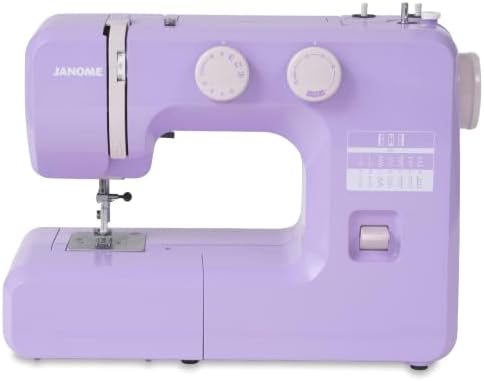 Visit on Amazon → Visit on Amazon →Janome Arctic Crystal |
Interior metal frame, bobbin diagram, tutorial videos, built for beginners | Garments, patchwork, light quilting | The safest first machine of the four |
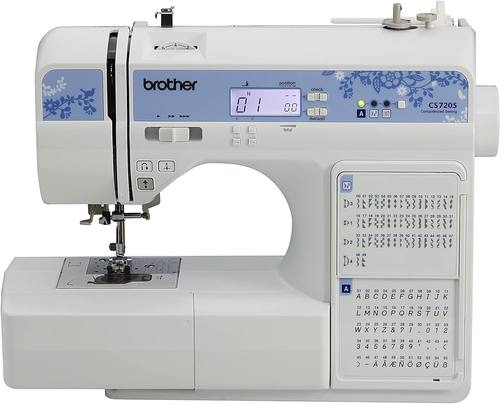 Visit on Amazon → Visit on Amazon →Brother CS7205 |
150 built stitches, 1 font, wide table, 11 sewing feet, computerized | Stitch variety, monogramming, larger projects | Most capability, and a circuit board to think about |
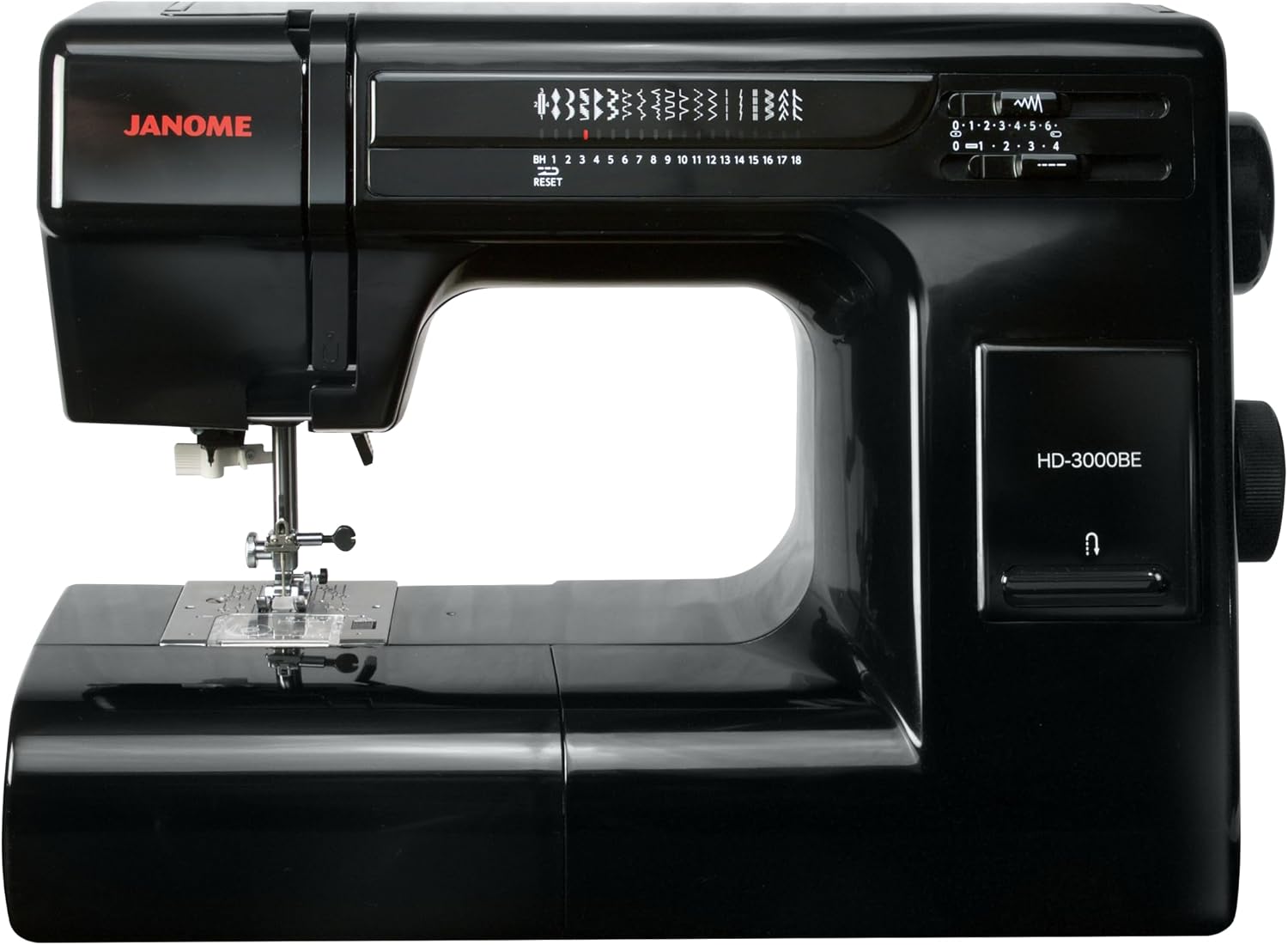 Visit on Amazon → Visit on Amazon →Janome HD-3000 Black Edition |
Heavy duty build, bonus 6 piece quilting kit | Denim, canvas, layered quilting | Built for thick fabric and layers |
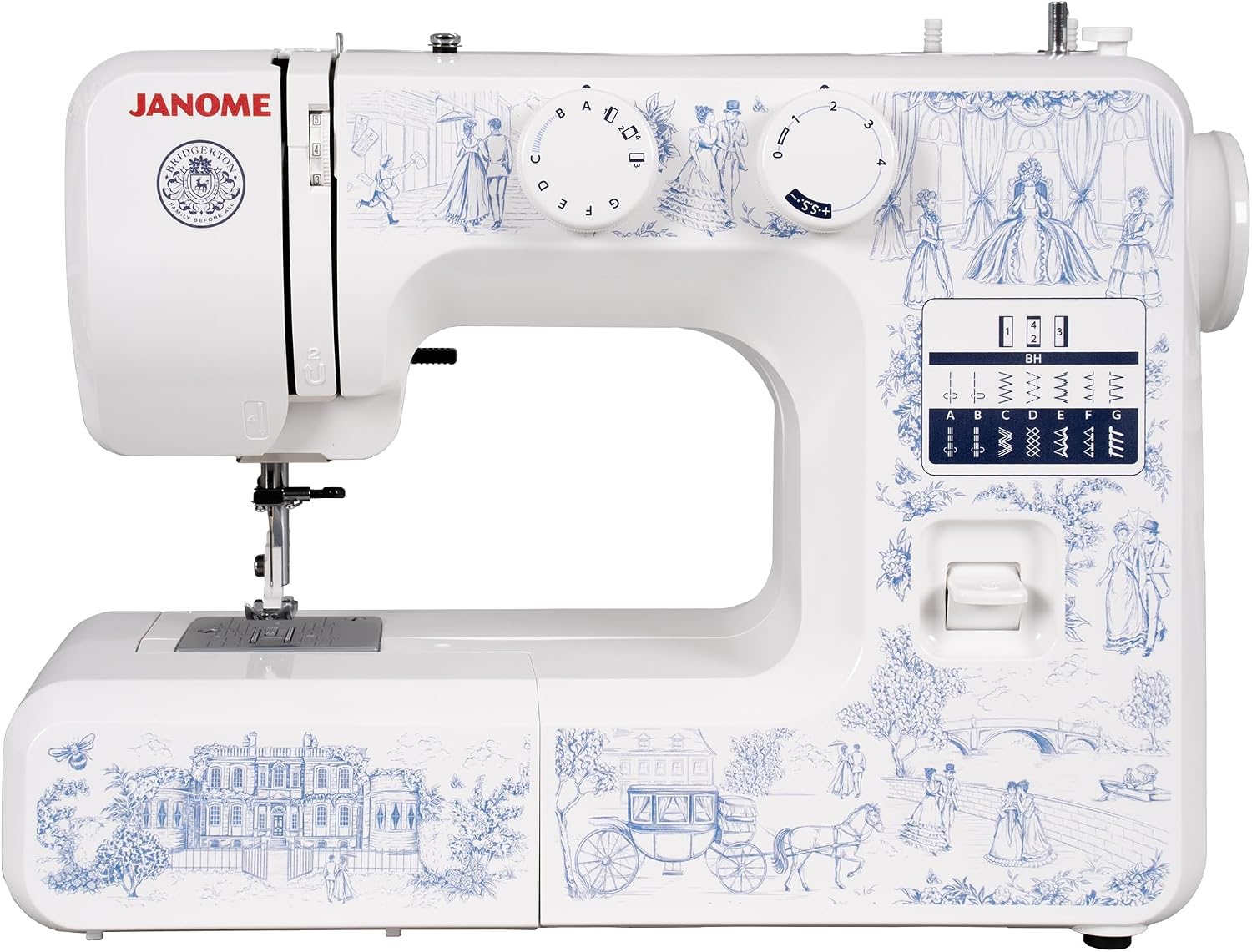 Visit on Amazon → Visit on Amazon →Janome Toile Romance |
15 stitches, officially licensed Bridgerton collection | Small spaces, simple projects, style | Fewest stitches, most personality |
Read the table the way you read a pattern envelope. Find the column that matches your actual projects, then check the notes for the compromise you are accepting. Every machine here is a good machine for somebody. None of them is a good machine for everybody.
Should you buy the Janome Arctic Crystal?
Yes, for most first-time sewers. The interior metal frame is the reason I recommend it: a frame that holds the needle bar and feed mechanism in alignment is what keeps a straight stitch straight in year three. The printed bobbin diagram and the tutorial videos answer the two questions every beginner asks in week one, and the garment, patchwork, and light quilting list is honest about what the machine will and will not do.
Light quilting is the ceiling, so if you already know you want bed-size quilts, plan accordingly. Otherwise, this is the machine I would hand a student on day one.
Should you buy the Brother CS7205?
Yes, if you want options and you are comfortable with electronics. The eleven presser feet in the box are worth more than the 150 built stitches, because accessories are where beginner machines usually cut corners and buying feet one at a time adds up fast. The wide table helps with quilting and larger projects, and the font lets you monogram gifts.
Just go in knowing it is computerized. That means a circuit board, and a board that dies out of warranty can cost a serious fraction of the machine to replace. If that risk bothers you more than decorative stitches excite you, buy the Arctic Crystal instead.
Should you buy the Janome HD-3000 Black Edition?
Yes, if your sewing life involves denim, canvas, or layered quilting. Heavy duty is the most abused phrase in this hobby, but a machine aimed at thick fabric and shipped with a six piece quilting kit is telling you what it was built for. Layers are where budget machines fail first, and a machine that walks through the thick spots lets you finish the project instead of frogging the same seam four times.
The trade-off is delicacy. If you mostly sew silk and fine garment fabric, the extra power is not doing much for you, and the lighter machines here will feel more controllable under your hands.
Should you buy the Janome Toile Romance?
Yes, if you want a machine that lives on the table instead of in a closet, and your projects are simple garments and basic home sewing. Fifteen stitches covers the utility work that does the real sewing, and the officially licensed Bridgerton styling is genuinely part of the appeal. A machine you enjoy looking at is a machine you use.
It is not the machine for big quilts or heavy canvas, so treat it as the fun, capable starter rather than the workshop workhorse. If you already know you want to quilt bed-size projects, spend your money on the HD-3000 instead.