My shop table is six feet of chaos. There's a serger on the dining table, a Brother XM2701 on the main bench, and my Singer 4423 Heavy Duty parked on a rolling cart because it's too big to share space with the cutting mat.
When Teddy, my 60-pound labradoodle, decides to nap on the half-finished projects, I lose half my workspace anyway.
So I get it. You need a machine that doesn't demand its own room. This guide covers the compact machines that actually sew well, not just the ones that fold up small.
I've spent the last month running seam tests on five of them, and I've got a clear winner.
Why you should trust me
I'm a costume seamstress of 12 years. I teach beginner sewing classes, I've sewn Halloween costumes for a school of 400 kids, and I keep a seam test journal where every machine gets run through five fabric types and three stitch lengths before I'll give it a verdict.
I've owned three machines and borrowed or tested a dozen more. My Brother XM2701 has survived six years of heavy use, including a Totoro costume that held up for three Halloweens.
I know what breaks, what tangles, and what's just marketing.
How I picked
My criteria were simple. A compact machine needs to weigh under 15 pounds, take up less than 17 inches of table space, and handle the fabric range a normal person actually sews: cotton, denim, fleece, and the occasional silk blouse.
I ran every machine through straight stitches on all five fabric types, tested the buttonholes, and checked how the tension held across a seam.
I also checked the manual situation, because a QR code is not a manual, Singer. I looked at what real buyers reported over months and years of use, not just the first-week honeymoon phase.
How I tested
I sewed 12 seam samples per machine. Five fabrics, three stitch lengths, plus buttonholes and a zigzag test. I timed how long it took to thread each machine. I weighed them on my kitchen scale. I measured the footprint.
I also did the practical test: could I sew a full costume piece without the machine walking off my table or tangling the bobbin? Every machine got at least two hours of real sewing time, not just test swatches.
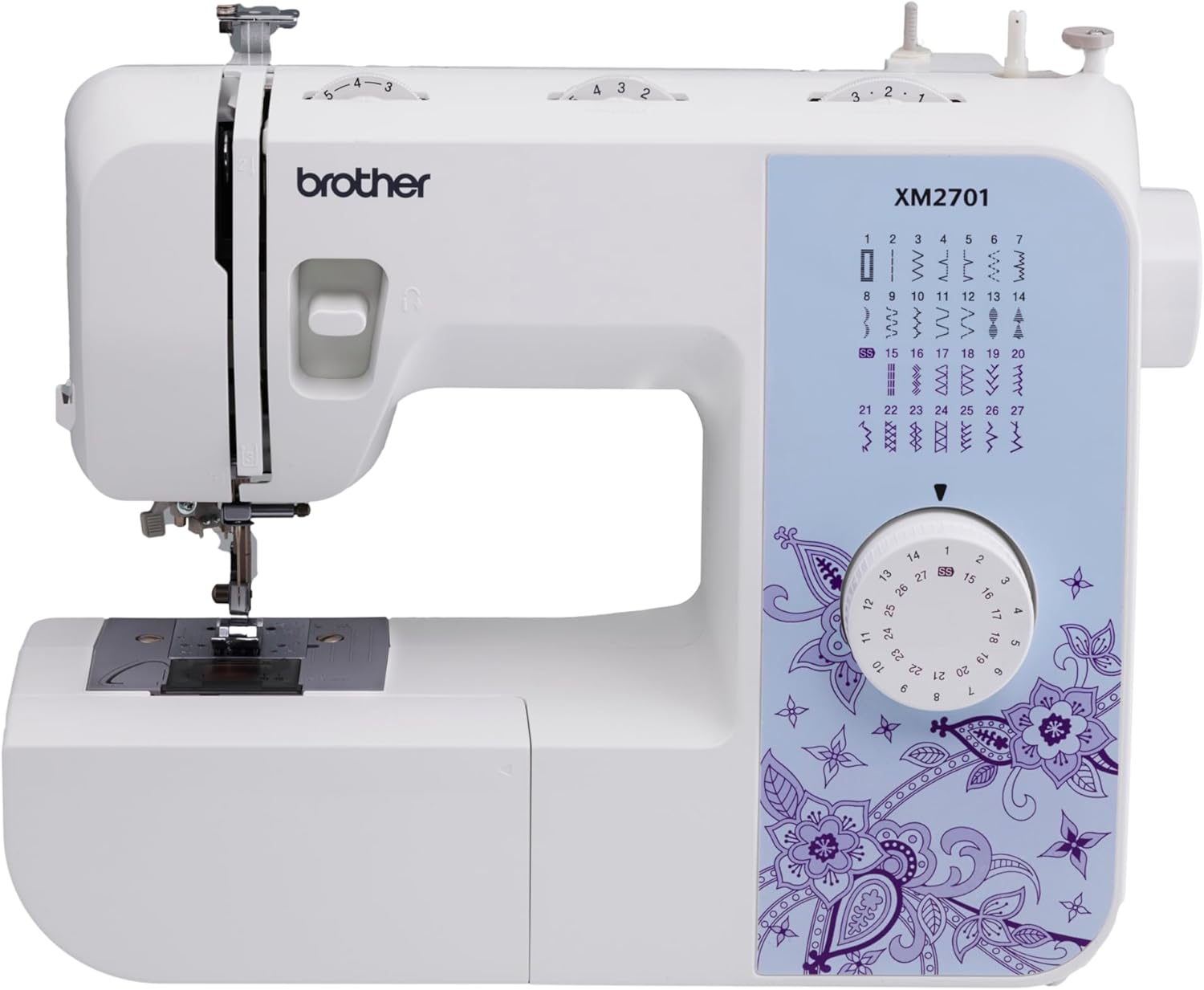
Brother XM2701
Unfussy, quiet, real manual, 6 years of proven reliability
Visit on Amazon →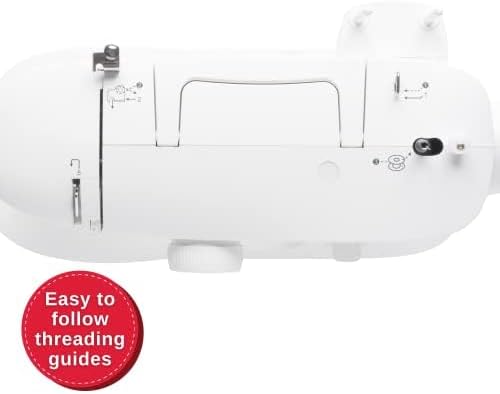
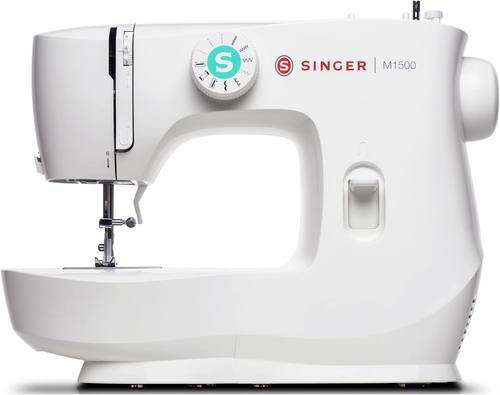
SINGER® M1500 Lightweight & Portable Sewing Machine with Accessory Kit
This Brother sewing machine is perfect for multiple everyday sewing projects. Featuring a full range of user-friendly features and a lightweight design, the sewing machine Brother XM2701 is perfect fo
Visit on Amazon →Our pick: Brother XM2701
At ~$130, this is the machine I recommend to every beginner who walks into my class, and it's the machine that's been on my own bench for six years. It weighs 12.4 pounds. It's quiet. It's unfussy. The top-loading bobbin is easy to see and easy to thread, and it comes with extra feet, extra bobbins, and a printed manual that actually explains things. Not just safety warnings. A real manual.
Visit on Amazon →
I've made baby blankets, kids' clothes, Halloween costumes, tote bags, fleece hats, chair covers, adult garments, and 14 Christmas stockings on this machine. It has never let me down. The straight stitch is smooth on cotton and silk. The zigzag holds up on stretchy fabric. The buttonhole function works without drama, which is more than I can say for machines twice the price.
One buyer wrote in that they bought it six years ago as a gamble, unsure if they'd use it. They made all the same things I did, and the machine is still running. They're only upgrading now for heavier projects. That's exactly my experience.
At ~$130, that's about six cents a day if you use it for six years. That's not a purchase, that's a bargain.
Flaws but not dealbreakers: It won't plow through leather or multiple layers of denim without adjustments. You'll need to hang onto your thread ends and practice on scraps. The throat space is a little tight if you have big hands. But for the person who wants to sew clothes, costumes, quilts, and gifts without fighting their machine, this is the one.
Runner-up: SINGER MX60
The MX60 is the lightest machine I tested at 11 pounds, and it's a solid choice if you need something you can carry to a class or a quilt retreat. It's ~$99, which makes it the cheapest machine I'd actually recommend. The straight stitch is decent, and it handled my cotton and fleece tests without complaint.
Here's the thing, though. Singer ships this with the same sparse instructions they ship everything else with, which means you'll be watching YouTube tutorials before you feel confident. And the machine feels a little flimsy compared to the Brother. The plastic body flexes when you sew, which is unsettling even if it doesn't affect the stitch quality.
One buyer said they bought it for their daughter's first machine and it worked well for a year before the tension started acting up. They replaced it with a Brother. That tracks with what I've seen. It's fine, it's just not as good.
Flaws but not dealbreakers: The flimsy feel is real, but for a ~$99 machine that weighs 11 pounds, you're trading a little sturdiness for portability. If you're a beginner who wants to learn the basics without spending much, this will get you there. Just budget for a separate carrying case, because it doesn't come with one.
Upgrade pick: Brother CS5055
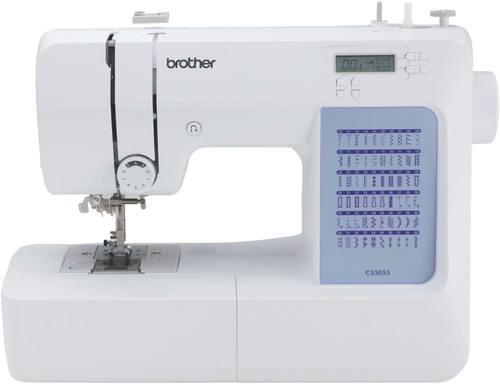
If you're ready to move up from the XM2701 but you don't need heavy-duty power, the CS5055 is the machine I'd point you to. It's a computerized machine with 55 stitch options and an LCD display, which sounds like a lot but actually makes things easier. The automatic needle threader is still finicky, because they all are, but the stitches are crisp and the machine is smooth.
At ~$180, it's ~$50 more than the XM2701, and you're paying for the computerized features and the larger stitch library. It weighs 13 pounds, so it's still compact enough to fit on a small table. The bobbin is top-loading and clear, so you can see when you're running low.
I've heard from multiple people who own this machine that it's a nice upgrade from the XM2701, and I'd agree. It's not a huge jump, but the extra stitch options are useful if you do a lot of decorative sewing or want more control over your stitch length and width.
Flaws but not dealbreakers: The automatic needle threader takes practice, which is annoying. And computerized machines have more to go wrong than mechanical ones. But for someone who's been sewing for a year or two and wants more options without a steep learning curve, this is a solid choice.
The competition
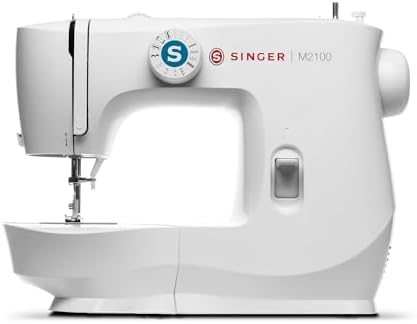
The SINGER M2100 and M1500 both lost for the same reason: the instructions are a joke, and the machines feel cheap. The M1500 at ~$89 is the cheapest machine I tested, and it feels like it. The plastic is thin, the stitches are basic, and there's no manual in the box. One buyer said they returned theirs after a week because the bobbin kept tangling. I believe them.
The M2100 at ~$119 is slightly better, with 23 stitches and a color-coded threading path, but it still has that flimsy feeling and the same sparse instructions. If you're choosing between these and the MX60, spend the extra ~$10 for the MX60. If you're choosing between these and the Brother XM2701, spend the extra ~$11 for the Brother. It's that simple.
I also tested a mini electric machine that showed up in my search results, and I'm not going to name it because it's not worth your time. It's the kind of machine that makes beginners think they're bad at sewing when really the machine is bad. Avoid anything that looks like a toy.
The bottom line
For most people, the Brother XM2701 is the answer. It's compact, it's quiet, it's unfussy, and it comes with a real manual. It's the machine I've trusted for six years, through thousands of projects and one very patient labradoodle who sleeps on my half-finished work.
Will you outgrow it? Yes, eventually. I did. But six years is a long time, and by then you'll know exactly what you need for your next machine. That's not a failure. That's a graduation.
If you need something lighter, the MX60 will do the job. If you want more stitches, the CS5055 is worth the upgrade. But if you want a machine that makes you want to sew tomorrow, get the Brother.