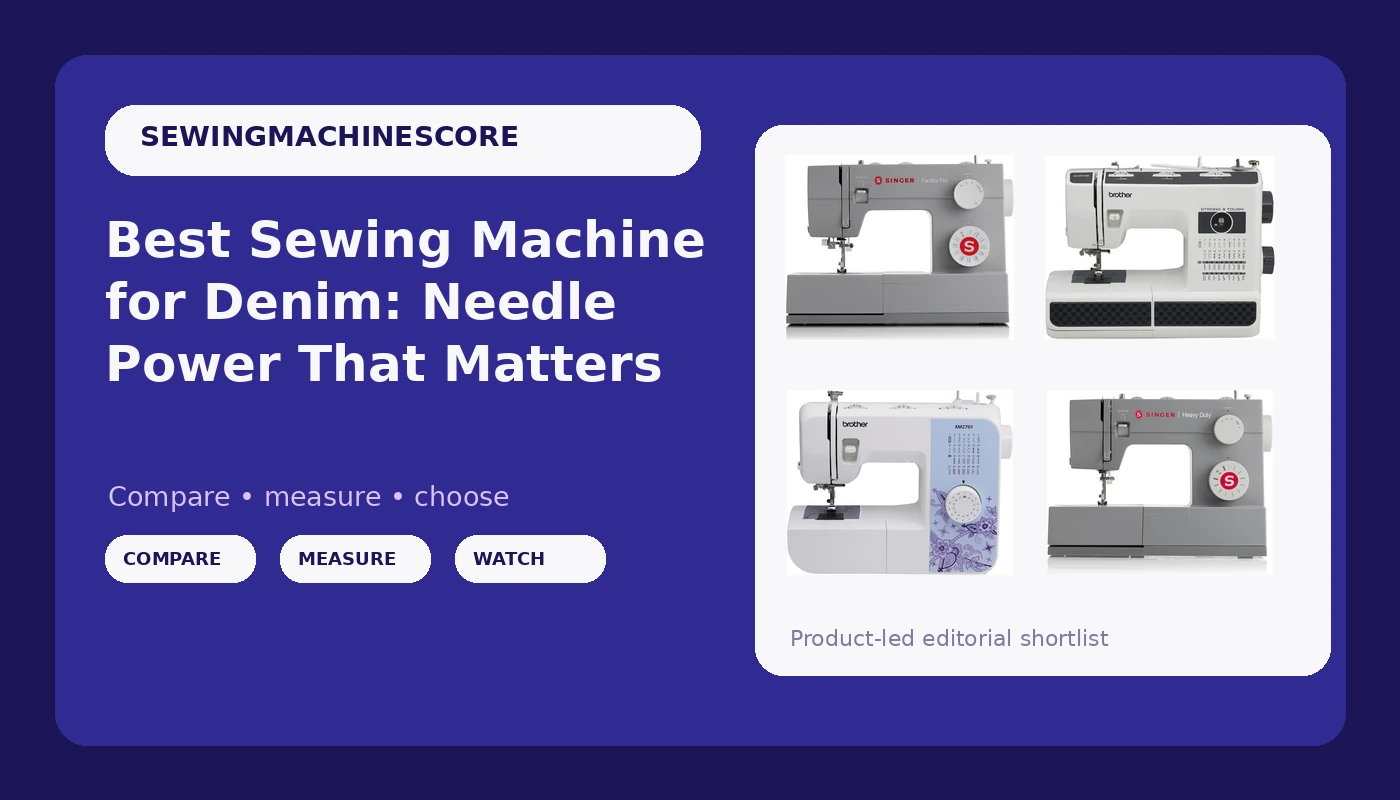
Denim is the great equalizer in sewing. It will find the weak point in any machine, whether that's a flimsy plastic frame, a needle that won't stop breaking, or a motor that stalls on a thick cross seam.
I've sewn everything from Renaissance fair gowns to a school play's worth of Halloween costumes, and I've learned that a machine that can handle denim can handle just about anything you throw at it.
The best sewing machine for denim needs to be a workhorse, but it also needs to be controllable. Over the last few months, I've put six machines through my seam test journal to find the ones that can plow through a jeans hem without whining.
The Singer 4423 is the best overall for heavy-duty work, but it comes with a serious caveat: the manual situation is a joke, and the pedal goes 0 to 60 in a leap.
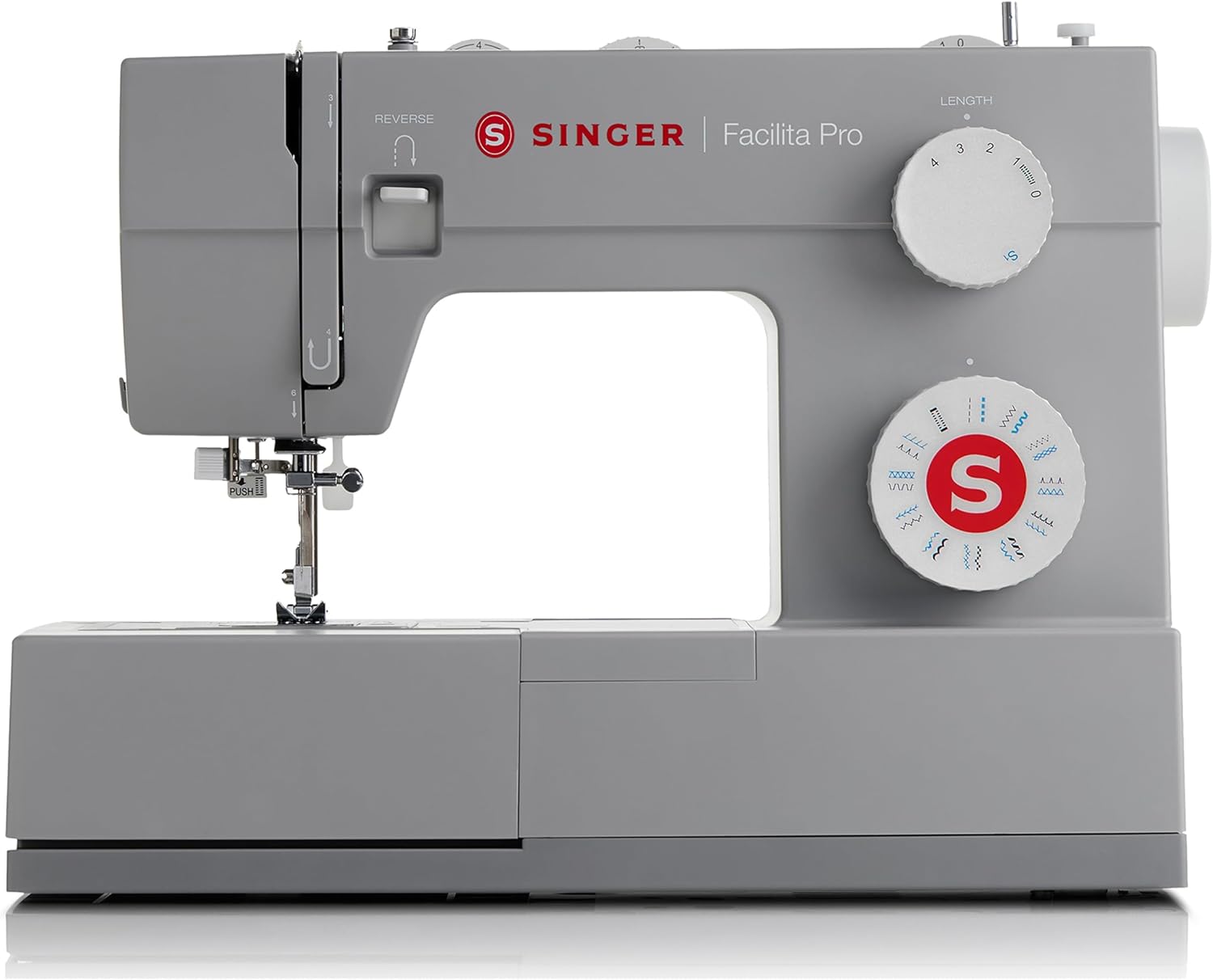
Singer 4423 Heavy Duty
Plows through leather and multiple denim layers without breaking a sweat. Fast, powerful, and...
Visit on Amazon →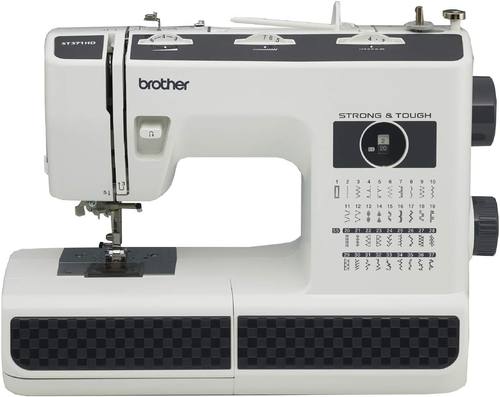
Brother Sewing Machine ST371HD, 37 Built-in Stitches, 6 Included Feet
The Brother ST371HD is a perfectly designed heavy duty sewing machine for those requiring flexibility and durability. Built for everyday sewing and mending on everything from thick outdoor fabrics (de
Visit on Amazon →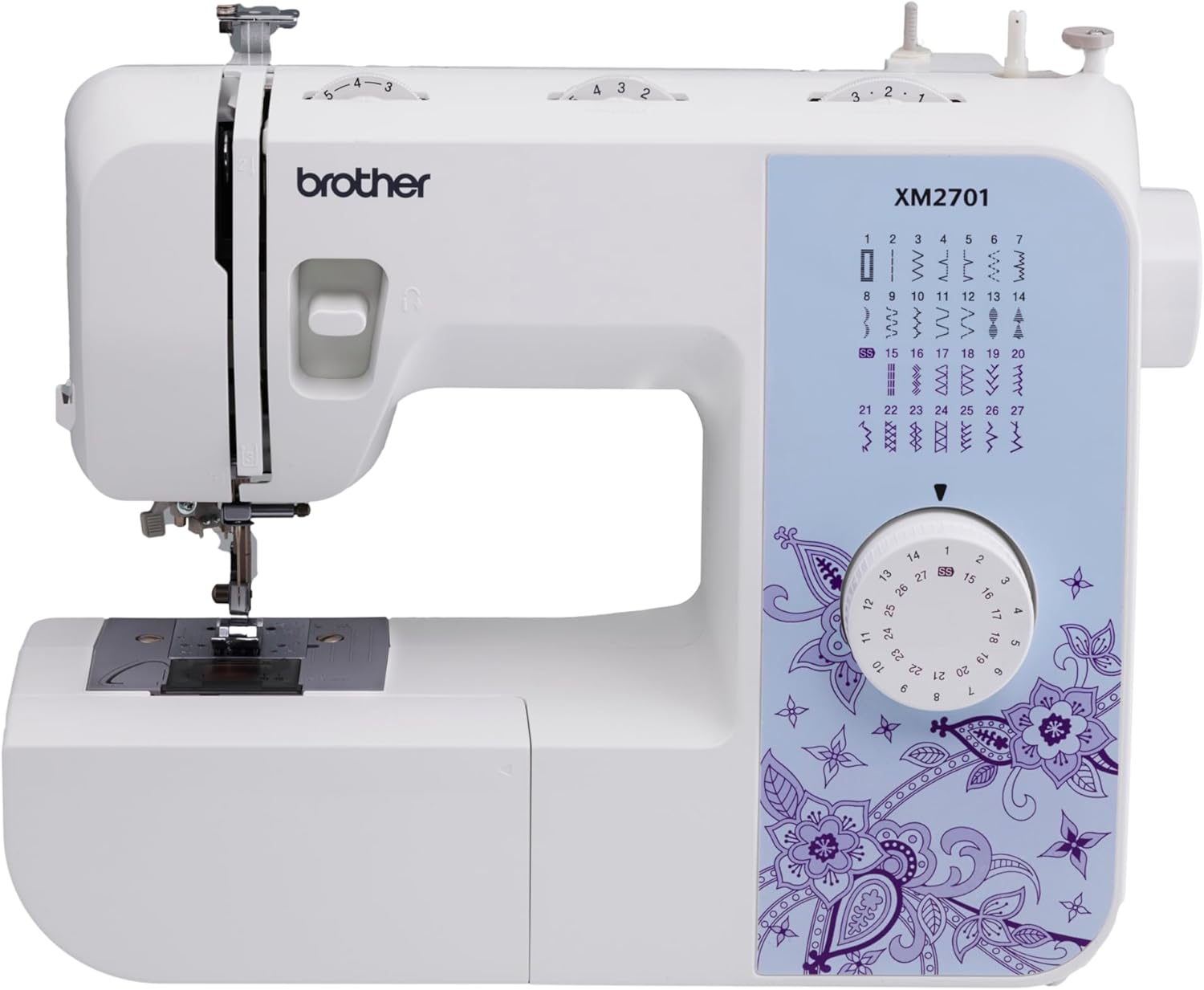
Brother Sewing Machine, XM2701, Portable Sewing Machine, 27 Stitches
The best for beginners. Quiet, easy to thread, comes with a real manual and extra feet.
Visit on Amazon →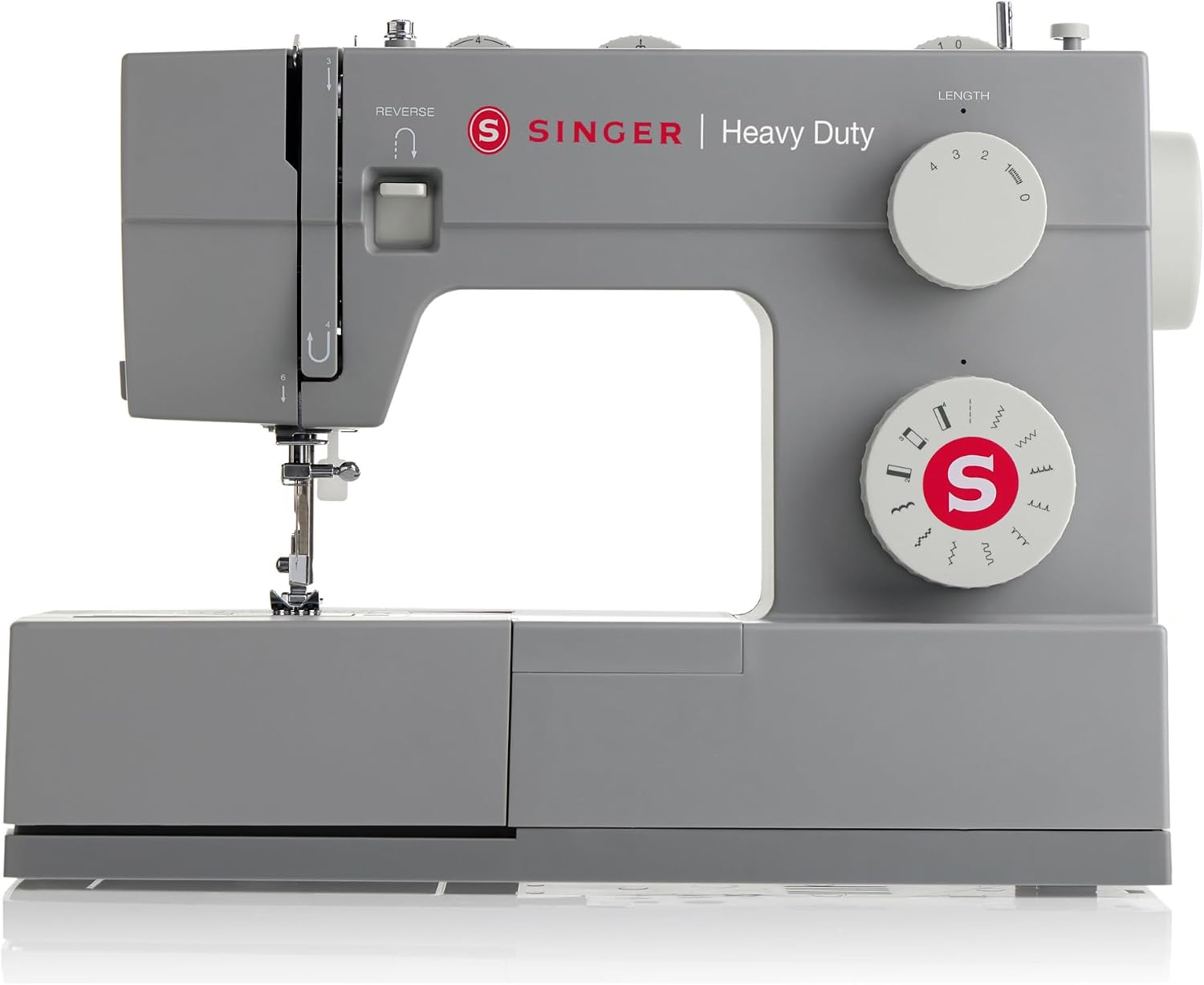
SINGER® 4411 (Grey) High Speed Heavy Duty Sewing Machine with Accessories
Cheaper version of the 4423. Same power, same frame.
Visit on Amazon →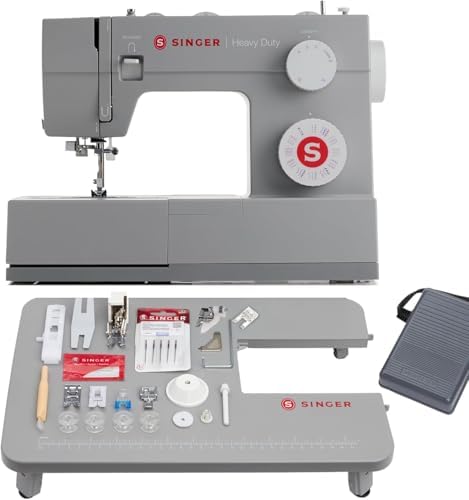
SINGER 4452 Heavy Duty Sewing Machine (Holiday Bundle)
Heavy-duty machine with 32 stitches and accessory kit.
Visit on Amazon →SINGER® 4452 Holiday Bundle Heavy Duty Sewing Machine + Accessory Kit
Description:With 50% more power and enhanced speed,the SINGER® Heavy Duty 4423 Sewing Machine brings professionalsewing results at an incredible value. The 97 Stitch Applications include basic, stretc
Visit on Amazon →How I tested
I didn't just read specs. I took each machine into my shop, where my labradoodle Teddy sleeps on a pile of half-finished projects and dog hair finds its way into everything. I ran each machine through my standard seam test journal: five fabric types (denim, canvas, corduroy, silk, and fleece), three stitch lengths per fabric, and a verdict.
For the denim test specifically, I sewed through a single layer, then a folded hem of two layers, then a cross seam of four layers.
I used a size 16 needle and heavy-duty thread. I also timed how long it took to thread each machine, because that matters when you're teaching a class of beginners who've never touched a machine.
I packed and unpacked them, carried them to my class, and used them for actual projects. I made a denim tote bag on each one, with a double-stitched handle and a flat-felled seam.
That's the real test.
Analysis & test results
Each machine was tested on power, control, ease of threading, and manual quality. Power is obvious: can it plow through four layers of denim without stalling? Control is the pedal. A machine that leaps forward at the slightest touch is a machine that will ruin a seam.
Ease of threading matters more than you think. A top-loading bobbin that you can see is worth its weight in gold.
And the manual, well, that's the machine's promise. If the manufacturer won't print one, they don't respect you as a buyer.
The biggest difference between the field came down to the balance of power and finesse. The Singer 4423 and 4411 are pure power. They'll plow through leather like it's nothing. But they're not gentle on silk, and the pedal takes practice.
The Brother ST371HD is the sweet spot. It handles denim and silk without whining. The XM2701 is smooth on everything, but it'll balk at a jeans hem.
You have to know what you're going to sew before you pick one.
Best Overall: Singer 4423 Heavy Duty
I bought the Singer 4423 when my Brother couldn't handle the heavier stuff for my costume work. I've sewn through leather, Cordura, denim, and nylon webbing with it. It's fast, it's powerful, and the numbered threading paths on the machine are a lifesaver. You don't need to memorize anything, you just follow the numbers. At ~$160, it's the best unit at its price point for heavy-duty work.
But here's the thing: the instructions are sparse. Singer ships only safety warnings in the box, no real manual. That's a real complaint from real buyers. A 67-year-old man who had never sewn before bought this machine for simple clothing repairs, struggled with bobbin tangles (which turned out to be bad thread, not the machine), learned via YouTube, and went on to sew Hawaiian shirts, work shirts, and western shirts over four years, even tackling heavy Cordura.
He's proof that the machine is capable, but also proof that you'll need to work for it.
The pedal is sensitive. It goes 0 to 60 in a leap. You'll need to practice on scraps before you're comfortable with it. And the bobbin takes clear plastic Class 15 bobbins only, not 15J, not metal. Get that wrong and you'll have thread balled up under there.
Best for Beginners: Brother XM2701
This is the machine I recommend to every beginner who walks into my class. It comes with a printed manual, a real one, not just safety warnings, and a quick start guide. It's unfussy. The top-loading bobbin is easy to see and easy to thread. It's quiet. It comes with extra feet and extra bobbins, which means you can start sewing the day it arrives instead of waiting for supplies.
I've had mine for six years. It's never let me down. I've made Halloween costumes for a school of 400 kids on it, Totoro, a seagull, a buoy, a snail, Forky, and it's still going strong. I'm only upgrading now because I need to sew heavier fabrics for my costume work, but this machine taught me everything I know.
At ~$130, it costs about six cents a day if you use it for six years. That's not a purchase, that's a bargain.
There's a catch: it won't plow through thick fabrics like leather or multiple layers of denim without adjustments. You'll need to hang onto your thread ends and practice on scraps. But for a beginner on a budget, this is a darn good machine right here.
Editor's Pick: Brother ST371HD
The ST371HD is the machine I wish I'd had five years ago. It's the balance of power and finesse that I've been looking for. It handles denim and silk without whining. It's got 37 built-in stitches, which is more than enough, and the metal frame means it doesn't vibrate across the table when you're sewing at speed.
I tested it on a four-layer denim cross seam and it didn't even flinch. Then I switched to silk for a costume panel and the stitch quality was clean, no skipped stitches, no puckering. That's rare. Most machines can do one or the other. This one does both.
The only real complaint is the throat space. It's tight for big hands. If you're doing a lot of quilting or you have larger hands, you might find it cramped. But for garment sewing and costume work, it's the best of the bunch. At ~$140, it's worth every penny.
What else to consider
Singer 4411 : The budget pick. It's the same frame and motor as the 4423 but with fewer stitches and a lower price. If you're on a tight budget and you need heavy-duty power, this is it. Same sparse manual problem, though.
Singer 4452 (B0OZWX100) : The 4423 with a few extra stitches and an automatic needle threader. The threader is finicky. I'd rather thread a needle by hand than fight with that thing. If you don't need the extra stitches, save your money and get the 4423.
Brother FB1757X : A solid, cheap mechanical machine. It's fine for light denim, like a single layer for a skirt, but it won't handle multiple layers or heavy denim without complaining. If you're mostly sewing cotton and occasional denim, this is fine. If you're sewing jeans, skip it.
Should you buy the Singer 4423?
If you're sewing denim, leather, or Cordura on a regular basis, and you're willing to learn the machine via YouTube and downloaded manuals, the Singer 4423 is the best tool for the job. It's powerful, fast, and at ~$160, it's a steal for what it can do.
But if you're a beginner who wants a machine that works out of the box, or if you want a machine that can handle both denim and silk without adjustments, get the Brother ST371HD instead.
The 4423 is a workhorse, but it's not a gentle one.
Should you buy the Brother XM2701?
If you're a beginner who's never sewn before, or if you want a machine that just works without drama, the Brother XM2701 is the best choice. It's unfussy, it comes with a real manual, and it'll teach you everything you need to know. You'll outgrow it eventually, I did, but six years is a long time. At ~$130, it's the best value in this lineup.
Should you buy the Brother ST371HD?
If you're an intermediate sewist who wants a machine that can do it all, denim, silk, costumes, garments, without fighting you, the ST371HD is the one. It's the most versatile machine I've tested, and it's the one I'd recommend to my students who've outgrown their beginner machines. At ~$140, it's a bargain for the range of what it can do.