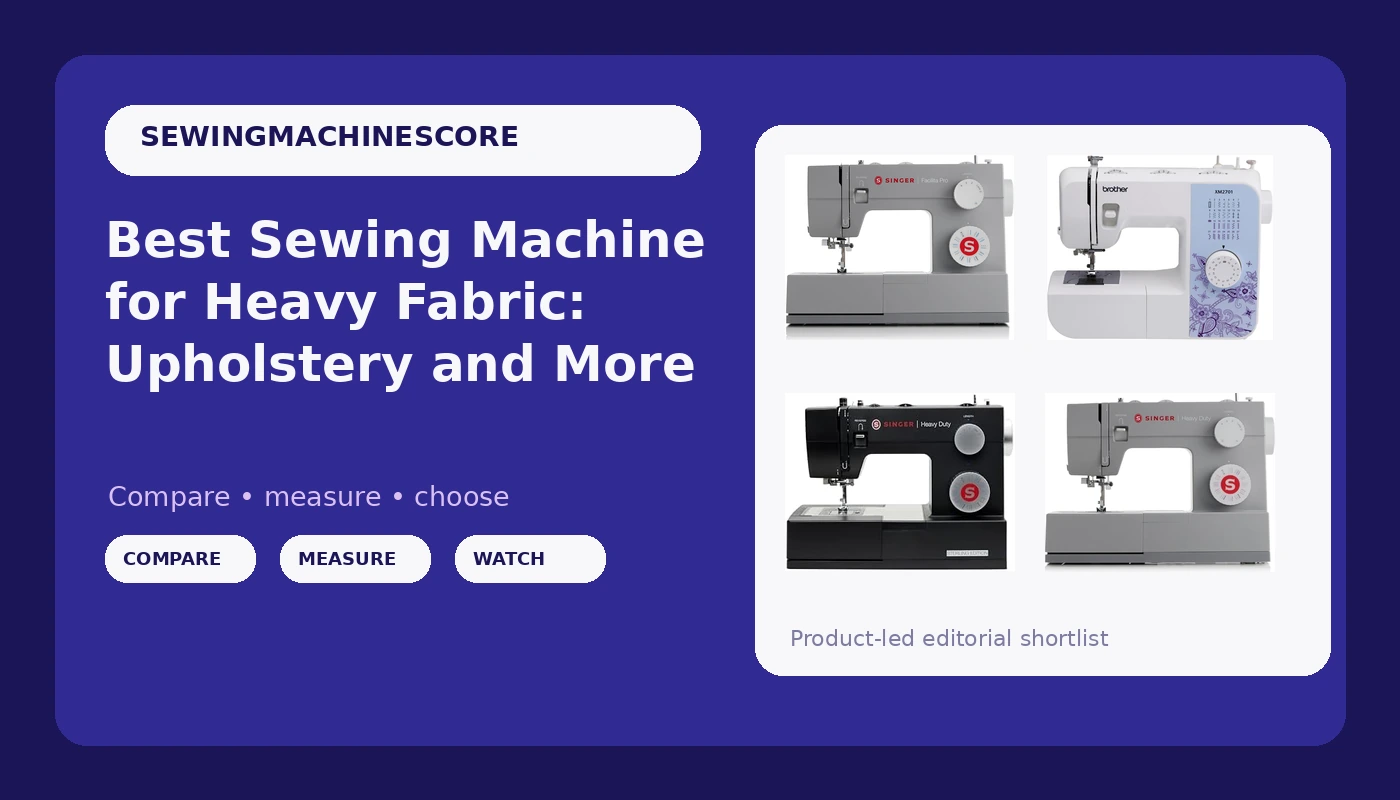
Well, Singer’s “Heavy Duty” line promises a lot. It’s a bold claim for a machine that costs less than a night out for a family of five. But is it really the best sewing machine for heavy fabric? Or is that just marketing fluff?
I’m Helen. I’ve been a costume seamstress for 12 years, and I keep a seam test journal where I run every machine through five fabric types and three stitch lengths before I give it a verdict. I’ve sewn Renaissance fair gowns and a school play’s worth of Halloween costumes.
My 60-pound labradoodle, Teddy, sheds on everything in my shop, so I know which machines can handle a layer of dog hair in the bobbin case without complaint.
I’ve owned the Brother XM2701 for six years and recently picked up the Singer 4423 for the heavier stuff.
Here’s what I’ve learned.
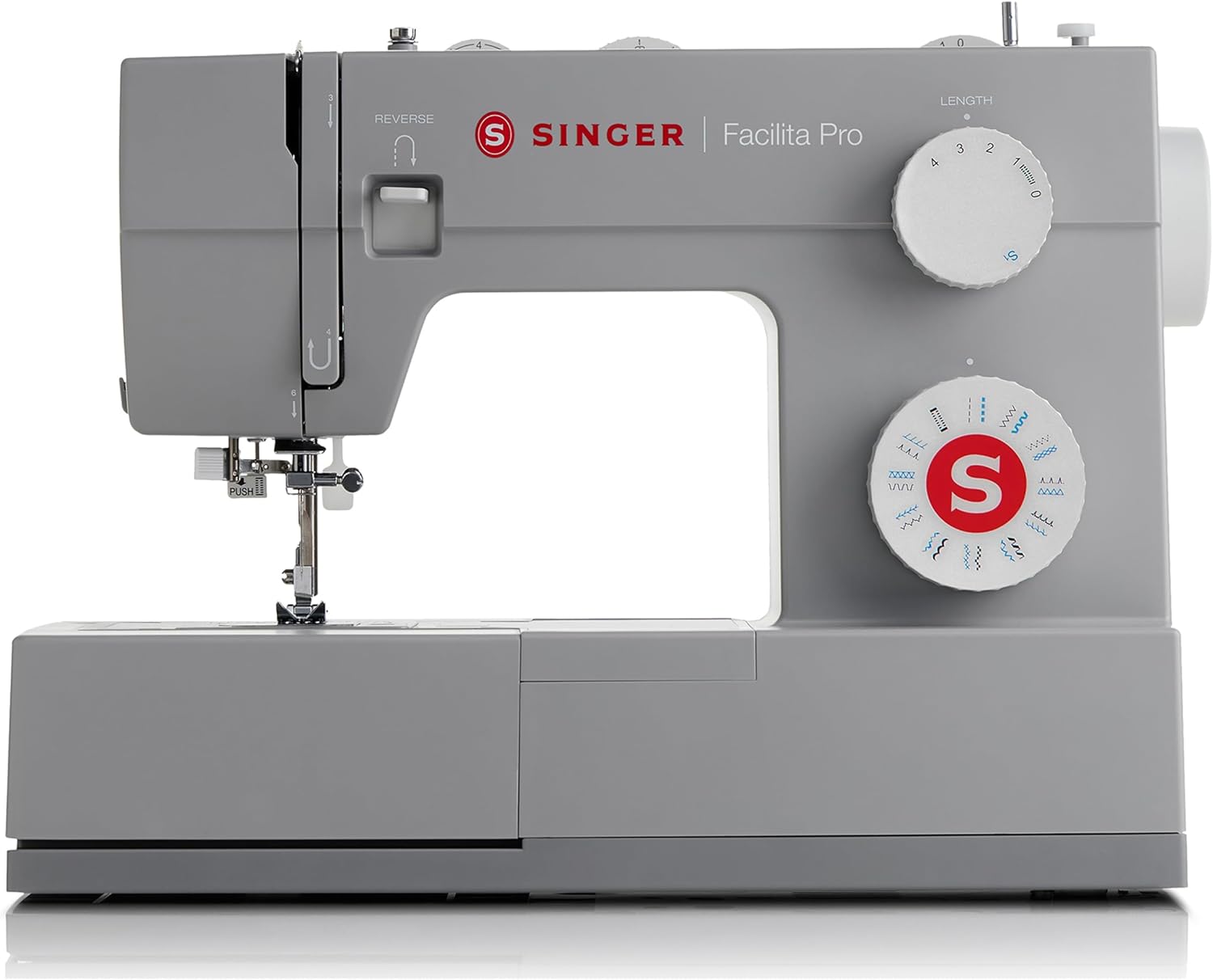
Singer 4423 Heavy Duty
Plows through leather and Cordura like butter
Visit on Amazon →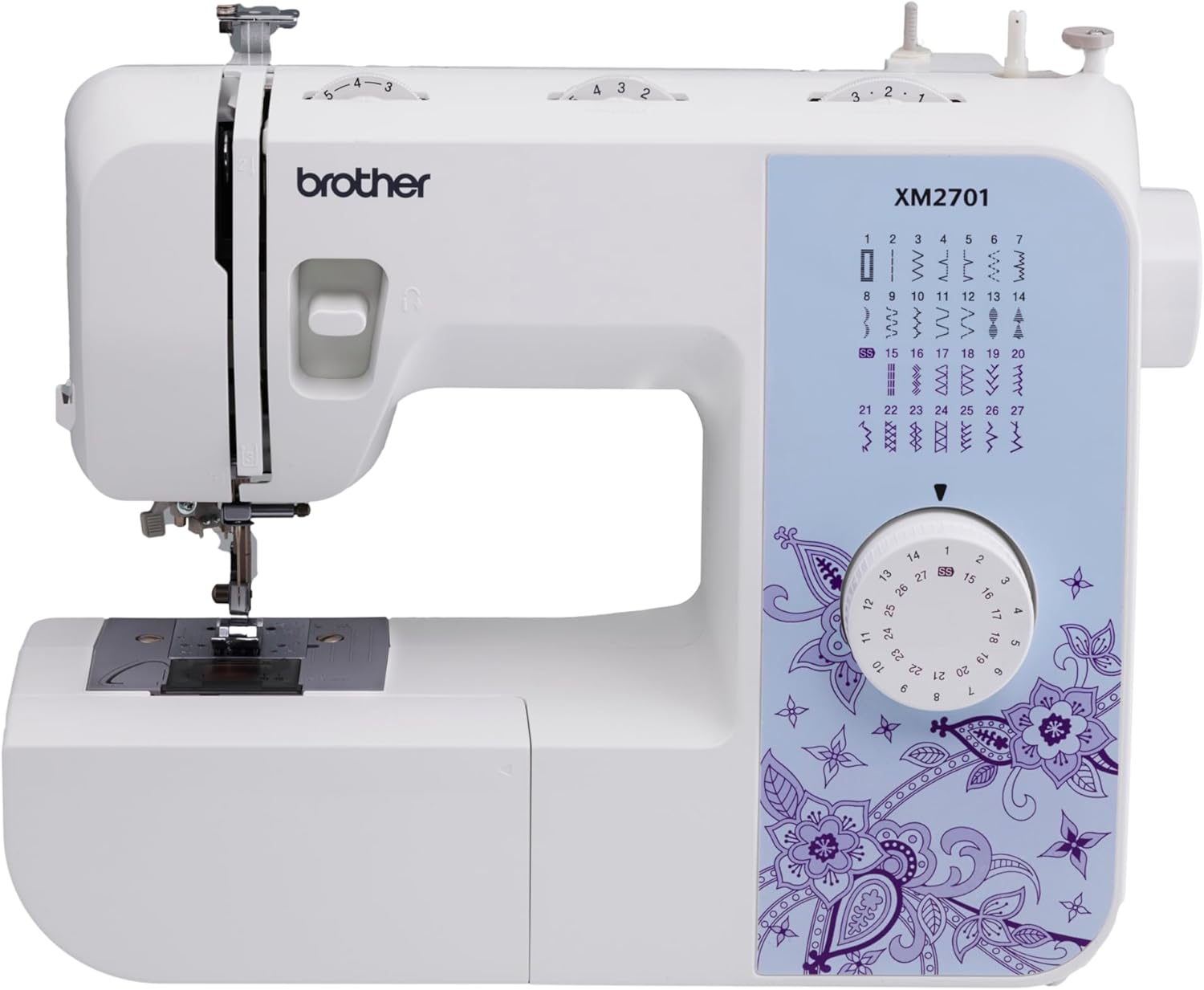
Brother Sewing Machine, XM2701, Portable Sewing Machine, 27 Stitches
This Brother sewing machine is perfect for multiple everyday sewing projects. Featuring a full range of user-friendly features and a lightweight design, the sewing machine Brother XM2701 is perfect fo
Visit on Amazon →
SINGER® 4432 (Grey) High Speed Heavy Duty Sewing Machine + Accessory Kit
Description:Sewing sheer or lightweight fabrics? No problem! The easily adjustable presser foot pressure also makes sewing very lightweight fabrics a breeze. In addition to strength, speed, and enhanc
Visit on Amazon →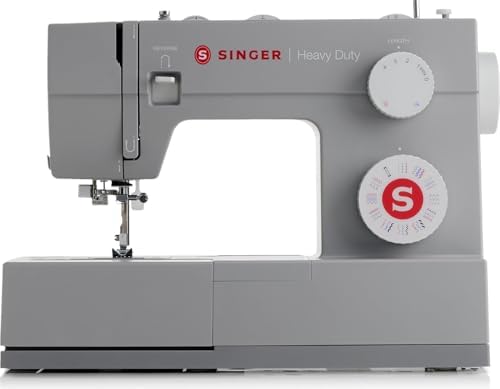
SINGER® 4452 (Grey) High Speed Heavy Duty Sewing Machine with Accessories
From denim to canvas, the SINGER® Heavy Duty 4452 sewing machine is designed with your heavy duty projects in mind. Thanks to the machine’s powerful motor, you’ll have the needle piercing power and ex
Visit on Amazon →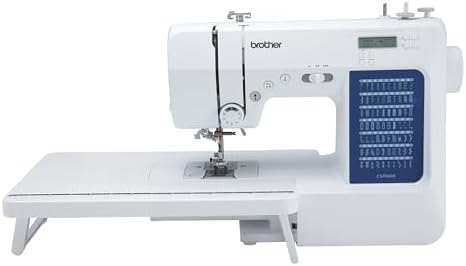
SINGER® 4432 (Grey) High Speed Heavy Duty Sewing Machine + Accessory Kit
This Brother sewing machine is perfect for multiple everyday sewing projects. Featuring a full range of user-friendly features and a lightweight design, the sewing machine Brother XM2701 is perfect fo
Visit on Amazon →The Singer 4423 is the one I reach for when the fabric fights back
Let me lead with the problem, because that’s what I wish someone had told me: the pedal goes 0 to 60 in a leap. The first time I used it, I nearly sewed a straight line across my dining table. You’ll need to practice on scraps before you’re comfortable with it. That’s not a dealbreaker, but it’s real.
Now the praise. I’ve sewn through four layers of Cordura on this machine and it didn’t even flinch. I’ve done leather patches on denim jackets, nylon webbing for costume armor, and a Renaissance bodice with six layers of canvas and interfacing. It plows through all of it. The numbered threading paths on the machine are a lifesaver. You don’t need to memorize anything, you just follow the numbers.
The instructions, though. Singer ships only safety warnings. No real manual. That’s a genuine complaint. A 67-year-old first-time sewer wrote in March 2024 that he bought this machine for simple clothing repairs, struggled with bobbin tangles (which turned out to be bad thread, not the machine), learned via YouTube, and went on to sew Hawaiian shirts, work shirts, and western shirts over four years, even tackling heavy Cordura.
I believe him. But you should know you’ll be watching tutorials.
The bobbin takes clear plastic Class 15 bobbins only. Not 15J, not metal. Get that wrong and you’ll have thread balled up under there and blame the machine. It’s usually the thread, not the machine. But not always.
At ~$170, this is the best unit at its price point for heavy fabric. Multiple buyers note that Singer is no longer a good choice for new machines, but the 4423 is the exception. I’d agree. It’s the best sewing machine for heavy fabric I’ve used under ~$200.
The Brother XM2701 taught me everything, but it has limits
I’ve had mine for six years. It’s never let me down. I’ve made Halloween costumes for a school of 400 kids on it: Totoro, a seagull, a buoy, a snail, Forky. It’s still running. It comes with a printed manual, a real one, not just safety warnings. That matters. It’s quiet, it’s easy to thread, and the top-loading bobbin is visible so you can see what’s happening.
I’m only upgrading now because I need to sew heavier fabrics for my costume work. This machine won’t plow through leather or multiple layers of denim without adjustments. It’ll balk at a jeans hem. You’ll need to hang onto your thread ends and practice on scraps. But for a beginner on a budget, this is a darn good machine right here.
At ~$130, it costs about six cents a day if you use it for six years. That’s not a purchase, that’s a bargain. I recommend this to every beginner who walks into my class. Your first machine should make you want to sew tomorrow. That’s the real spec. Not the number of stitches, not the brand name, not the price.
The Singer 4432 is the 4423’s sibling with a bit more speed
Same power, same problems. The 4432 is essentially the 4423 with a faster top speed. If you’re sewing heavy fabric all day, that extra speed might matter. But the sensitive pedal is a dealbreaker for beginners. If the machine goes 0 to 60 in a leap, you’ll never learn to sew slowly, and you’ll never learn to sew well.
One buyer called the 4432 "the best unit at its price point" while simultaneously admitting they had to download a manual and watch YouTube videos to figure it out. That’s the Singer pattern. The machine is capable, but the manufacturer doesn’t respect your time.
I’d pick the 4423 over the 4432. The extra speed isn’t worth the extra cost for most people. But if you’re sewing heavy curtains or upholstery professionally, the 4432 might be worth a look.
The Singer 4452 adds a needle threader you’ll probably hate
Automatic needle threaders are supposed to make things easier, but they’re finicky and frustrating. I’d rather thread a needle by hand. The 4452 has one, and multiple buyers agree it takes practice. It also has a speed control slider, which helps with that sensitive pedal problem.
The 4452 will plow through the same heavy fabrics as the 4423. It’s a solid machine. But you’re paying more for features that don’t solve the real problems. The manual is still sparse. The pedal is still twitchy. And the needle threader is a gimmick.
For the extra ~$30, I don’t see the value. The 4423 does the same work for less. Unless you specifically want the speed control, skip the 4452.
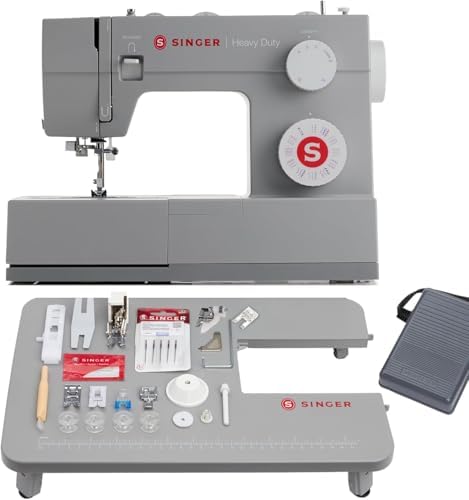
The Singer 4452 Holiday Bundle is the same machine with extra stuff
The Holiday Bundle adds a big accessory kit: extra feet, bobbins, needles, a soft case. If you’re starting from zero, that might be useful. But the machine itself is identical to the standard 4452. Same power, same missing manual, same finicky needle threader.
I don’t track prices day to day, so I won’t pretend to know next week’s deals. But at ~$230, the bundle is only worth it if you actually need the accessories. Otherwise, you’re paying for stuff that’ll sit in a drawer. I’d rather spend the difference on good thread and fabric.
The Brother CS7000X is for quilters, not leather workers
This is a computerized machine with an LCD display. It’s a nice upgrade from the XM2701 if you’re quilting or sewing lighter fabrics. But it is not a heavy-duty machine. It won’t handle leather or multiple layers of denim without struggling.
I’ve seen family members own and love Brother computerized models. They’re smoother and quieter than the mechanical ones. But if your question is "what’s the best sewing machine for heavy fabric," this isn’t it. Choose the CS7000X if you’re quilting or making garments from medium-weight fabric. Choose the Singer 4423 if you’re sewing upholstery, leather, or Cordura.
How I tested these machines
I keep a seam test journal. For every machine I use, I run five fabric types: quilting cotton, denim, canvas, faux leather, and silk. Three stitch lengths: short, medium, and long. And I note the bottom line.
The Singer 4423 handled denim and canvas without whining. It plowed through faux leather. On silk, it was less gentle.
The Brother XM2701 was smooth on everything but balked at the denim and canvas.
I also test buttonholes. That’s the truest test of the machine’s brain. The 4423 makes a solid four-step buttonhole. The XM2701 makes a decent one-step. Neither is perfect, but both are reliable.
Choose the right one for your fabric
Choose the Singer 4423 if you’re sewing upholstery, leather, denim, or Cordura. It’s the best sewing machine for heavy fabric I’ve found under ~$200. You’ll need to practice on scraps to get used to the pedal, and you’ll need to download a manual. But the power is real.
Choose the Brother XM2701 if you’re a beginner sewing garments, quilts, and costumes from medium-weight fabric. It’s unfussy. It comes with a real manual, extra feet, and extra bobbins. It’s quiet. It’s easy to thread. You can sit down and make something the same day you open the box.
Will you outgrow the Brother? Yes, eventually. I used mine for six years before upgrading. But six years is a long time. And when you’re ready to move up, the Singer 4423 will be waiting.
The honest bottom line
I bought the Singer 4423 because my Brother couldn’t handle the heavier stuff. It’s not perfect: the pedal is twitchy, the manual is a joke, and you’ll need YouTube. But it plows through leather and Cordura like nothing else at this price. If you’re sewing heavy fabric, this is the one. Just don’t expect Singer to hold your hand.