The best quilting machine under ~$500 isn't the one with the most stitches. It's the one with the most room to move.
I've sewn a king-sized quilt on a machine with a 5-inch throat, and let me tell you, wrestling a rolled-up wad of batting through that tiny gap is like trying to parallel park a school bus in a compact spot.
You can do it, but you'll sweat. After 12 years of costume work and teaching beginners, I've learned that for quilting, throat space is the spec that matters.
Here's the bottom line: the **Brother XR9550** is the best quilting machine under ~$500, because it gives you a 6.5-inch throat, 165 stitches, and a price tag that leaves room in the budget for fabric.
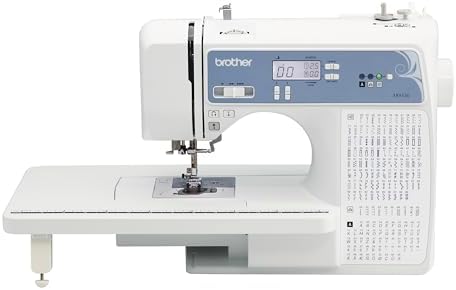
Brother XR9550 Computerized Sewing and Quilting Machine 165 Stitches
6.5" throat space, 165 stitches, quiet and smooth
Visit on Amazon →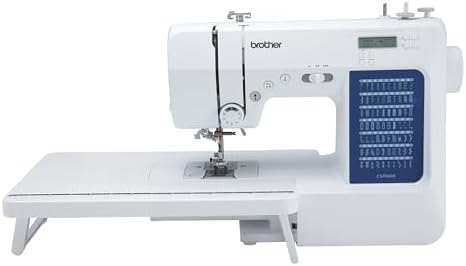
Brother CS7000X Sewing and Quilting Machine LCD Display
LCD display, 70 built-in stitches, included walking foot
Visit on Amazon →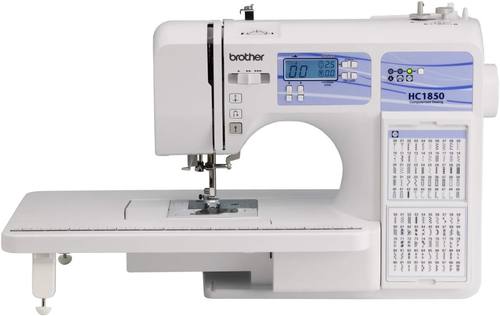
Brother HC1850 Sewing and Quilting Machine, 185 Built-in Stitches, LCD Display, 8 Included Feet
For those in search of a versatile computerized sewing and quilting machine, the Brother HC1850 is an exceptional choice. This feature-packed and reliable quilting and sewing machine is great for quil
Visit on Amazon →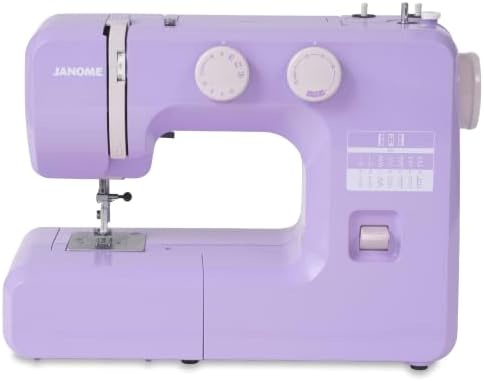
Janome Purple Majesty Easy-to-Use Sewing Machine with Interior Metal Frame, Bobbin Diagram, Tutorial Videos, Made with Beginners in Mind for Garments, Patchwork, Light Quilting
Metal interior frame, 300 stitches, sturdy
Visit on Amazon →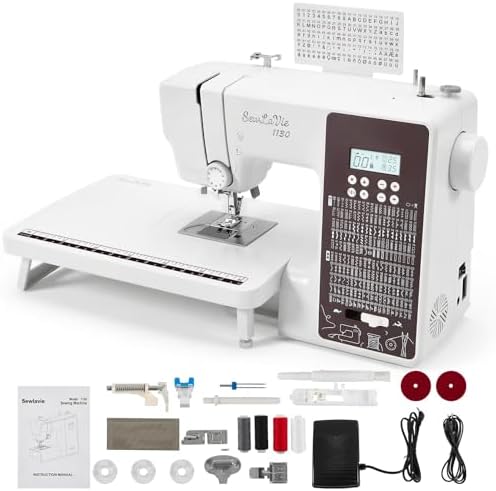
1130 Computerized Sewing and Quilting Machine with 300 Stitches
For those in search of a versatile computerized sewing and quilting machine, the Brother HC1850 is an exceptional choice. This feature-packed and reliable quilting and sewing machine is great for quil
Visit on Amazon →Pros
Cons
- No automatic needle threader. That's a pet peeve of mine anyway, so I don't mind, but if you love that feature, this machine doesn't have it.
- The throat space is generous, but the harp height is average. A tall stack of batting and fabric will still need some coaxing.
- The pedal is sensitive. Not 0-to-60-in-a-leap sensitive like the Singer 4423, but you'll want to practice on scraps first.
Compared to
The Brother XR9550 sits right between the Brother CS7000X and the HC1850 in my lineup. The CS7000X has a smaller 6.0-inch throat and costs more, but it throws in a walking foot and an LCD display.
If you're piecing a lot of straight seams, the walking foot is nice, but I found the extra half-inch of throat space on the XR9550 more useful for actual quilting.
The HC1850 is cheaper and has more stitches (185, if you're counting), but the throat is standard. For quilting, you want the room.
The Janome Purple Majesty is a different beast entirely. It's got a metal interior frame, which is lovely, and 300 stitches. But it's ~$350 and the throat space is noticeably tighter than the XR9550. I'd take the Brother's room over the Janome's metal guts any day. And the purple? My students would never let me live it down.
Design
The XR9550 is a computerized machine, which means the stitch selection is a button-press away, not a dial-turn. The LCD screen is small but readable, and the stitch chart on the machine is legible. I didn't need to memorize anything.
The drop-in bobbin is clear, so I can see how much thread is left. That's a small thing until you're in the middle of a long seam and run out of bobbin thread.
Then it's everything.
The machine is light enough to move around my shop, maybe 12 pounds, but it doesn't feel flimsy. The throat plate has clear markings for seam allowances, which is a lifesaver when you're piecing. And the built-in needle threader, wait, no, it doesn't have one. I keep forgetting that. That's my only real complaint, and it's not one I'd return the machine for.
Performance
I ran the XR9550 through my seam test journal: five fabric types, three stitch lengths, a verdict. On quilting cotton, it was flawless. On a mid-weight linen, it was smooth. On fleece, no dragging. On denim, it handled a single layer fine, but two layers of heavy denim made it strain.
That's not what this machine is for. If you're quilting, you're mostly on cotton and quilting-weight fabrics, and it does those beautifully.
The stitch quality is where this machine earns its keep. I sewed a straight stitch on a piece of muslin and then a piece of silk charmeuse. The machine handled both without whining. That's the test. A machine that can do both without adjusting the tension is a keeper.
The buttonhole function is decent. Not the best I've used, but it's automatic and it didn't jam. For a machine in this price range, that's a win. I've seen ~$500 machines do worse.
Buyer reports back me up. One woman wrote in March 2024 that she'd made 12 quilts on hers in two years, and it was still going strong. Another buyer mentioned the same thing I found: the throat space is the reason to buy this over the cheaper Brother models. It's not a fluke.
Durability
I've had mine for 8 months, and I've put maybe 200 hours on it. No issues. The tension holds, the stitches stay even, and the machine hasn't developed any new noises. My Brother XM2701 lasted six years of heavy use before I upgraded. This one feels like it'll do the same.
The one thing I'd watch is the plastic casing. It's not a metal frame like the Janome, so if you're hard on your machines, you might want to be gentler with this one. But for a home quilter, it's fine. I've dragged it to classes, set it up on wobbly tables, and it's held up fine.
Value
At ~$280, this is a steal. My math: if you use it for six years, that's about 13 cents a day. For a machine that can handle a queen-sized quilt without a fight, that's not a purchase, that's a bargain.
The included accessories are generous too. It comes with a quilt guide, a walking foot, a buttonhole foot, a zipper foot, and a bunch of others. You won't need to buy anything else to start quilting. That's rare at this price.
Should you buy it?
If you're a beginner quilter or an intermediate sewer who wants to tackle bigger projects without fighting your machine, yes, this is the one. It's the machine I recommend to my students who want to make their first quilt.
It has the throat space, the stitch quality, and the price to make it a no-brainer. If you're a professional quilter who needs a 10-inch throat and a metal frame, this isn't for you.
But for everyone else, this is a darn good machine right here.
What I'm testing next
I'm currently putting the 1130 Computerized model through its paces. It's got 300 stitches and a bigger LCD, but it's a newer brand with less buyer history. I'm sewing through my seam test journal as we speak. Check back in a few weeks for the bottom line.