I have sewn costumes for twelve years, taught beginner classes for six of them, and kept a seam test journal for most of that time. So when four products keep landing in the same search results and get treated as interchangeable, I pay attention. This sewing machine comparison puts the Janome HD-5000 Black Edition next to the Janome Toile Romance from the Bridgerton collection, the CraftBud Mini, and a cone thread stand that is not a machine at all but solves a problem that shows up on two of the three.
These are not the same tool wearing different paint. One is a garment workhorse. One is a light home machine with a licensed print. One is a beginner and kid machine that fits in a tote. One is an accessory that changes how your thread feeds into whatever machine you already own. Comparing them head to head is useful only if you compare them by the job you actually need done.
Related: How to Choose a First Sewing Machine for Garment Sewing
If you sew garments and you want one machine that grows with you, the Janome HD-5000 Black Edition is the pick in this group, because a heavy-duty frame is the only upgrade that pays you back on every single seam. If your budget, your space, or your student says otherwise, the Janome Toile Romance is a smarter 15-stitch compromise than a mini machine, and the CraftBud Mini is a first machine for a kid or a travel kit, not a primary machine.
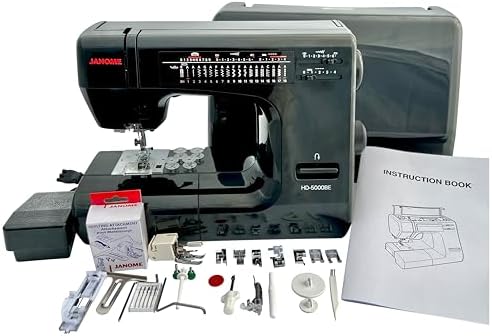
Janome HD-5000 Black Edition Heavy-Duty Sewing Machine
Heavy-duty build aimed at layered garment work, the one here I would put on a paid costume
Heaviest and least portable of the three machines, and it wants a permanent table
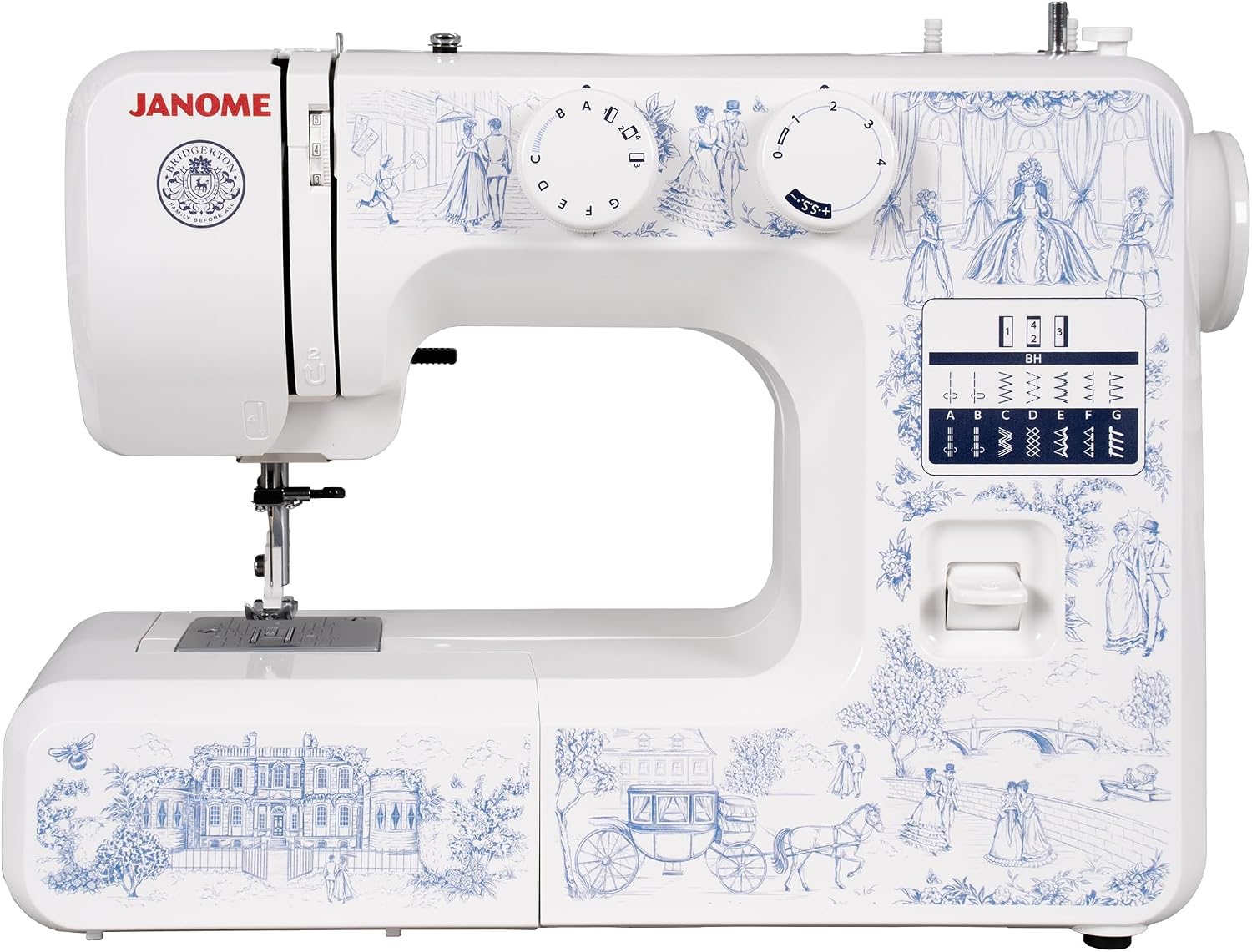
Janome Toile Romance Easy-to-Use 15-Stitch Sewing Machine Officially Licensed Bridgerton Collection
15 stitches cover the garment basics, easy-to-use layout, licensed Bridgerton finish
Light-duty frame, not the machine you reach for on canvas or thick layers
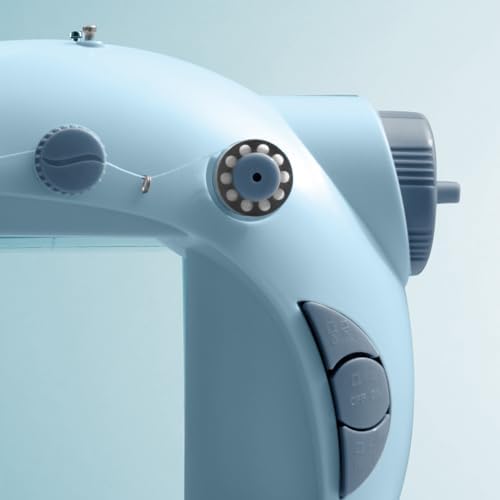
CraftBud Mini Sewing Machine for Beginners, Adults and Kids Sewing Machine
Small, simple, the one to hand a kid or pack for a class
Tiny throat space, limited fabric weight, not a primary machine
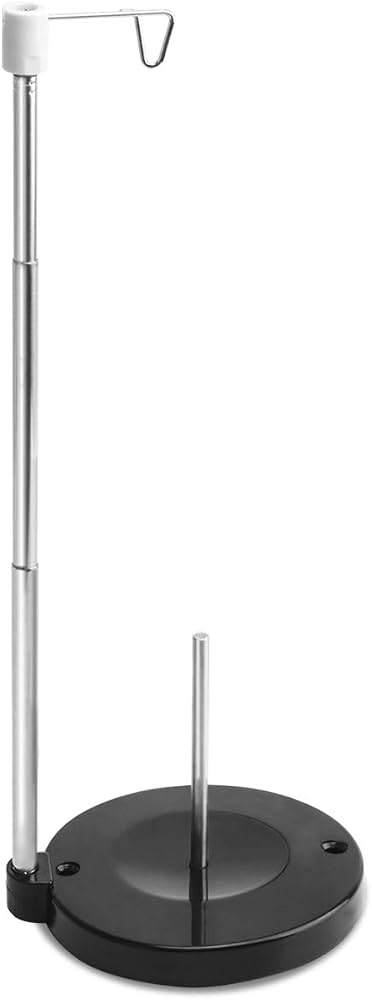
Sew Tech Adjustable Cone Thread Stand Spool Holder for Sewing Machine Embroidery Quilting Serger Machines, Single Thread Stand for Smoother Feed, Large Spool Holder with Steady Heavy Plastic Base
Fixes cone and large spool feeding, adjustable height, steady base
It is an accessory, not a machine, and it holds one cone at a time
Prices and availability were captured from Amazon Creators API and may change.
What I check before I recommend any machine
Four questions, every time. I hand this list to students in my beginner classes too, because it works whether you are standing in a store or working inside a return window.
First, the straight stitch. Run it on five fabric types: denim, quilting cotton, a slippery lining, a knit, and something canvas-weight. The straight stitch is the whole game. Every other feature is convenience stacked on top of that foundation. A machine that handles denim and silk without whining is a machine with a real frame and real feed dogs behind it.
Second, the tension dial. The dial is the part everyone touches and nobody understands, and balanced tension is the entire craft. When you turn the dial, something should change, and it should change predictably. If the dial does nothing until it does everything, you will fight that machine for as long as you own it.
Third, the buttonhole. A machine's buttonholes tell you more than its stitch count ever will. A clean, consistent buttonhole means the feed and the timing are working together.
Fourth, and this is the one that decides it: would I trust this machine on a paid costume? If the answer is no, it is a hobby machine, and that is fine, as long as you know it going in.
One more thing I check on every machine: the bobbin area. Bobbin issues sit behind half the "my machine is broken" posts I read, and easy bobbin access is worth more than three decorative stitches you will never use.
The heavy-duty pick: Janome HD-5000 Black Edition
The word "heavy duty" gets stamped on plastic-bodied machines constantly, and that is one of my standing pet peeves. So when a machine carries that label, my first question is what the frame is actually doing, not what the sticker says.
Here is what I will say about the HD-5000 Black Edition in the context of this group. It is the machine built for the work I actually do: layers. Costume work is layer management. A bodice with interfacing, lining, and boning channels is four layers before you add a zipper. Denim hems are a wall. Canvas bags and corset panels are a wall. The machine that survives that is the machine with a stable frame, strong feed, and a motor that does not stall and scream.
Janome is my pick for mid-range garment sewing generally, and the reason is boring and important: the stitch quality is consistent and the tension dials actually do something. That consistency is what you are paying for at this level, not a longer stitch menu.
Trade-offs, honestly. This is the heaviest and least portable of the three machines here. It wants a dedicated spot. It is not the machine you carry to a class or set up on the kitchen counter and put away every night. And if you only ever sew quilting cotton and repair hems, you are buying capability you will not use. That is not a flaw in the machine, it is a mismatch in the buyer.
Where it earns its place: garment construction, layered work, and anything you would be embarrassed to frog twice.
The 15-stitch compromise: Janome Toile Romance
Fifteen stitches. Let me say the unpopular thing first: stitch count marketing is mostly noise. A 100-stitch machine uses about 10 of those stitches, and half of the ten are variations nobody can tell apart on a finished garment.
What 15 stitches actually gets you, if the machine is built sensibly: a straight stitch, a zigzag, a stretch or knit stitch, a blind hem, a couple of overcasting options, and at least one buttonhole. That is a garment sewing kit. That is genuinely enough to make a dress, hem a pair of pants, and finish a seam so it does not fray into dust in the wash.
The Toile Romance is described as easy to use, and it carries the officially licensed Bridgerton collection finish. That finish is doing real work for a certain buyer, and I am not going to pretend otherwise. If a machine you love looking at is the machine you sit down at, that is not vanity, that is a use case. The machine that makes you want to sew tomorrow is the real spec.
What I would check on it: the buttonhole, and the straight stitch on a mid-weight fabric. Those two things tell you whether the machine has a brain or just a motor.
Trade-offs. It is a light-duty home machine. Light-duty is not an insult, it is a description. It will handle quilting cotton, most knits, and everyday mending happily. It is not the machine you feed canvas, multiple layers of denim, or heavy home decor fabric, and if you try, you will hear about it. Buy it for the fabric you actually sew, not the fabric you imagine sewing.
The beginner and kid machine: CraftBud Mini
The CraftBud Mini is sold as a sewing machine for beginners, adults, and kids, and that framing is accurate to what it is. This is a small, simple, portable machine.
Who it is genuinely for: a kid learning that fabric moves under a needle, an adult who wants to mend a hem without clearing a table, a class kit, a travel machine. For those jobs, small and simple is a feature, not a compromise. It is also the machine I would hand a student who is nervous, because nervous hands and a heavy machine with a fast motor is a bad combination.
Where it runs out: throat space and fabric weight. Small machines have small openings, which means big projects bunch up and fight you. And a mini machine is not built to chew through denim, canvas, or four layers of anything. If you buy it expecting to make a winter coat, you will be disappointed, and it will not be the machine's fault.
My honest framing for a mini: it is a first touch, not a first love. It teaches you whether you enjoy the rhythm of sewing. If you do, you will outgrow it in a season and pass it to a kid, which is exactly what it is good for.
One practical note. Whatever machine a beginner starts on, the first week is about tension and bobbin threading, not about stitches. Learn those two things and every machine afterward feels familiar.
The accessory that belongs in this comparison: Sew Tech cone thread stand
It is not a sewing machine, and it still belongs here, because thread feeding causes a specific kind of misery that people blame on their machine.
Cones are not spools. A cone is meant to feed from above, straight up and over into the thread guides. Put a big cone on a machine's built-in horizontal spool pin and the thread drags, the cone wobbles, and your tension goes strange in ways that make no sense until you watch the thread path. That is the whole reason a cone stand exists.
The Sew Tech stand is adjustable, holds a single large cone or spool, and sits on a heavy plastic base so it stays where you put it instead of tipping over mid-seam. The adjustable height matters more than it sounds like it should. You want the thread coming off the cone and into the machine's first guide at a clean angle, not fighting a corner.
Who needs this: anyone running serger cones, embroidery cones, or the big quilting spools that do not fit a standard pin. Anyone who has ever watched a cone walk itself off the back of the table. Anyone whose tension behaves differently at the top of a cone than at the bottom.
Trade-offs, plainly. It holds one cone. If you run a serger you are threading three or four threads, so one stand covers one of them, and you will want more or a multi-cone setup. It is also one more thing on the table, and it takes up space behind the machine. And it is not a fix for a machine with genuinely bad tension, it is a fix for bad thread delivery. Know which problem you have.
The trade-offs, side by side
If you want the short version of how these four stack up:
Capability: the HD-5000 Black Edition goes furthest into layered and heavy work. The Toile Romance covers everyday garment sewing and mending. The CraftBud Mini covers light, small, and portable. The thread stand adds no stitches, it just makes the thread behave.
Portability: the CraftBud Mini wins and it is not close. The HD-5000 loses and it is not close.
Room to grow: the HD-5000 has the most headroom before you need a second machine. The Toile Romance has enough for a hobby garment sewer who stays in mid-weight fabrics. The Mini has almost none, by design.
Repair risk: mechanical machines with fewer electronics are the ones I worry about least over a decade. Computerized features are wonderful right up until the circuit board dies and the repair quote is half the machine. That is not a reason to avoid a machine you love, it is a reason to buy one you intend to keep.
Who should buy which
Buy the Janome HD-5000 Black Edition if you sew garments, you deal with layers, and you want one machine you will still be using in five years. It is the one here I would put on a paid job.
Buy the Janome Toile Romance if you are starting out in garment sewing, you sew mid-weight fabrics, and you want a machine that feels approachable instead of intimidating. Fifteen stitches is enough. Check the buttonhole and the straight stitch and you will know.
Buy the CraftBud Mini if you are buying for a kid, building a class kit, or want a small machine for mending and travel. Do not buy it as your only machine if your plans involve denim or coats.
Buy the Sew Tech cone thread stand if you run cones or oversized spools on a serger, an embroidery machine, or a quilting setup and your tension keeps wandering. It is the cheapest fix in this article for a problem that feels expensive.
One last thing, because I say it to every class. Your first machine should make you want to sew tomorrow. That is the actual spec. Everything else, the stitch count, the licensed print, the heavy-duty label, is marketing layered on top of whether you sit down and sew. Pick the one that gets you to the table, then learn your tension and your bobbin, and the rest gets easy from there.