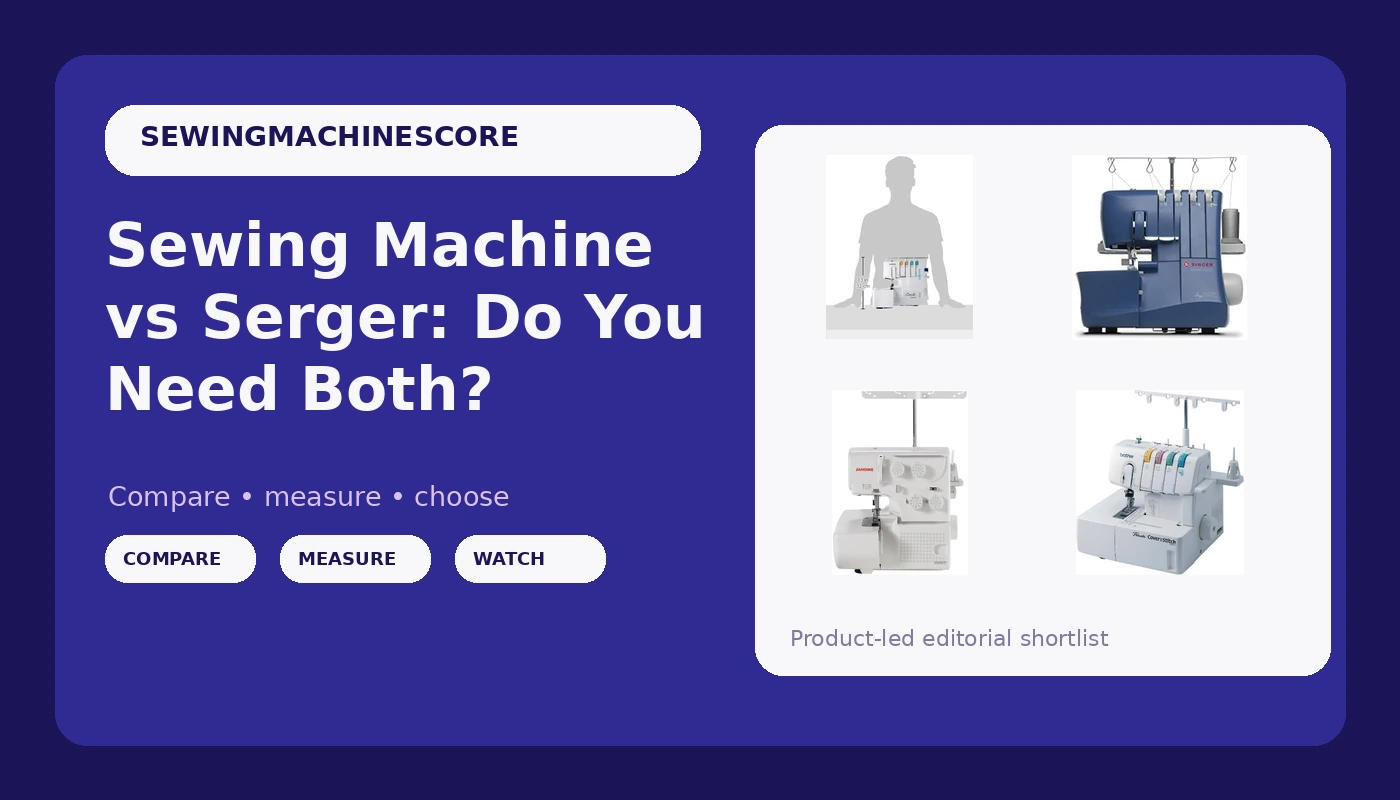
Well, my serger has lived on my dining table for the better part of a year now, right next to Teddy’s pile of half-finished projects. My sewing machine is in the shop. Do you need both? I’ve spent 12 years making Renaissance gowns and 400 school Halloween costumes on a plain sewing machine, and I bought my first serger six months ago.
Here’s the honest truth: you don’t need both on day one, but the day you sew your first stretchy knit or a costume that a kid will actually run around in, you’ll start wondering.
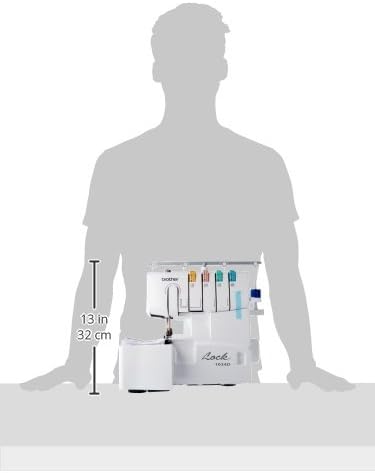
Brother 1034D
The unfussy workhorse. Easy threading, 3/4 thread, handles knits and wovens without drama.
Not great for heavy denim or leather. Plastic body feels light.
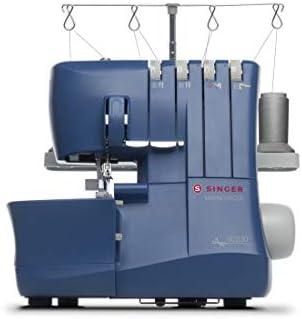
SINGER S0230
Fast, high-speed, clean rolled hems. Good price for a 2/3/4 thread.
Sparse instructions, no printed manual. You’ll need YouTube.
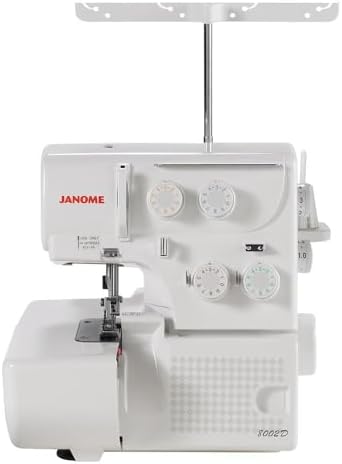
Janome 8002D
Solid build, smooth tension, great for beginners who want to learn serging.
More expensive, fewer stitch options than the Brother.
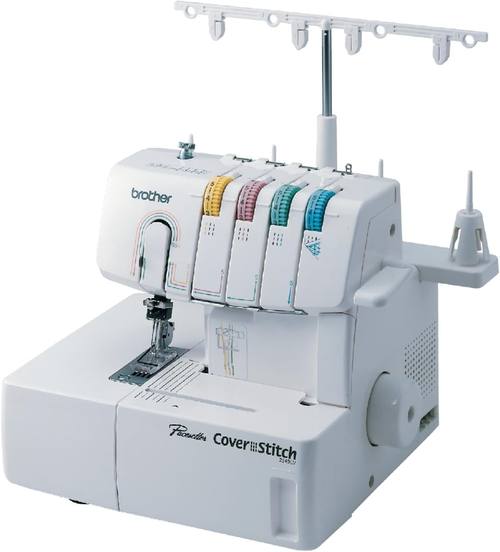
Brother 2340CV
Coverstitch and chainstitch, perfect for hems on knits.
Pricey, and it only does coverstitch, not a true overlock.
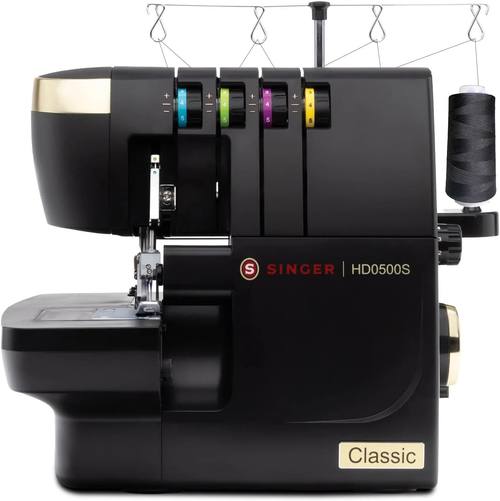
SINGER HD0500S
Heavy duty claim, metal interior, plows through thicker fabric.
Heavy, loud, and the pedal is 0 to 60 in a leap.
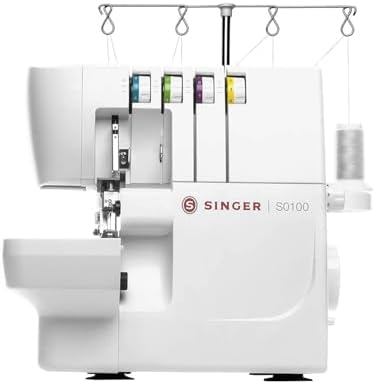
SINGER S0100
Cheap entry into serging, 2/3/4 thread, decent stitch quality.
Feels flimsy, tension dials are finicky.
Prices and availability were captured from Amazon Creators API and may change.
The short version
A sewing machine does straight stitches, zigzag, buttonholes, and topstitching. It’s what you use for 90 percent of garment construction. A serger trims the seam allowance, wraps the edge in thread, and sews a stretchy seam all in one pass. It makes knits look professional and stops raw edges from fraying. It doesn’t do buttonholes, it doesn’t do topstitching, and it’s a pain to thread.
I bought the Brother 1034D after six years on my Brother XM2701. I was making fleece hats and chair covers, and the raw edges were driving me crazy. I kept zigzagging everything and it looked like a beginner did it. I watched three YouTube tutorials, felt woefully ignorant about serger tension, and bought the 1034D on a whim.
What I use my sewing machine for
My Brother XM2701 is still my main machine. I’ve made Totoro, a seagull, a buoy, a snail, and Forky on it. That machine has never let me down. It’s unfussy, it’s quiet, and it came with a real manual, not just safety warnings. I’ve sewn through fleece, cotton, quilting weight, and the occasional denim hem without complaint. For a beginner on a budget, that’s a darn good machine right here.
The sewing machine is for structure. It’s for the seams that need to hold, the buttonholes that need to look neat, and the topstitching that needs to be straight. I use it for everything from the lining of a Renaissance bodice to the straps on a Halloween costume. It’s the machine I teach on, and it’s the machine I recommend to every student who walks into my class.
What I use my serger for
The serger is for speed and finish. I sewed four layers of fleece on my Brother 1034D last week and it didn’t even flinch. It trimmed the seam allowance, wrapped the edge, and left a clean, professional finish that would have taken me twenty minutes with a zigzag stitch on my sewing machine.
For knits, it’s a revelation. T-shirts, leggings, and anything with stretch come out looking like they came from a store.
But it’s not perfect. Threading a serger is black magic. There are four spools, two needles, and a looper that I still have to consult the manual for every single time. The first time I threaded it, I got thread balled up under there and blamed the machine. Then I realized I’d threaded the upper looper wrong. It’s usually the thread, not the machine, but not always.
The Brother 1034D is the one I own, and it’s the one I’d recommend to anyone who wants a serger without the drama. It comes with a printed manual, which is more than I can say for some brands. It’s easy to thread compared to the Baby Lock I tried, which was temperamental and worse for threading than my Brother.
The 1034D has a 3 or 4 thread capability, which covers most projects, and it has a built-in rolled hem setting that I use for napkins and handkerchiefs.
The SINGER S0230
SINGER is no longer a good choice for new machines, I’ve heard that from too many people to ignore it. But the S0230 is a bit of an exception. It’s a high speed serger, 2/3/4 thread, and it does a clean job on knits and wovens. The rolled hem is nice, and it’s a good price for what you get.
But the instructions are sparse. SINGER ships only safety warnings in the box, no real manual. You’ll need YouTube and a downloaded manual. That’s a real complaint from real buyers. One buyer wrote in March 2024 that they bought it for simple clothing repairs and ended up making Hawaiian shirts. I believe him. The machine is capable, but you’ll need to work for it.
The pedal is sensitive. It goes 0 to 60 in a leap. You’ll need to practice on scraps before you’re comfortable with it. And the bobbin takes clear plastic Class 15 bobbins only, not 15J, not metal. Get that wrong and you’ll have thread balled up under there.
The Janome 8002D
The Janome 8002D is a 3/4 thread overlock machine that’s built like a tank. It’s heavier than the Brother and feels more solid. The tension dials are marked clearly, and the threading paths are printed on the machine, which is a lifesaver. If you’re a beginner who wants to learn serging without fighting the machine, this is a good choice.
But it’s more expensive than the Brother, and it doesn’t have the same range of stitch options. You get a 3 or 4 thread overlock, a rolled hem, and not much else. For my money, the Brother 1034D gives you more versatility at a lower price. The Janome is a better build, but I don’t need a machine that lasts 20 years. I need one that works today and doesn’t make me want to throw it out the window.
The Brother 2340CV
This is a coverstitch machine, not a serger. It does the hems on knits that a serger can’t do. If you’re making T-shirts or leggings, a coverstitch is what gives you that professional twin needle look on the hem. It’s a nice upgrade if you’re ready to move up from the 1034D and you don’t need heavy duty power.
But it’s pricey, and it only does coverstitch and chainstitch. It won’t trim seams or overlock edges. You’d still need a serger for construction. I don’t own one, but my sister has one and she loves it. If you’re serious about knit garments, this is the direction I’d point you. But it’s not a replacement for a sewing machine or a serger.
The SINGER HD0500S
The HD0500S is advertised as heavy duty, and I fell for that hook, line, and sinker. It’s got a metal interior and it can plow through thicker fabric. I sewed through four layers of denim and it didn’t complain. But it’s heavy, it’s loud, and the pedal is 0 to 60 in a leap. I tried to sew slowly and it leapt forward, breaking a needle on a jeans hem.
The instructions are sparse. SINGER ships only safety warnings in the box, no real manual. You’ll need YouTube. I’ve seen this pattern myself. Singer used to be the gold standard. Now, unless it’s the 4423, I’d steer clear. The HD0500S is a capable machine, but it’s not the machine I’d recommend for a beginner. It’s for someone who knows what they’re doing and needs power.
The SINGER S0100
The S0100 is the cheapest entry into serging, and it shows. It’s a 2/3/4 thread machine that does a decent job on knits, but the tension dials are finicky and the body feels flimsy. I’ve heard from buyers who had thread balled up under there on the first try, and when they swapped out the cheap thread it never happened again. It’s usually the thread, not the machine, but not always.
At this price, it’s a gamble. If you’re on a tight budget and you need a serger, it might work for you. But I’d rather spend the extra ~$50 on the Brother 1034D and get a machine that’s easier to thread and more reliable.
Do you need both?
Here’s my honest bottom line. If you’re a beginner, buy a sewing machine first. The Brother XM2701 is the one I recommend. It’s unfussy, it comes with a real manual, and it’ll teach you how to sew. You can make most projects on it without a serger. I made 14 Christmas stockings on mine and they looked fine.
But if you’re sewing knits, or you’re making costumes for kids who will actually run around in them, a serger is worth the money. It makes seams that stretch, it trims the raw edges, and it looks professional. My Brother 1034D cost about ~$300, and at six cents a day over a year of use, that’s a bargain.
Choose the serger if you’re tired of zigzagging every raw edge and you want your seams to look like they came from a store. Choose the sewing machine if you’re just starting out and you want to make things without fighting the machine. I own both, and I use both. Teddy doesn’t care, but he’s a labradoodle and he sleeps on whatever’s on the table.