Related: Sewing Machine vs Serger: Do You Need Both?
Well, the serger is the machine everyone thinks they need before they've even learned to sew a straight line. I've been teaching beginner classes for years, and I own both a Brother XM2701 and a Singer 4423, so I get asked this constantly. I've been sewing on my own machines for over a decade, and here's the honest answer: you buy the sewing machine first, every single time.
What a serger actually does
A serger cuts the fabric, sews the seam, and finishes the raw edge all in one pass. It also trims the excess fabric as it goes. That's it. That's the whole trick. It makes your seams look professional on the inside, the kind you see on store-bought clothes, and it stops fraying in the wash.
What it doesn't do is replace a regular machine. It can't do a buttonhole. It can't do a zipper. It can't do a topstitch or a hem on most fabrics. It uses three or four threads at once instead of one, which means more cones of thread to buy and more tension dials to learn. I've watched grown adults cry over serger tension, and I've been there myself. It's black magic until it suddenly isn't.
Why the sewing machine comes first
You need a machine that does the basic stuff before you can even think about finishing edges. My Brother XM2701 has been my workhorse for six years. It's the machine I recommend to every beginner who walks into my class, and it's the machine I made 14 Christmas stockings on last year alone.
The version I own came with a printed manual, a real one, not just safety warnings, and a quick start guide.
It's unfussy. The top-loading bobbin is easy to see and easy to thread. It's quiet. It comes with extra feet and extra bobbins, so you can start sewing the day it arrives instead of waiting for supplies.
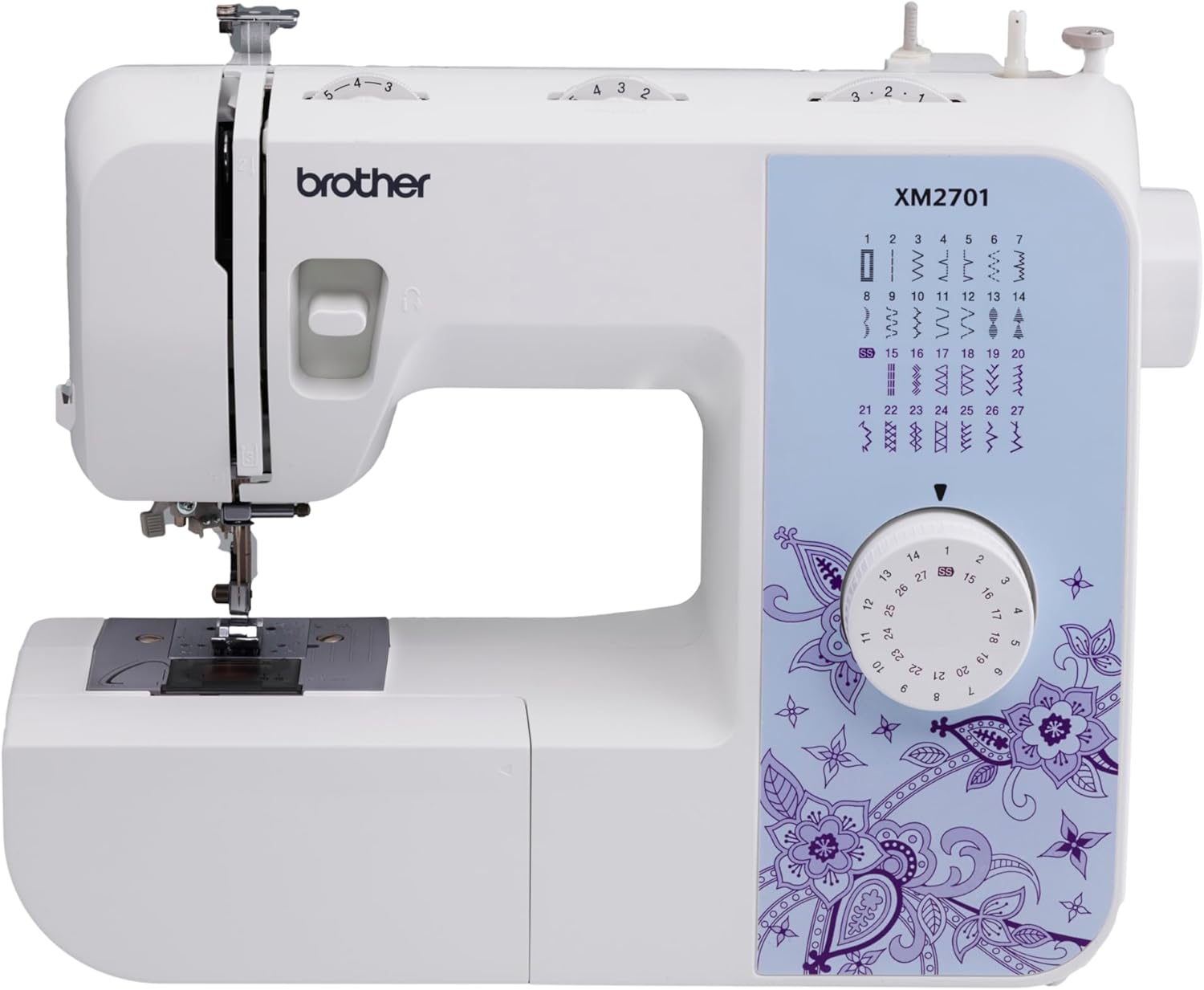
I've made Halloween costumes for a school of 400 kids on this machine. Totoro, a seagull, a buoy, a snail, Forky. It's still running. I'm only upgrading now because I need to sew heavier fabrics for my costume work, but this machine taught me everything I know. At ~$130, it costs about six cents a day if you use it for six years. That's not a purchase, that's a bargain.
The one thing the Brother can't do
It won't plow through thick fabrics like leather or multiple layers of denim without adjustments. I hit that wall when I started doing Renaissance fair gowns and costume work. That's when I bought the Singer 4423 Heavy Duty.
The version I own has real power. I've sewn through leather, Cordura, denim, and nylon webbing with it.
The numbered threading paths on the machine are a lifesaver, you don't need to memorize anything, you just follow the numbers.
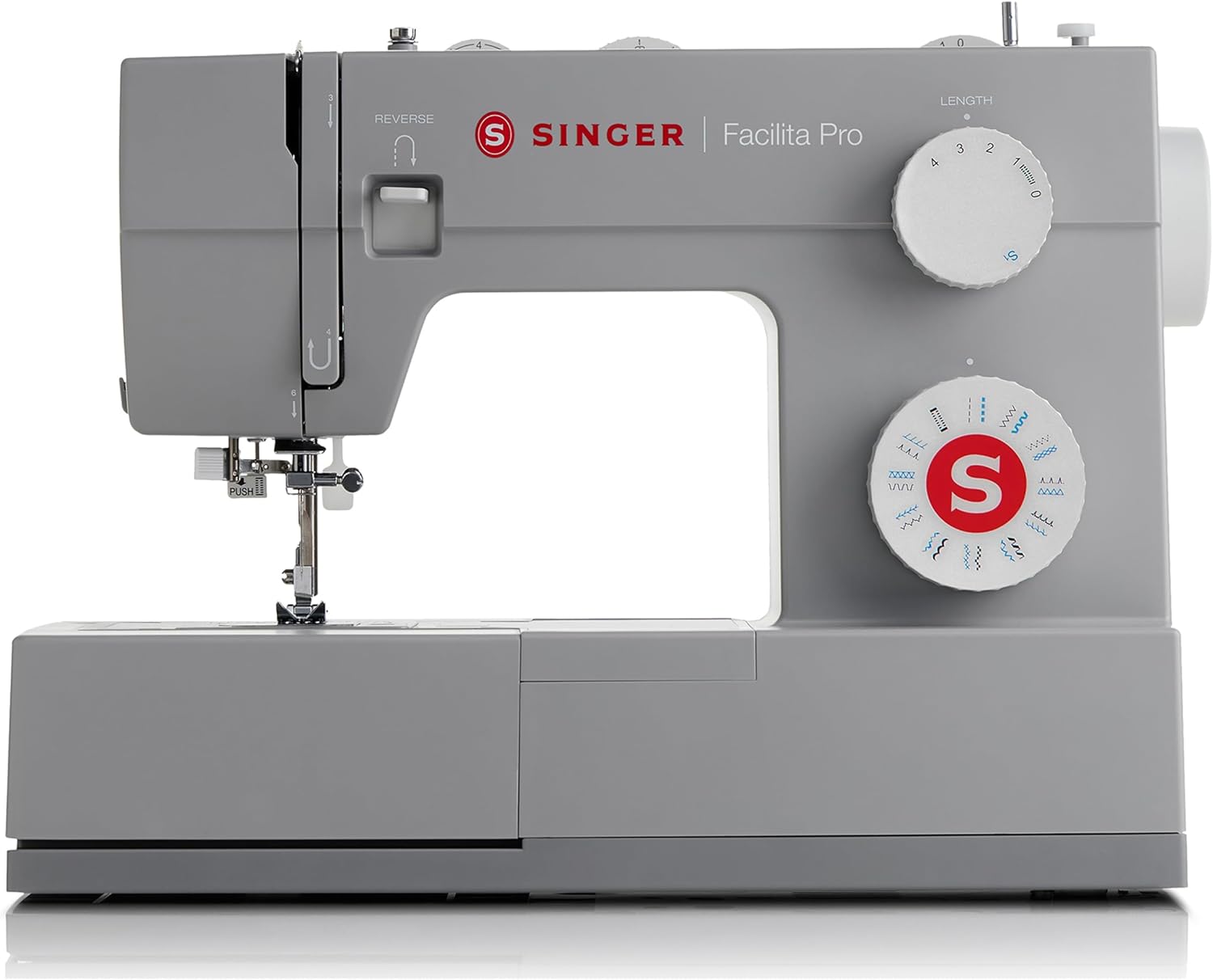
But here's the catch: Singer ships only safety warnings in the box, no real manual. You'll need YouTube and a downloaded manual. That's a real complaint from real buyers. A 67-year-old man who had never sewn before bought this machine for simple clothing repairs, struggled with bobbin tangles (which turned out to be bad thread, not the machine), learned via YouTube, and went on to sew Hawaiian shirts, work shirts, and western shirts over four years.
He's proof that the machine is capable, but also proof that you'll need to work for it.
The pedal is sensitive. It goes 0 to 60 in a leap. You'll need to practice on scraps before you're comfortable. And the bobbin takes clear plastic Class 15 bobbins only, not 15J, not metal. Get that wrong and you'll have thread balled up under there and blame the machine when it's your own fault.
The serger I'd point you to later
I own a serger that lives on my dining table. It's not one of the machines I'm reviewing here, but I'll tell you what I tell my students: don't buy one until you've been sewing for at least a year. You need to understand how a regular machine behaves before you can appreciate what a serger does differently.
You need to know what a seam allowance is, what a finished edge looks like, and why your tension dial matters.
Once you know those things, a serger will change your life. Before that, it's just another machine to fight with.
A serger also requires more thread. Four cones at once instead of one spool. That's a bigger upfront cost and a bigger ongoing cost. And it's a specialty tool. It does one thing beautifully, but it can't do the other 95% of what you need a machine for.
What the buyer evidence actually says
People tell me the same story over and over. They bought a serger first because it sounded impressive, then realized they couldn't make a simple tote bag without a regular machine. Or they bought a sewing machine, used it for a year, and then added a serger when they started making garments they actually wanted to wear.
One buyer wrote in about her Brother XM2701 that she bought it six years ago as a gamble, unsure if she'd use it. She fell in love with sewing, made baby blankets, kids' clothes, Halloween costumes, tote bags, fleece hats, chair covers, adult garments, and Christmas stockings.
The machine is still running. She's only now upgrading for heavier projects. That's exactly my experience, and I hear it from students all the time.
The Singer 4423 is the machine I recommend when someone needs power. It's the best unit at its price point. Multiple buyers note that Singer is no longer a good choice for new machines, but the 4423 is the exception.
I'd agree. The version I own has sewn through four layers of Cordura without flinching. But the lack of a printed manual is a real problem.
A QR code is not a manual. Singer, I'm looking at you.
What about the computerized Brothers
If you're ready to move up from the XM2701 and you don't need heavy-duty power, this is the direction I'd point you. Family members of mine own them and love them. They're nicer upgrades with more stitch options and easier buttonholes. But they're not necessary for a beginner. The XM2701 does everything you need to learn on, and it does it well.
What about the old Kenmore
My first machine was a hand-me-down 1980s Kenmore that finally gave out after 20+ years. I cried when it died. Those machines were built to last, and the people who owned them are now looking for replacements that match the quality.
The problem is, most new machines don't. I've seen this pattern myself. One buyer returned a Singer immediately after their 20+ year old Kenmore finally died.
I understand that frustration. The Kenmore was a workhorse, and it's hard to find that in a new machine.
I also have opinions about the Baby Lock I tried. It was temperamental. Worse for threading than the Brother. I'd take the Brother every time. And the old Berninas, they're beautiful but the manual reads like vintage Good Housekeeping. Hard to learn on. If you're a beginner, that's not the machine for you, no matter how pretty it looks on the shelf.
Which one do you buy first
Choose the sewing machine if you're just starting, if you want to make clothes, costumes, bags, quilts, home decor, or gifts. Choose the sewing machine if you want to learn how fabric behaves, how tension works, how to fix a mistake. Choose the sewing machine if you want to make something the same day you open the box.
Choose the serger later, when you've made a few garments and you're tired of raw edges fraying in the wash. Choose the serger when you're ready to take your seams to the next level and you understand what you're actually looking at when you open the front cover.
I don't track prices day to day, so I won't pretend to know next week's deals. But I know that the Brother XM2701 has been my go-to recommendation for six years, and it's never let me down. I know that the Singer 4423 will plow through leather like it's nothing, but you'll need YouTube to figure it out. And I know that a serger is a wonderful tool to have, once you've earned it.
My honest bottom line: buy the Brother XM2701 first. Learn to sew on it. Make mistakes on it. Make ugly things and then make better things. When you outgrow it, and you will, that's not a failure. That's a graduation. Then buy the Singer 4423 if you need power, or a serger if you need finished edges. But don't skip the first step. It's the one that teaches you everything.