Related: Best Sewing Machine for Costume Work: Stitch Quality First
I have been teaching beginners for twelve years, and I can tell you the exact moment a student stops blaming herself and starts blaming the machine. It is usually the first time she sews over a folded jeans hem. So when someone asks me which sewing machines for beginners are worth the money, I do not start with stitch counts or the number of presser feet in the box. I start with one question: what fabric are you actually going to sew?
That question eliminates half the market. A quilter who buys a garment machine spends the next year fighting the throat space. A garment sewer who buys a quilting machine spends the next year fighting the feed. Buy for the fabric you actually sew, not the fabric you imagine sewing, and most of the anxiety disappears.
The four items below cover the realistic range for a beginner: one mechanical machine that will not fight you, one computerized machine that can carry paid work, a five-pack of needles that fixes more "broken" machines than any repair shop, and a handheld kit for the mending you would never set up a machine for. Here is how each earns its place, and who should skip it.
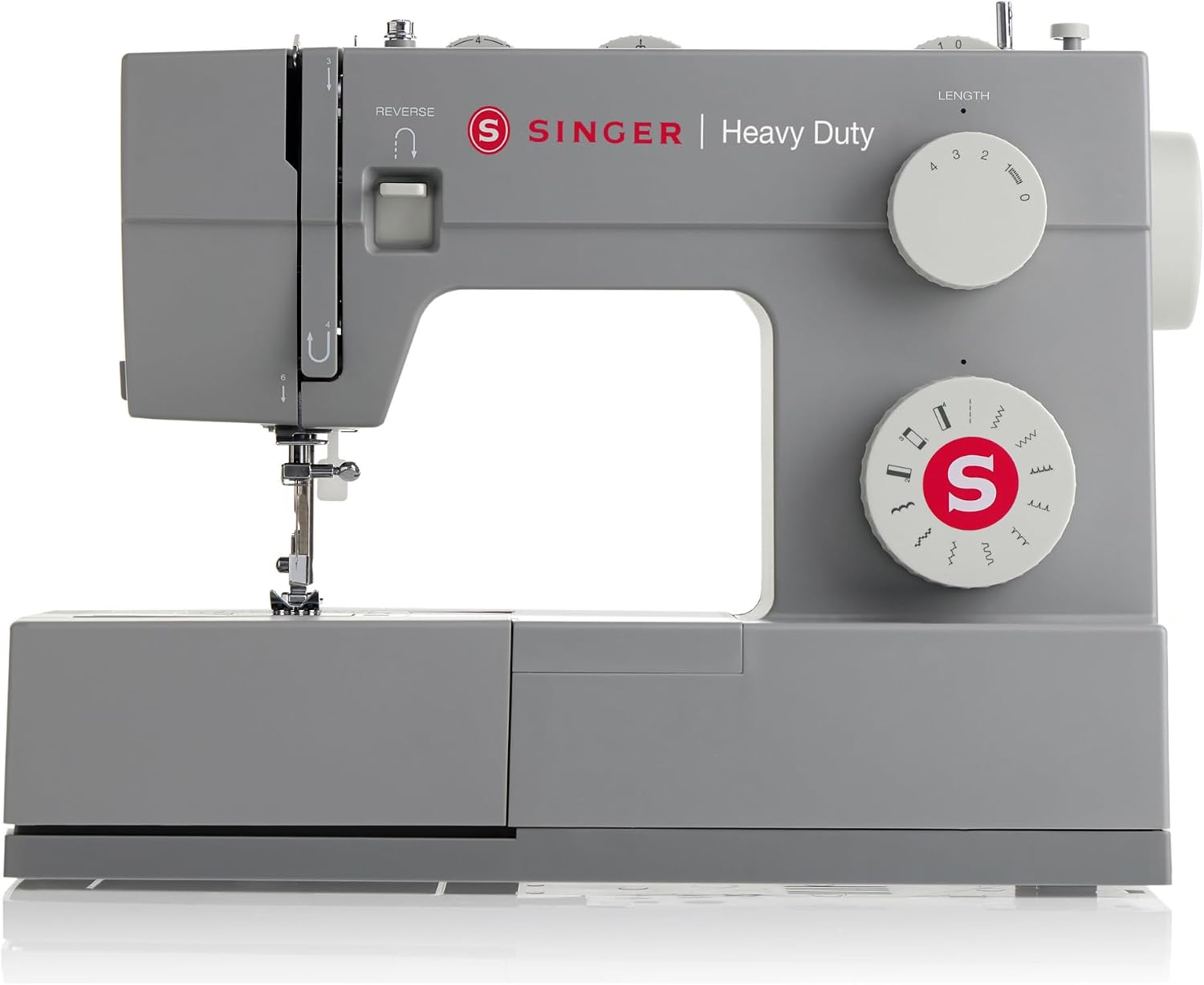
Best Overall for a Beginner: SINGER 4411 (Grey) High Speed Heavy Duty Sewing Machine with Accessories
Singer's modern catalog is a minefield wearing a famous name, and I have said that in print more than once. The Heavy Duty line is the exception, and the 4411 is the version I would hand a beginner who wants to sew garments, curtains, and the occasional bag. It is a mechanical machine in a computerized world, and that is the point. There is no board to die and no touchscreen to argue with. The stitch menu is short enough that you will actually use all of it, and a short menu is a feature, not a limitation. A hundred-stitch machine uses about ten.
The accessories in the box matter more than beginners expect. Feet bought one at a time add up fast, and a zipper foot you already own is a zipper foot you will use.
Before you commit, thread it and run one straight stitch on a scrap of denim folded double. If it feeds without stalling and the seam lies flat, the machine is doing its job. Then run the same straight stitch on a scrap of silk or lining and watch whether the fabric gets dragged down into the needle plate. If it does, you need a finer needle and less pressure, not a different machine. This is the test I watch students run in class, and it tells you more about a machine than the entire spec sheet.
This is not a machine that will make you feel like a professional. It is a machine that will let you finish the costume, hem the pants, and get to bed before midnight. For a first machine, that is the spec that matters.
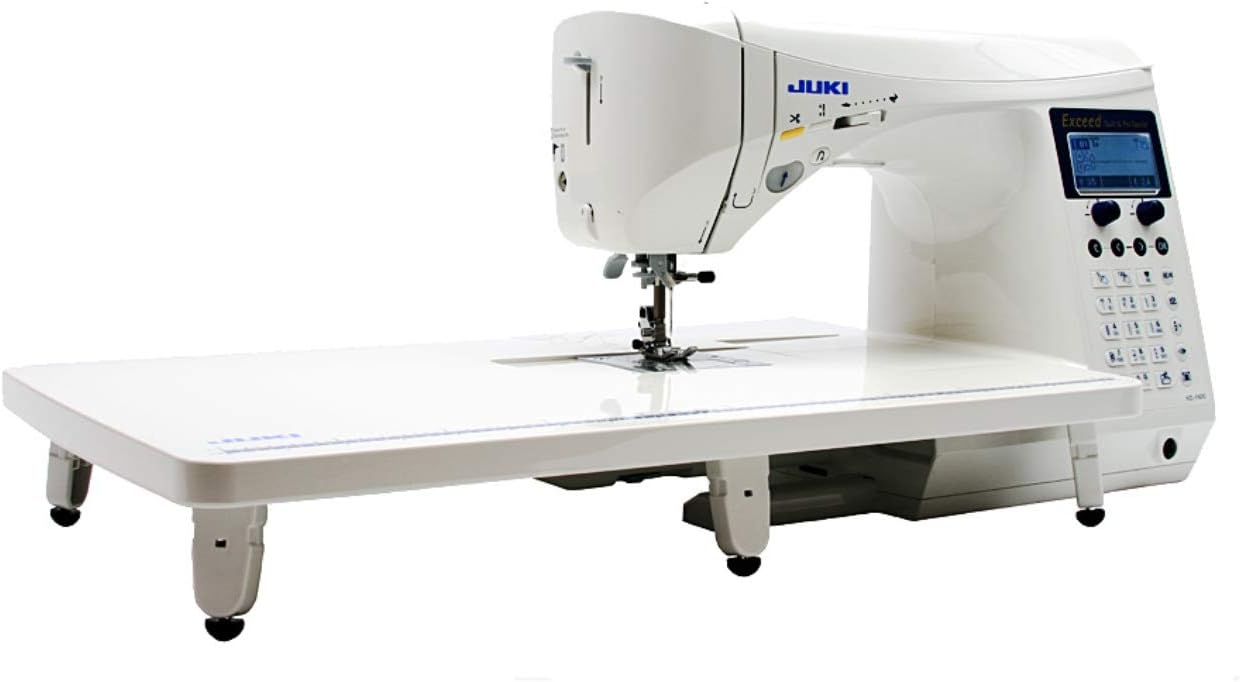
The Machine I Would Trust on a Paid Costume: Juki HZL-F600 Computerized Sewing and Quilting Machine
Juki's reputation was built on industrial straight-stitch machines, tanks that sew seams all day and ask for nothing but oil and a fresh needle. The HZL-F600 is the home version of that philosophy: a computerized sewing and quilting machine for people whose projects are measured in yards, not in greeting cards. It is priced like serious equipment, and it should be judged that way.
If you quilt bed-size projects, this is the class of machine where the accessories stop being optional and start being required. A walking foot stops layers from shifting, and on a queen-size quilt a single shifted layer means frogging three feet of stitching, which is the most practiced skill in sewing and the one nobody wants to practice. If you sew for money, the math is straightforward: the machine pays for itself across a couple of seasons of paid work, and the resale value of a good machine holds far better than the resale value of a cheap one.
The honest trade-off of anything computerized is this: the circuit board is what ends the machine's life, not the motor and not the metal. Board repairs can cost real money, and nobody plans to ship a machine out in the middle of a deadline. So I say the same thing every time. Buy the Juki when the sewing pays for it, keep the simpler machine as your backup, and treat the electronics as the consumable they are.
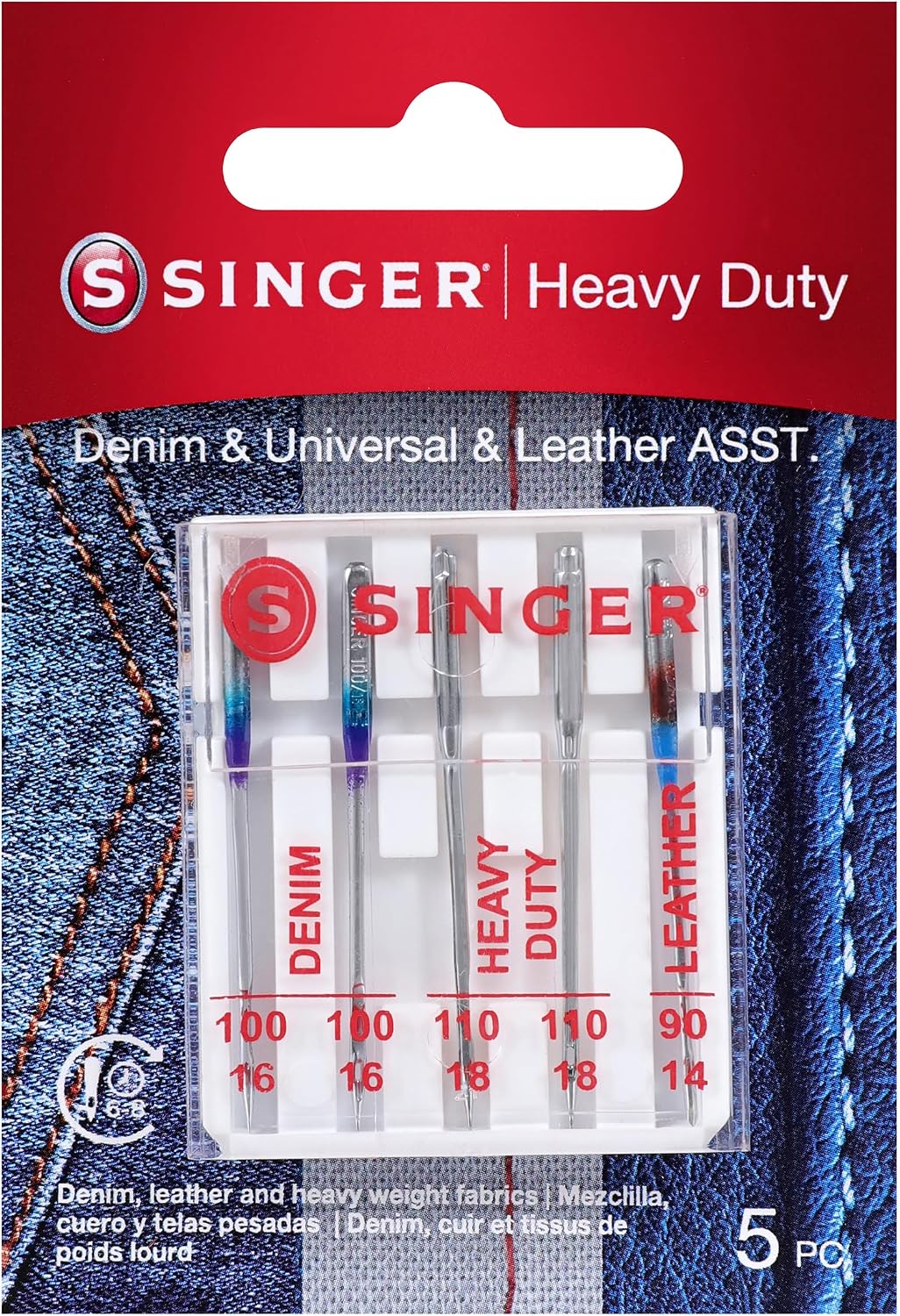
The Fix That Costs Less Than a Repair Visit: SINGER Heavy Duty Needles 90/14 100/16 110/18 Denim Leather 5-Count
Half of the "my machine cannot handle denim" complaints I hear in class are needle problems wearing a machine costume. The needle in your machine right now is almost certainly a general purpose size that came in the box, and it has been asked to pierce canvas, hem jeans, and quilt through four layers. A dull or too-thin needle does not slice through fabric, it punches, and punching is what makes a machine scream on thick material.
This five-count set covers the range that matters. The 90/14 handles denim and heavier wovens. The 100/16 takes canvas, multiple layers, and bag construction. The 110/18 is for leather and the folded waistband of real jeans, the spot where beginner machines usually give up.
Match the needle to the fabric, and change it every project or two. That is the whole rule. A fresh needle is the cheapest upgrade in sewing, and it is the one most people skip because it is not fun to shop for. If your machine is struggling on heavy fabric and the tension dial is doing nothing useful, swap the needle before you swap the machine.
The Mending Tool That Lives in a Drawer: Sewing Kit: Sewing Bliss in One Box. Handheld Sewing Machine.
Every guide needs one item for the person who is not going to learn a machine this year, and this is it. The handheld machine in this kit is a one-stitch tool, and the feed is you. Tension control is whatever the factory set, which means it is a mending device, not a construction device.
What it does well: hemming a curtain that is already hanging on the rod, stitching a strap back onto a bag, closing a popped seam on a costume at the venue with thirty minutes until curtain. Those jobs are real, and hauling out a full machine for them is why they sit undone for months. The kit format also means you stop hunting for a needle and thread in a junk drawer, which is honestly half the value.
What it does not do: replace a sewing machine for garment work. Unbalanced tension shows on every seam, and you cannot correct tension on a device with no dial. Buy it as a mending tool and it will earn its space. Buy it as your first sewing machine and you will decide you hate sewing by week three.
How I judge a sewing machine
The method does not change much from machine to machine. Straight stitch quality is the whole game; everything else is convenience layered on top of that foundation. So the first thing I look at is whether the tension dial actually does something. The tension dial is the control everyone touches and nobody understands, and balanced tension across a seam is the entire craft. A dial that makes no difference between the top and bottom of its range is a machine telling you the truth about itself.
The second is the buttonhole. A machine's buttonholes tell you more about its brain than its stitch count ever will. If the buttonhole comes out even and the fabric does not pucker, the feed and the timing are working together. If it comes out lopsided, you have learned something before you spent the money.
The third is behavior on thick fabric. Not just whether it sews denim, but whether it complains. A machine that whines on a folded seam will whine on everything after that.
And the last question is the one I use as the tiebreaker: would I trust this machine on a paid costume? If the answer is no, it is a hobby machine, and it should be priced and bought like one.
What the fabric tells you
Run a straight stitch on denim and then on silk. The machine that handles both without whining is the one worth owning. Most machines handle one or the other, and that is not a defect, it is a design decision you have to shop around.
Heavy duty is a needle decision
"Weavy duty" stamped on a plastic housing is one of my least favorite phrases in this industry. Real capacity comes from three things: a needle sized for the fabric, enough presser foot pressure, and a feed that can move the layers without stalling. You can fix the first with a five-dollar pack of needles. You cannot fix the other two with marketing language, which is why the needles are on this list.
Handheld machines are a supplement, not a substitute
No serger versus sewing machine gatekeeping here, and no handheld versus real machine gatekeeping either. They are different tools for different jobs. The handheld closes a hem on a ladder. The machine builds the garment. Owning both is not redundant, it is just honest about how mending actually gets done.
The sewing machine and needle reference table
This is the version of the list I keep in my class binder, sorted by what each item is for rather than by what it costs.
| Product | Best for | Fabric it earns its keep on | What to check before you buy |
|---|---|---|---|
 Visit on Amazon → Visit on Amazon →SINGER 4411 |
A first machine for a beginner | Denim, canvas, cotton | Straight stitch on folded denim, then on silk |
 Visit on Amazon → Visit on Amazon →Juki HZL-F600 |
Paid work and bed-size quilting | Medium to heavy wovens, quilting layers | Whether the tension dial changes anything |
 Visit on Amazon → Visit on Amazon →SINGER Heavy Duty Needles |
Fixing the machine that "cannot" sew thick fabric | Denim, canvas, leather | Whether the needle is fresh |
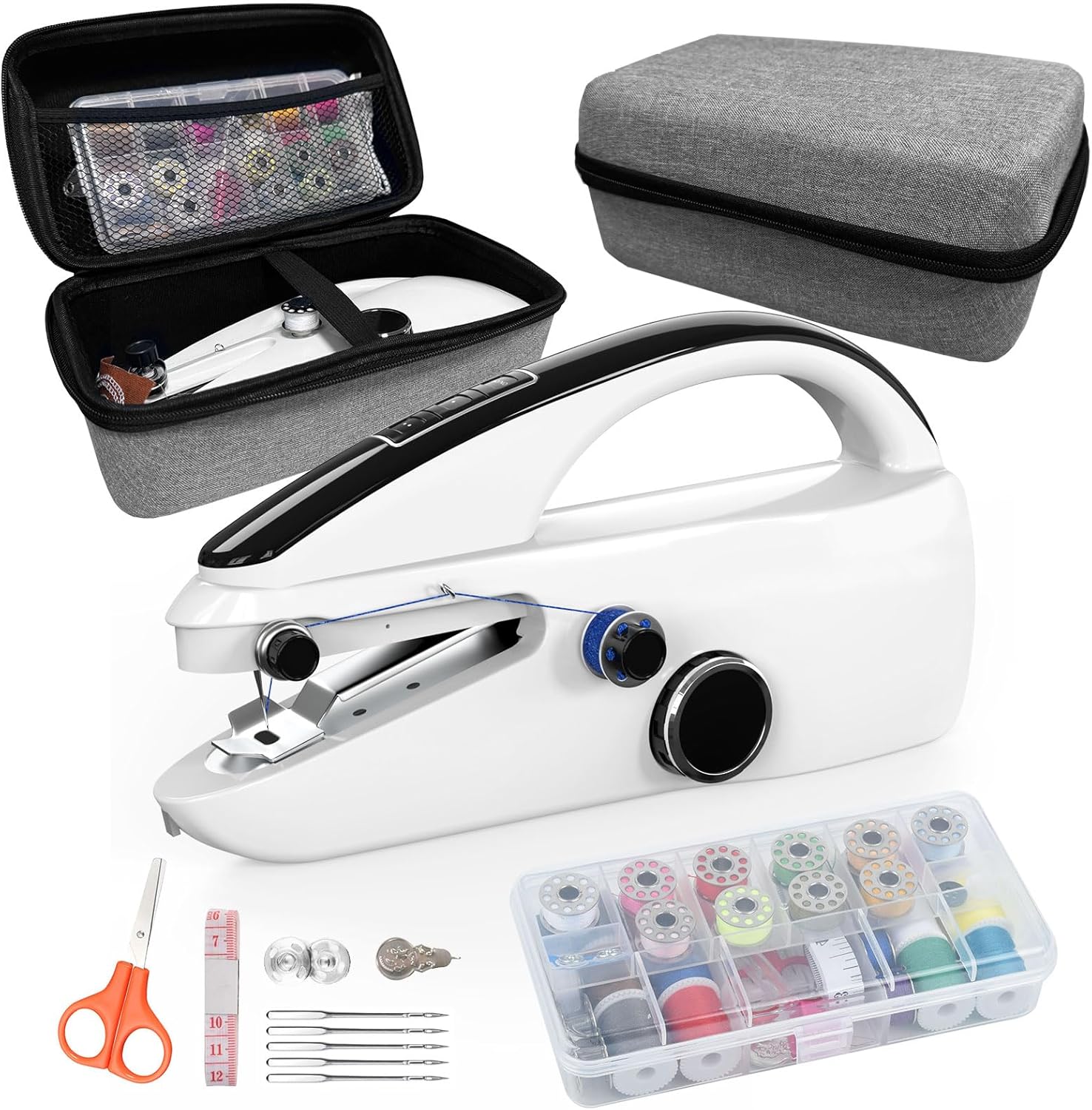 Visit on Amazon → Visit on Amazon →Handheld sewing kit |
Mending away from a table | Light wovens, quick repairs | That you are not expecting a garment machine |
Should you buy the SINGER 4411?
Yes, if your goal is to learn on something that will not fight you. It is the part of Singer's current lineup I will recommend, the accessories are already in the box, and it takes the heavier needles that let it handle denim and canvas. Run the denim test and the silk test before you commit. If both seams come out clean, you have your machine.
Should you buy the Juki HZL-F600?
Yes, if the sewing pays for itself. This is a computerized sewing and quilting machine priced like serious equipment, and it is the machine on this list I would trust on a paid costume. If you quilt large projects or sew for clients, it will earn back its cost. If you sew a few costumes a year, remember that the electronics are what end a machine's life, and keep a simpler machine as backup.
Should you buy the SINGER Heavy Duty Needles?
Yes, and sooner than you think. Check the needle in your machine right now. If you cannot remember when you last changed it, that is your answer. The 90/14, 100/16, and 110/18 range covers denim, canvas, and leather, which is exactly where beginner machines get blamed for problems the needle caused.
Should you buy the handheld sewing kit?
Yes, as a drawer tool for mending, not as a first sewing machine. One stitch, tension set at the factory, and no dial to correct it. It will hem a curtain on the rod and close a seam at the venue. It will not build a garment. Buy it for the jobs you would otherwise put off, and it pays for itself the first time you use it.