Related: Beginner Sewing Machine Setup: Tension, Bobbins, and the First Seam
I learned to sew on a 1962 machine my grandmother kept running for forty years. One stitch, one tension dial, and a straight seam that still looked better than most of what I see on new machines at the fabric store. That is the standard I hold everything to, and it is why my answer to "what should I buy first" has not changed in twelve years of costume work.
I sew costumes for a living and I teach beginner classes in Portland, so I watch people buy their first machine every season. The best sewing machines for beginners are not the cheapest ones, and they are not the ones with the biggest stitch count printed on the box. They are the machines where a straight stitch comes out clean on quilting cotton and on denim, where the tension dial actually does something when you turn it, and where the buttonhole does not make you want to throw the thing out the window.
The four machines below are the ones I point students toward, sorted by what they are actually for. One is a do-everything beginner machine. One is for people who want to embroider. One is the budget pick for denim and speed. One is a serger, which is a different tool entirely and not a replacement for a sewing machine. I will tell you who should skip each one, too, because a bad first machine kills the hobby faster than any pattern ever will.
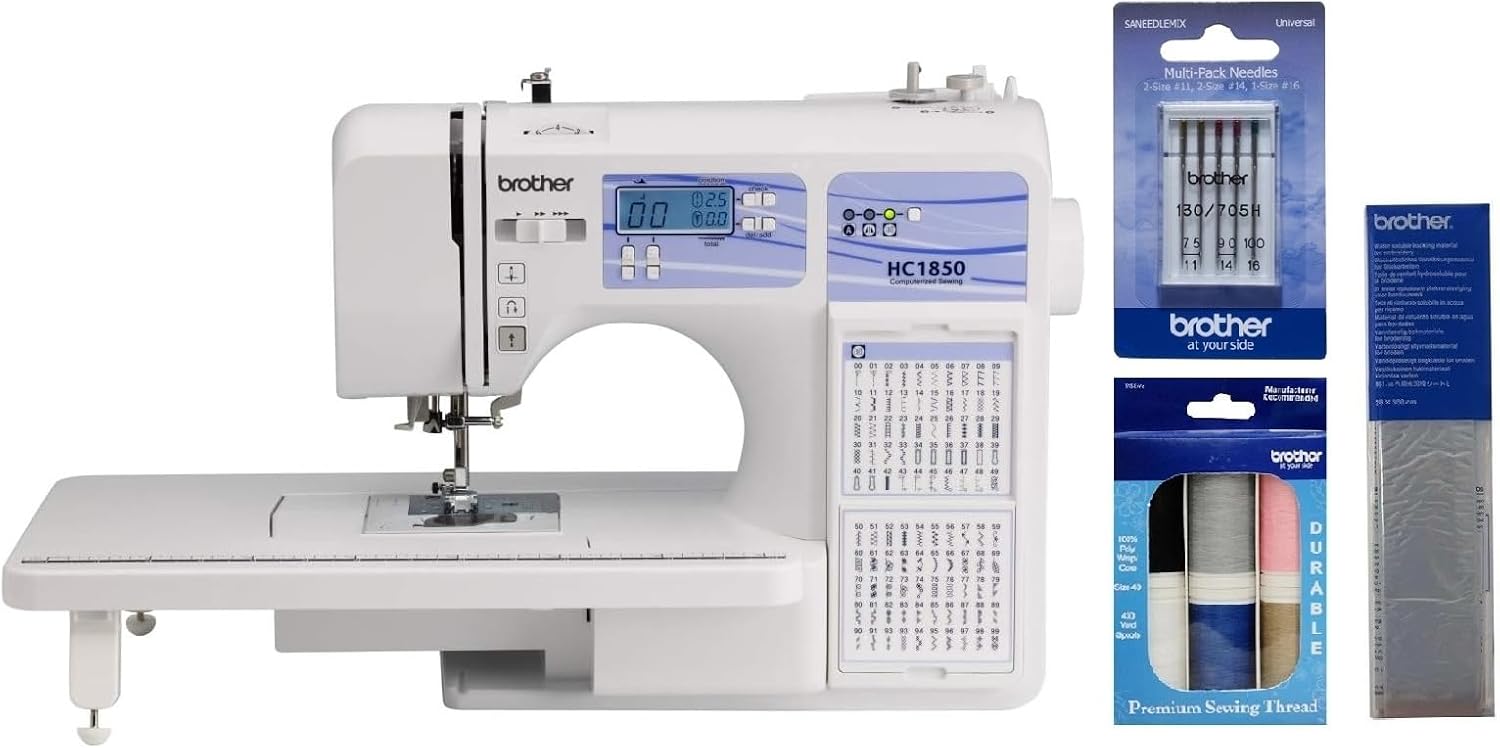
Best Overall: Brother HC1850 Sewing and Quilting Machine
If you want one machine that handles garments and quilting and does not make you read a manual for a week, this is where I send most beginners. It carries 185 built-in stitches and an LCD display that shows you which stitch you have selected, which matters more than people admit. On a mechanical machine you are counting clicks on a dial and hoping. On this one you can see it.
The bundle is what makes it a real beginner package rather than a machine in a box: a six-pack of premium thread, water-soluble stabilizer, and a five-pack of needles. That is the stuff that normally sends you back to the store before you can sew a single seam. The stabilizer is the quiet hero of the group, because it lets you sew on stretchy or fuzzy fabric that would otherwise pucker, then you wash it away.
The 185 stitches are mostly decorative, and I will say plainly that a beginner uses maybe ten of them. What matters is that the core ones are there: straight stitch, zigzag, a stretch stitch for knits, and a blind hem. The quilting side is why it sits first on this list for someone who has not decided yet whether they are a garment sewer or a quilter. Buy for the fabric you actually sew, and this one covers the most fabric types.
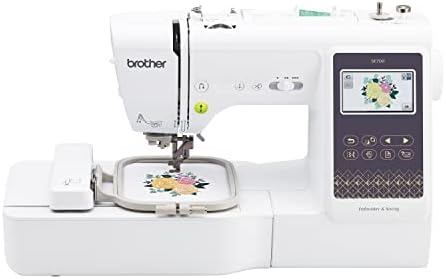
Best for Embroidery: Brother SE700 Sewing and Embroidery Machine
Embroidery is its own hobby wearing a sewing machine costume, and this is the machine I recommend to the student who keeps asking about monograms and applique instead of hemming. It is a sewing and embroidery machine with wireless LAN and eight included feet. The wireless connection is the part I care about most, because it means you are not hunting for a cable or a memory card every time you want to move a design from your computer to the hoop.
Eight feet in the box is a genuine head start. Feet are the accessory that changes what a machine can do, and buying them one at a time adds up fast. This is also the pick for the person who wants their work to look custom, names on stockings, a design on the back of a jacket, that kind of thing.
Here is the honest caveat, and it comes straight out of my own philosophy about computerized machines. Screens and circuit boards are wonderful right up until they fail, and a repair can cost a serious fraction of what you paid. If you sew four hours a week and you want embroidery, this is worth it. If you hem pants twice a year, you are paying for a brain you will never use.
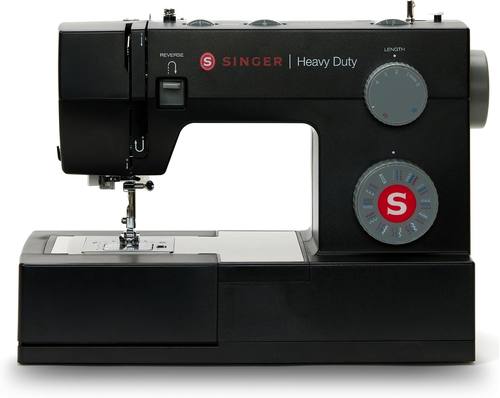
Best Budget Pick: SINGER 4432 High Speed Heavy Duty Sewing Machine
I am on record that modern Singer machines are a shadow of the vintage ones, and I stand by it. The HD line is the exception I make room for, and the 4432 is the version I would hand a beginner on a tight budget. It is built around speed and heavier fabric, and it ships with an accessory kit, so you are not starting from nothing.
The "heavy duty" label is where I get cautious, because I have seen that phrase stamped on plenty of plastic-bodied machines that scream the moment you feed them denim. The honest read on this one is that it is a fast machine aimed at mid-weight fabric and light heavy work: tote bags, simple curtains, denim hems, canvas pouches. It is not an industrial machine and it will not behave like one.
Who should skip it? Anyone who sews silk, chiffon, or fine knits. Tension nuance on delicate fabric is not what this machine is for, and you will fight it. Buy it for sturdy seams at speed, not for delicate drape.
Best for Finishing Seams: Brother 1034D Serger
A serger is not a sewing machine and I will not pretend otherwise. It trims the edge and overcasts it in one pass, which is what makes the inside of a costume look finished instead of homemade. The 1034D is the overlock machine that lives on my dining table, and it is the upgrade that changed how my work looks more than any other purchase I have made.
What it will not do: sew a seam you can open and press, make a buttonhole, or attach a zipper. It does not replace the machine that does those things. You need both, in that order. If you make costumes, sew knits, or work with anything that frays, a serger earns its counter space. If you quilt, you can skip it for a long time.
How I test a machine
Every machine that comes into my house or my classroom goes through the same rubric, and it lives in a seam test journal. Five fabric types: quilting cotton, denim, silk, jersey knit, and polar fleece. Three stitch lengths on each. A verdict written down before I form an opinion I will repeat out loud.
Straight stitch quality comes first, because it is the whole game. Everything else is convenience stacked on top of that foundation. Then the tension dial: does turning it change the stitch, or does it just spin? Then the buttonhole marathon, because a buttonhole tells you more about a machine's brain than its stitch count ever will. Then the question I ask last and trust most: would I put this on a paid costume?
What the specs actually mean
Stitch count is marketing. A 100-stitch machine uses about ten of them, and most of the rest are variations nobody can tell apart at arm's length. Do not pay for numbers. Pay for a clean straight stitch and a buttonhole that finishes square.
Automatic needle threaders break. That is not a brand problem, it is a physics problem. The real question is whether you can live without it when it goes, and on most machines you can, once you learn to thread by hand.
LCD displays and wireless connections are genuinely useful, and they also mean a circuit board. Computerized features are wonderful until the board dies and the repair costs half the machine. That trade is worth it for embroidery. It is a harder sell if all you do is hem.
Serger versus sewing machine is not a competition. They are different tools and I review them separately, because telling a beginner to choose between them is telling them to choose between a hammer and a screwdriver.
The comparison table
| Machine | Best for | Key specs | Price |
|---|---|---|---|
 Visit on Amazon → Brother HC1850 |
Beginners who want garments and quilting in one machine | 185 built-in stitches, LCD display, premium thread 6-pack, water-soluble stabilizer, needles 5-pack | $329.98 |
 Visit on Amazon → Brother SE700 |
Monograms, applique, and custom embroidery work | Sewing and embroidery, wireless LAN, 8 included feet | $579.99 |
 Visit on Amazon → SINGER 4432 |
Sturdy seams at speed on mid-weight fabric | High speed build, marketed as heavy duty, accessory kit included | $239.97 |
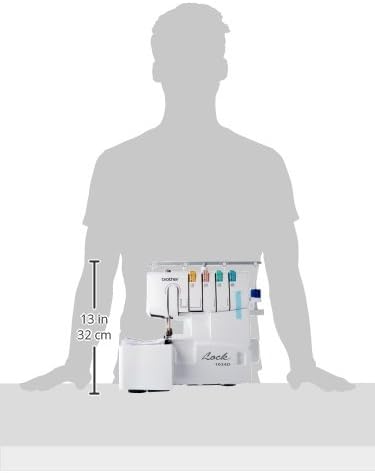 Visit on Amazon → Brother 1034D |
Finishing seams on knits, costumes, and fraying fabric | Overlock serger, trims and overcasts in one pass | $319.99 |
Should you buy the Brother HC1850?
Yes, for most first machines. It covers the most fabric types, the bundle gets you sewing the day it arrives, and the LCD takes the guesswork out of stitch selection. The 185 stitches are more than you need, which is fine, because you are not paying extra for complexity you cannot see. If you are the person who wants one machine and one decision, stop here.
Should you buy the Brother SE700?
Yes, if embroidery is the thing you actually want to do. The wireless LAN keeps design transfer simple and the eight included feet save you real money. No, if you are buying it because it sounds like more machine. You would be paying for a brain you will never use, and the repair bill on that brain is the trade you accept when you buy it.
Should you buy the SINGER 4432?
Yes, if your sewing is bags, curtains, denim hems, and heavy cotton, and your budget is the deciding factor. It is fast and it ships with an accessory kit. No, if you sew fine fabric, because tension nuance on silk and chiffon is not what this machine was built for. Remember that "heavy duty" on a home machine means sturdy, not industrial.
Should you buy the Brother 1034D?
Yes, if you already own a sewing machine and you are tired of fraying insides and stretched knit seams. It is the single biggest visual upgrade to costume work I know of. No, if it would be your only machine. You cannot buttonhole or set a zipper on a serger, and a beginner with one tool and the wrong tool has a bad first year.