I learned to sew on a machine with one stitch, no needle threader, and a tension dial that clicked when you turned it past the mark. Twelve years of costume work and a few hundred beginners through my classes later, I still judge every machine the same way: straight stitch first, tension behavior across a long seam second, buttonhole quality third, and then the only question that really matters, would I trust it on a paid costume.
Those four questions frame this comparison. These four machines sit in four different price brackets and four different sewing lives, and the gap between them has almost nothing to do with the number of stitches printed on the box. The best beginner sewing machines are the ones that make you want to sit down and sew tomorrow, and only one or two of the machines here do that for every kind of sewer.
The short answer: the Janome JW8100 is the strongest all-around pick of this group for garment sewing, the SINGER Heavy Duty 4523 Next Evolution is the best value if your fabric is mostly cotton and denim, the SINGER 4452 is the speed option for long straight seams, and the SINGER MX60 is the one I would point a small-space beginner toward.
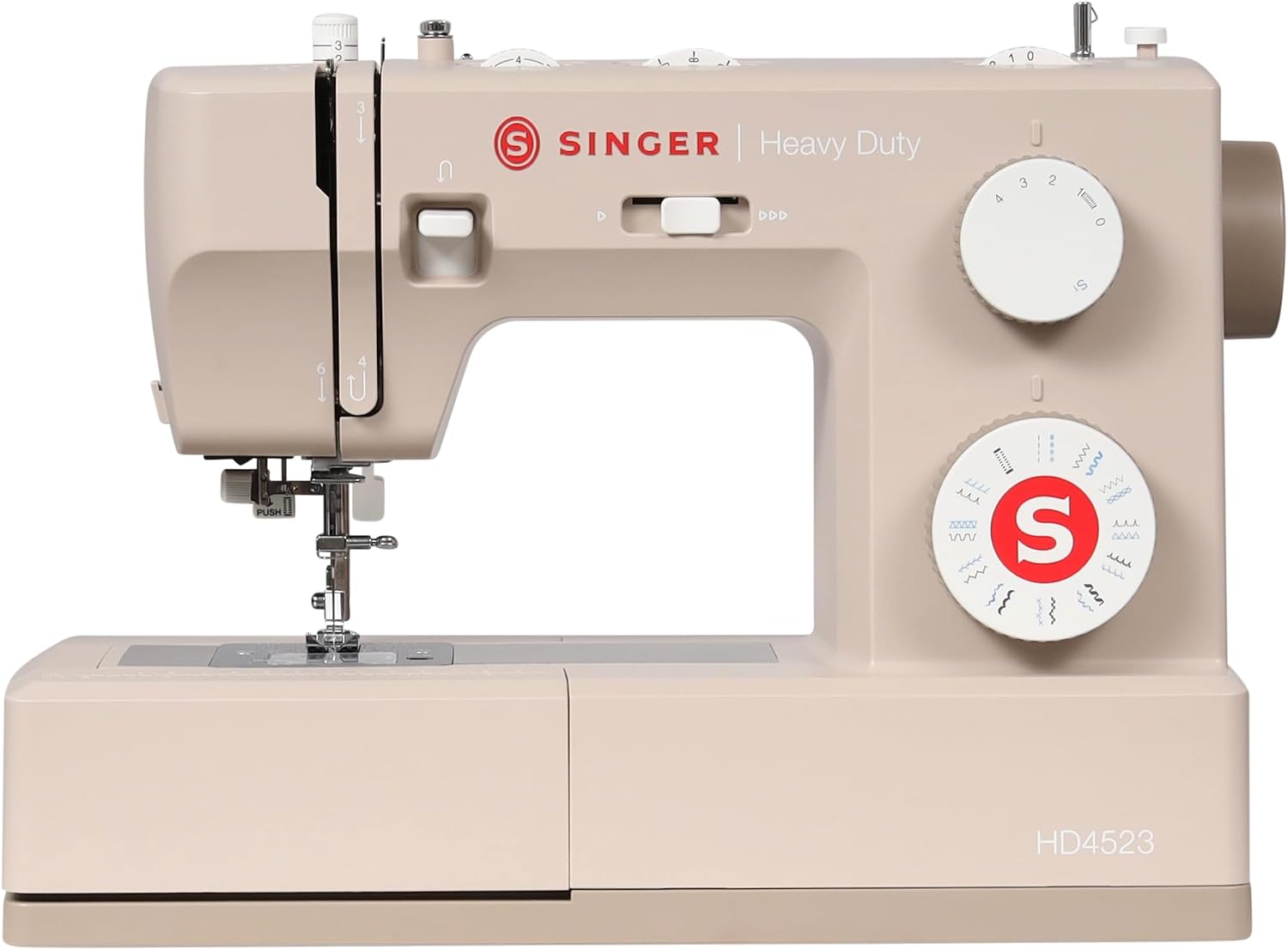
SINGER Heavy Duty 4523 Next Evolution
The newer of the two Heavy Duty platforms, with accessories in the box and mechanical controls that are easy to learn and easy to service
Mechanical only, so no computerized stitch selection or buttonhole memory, and the Heavy Duty name is marketing first and specification second
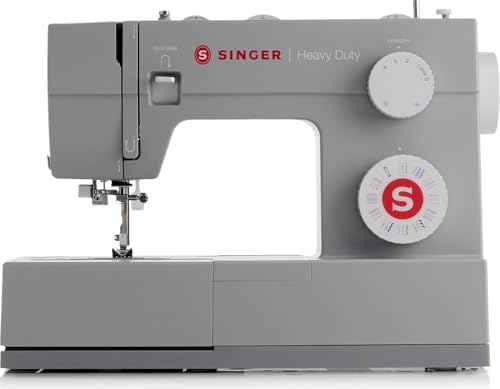
SINGER 4452 (Grey) High Speed Heavy Duty
High-speed straight stitching for long seams, curtains, and repetitive work, at the lower end of this group's pricing
The older Heavy Duty platform of the two, and speed does not fix a tension problem or make a better buttonhole
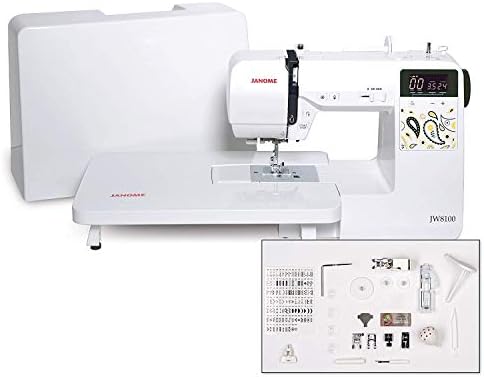
Janome JW8100
100 stitches, 7 buttonholes, hard cover, extension table, and 22 accessories: the most complete package here and the best garment-sewing brain of the four
Costs the most of this group, and computerized means a circuit board that can end the machine's working life early
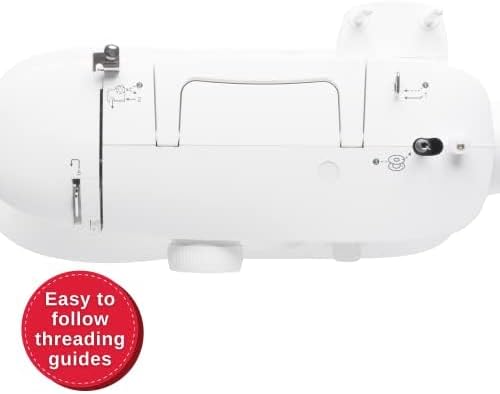
SINGER MX60
Lightweight and portable with an accessory kit, the easiest of the four to carry to a class or store on a shelf
A light build means thick fabric is not the job, and it carries fewer features than the machines above it
Prices and availability were captured from Amazon Creators API and may change.
How I judge a machine, and why stitch count comes last
My seam test journal runs on one rule: five fabric types, three stitch lengths, and a verdict. Cotton poplin, quilting cotton, denim, a knit, and a slippery lining. Three stitch lengths on each. If a machine holds tension across all fifteen combinations without me chasing the dial, it passes. If I have to re-thread to fix a bird's nest, it does not.
Notice what is missing from that list: decorative stitches. A hundred-stitch machine uses maybe ten of them, and eight of those ten are variations on the same zigzag. Stitch count is the easiest number to print on a box and the least useful number to compare across brands.
The tension dial is the second checkpoint. On a good machine, turning it one number changes the stitch in a way you can see and feel. On a frustrating machine, you turn it three numbers and nothing happens until it suddenly does, which is how beginners end up convinced that their machine is broken when the bobbin is simply threaded wrong.
Buttonholes are the third checkpoint because they expose the machine's brain. A seven-buttonhole machine like the Janome has to control stitch width, stitch length, and feed direction in sequence. A machine that makes a clean buttonhole on a cotton shirt placket will handle almost anything else you ask of it.
Janome JW8100: the garment sewer's pick
The Janome JW8100 is the machine in this group that reads like it was designed by people who sew clothes. A hundred stitches and seven buttonholes put real options in front of you: a stretch stitch that will not pop on a knit, a blind hem for a skirt, an overcast-style stitch to finish a seam allowance without dragging out the serger.
The hard cover and extension table matter more than they sound. A hard cover means the machine survives being shoved in a closet between projects, and an extension table gives you somewhere to land a jacket panel or a curtain hem instead of letting it drag off the edge of the table and pull your seam crooked. The 22 accessories are a starting kit, not a substitute for the two or three feet you will actually use.
Janome's reputation in my sewing circle is about consistency. The tension dials on Janome machines generally do something, the stitch quality holds up across fabric types, and the brand sits in that middle range where you get real capability without paying for a name that belongs in a professional studio. For a garment sewer who makes dresses, shirts, and costumes, this is the machine of the four I would hand over and expect to see again in a year.
The catch is the price and the electronics. This is the most expensive machine here, and every computerized feature adds a circuit board that a mechanical machine does not have. If a board fails out of warranty, the repair can run a serious fraction of what you paid. That is not a reason to avoid it. It is a reason to buy it from somewhere with a real return window and to keep it out of a damp basement.
SINGER Heavy Duty 4523 Next Evolution: the practical middle
The SINGER Heavy Duty 4523 Next Evolution is the sensible answer for a beginner whose sewing is mostly cotton, denim, canvas, and costume layers. It is the newer of the two Heavy Duty Singers in this comparison, it ships with accessories, and it keeps the mechanical control layout that made this series popular in the first place.
Mechanical controls are a feature, not a compromise. There is no menu to navigate, no stitch selection screen to fail, and no learning curve between you and a straight seam. The 4523 also has the kind of build and motor spec that makes it a reasonable choice for hemming jeans and sewing through the multiple layers at a waistband, which is exactly where cheap machines start to whine.
Where I get stuck is the branding. "Heavy Duty" on a modern consumer machine is doing a lot of work in the marketing department, and I have written before that a plastic-bodied machine with that label on it is one of my least favorite things in this hobby. The Heavy Duty series is the part of Singer's modern lineup I can actually recommend, which is a low bar but an honest one. It is not a vintage 201, and it will not outlive you.
What the 4523 does well is cover the widest range of ordinary beginner projects at a price that leaves room for a walking foot, a decent pair of shears, and extra bobbins. If you sew denim and cotton and you want a machine you can service yourself, this is the value pick.
SINGER 4452: the case for speed
The SINGER 4452 is the high-speed version of the same idea, and speed is a real specification when you sew long seams. If you make curtains, quilt backs, or anything with yards of straight stitching, a faster machine is the difference between an evening of sewing and three evenings of sewing.
That said, speed is the least interesting thing about a sewing machine to me, and it is not the same as stitch quality. A machine can stitch quickly and still produce a wobbly seam if the feed dogs and tension are not cooperating. The 4452 is the older platform of the two Heavy Duty Singers here, so if you are choosing between it and the 4523, you are mostly choosing between a familiar design and a newer one, both with the same limitations: no computerized features, no hard cover in the name, and buttonholes that will be fine rather than excellent.
For a sewer whose projects are mostly long, straight, and sturdy, the 4452 is a perfectly reasonable purchase. For a sewer who wants to make button-down shirts and knit dresses, the Janome is worth the stretch.
SINGER MX60: small, light, and honest about it
The SINGER MX60 is the machine I recommend to people who sew at a kitchen table, in a dorm room, or in an apartment where the machine has to go back in a closet when dinner is over. Lightweight and portable with an accessory kit is not a knock against it. It is the entire point of the machine, and plenty of good sewing happens on a light machine.
The trade-off is physics. A light machine has less mass to absorb vibration, so heavy fabric is not its job. Lightweight machines also tend to walk across the table when you push a thick seam through them, which is a problem you solve with a rubber mat or a nonslip pad rather than with a repair. If your fabric is quilting cotton, poplin, and the occasional knit, the MX60 will do the work.
The MX60 is also the machine where I would expect the automatic needle threader to be the first thing to break, because that is true of threaders across every brand at this price point. The question I always ask beginners is whether they can live without it when it goes. On a machine this simple, the answer is yes, and that is why I am comfortable recommending it as a first machine rather than as a permanent one.
What the trade-offs actually cost you
Three trade-offs separate these machines, and none of them show up in a spec sheet.
The first is the "heavy duty" label. On a modern consumer machine, it means the machine is built a little sturdier than the cheapest tier, not that it will sew leather or upholstery. If you need to sew webbing, thick leather, or four layers of canvas every week, no machine in this comparison is the right answer. Buy for the fabric you actually sew, not the fabric you imagine sewing.
The second is the needle threader. Every one of these machines either has one or will be sold as if it should. They break, usually in the first year or two, and the machine is still perfectly usable afterward. If a broken threader would make you stop sewing, buy the machine with the simplest threading path you can find and learn to thread it by hand from day one.
The third is electronics. The Janome is the only computerized machine here, and that buys you stitch selection, buttonhole memory, and a level of stitch consistency that mechanical machines struggle to match. It also buys you a failure mode that a mechanical machine does not have. Mechanical machines go out of adjustment. Computerized machines can go dark. Neither is immune, and the honest position is that you pick the failure you can live with.
Matching the machine to the sewer
If you sew garments, costumes, or anything with a buttonhole in it, the Janome JW8100 is the machine here that will keep you sewing the longest. The seven buttonholes and the extension table are not luxuries for that work, they are the difference between finishing a shirt and avoiding shirts forever.
If you sew denim, canvas, tote bags, and simple repairs, the SINGER Heavy Duty 4523 Next Evolution gives you the most capability for the least complication. It is the machine I would suggest to a beginner who wants to learn how a machine works instead of reading a menu.
If you sew long straight seams at volume, curtains, quilt backs, hemming in batches, the SINGER 4452 is built for that pace. It is a one-job machine in the best sense.
If you sew in a small space, take classes, or need a machine that lives on a shelf, the SINGER MX60 is the one that fits your actual life. A machine you can set up in two minutes gets used. A machine that takes twenty minutes and a cleared dining table does not.
What to buy alongside it
Budget for the accessories that make any of these machines better: a walking foot for quilting and layered seams, a fresh pack of bobbins that match your machine, needles in sizes for the fabric you sew, quality thread, and a seam ripper you do not have to hunt for. Frogging is the most practiced skill in sewing, and a cheap ripper makes it worse.
Skip the giant accessory bundle if it includes feet you will never attach. A walking foot, a zipper foot, and a quarter-inch foot cover almost everything a beginner does.
The bottom line
Four machines, four answers. The Janome JW8100 wins on stitch quality and buttonhole engineering. The SINGER Heavy Duty 4523 Next Evolution wins on value and simplicity. The SINGER 4452 wins on speed for long seams. The SINGER MX60 wins on portability and price of entry.
Pick the one that matches the fabric in your closet and the table you actually own, and spend the difference on thread and a walking foot. That is the decision that keeps a beginner sewing past month three.