Related: How to Choose Your First Sewing Machine: Fabric First, Features Second
I have taught beginner sewing classes for years, and the same question lands in the first ten minutes of every session: which machine do I buy? The honest answer is that beginner sewing machines are not one category. They are three. A handheld unit that lives in a drawer. A mini portable that sits on a table. A full-size mechanical machine that sews like a real tool. Picking the wrong one is why so many people quit in month two.
My rule has not changed in twelve years of costume work: buy for the fabric you actually sew, not the fabric you imagine sewing. If your list is hemming curtains, patching a backpack strap, and mending a torn seam on a school costume at nine the night before the parade, you need something very different from the person who wants to make a linen dress.
Here is how the four machines I would put in front of a beginner compare, and who each one is actually for.
Best Overall for Learning: Brother XM3700
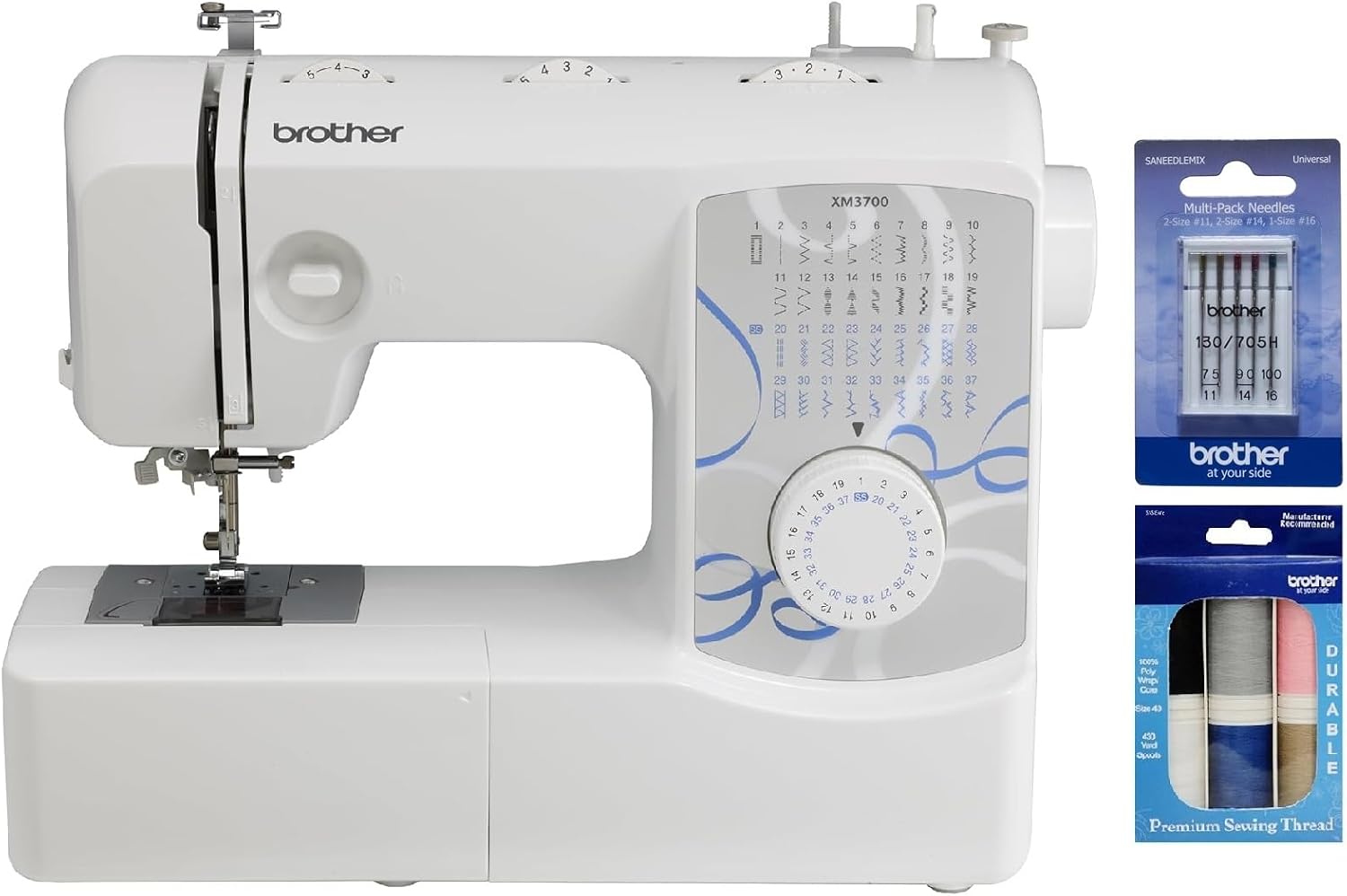
If you want to learn to sew, this is the machine to start on, and it is not a close call. The Brother XM3700 is a full-size mechanical machine with 37 built-in stitches, five included sewing feet, and a premium thread six-pack plus a needle five-pack in the box. That is a real machine, not a toy that happens to hold a needle.
The reason it matters is the straight stitch. On a full-size machine with real mass under the needle, you get a stitch you can press open and trust. On mini machines, the straight stitch is usually where the compromise shows up first: skipped stitches on knits, a wobble on lightweight cotton, a feed that pulls the fabric sideways. Run a straight stitch on denim, then on silk, and watch what the machine does at the transition. The machine that handles both without whining is the one.
Thirty-seven stitches is more than a beginner needs, and that is fine. You will use four of them for a year. The overcast-style stitch and the blind hem are the two that earn their place on a beginner's machine. The buttonhole is the one that tells you whether the machine has a brain, because a machine that makes a clean, even buttonhole has a feed and a tension system that are actually doing their jobs. Five presser feet means you can grow into zippers and buttonholes without ordering accessories for a while, and the bundled thread and needles mean you can sew the day it arrives.
The tradeoff is size. It has a footprint, it weighs what a real machine weighs, and it wants a table. If you have no permanent sewing corner, that is the price of admission.
Best for Emergency Mending: Handheld Sewing Machine for Beginners
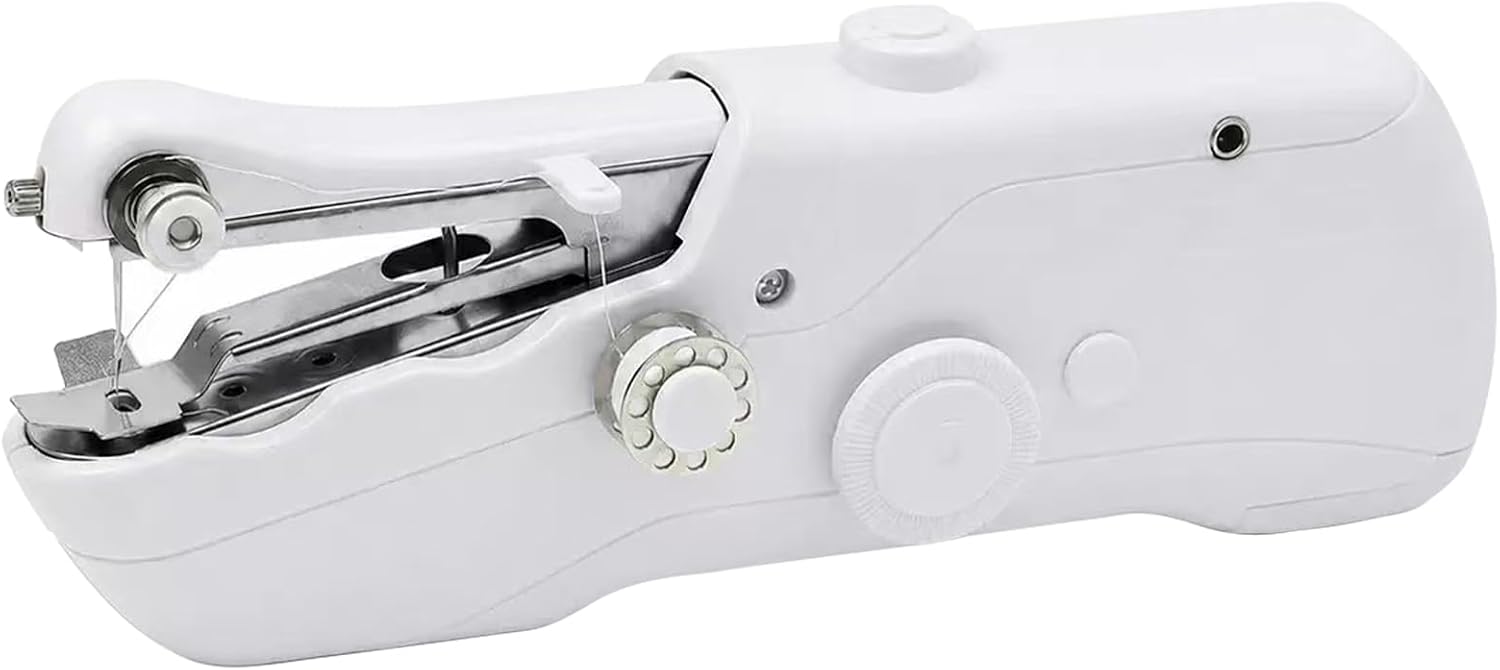
This is the one that lives in a drawer and earns its keep at the worst possible moment. A handheld machine is a battery of quick repairs: a fallen hem, a split seam on a costume, a strap that gave out on a suitcase. It fits in a travel bag, it needs no table, and it can be running in less time than it takes to thread a needle by hand.
What it is not is a sewing machine in the sense a garment sewer means it. There is no feed dog doing the work for you, so you guide the fabric and the machine follows. Stitch length is whatever your hand does. On a long seam, your stitch line will wander, and on anything heavier than mid-weight cotton it will struggle or skip outright.
Buy it for mending, quick crafts, and emergencies. Do not buy it to make a dress. The person happiest with this machine already owns a real one and wants a backup, or sews almost nothing but repairs. For a beginner with no other machine, it is a supplement, not a foundation.
Best Starter Bundle: Portable Sewing Machine with 28-Piece Fabric Kit
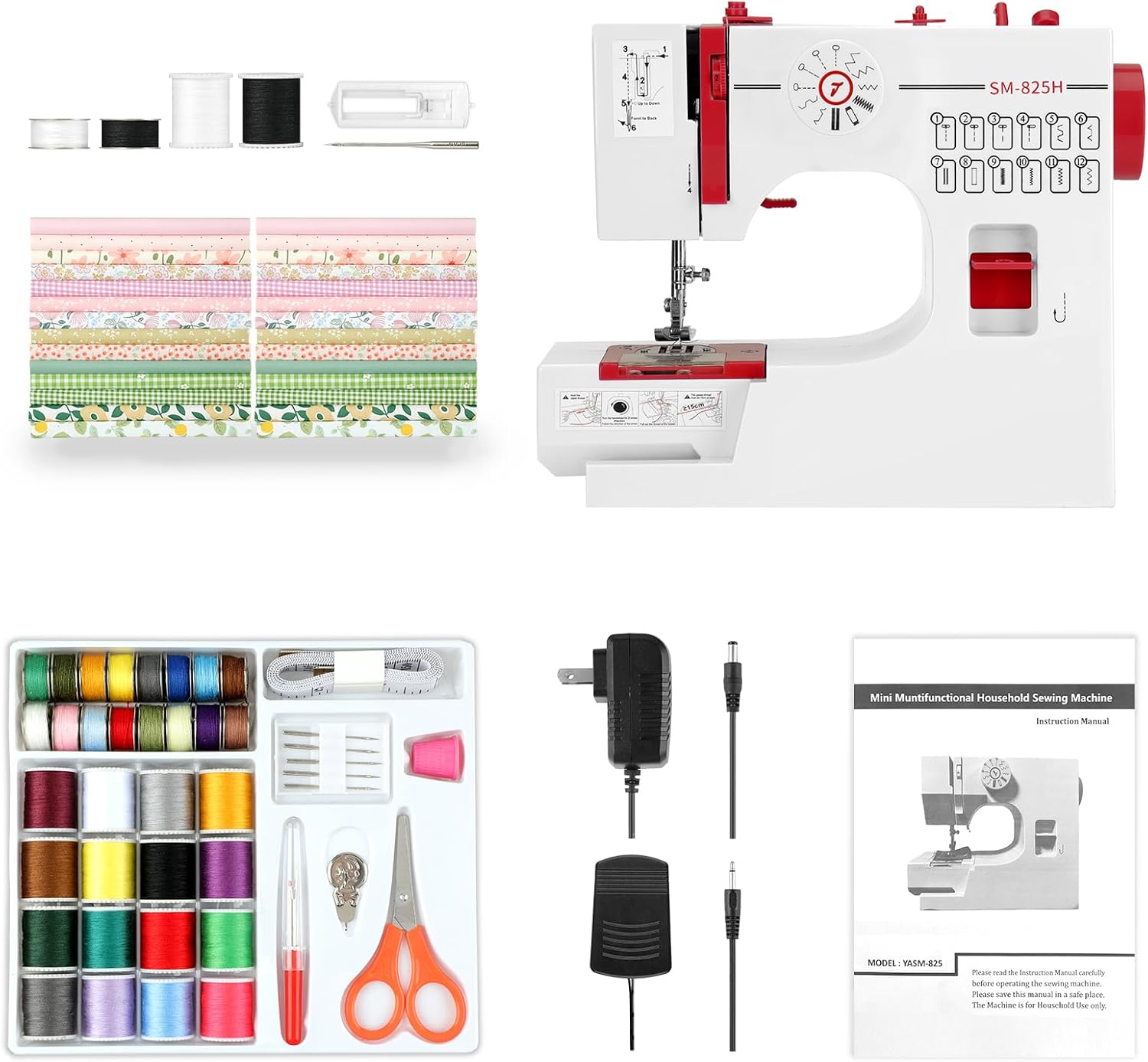
This is the middle path, and for a lot of beginners it is the right first purchase. It is a portable machine that arrives with a 28-piece fabric kit, which means you get the fabric, the tools, and the machine in one box instead of three separate orders and a week of guessing about what you need.
The kit is the real argument. Beginners lose their first month to logistics: which thread, which needles, which fabric, which scissors. A bundle removes those decisions, and the difference between a person who sews their first seam on day one and a person who sews it in three weeks is usually just that.
The tradeoff is the one every portable carries. It is lighter than a full-size machine, which means less mass under the needle, which means more vibration at speed and more attention required on thick seams. It will handle cotton, quilting-weight fabric, and simple garments comfortably. It will not love denim, canvas, or several layers of upholstery. That is true of nearly everything in this class, and no amount of "heavy duty" wording printed on a plastic body changes the physics.
If your plan is small projects, crafts, and learning the basics without committing a table to it, this is a sensible place to start.
Best Gift Option: Mini Sewing Machine with Extension Table
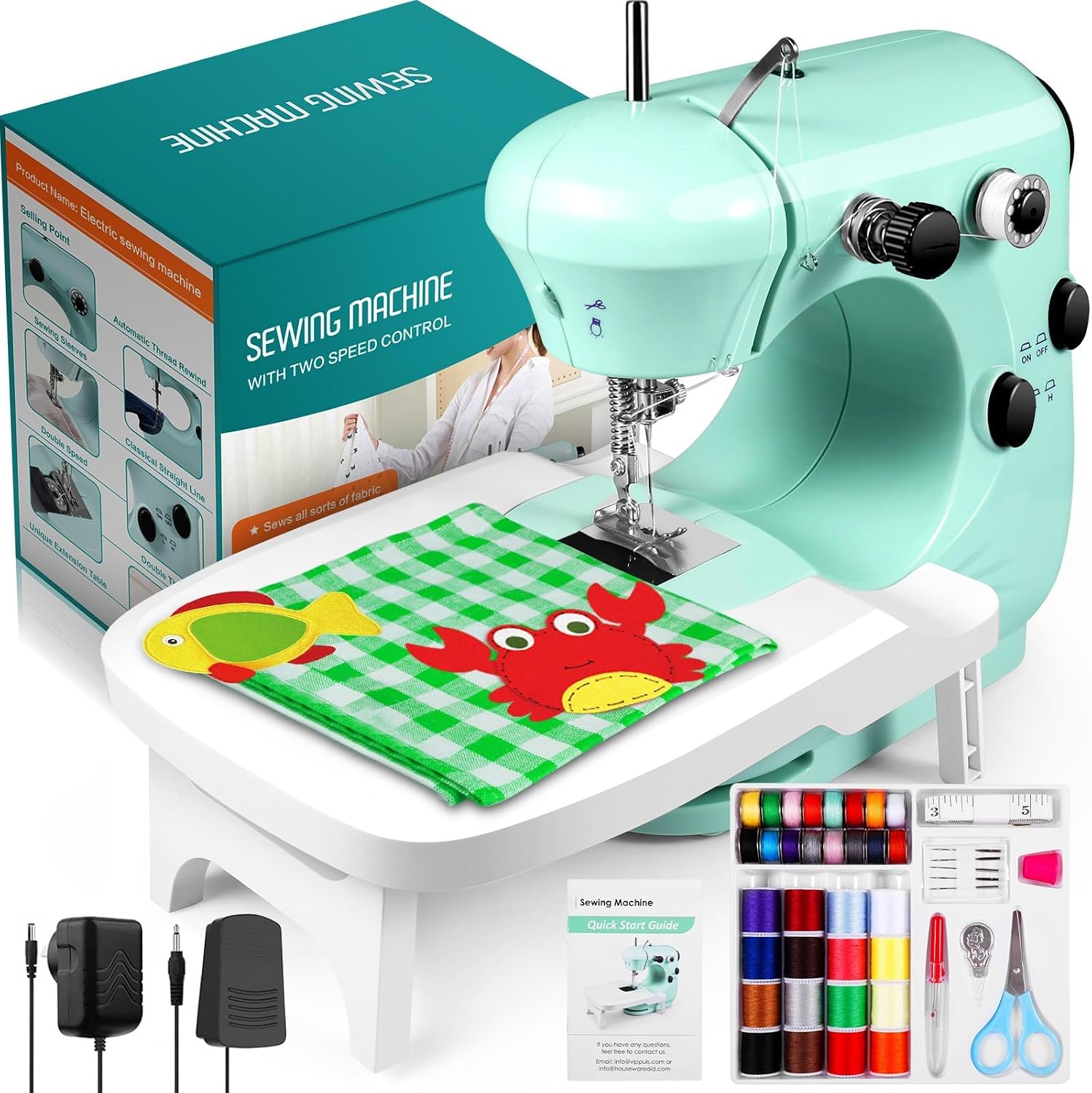
Of the small machines, this is the one built for a gift. It is a mini with dual speed, a built-in light, and an extension table, and the listing describes an eco-friendly body material. The extension table is the feature that matters most. A mini machine's built-in work surface is tiny; add the table and you finally have somewhere to rest the fabric while you sew, which is the difference between a straight seam and a curve you did not intend.
Dual speed is the second useful feature. Slow for learning, faster for long seams, and a beginner who can slow the machine down learns control instead of fighting it. The built-in light matters more than people expect, because you sew where the needle is, and shadows hide the mistakes you most need to see.
What it is not is a garment machine. Stitch selection is limited, the motor is small, and there is no meaningful presser foot pressure adjustment. It is a good gift for a kid who wants to make doll clothes, or for an adult who genuinely does not know yet whether they like sewing and does not want to spend real money finding out. It is a poor gift for an adult who has already decided they want to make clothes, because they will outgrow it in a month and feel awkward saying so.
How I test a beginner machine
Every machine I put in front of a student gets the same treatment. Five fabrics: quilting cotton, linen, a cotton knit, mid-weight denim, and a slippery poly lining. Three stitch lengths on each, recorded in a seam test journal, because a machine that looks fine at one length and skips at another is a machine that will ruin a hem at the worst moment.
The straight stitch comes first, always. Then the tension dial, because the dial should mean something. If turning it a full number changes nothing, the machine is decorative. Then a buttonhole, which is the truest test of the machine's brain. Then a four-layer seam of denim, and I listen. A machine that screams on thick fabric is telling you exactly what it is made of, and the answer is not usually heavy duty.
Finally I ask whether I would trust it on a paid costume. That is the real standard, and it is the reason I do not recommend a machine to a beginner just because it is cheap.
The comparison table
| Machine | Who it is for | Stitches | In the box | Price |
|---|---|---|---|---|
 Visit on Amazon → Brother XM3700 |
Learning to sew for real | 37 built-in | 5 presser feet, thread 6-pack, needles 5-pack | $149.97 |
 Visit on Amazon → Handheld mini machine |
Mending, travel, emergencies | Quick stitch | Machine only | $19.99 |
 Visit on Amazon → Portable machine with fabric kit |
Beginners who want everything at once | Standard portable set | 28-piece fabric kit | $76.49 |
 Visit on Amazon → Mini machine with extension table |
Kids, gifts, first try | Limited selection | Extension table, built-in light | $39.99 |
What the specs actually mean
Stitch count is marketing. A 37-stitch machine uses about ten of those stitches in real life, and a beginner uses four. What matters is not how many stitches exist but whether the machine executes the boring ones consistently.
"Portable" is a weight class, not a feature. Every lighter machine trades mass for convenience, and mass is what keeps a needle from deflecting on a thick seam. That is why I never promise a portable will handle denim.
"Eco-friendly material" and "heavy duty" are claims about the housing, not the mechanism. The parts that decide whether a machine sews well are the feed dogs, the presser foot, the bobbin case, and the tension assembly. Nobody prints those on a box.
Accessories are where the real value hides. Five presser feet and a thread and needle bundle on the Brother is a bigger deal than its stitch count. A 28-piece fabric kit on the portable machine is a bigger deal than its stitch selection, because it gets a beginner sewing instead of shopping.
Should you buy the Brother XM3700?
Yes, if you actually intend to learn. It is the only machine here I would trust on a paid costume, and it is the one a beginner can grow into instead of out of. Thirty-seven stitches, five feet, thread and needles included. Check current Amazon price and compare it against what you would spend on a mini machine plus fabric plus tools, and the gap closes fast.
Should you buy the handheld sewing machine?
Buy it for mending and emergencies, and buy it as a second machine. It is genuinely useful in a drawer, a dorm room, or a suitcase, and it will save a costume the night before a show. It will not teach you to sew a seam.
Should you buy the portable machine with the 28-piece kit?
If you want the shortest path from box to first finished project, yes. The kit removes the shopping decisions that stall most beginners, and the machine itself is a reasonable portable. Just keep it on cotton and quilting-weight fabric and it will behave.
Should you buy the mini with the extension table?
As a gift for a kid or a curious beginner, yes. The extension table and dual speed make it more usable than most minis, and the light helps more than the listing lets on. As a first machine for an adult who wants to make clothes, no. Buy the Brother instead and skip the upgrade in six months.
The short version: a handheld mends, a mini introduces, a portable gets you sewing, and a full-size Brother teaches you the craft. Buy for the sewing you will do next month, not the sewing you are daydreaming about.