I teach a beginner sewing class in Portland, and every term somebody unboxes a portable sewing machine for beginners at the back table, sews one wobbly line of stitches, and asks me whether they bought the wrong thing. After twelve years of costume work and a seam test journal that logs five fabric types and three stitch lengths per machine, my answer is blunt: it depends on whether you want to learn to sew or you want to fix a hem in five minutes. Those are two different products, and the four machines below split cleanly along that line.
For most beginners, the Brother XM3700 is the machine worth buying, because 37 built-in stitches and five included presser feet give you room to grow well past your first pillowcase. The handheld models are mending tools rather than teaching tools, and the Rxmeili kit is the least expensive way to find out whether you actually enjoy this hobby before you commit real money to it.
I want to be upfront about what this comparison is not. It is not a claim that a handheld machine is bad. I keep one in a drawer myself, next to a spool of gray thread, and it has saved a recital and a job interview in the same year. It is a claim that buying the wrong category is the most common and most expensive beginner mistake I see, and that the category question comes before the brand question every single time.
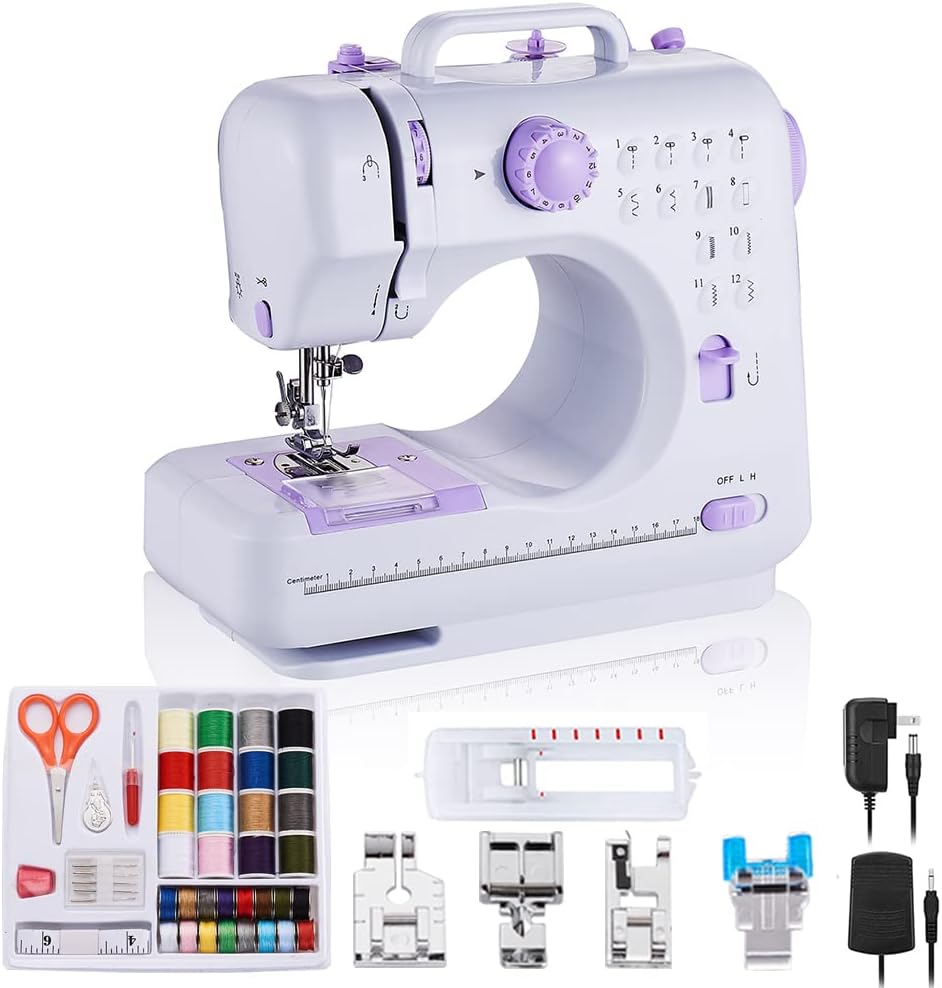
Rxmeili Portable 12-Stitch Sewing Machine, 42-Pc Sewing Kit for Beginners
The lowest-risk way in: 12 stitches plus a 42-piece kit that covers pins, needles, thread, and a seam ripper
Light and medium cotton only; it will struggle and complain on denim or canvas
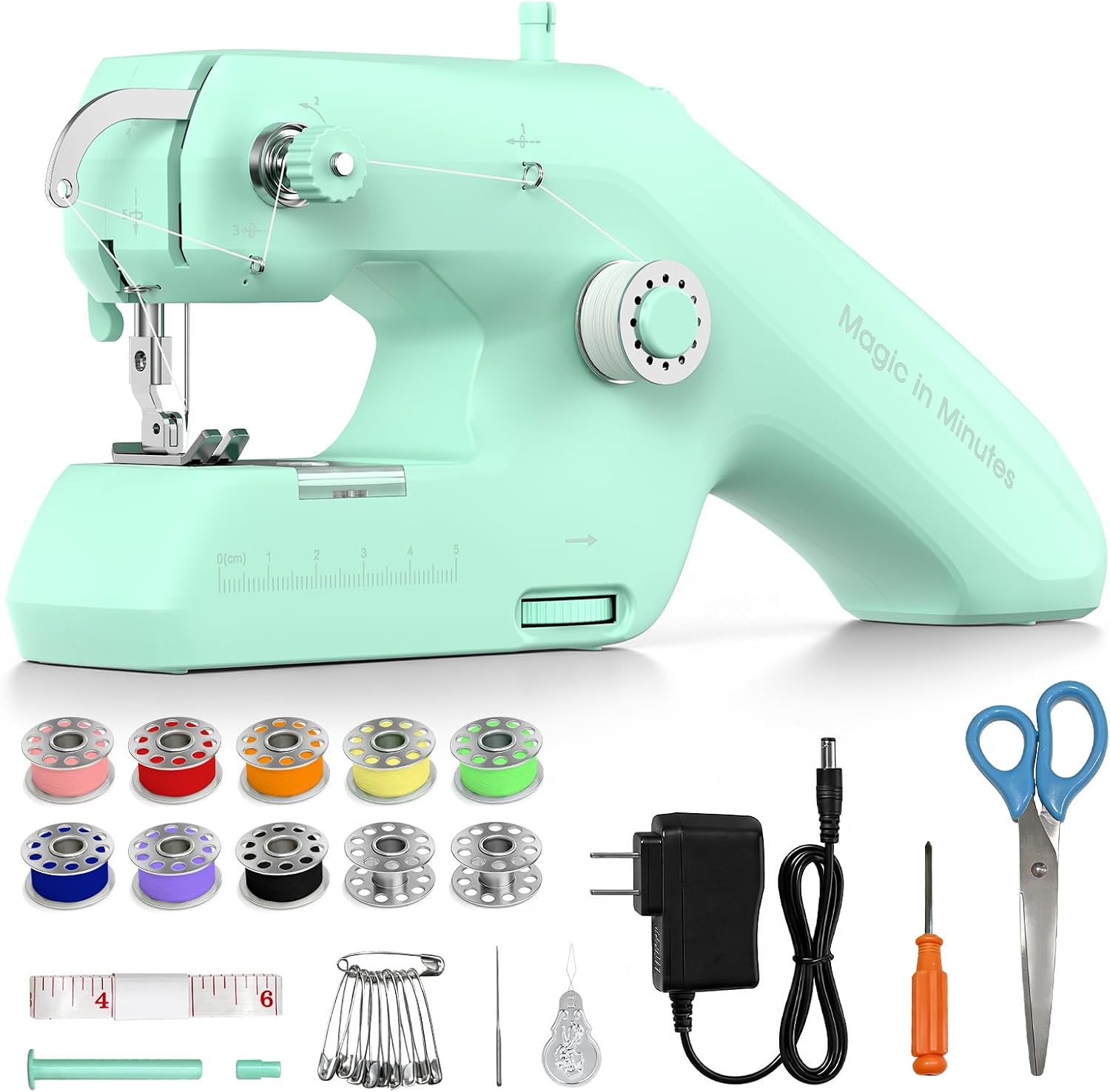
Double Thread Handheld Sewing Machine for Beginners with Lockstitch
A true lockstitch in a handheld body, so the seam holds better than single-thread chain machines
You feed the fabric with one hand, so long seams wander and seam allowances drift
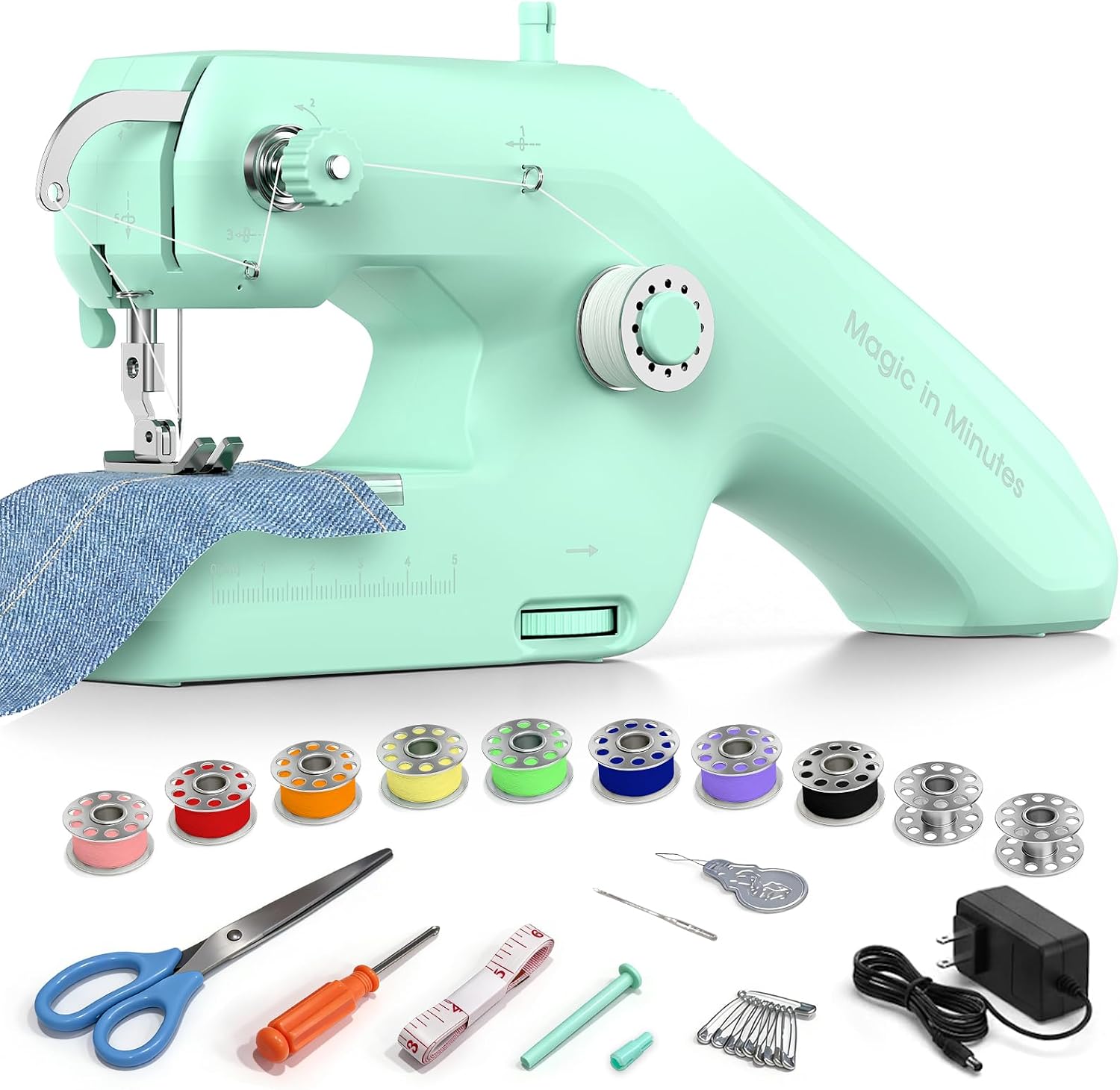
Portable Mini Handheld Sewing Machine for Beginners for Mending
Small enough for a drawer or a dance bag, and honest about being a repair tool
Mending is the entire job description; no presser foot, no feed dogs, nothing to learn on
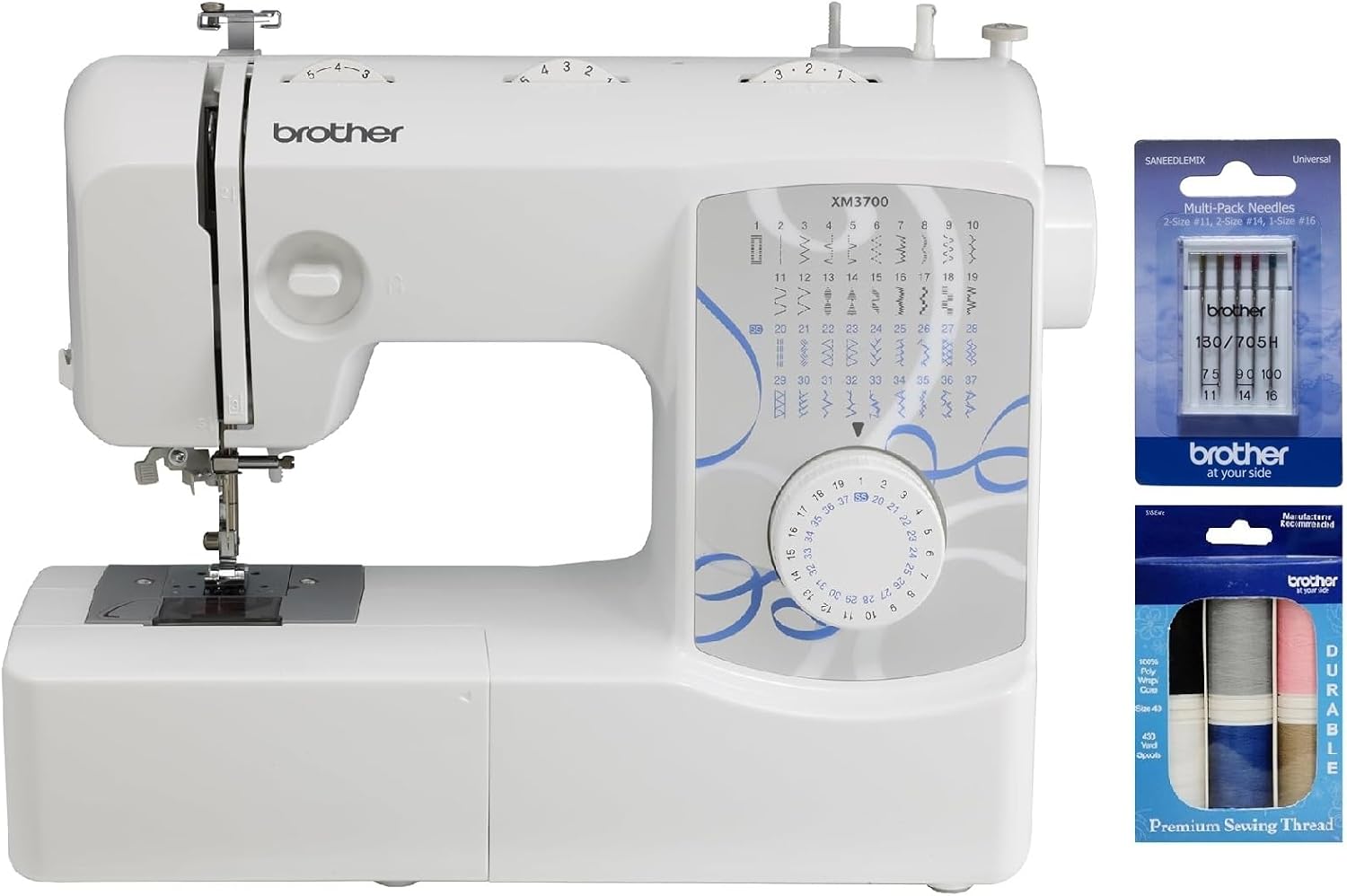
Brother XM3700 Sewing Machine, 37 Built-in Stitches, 5 Included Sewing Feet, Premium Thread 6-Pack and Sewing Machine Needles 5-Pack
37 built-in stitches, five included feet, and a bundle that arrives ready to sew
The most expensive of the four, and it needs a table and real space
Prices and availability were captured from Amazon Creators API and may change.
What I actually look for in a beginner machine
My seam test journal has one rule written at the top of every page: no verdict without a seam test on at least three fabric types. For beginners I care about four things, and they are in a specific order.
The straight stitch comes first. It is the stitch you will use for most of every project, and a machine that cannot hold a balanced straight stitch through quilting cotton and a medium-weight twill is not a beginner machine, it is a frustration with a motor attached. Before I recommend anything, I want to know how the stitch looks on the underside, not just on the top.
Tension control comes second. If the dial does not visibly change the stitch, you have lost your main tool for fixing problems, and you will spend your first month blaming your hands for something the machine is doing. A tension dial that means something is worth more than ten extra decorative stitches.
The presser foot situation comes third. Feet are how a machine does specific jobs: a zipper foot, a buttonhole foot, a blind hem foot. A machine that ships with one foot and no path to more is a dead end, no matter how many stitches it advertises.
Buttonholes come fourth, and they are the tiebreaker. A buttonhole is the most mechanically demanding thing a home machine does. Its quality tells you more about the machine's brain than any stitch count printed on the box.
That is the framework. Now the four machines.
The full-size pick: Brother XM3700
If you are going to own one machine, own a machine with feed dogs, a presser foot, and a needle that moves up and down over a flat bed. The Brother XM3700 is the only product in this comparison that qualifies.
The spec list is the reason. 37 built-in stitches is not a marketing number here; it is a working range that covers straight, zigzag, stretch, and decorative work, plus the blind hem you will want the first time you shorten a pair of pants. Five included sewing feet means you can install a zipper, sew a buttonhole, and finish a hem without ordering anything extra, and that matters more to beginners than they expect. The bundle also includes a six-pack of premium thread and a five-pack of needles, so the machine arrives ready to sew rather than ready to shop.
The trade-offs are price and space. This is the most expensive of the four, and it needs a table, a chair, and roughly the footprint of a small microwave. If your apartment has no sewing corner, that is a real cost, not a hypothetical one. But it is also the only machine here that will still be doing useful work when you are sewing a Halloween costume instead of a drawstring bag.
Two caveats I give every class. First, a 37-stitch machine uses maybe eight of those stitches on a regular basis; buy it for the feet, the tension dial, and the build, not for the number. Second, an automatic needle threader is a convenience, not a foundation. They break, and when yours does you need to be able to thread a needle by hand without panicking. Practice that in week one, before you need it.
The handheld machines: what they can and cannot do
Handheld sewing machines are a real category, not a gimmick, and I have watched them save people a lot of money on alterations. The catch is that they do one job well and everything else badly.
Rxmeili Portable 12-Stitch Sewing Machine, 42-Pc Sewing Kit for Beginners
The Rxmeili is the entry point. Twelve stitches, a 42-piece kit that includes the pins, needles, thread, and seam ripper you would otherwise buy separately, and a body light enough to move between the kitchen table and a closet shelf. For a beginner who wants to test the water before committing to a hobby, this is the lowest-risk way in.
What it is not is a machine for heavy fabric. A portable 12-stitch machine is built for light and medium cotton, and if you feed it denim, canvas, or a lined bodice, you will hear the motor struggle and you will blame the machine instead of the fabric choice. Buy it for cotton, muslin, and simple repairs and it will do exactly what you paid for.
Double Thread Handheld Sewing Machine for Beginners with Lockstitch
The double thread handheld is the one I recommend to people who specifically want a handheld. Lockstitch is the important phrase in its name. A lockstitch forms the same way a full-size machine's stitch forms, with an upper thread and a bobbin thread meeting inside the fabric, and that produces a stronger, more stable seam than a single-thread chain. If you are repairing a hem or taking in a curtain panel, this is the handheld whose seam will hold.
The limitation is your own hands. You guide the fabric with one hand while the machine works with the other, which means long seams wander and seam allowances drift. For short repairs it is excellent. For a 60-inch hem you will wish you had a flat bed and a presser foot guiding the fabric for you.
Portable Mini Handheld Sewing Machine for Beginners for Mending
The mini handheld is the smallest and most specialized of the four. Its stated purpose is mending: a dropped hem before a recital, a split seam on a work shirt, a quick repair on a backpack strap. Keep one in a drawer with a spool of thread and you will use it more often than you expect.
Do not buy it to learn on. There is no presser foot, no feed dogs, and no tension dial you can meaningfully adjust. You will not learn seam allowance, you will not learn to read a pattern, and you will not learn what a balanced stitch looks like. That is not a knock on the tool. It is a description of the tool.
Trade-offs worth naming out loud
Stitch count is the most oversold spec in this category. A 12-stitch machine and a 37-stitch machine both spend most of their lives on the straight stitch and the zigzag. The difference that matters is not the number, it is whether the machine has the feet and the tension control to let you use the stitches you have. That is why the Brother wins this comparison and why the Rxmeili is a starter kit rather than a destination.
Threaders break. Every automatic needle threader I have met has a lifespan, and the ones on budget machines are the shortest-lived of the bunch. If a machine's entire appeal is a threader, you have bought a two-month feature. Learn to thread by hand and a broken threader becomes an annoyance instead of the end of your evening.
"Heavy duty" stamped on a plastic body is a phrase I have learned to distrust. If your plan is denim, upholstery, or multiple layers of canvas, none of the four machines here is the right tool. The handhelds are for mending and light fabric, and the Brother is a home machine for garments, quilts, and crafts. If your actual sewing life is bags and denim, save your money for a machine built for that work.
Where you sew matters as much as what you sew. Three of these four machines can live in a drawer. One needs a table and a chair. Be honest with yourself about which life you actually have, because that answer eliminates half of this list before you spend a dollar.
Which one should you buy?
Buy the Brother XM3700 if you want to learn to sew and you have a table to sew on. It is the only machine here that will still be earning its keep after your skills outgrow beginner projects, and the included feet mean you will not be shopping for a zipper foot in week two.
Buy the double thread handheld with lockstitch if you already sew, or you already own a machine and want a second tool for mending, hemming, and quick repairs away from your sewing table. It is the handheld that forms a real stitch.
Buy the Rxmeili kit if you want the lowest-risk way to find out whether you like this hobby, and you understand that you are buying a starter kit rather than a lifetime machine. The 42-piece accessory set alone covers most of what a first project needs.
Buy the mini handheld if your goal is mending and nothing else. It is a repair tool, and it is good at being one.
The honest summary: one of these four is a sewing machine and the other three are tools that sew. Knowing which one you actually need is most of the decision, and no stitch count on a box will answer it for you.
What I am testing next
I am partway through a tension stability run on budget beginner machines, five units and a buttonhole marathon on each one, and I will post the results when the seam test journal pages are full. What twelve years at the machine have already taught me is that the machine you can adjust is the machine you can live with. A tension dial that means something, a presser foot you can change, and a straight stitch that holds on more than one fabric will beat a longer stitch list every single time.