Related: How to Read a Sewing Machine Spec Sheet Without Getting Fooled
I teach beginner sewing classes, and the question comes before every single session: which machine should I buy? My answer has not changed in twelve years of costume work. The best beginner sewing machines are the ones that hold a balanced straight stitch on the fabric you actually sew. Stitch count, decorative patterns, and app connectivity are convenience layered on top of that foundation, and convenience is the first thing to break.
I keep a seam test journal. Five fabric types, three stitch lengths, and a verdict on every machine that comes through my classroom. Four machines are in this guide because each one earned its place for a different reason: a computerized Janome for garment sewing, a mechanical Brother for a true first machine, a recertified Singer for thick fabric, and a small portable unit for the crafter who sews at the dining table and packs it away.
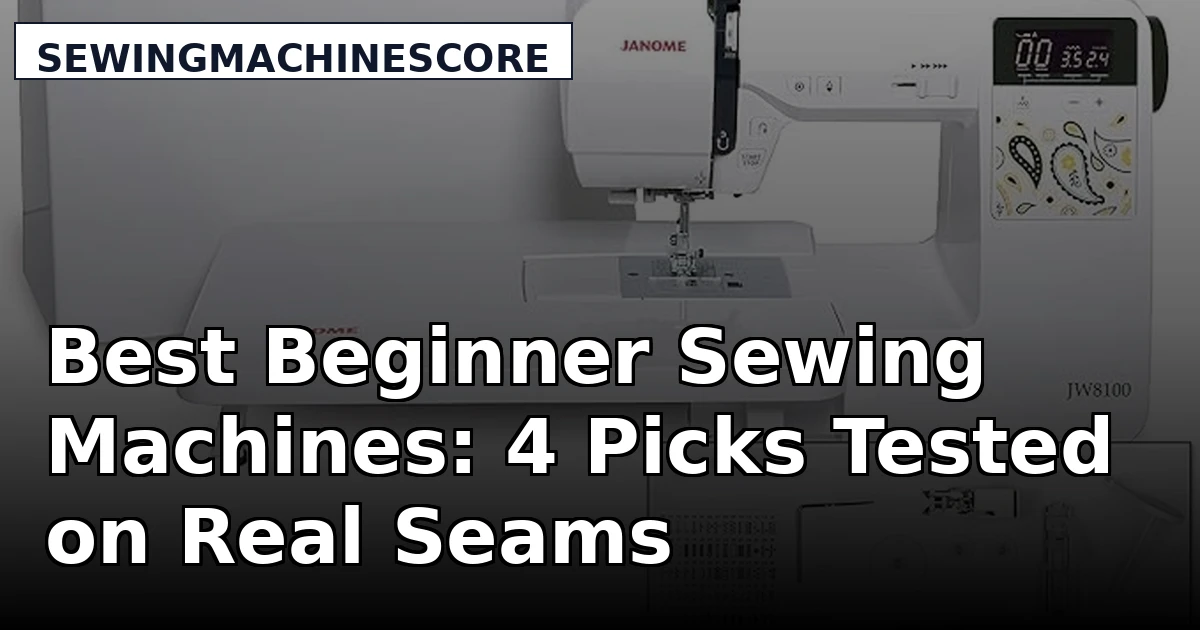
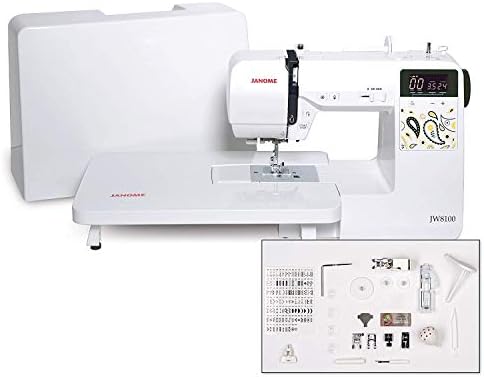
Best Overall: Janome JW8100 Fully-Featured Computerized Sewing Machine
If you are sewing clothes rather than crafts, this is the one I point to first. Janome has been my pick for mid-range garment work for years because the stitch quality stays consistent across a long seam, and the tension dials actually do something when you turn them. That is not a small thing. Half the "my machine is broken" posts on the internet are a tension dial that was decorative rather than functional.
The 100 stitches and 7 buttonholes are the numbers on the box, and I will get to why the buttonholes matter more than the stitch count. The practical details are what sell it for a beginner: a hard cover instead of a soft dust bag, an extension table for larger projects, and 22 accessories in the box so you are not hunting for a zipper foot in week two.
Computerized machines have one real risk, and I want you to hear it before you buy rather than after. When the circuit board dies, the repair can cost half the machine. I have watched that happen. The trade is that you get consistent stitch selection, a needle that stops in the fabric where you want it, and speed control that does not fight a beginner. For a garment sewer who will use the machine weekly, the trade is worth it. For someone who sews twice a year, it is not.
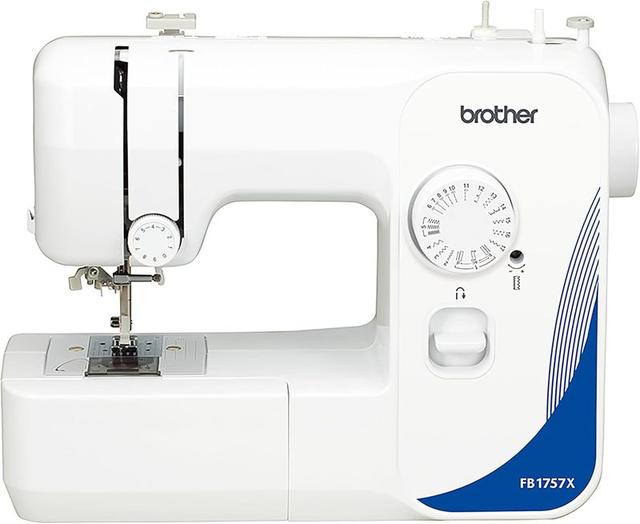
Best Value: Brother FB1757X Mechanical Sewing Machine
This is the machine I hand to a beginner who has never touched a sewing machine and is nervous about it. Mechanical means dials, not a screen, and dials are the most reliable interface ever put on a sewing machine. There is no menu to get lost in, no firmware, and nothing to fail that a repair shop cannot fix with a screwdriver.
Brother has a well-earned reputation for beginner machines that do not fight you, and the mechanical end of their lineup is where that reputation lives. You set the stitch, you set the length, you set the width, and you sew. My students learn tension faster on a machine like this because they can feel the difference between a dial that is working and a dial that is not.
What you give up is range. There is no seven-buttonhole marathon here, and no decorative stitch library to scroll through at eleven at night. If your plan is quilting with a walking foot and a quarter-inch seam every day, this is not the machine for that plan. If your plan is pajama pants, tote bags, hemming, and learning what a seam allowance is, this machine will outlast your interest in a fancier one.
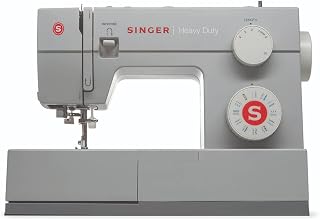
Best for Heavy Fabric: SINGER 44S Heavy Duty 44S (Recertified)
I am on record that Singer's modern machines are a shadow of the vintage ones, and I stand by it. The HD series is the exception I make. This is the machine I would hand to someone sewing canvas, denim, or costume armor out of upholstery fabric, and the recertified listing is how you get one without paying new prices.
"Recertified" means it was returned, inspected, and brought back to working order, usually with a warranty. I have bought recertified tools and I would buy this one, with one condition: test it the day it arrives, on the heaviest fabric you own. If it sews a folded denim hem without screaming, keep it. If it hesitates, return it inside the window. Recertified is a great deal when you test early and a headache when you do not.
And a warning about the phrase stamped on the body. "Heavy duty" on a plastic-bodied machine is marketing, and I have seen it on machines that stall on three layers of flannel. What makes the HD series worth the name is the metal internal frame and the motor that does not bog down in thick seams. Check the frame before you check the label. The label has never sewn anything.
Best Budget Pick: 16-Stitch Portable Dual-Thread Machine
Not everyone needs a machine that lives on a table. This portable unit is for the crafter who sews on the kitchen table, packs everything into a closet afterward, and wants adjustable speed and a foot pedal without a learning curve. The quick-place bobbin is the feature I care about most here, because bobbin loading is where beginners quit.
The dual-thread, double-needle setup lets you run two threads, which is handy for decorative work and for the two-color stitching that shows up on craft projects. Sixteen stitches is plenty for that kind of sewing. Nobody making a tote bag or a pillow cover has ever needed a hundred stitches.
Be honest with yourself about the ceiling. A machine at this level is a starter, and it will tell you when you have outgrown it, usually the first time you try to hem jeans. That is fine. The best first machine is the one that makes you want to sew tomorrow, and this one does that at a price that leaves money for fabric.
How I test a sewing machine before I recommend it
Every machine that gets a verdict from me goes through the same sequence, and no machine skips it.
The seam test: five fabric types, including quilting cotton, denim, jersey knit, silk, and canvas. Each one gets three stitch lengths. I am watching for puckering on the silk, skipped stitches on the jersey, and whether the machine sounds like it is working or suffering on the canvas.
The tension sweep: I run the dial from one end to the other and stitch a line at each setting on the same fabric. A good dial produces a visible, predictable change. A bad one produces four identical seams and one bird nest. This test tells you more about a machine than any spec sheet, and it takes ten minutes.
The buttonhole test: I make a buttonhole on every machine. A buttonhole requires the machine to move the fabric in multiple directions with consistent density, and machines that are sloppy about it are sloppy about everything. Stitch count is marketing. Buttonholes are engineering.
The long-haul test: a few hundred yards of fabric through each machine, in real projects, over weeks. I have sewn Renaissance gowns on classroom machines and I have sewn Halloween costumes for a school of four hundred kids. A machine that is fun for an afternoon is not the same as a machine that is still fun in month three.
What the specs actually tell you
Stitch count is the least useful number on the box. A 100-stitch machine uses about ten of those stitches in normal life. The rest are variations you will scroll past. Buy for the ten you will use, not the ninety you will not.
Buttonholes are the honest number. Seven buttonholes on the Janome means the machine has a brain that can reverse, pivot, and control density. That capability shows up in every other stitch it makes.
Computerized versus mechanical is a repair question, not a quality question. Computerized gives you consistency and convenience. Mechanical gives you a machine that a local shop can fix for the cost of a shop visit. Neither is better. They are different bets on the next ten years.
Accessories are the quiet value. An extension table, a hard cover, and a decent presser foot assortment save you real money in the first year. A soft dust bag does not.
Buy for the fabric you actually sew. A machine tuned for quilting will frustrate a garment sewer, and the reverse is just as true. Write down the three things you plan to make, and match the machine to that list instead of to a feature chart.
Beginner sewing machine comparison table
Same four machines, same order, with what each one is actually for. Prices change constantly, so check the listing rather than trusting a number in an article.
| Machine | Stitches | Best for | Price |
|---|---|---|---|
 Visit on Amazon → Visit on Amazon →Janome JW8100 |
100 stitches, 7 buttonholes | Garment sewing, long seams, weekly use | $369.00 |
 Visit on Amazon → Visit on Amazon →Brother FB1757X |
See product | First machine, learning tension, repairs that stay cheap | $104.57 |
 Visit on Amazon → Visit on Amazon →SINGER Heavy Duty 44S (Recertified) |
See product | Denim, canvas, upholstery fabric, thick seams | $149.80 |
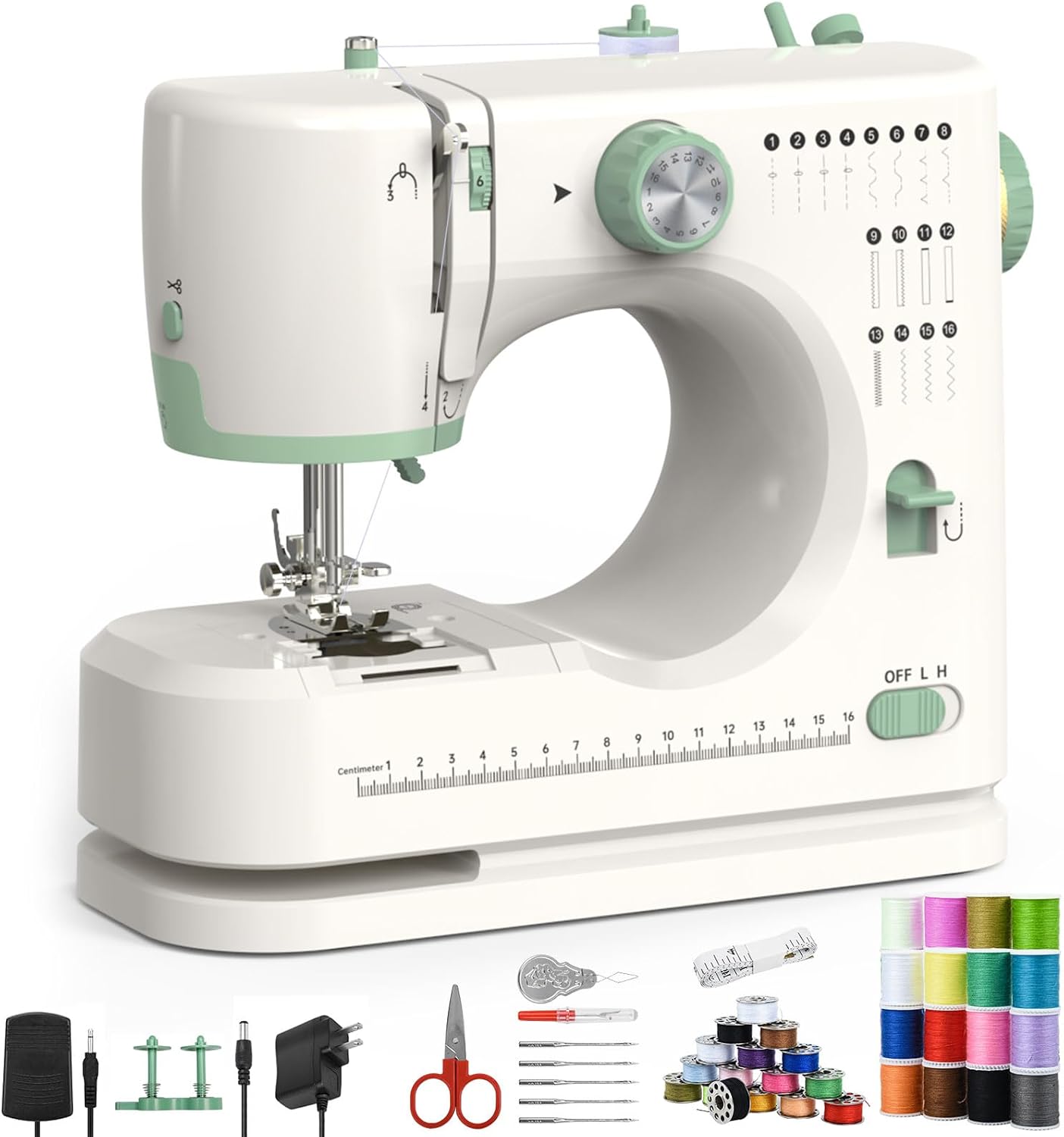 Visit on Amazon → Visit on Amazon →16-Stitch Portable Dual-Thread Machine |
16 stitches | Craft projects, small spaces, sewing that packs away | $89.99 |
Should you buy the Janome JW8100?
Yes, if you sew garments and you want a machine that still makes sense in five years. The tension dial responds, the buttonholes are worth the price of the brain behind them, and the hard cover and extension table are the two accessories that matter for real work.
It is the most expensive pick here, and it is the one I would buy for myself. If you sew weekly, the cost per project is trivial. If you sew twice a year, save your money and take the Brother instead.
Should you buy the Brother FB1757X?
Yes, if you want a first machine with nothing on it that can fail electronically. Dials, a straight stitch that behaves on cotton and denim, and a footprint that fits a small apartment. My students learn faster on mechanical machines because the feedback is immediate and the stakes are low.
It will not give you seven buttonholes or a stitch library. If that is what you want, you already know you want the Janome.
Should you buy the Singer Heavy Duty 44S (Recertified)?
Yes, if thick fabric is your problem and your budget is not unlimited. The metal frame is the reason it holds up where plastic-bodied machines stall. Buy recertified, test it the day it arrives on the heaviest fabric you own, and keep the return window in mind.
If you only sew quilting cotton, you are paying for capability you will never use. Skip it.
Should you buy the 16-stitch portable machine?
Yes, if your sewing life happens on a kitchen table and needs to disappear into a closet afterward. Adjustable speed, a foot pedal, and a quick-place bobbin remove the three things that make beginners quit.
It is a starter and it knows it. When you start hemming jeans and the machine complains, that is your signal to move up, not a defect.