Related: Best Sewing Machine for Costume Work: Stitch Quality Over Stitch Count
The phrase "beginner sewing machine" gets glued onto everything from a handheld gadget that fits in a drawer to a computerized quilting workhorse, and those two things have almost nothing in common. I teach beginner sewing classes in Portland, and the same question lands in every session: which machine do I buy first? The honest answer is that it depends on the fabric you actually sew, and on whether you want to learn on a machine that behaves.
I keep a seam test journal. Five fabric types, three stitch lengths, and a verdict on every machine I have put thread through. Quilting cotton, mid-weight linen, a ponte knit, a scrap of denim, and a slippery lining fabric. If a machine runs a straight stitch across all five without skipping or nesting, it passes the first gate. Then comes the buttonhole marathon, because buttonholes tell you more about a machine's brain than a stitch count ever will.
The four machines here cover the range most beginners are choosing between: a computerized Brother with 165 stitches, a Singer built for heavy fabric, a mini electric machine with a 42-piece kit, and a handheld kit that lives in a drawer. Here is how I would sort them, and what I would check before you spend anything.
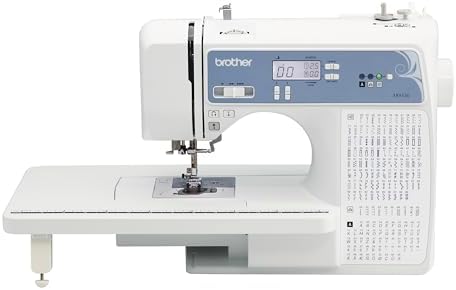
Best Overall: Brother XR9550 Computerized Sewing and Quilting Machine
If you want one machine that carries you from your first tote bag to your first quilt, this is the one I point beginners toward. The XR9550 is computerized and quilting-capable with 165 built-in stitches, and it sits in the middle of the market where most first-time buyers should be looking. Check current Amazon price.
165 stitches is more than you will use. I say that as a person who counts stitches for a living. You will live in four of them: straight stitch, zigzag, a three-step zigzag for knits, and one stretch stitch. But the computerized layer is the part that matters, because it is what controls needle position, speed, and the repeatability of the stitch. A computerized machine runs the same stitch at the same length every time you press the pedal. Consistency is the thing a beginner needs most, and it is the thing a cheap mechanical machine cannot fake.
What I would check first on any computerized machine is the straight stitch. Run it on quilting cotton, then on linen, then on a scrap of denim. If the tension stays balanced across those three without you touching the dial, the machine is doing its job. Then run a buttonhole. The XR9550 is built for quilting as well as garments, which means it is designed to move a quilt sandwich through the machine better than a basic mechanical model will. That is the difference between quilting being pleasant and quilting being a fight.
The trade-off is the circuit board. Computerized features are wonderful until the board dies and the repair costs a large fraction of what you paid. That is true of every computerized machine, not just this one. If you sew hard and often, it is a risk worth taking. If you sew twice a year, a mechanical machine is the safer long-term bet.
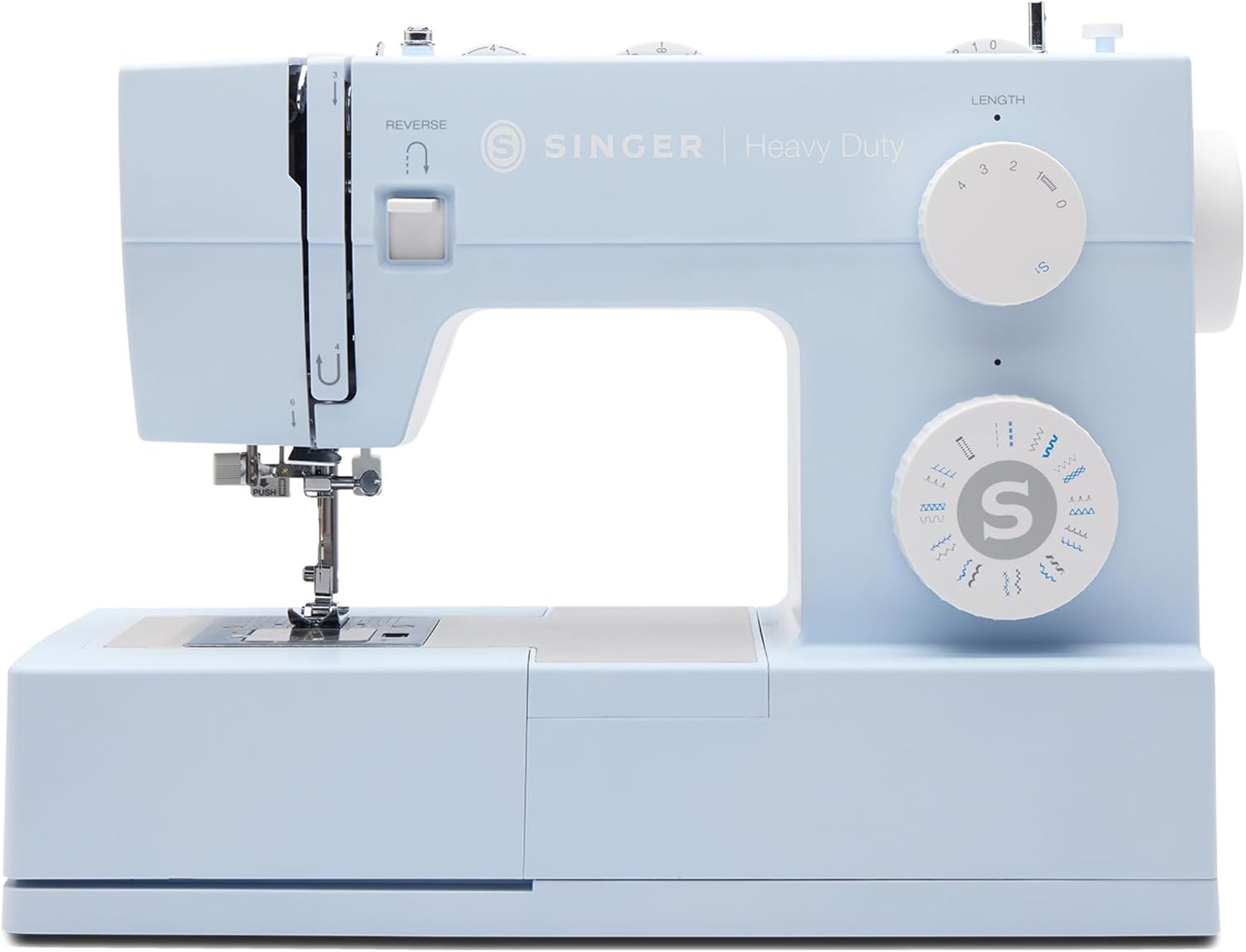
Best Value: SINGER 4423 Heavy Duty Sewing Machine
The 4423 is the machine I recommend when someone tells me their projects involve denim, canvas, or upholstery fabric. It is a heavy duty machine that comes in Meltwater Blue with an accessory bundle, and this is one of the few modern machines where the heavy duty label is doing real work rather than decorating a plastic shell. Check current Amazon price.
Here is my honest position on Singer. The modern lineup is a shadow of the vintage machines, and I will say that to anyone who asks. The HD series is the part of that lineup I still respect, because a heavy duty machine is about the mechanical work: metal where it counts, a motor that does not stall on a thick seam, and no computer to argue with when the layers get deep.
What you give up is the computerized layer. Stitch selection is mechanical, nothing is memorized for you, and the machine will not hold your hand through a decorative stitch. What you get instead is a machine that will very likely still be running when the computerized one in the next chair has been to the repair shop twice.
If you sew garments, this is a strong first machine. If you quilt, get the Brother instead, because quilting asks for a different set of features than heavy-fabric sewing does. Buying for the fabric you actually sew is the whole decision. A heavy duty machine frustrates a quilter, and a quilting machine frustrates someone who wants to hem jeans.
How I test a beginner machine
Every machine I form an opinion on goes through the same sequence, and it is the sequence I would hand to a first-time buyer if I could.
The five-fabric straight stitch. Cotton, linen, ponte knit, denim, slippery lining. Three stitch lengths on each. I am watching for skipped stitches, nested thread underneath, and whether the tension dial actually does something between settings. A tension dial that does nothing across its full range is a machine telling you the truth about its build.
The seam crossing. Two pieces of fabric joined, then crossed over a bulky intersection, the way a real garment does at a shoulder or a crotch seam. Machines that scream on thick fabric get written down in the journal with a note. I have no patience for a machine that whines at three layers of denim.
The buttonhole marathon. Four buttonholes in a row, same settings, and then I look at all four side by side. The truest test of a machine's brain is whether buttonhole number four looks like buttonhole number one. A machine with a shaky buttonhole will make shaky garments, no matter how many decorative stitches it advertises.
The final question, which is the one that actually decides it: would I trust this machine on a paid costume? If the answer is no, I say so.
Analysis: what the numbers do not tell you
Stitch count marketing is the biggest lie in this category. A machine with 100 stitches uses about 10 of them, and most sewists use four. Pay for stitch quality and tension stability, not for a longer menu. The Brother's 165 stitches are nice to have. The straight stitch underneath them is what you are actually buying.
"Heavy duty" is a phrase I want to see earned. On a plastic-bodied machine it means nothing, and it is one of my standing complaints about the category. On a machine like the Singer 4423, where the whole point is punching through layers, the label means something. The test is simple: does the machine hold its stitch length when the fabric gets thick, or does it shorten up and pucker?
Automatic needle threaders break. Every one I have used eventually goes. The question is not whether it will break, it is whether you can live without it when it does, and whether the rest of the machine is worth threading by hand. That is why I never let a threader be the deciding feature on a beginner machine.
Bobbin issues are behind half the posts I read where someone insists their machine is broken. It usually is not. It is usually a bobbin wound unevenly, or the wrong bobbin for the machine, or a bobbin case with lint in it. Learn to wind a bobbin properly and to clean the bobbin area, and you will avoid most of the frustration that makes people quit in month two.
The mini machines have a real place, and I will get to that below. But understand what they are: a light-duty tool for light work. They are not a substitute for a full-size machine, and no amount of bundled accessories changes that.
The beginner sewing machine reference table
This is how I sort these four machines. Nothing here is a substitute for running a straight stitch yourself, but it will tell you which machine belongs in your cart.
| Machine | Best for | Stitches listed | Speed control | Notes |
|---|---|---|---|---|
 Visit on Amazon → Visit on Amazon →Brother XR9550 |
Garment sewing and quilting | 165 built-in | Computerized, foot pedal | Best all-round first machine |
 Visit on Amazon → Visit on Amazon →SINGER 4423 |
Denim, canvas, upholstery | Heavy duty build | Foot pedal | Accessory bundle included |
 Visit on Amazon → Visit on Amazon →Mini electric machine |
Learning stitches, small projects | 12 built-in | Dual speed, foot pedal | 42-piece kit included |
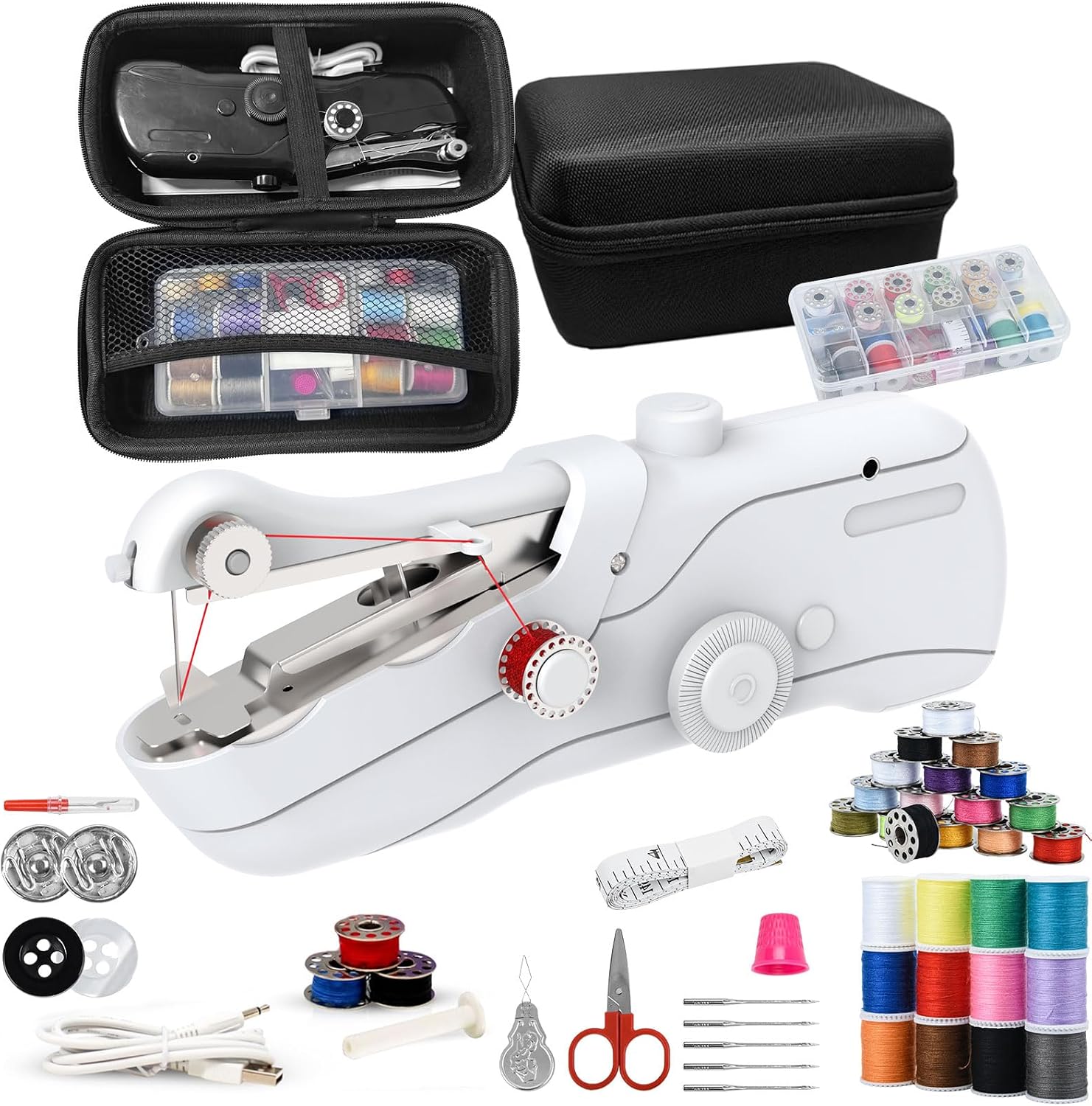 Visit on Amazon → Visit on Amazon →Handheld sewing kit |
Mending, hems, quick repairs | Not listed | Two speed modes, electric switch | Storage built in |
Read the table by column two, not column three. Best for is the only column that decides anything. If your answer is quilting and garments, go Brother. If your answer is thick fabric, go Singer. If your answer is mending and small repairs, the handheld kit is the right tool. If your answer is "I do not know yet," the mini machine is a cheap way to find out, and the Brother is what you buy once you know.
Mini electric machines
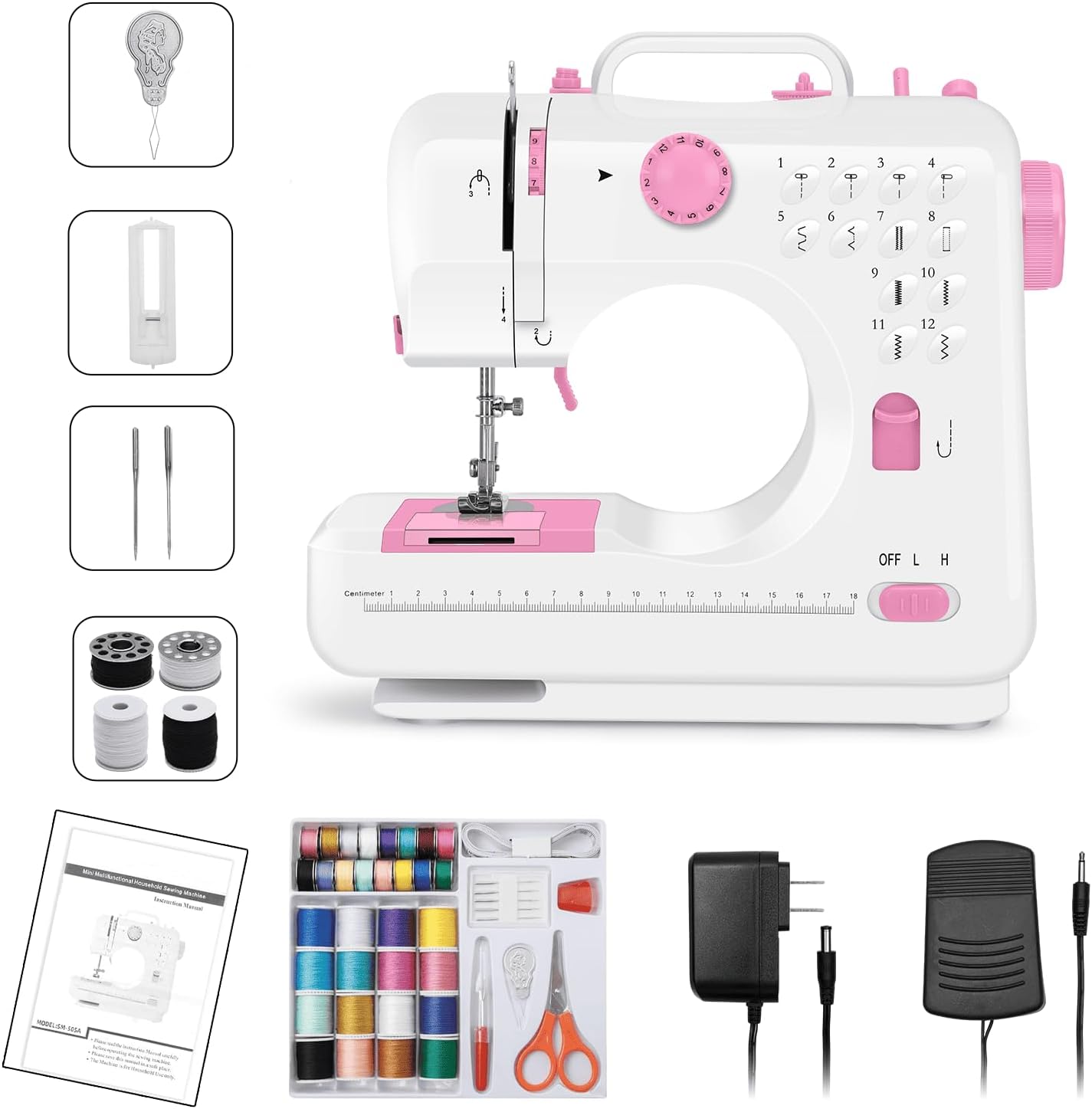
This mini electric machine is a beginners' model with 12 built-in stitches, dual speed, a foot pedal, and a 42-piece sewing kit. Check current Amazon price. As a first machine for a kid, or as a way to find out whether you enjoy this at all before committing real money, it does a job.
What it will not do is behave like a full-size machine on a real garment. The 12 stitches are enough to learn what a stitch is and how fabric feeds, and the foot pedal with dual speed gives you actual control instead of a single on-off switch. That matters more than it sounds, because learning to control speed is half of learning to sew.
My advice: buy it knowing what it is. Learn the straight stitch on it, make a tote bag, and if you are still sewing in three months, upgrade. Do not expect it to hem a pair of jeans or to hold tension on a knit.
Handheld and portable machines
This handheld kit comes with storage built into the machine, an electric switch, and two speed modes. Check current Amazon price. It is a mending tool, and I mean that as a compliment. Every costume shop I have worked in has something like this in a drawer for a reason: a hem that let go ten minutes before curtain, a seam on a curtain that nobody wants to take down.
Where beginners get into trouble is buying one of these as their only machine. A handheld machine cannot construct a garment. It cannot hold tension across a long seam the way a flat-bed machine does, and it will not run a consistent stitch length over a yard of fabric. Buy it as the second tool in the drawer, the one that handles the emergencies, and you will be glad you own it.
Should you buy the Brother XR9550?
Yes, if you want one machine that covers garment sewing and quilting. It is computerized with 165 built-in stitches, and the computerized layer is what gives you the consistent straight stitch a beginner needs. The trade-off is the circuit board. If it fails out of warranty, the repair can cost a large fraction of the machine. Sew often and that risk is worth taking. Sew twice a year and a mechanical machine is the safer bet.
Should you buy the SINGER 4423?
Yes, if you sew denim, canvas, or upholstery fabric. It is a heavy duty machine with an accessory bundle, and it is the one I point people toward when their projects involve thick seams. You give up the computerized conveniences and you get a machine built to punch through layers. If your main goal is quilting, choose the Brother instead.
Should you buy a mini or a handheld machine?
Buy one as a second machine, not a first one. The mini electric model with 12 built-in stitches, dual speed, and a 42-piece kit is a fine way to learn what a stitch does, and the handheld kit with storage is genuinely useful for mending and hems. Neither replaces a full-size machine for real garment construction. Match the machine to the fabric and the work, and you will not waste money either way.