Related: How to Choose a Sewing Machine: What the Stitch Count Never Tells You
Sewing machine needles are sold as universal, denim, ballpoint, and microtex, but the box won't tell you which one your machine actually needs. I've been sewing for 12 years, teach beginner classes, and keep a seam test journal on every machine I use. After burning through a box of bent needles on a denim hem last month, I have some opinions. Here's what actually matters.
Start with the system, not the needle
Before you buy anything, check your machine's manual for the needle system it takes. Most home machines use HAx1 or 130/705H needles, which are the same thing under two names. My Brother XM2701 and my Singer 4423 both take them.
My grandmother's old Kenmore took them too. But some older machines and most industrial machines use different systems, and a needle that doesn't seat properly will break, bend, or skip stitches no matter how good it is.
This is the part that makes people give up. They buy a pack of needles, pop one in, and the machine starts making a thunking noise. They blame the machine. I've done it myself. The needle was wrong for the system, and the machine was fine.
Needle size matters more than brand
Needles come in sizes like 70/10, 80/12, 90/14, and 100/16. The first number is the metric diameter in hundredths of a millimeter. The second is the old American system. A 70/10 is fine for silk and lightweight cotton. A 100/16 is for denim, canvas, and leather.
Here's the thing I tell my students: the needle size has to match both the fabric and the thread. If you're sewing a cotton dress with 50-weight thread, a 70/10 or 80/12 is right. If you're topstitching a denim jacket with 40-weight thread, you need a 90/14 or 100/16.
The needle eye has to be big enough for the thread to pass through without friction, and the needle shaft has to be thick enough to not bend when you push it through heavy fabric.
I sewed through four layers of Cordura on my Singer 4423 with a 100/16 denim needle and it didn't even flinch. I tried the same fabric with an 80/12 and bent the needle on the second seam. Same machine, same thread, different needle. That's the whole lesson.
Universal needles are fine, but they're a compromise
Universal needles have a slightly rounded point that works on both wovens and knits. They're the default that comes with most machines, and they're fine for general sewing. But they're not great at anything.
For knits, a ballpoint needle pushes the fibers aside instead of cutting them, which prevents skipped stitches and runs. For tightly woven fabrics like denim or canvas, a sharp needle with a reinforced shaft cuts through cleanly without bending. For silk and other delicate fabrics, a microtex needle has an extra-sharp point that doesn't push the threads around.
I keep a box of each on my shelf. It's maybe ~$7.24 total, and it saves me from ripping out seams and cursing at the machine.
The Brother XM2701 and its needle quirks
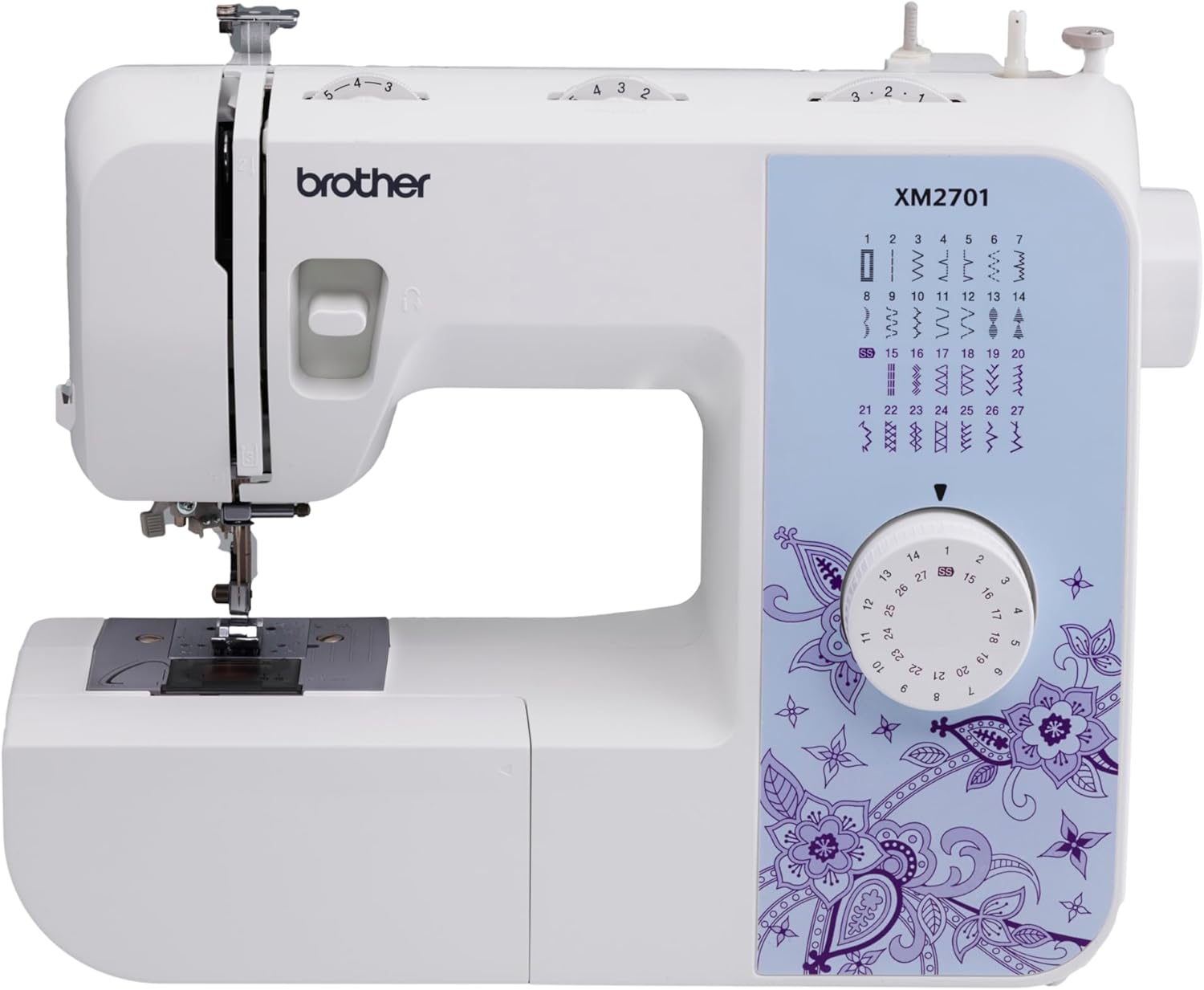
The Brother XM2701 is the machine I recommend to every beginner who walks into my class. I've had mine for 6 years. It's made Halloween costumes for a school of 400 kids, including a Totoro, a seagull, a buoy, a snail, and a Forky. It has never let me down.
But it has a needle quirk: the throat space is tight. If you have big hands, you'll be fighting to get the needle in and out. And the automatic needle threader, which I'm generally not a fan of, is finicky. I'd rather thread the needle by hand than wrestle with that little hook.
The machine takes standard HAx1 needles, which is good. But it struggles with anything above a 90/14. If you try to push a 100/16 through it, the machine will complain. The feed dogs aren't strong enough, and the motor doesn't have the torque. For a beginner sewing cottons and fleece, that's fine. For someone planning to sew denim and leather, this is the wrong machine.
At ~$7.24, the XM2701 costs about six cents a day if you use it for six years. That's not a purchase, that's a bargain. But it's a bargain for a specific kind of sewing, and that kind is lightweight to medium fabrics with needles up to 90/14.
SINGER Heavy Duty Needles (90/14, 100/16, 110/18)
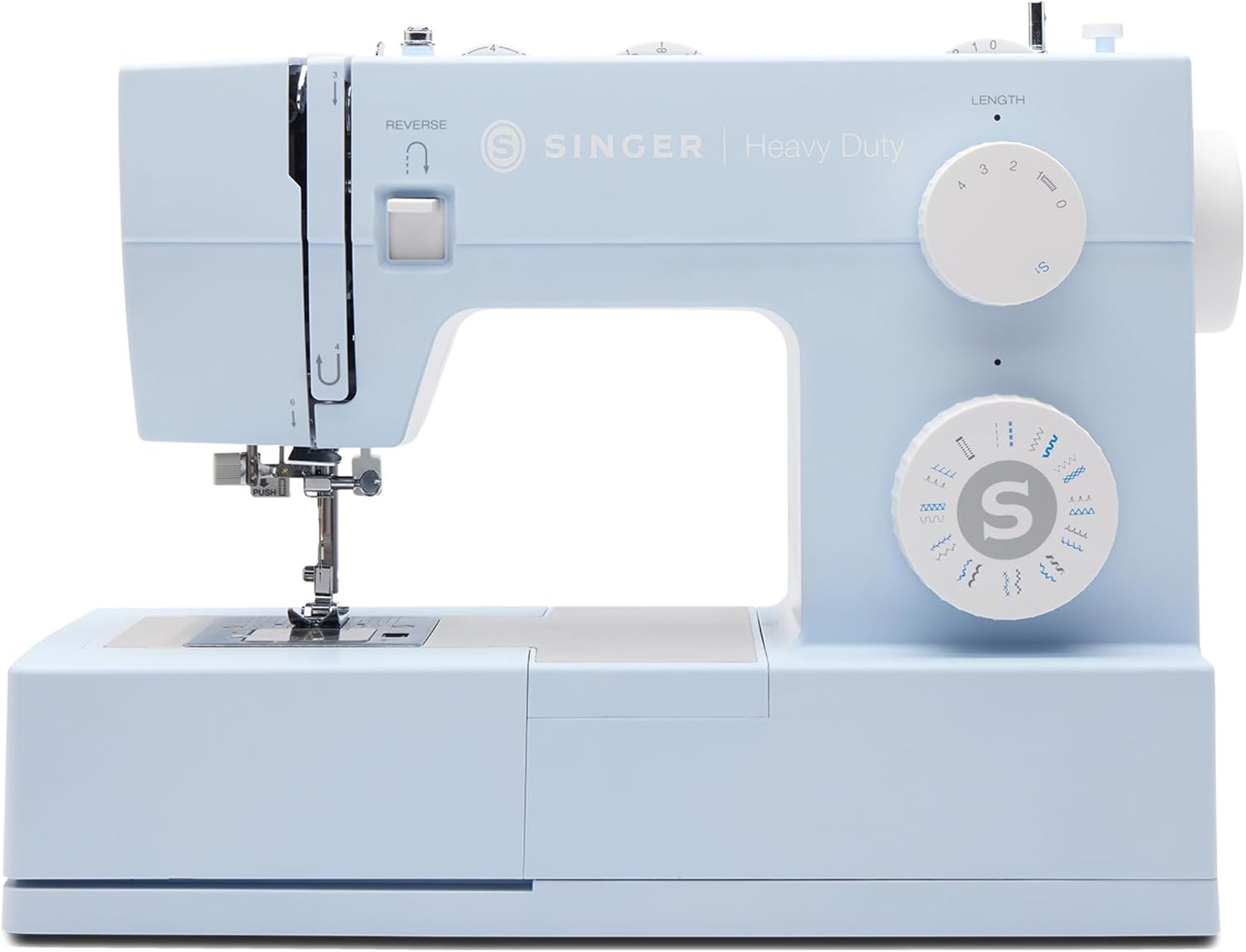
These SINGER Heavy Duty Needles are for machines that can handle heavier fabrics. I've sewn through leather, Cordura, denim, and nylon webbing with it. The numbered threading paths on the machine are a lifesaver.
But the instructions are sparse. Singer ships only safety warnings in the box, no real manual. You'll need YouTube and a downloaded manual.
That's a real complaint from real buyers.
The needle situation is where this machine gets interesting. It takes the same HAx1 system, but it can handle bigger needles than the Brother. I've run 100/16 denim needles through mine without any issues. The motor has the power to push them through heavy fabric, and the feed dogs grip well.
But here's the catch: the pedal is sensitive. It goes 0 to 60 in a leap. If you're not expecting it, you'll be off to the races before you know what happened. And if you're using a needle that's too small for the fabric, the machine will skip stitches and make a horrible clicking sound. I've seen beginners blame the machine for this. It's the needle.
A 67-year-old man who had never sewn before bought this machine for simple clothing repairs. He struggled with bobbin tangles, which turned out to be bad thread, not the machine. He learned via YouTube and went on to sew Hawaiian shirts, work shirts, and western shirts over four years, even tackling heavy Cordura.
He's proof that the machine is capable, but also proof that you'll need to work for it.
The Singer 4423 is ~$160 to ~$180 depending on where you buy it. At this price, it's a darn good machine for heavy fabrics. But you need to pair it with the right needles, or you'll spend your first week ripping out seams and wondering what you did wrong.
Denim needles are not optional for jeans
If you're going to sew denim, buy denim needles. They have a reinforced shaft and a sharp point that cuts through the tight weave. I've seen people try to sew a jeans hem with a universal 80/12 and break three needles in a row. The fabric is too dense for a general-purpose point.
I fell for the "heavy duty" marketing hook, line, and sinker when I bought a pack of universal needles that claimed to handle denim. They didn't. The first one bent on a jeans hem. The second one broke. I switched to a proper denim needle and the machine ran like a dream.
Denim needles come in 90/14 and 100/16. For most jeans, 90/14 is fine. For multiple layers, like a hem where you're sewing through four layers, go up to 100/16. And use a longer stitch length, around 3 to 3.5, so the needle isn't punching too many holes in the fabric.
Ballpoint needles save your knit projects
Knits are where beginners get frustrated. The machine skips stitches, the fabric stretches, and the seam puckers. Most of the time, it's the needle. A universal needle cuts through the knit fibers, which weakens the fabric and causes skipped stitches. A ballpoint needle pushes the fibers aside, which keeps the fabric intact and the stitches even.
I made a fleece hat on my Brother with a ballpoint 80/12 and it came out perfect. I made the same hat with a universal needle and had to rip out half the seams. Same fabric, same thread, different needle.
For jersey, interlock, and fleece, use a ballpoint or stretch needle. The stretch needle has a slightly different shape that helps prevent skipped stitches on highly elastic fabrics. If you're sewing swimwear or activewear, get a pack of stretch needles.
Microtex needles for silk and fine fabrics
Silk is the fabric that makes everyone nervous. It's slippery, it frays, and it shows every mistake. A microtex needle with a sharp, slim point is the right tool. It cuts cleanly through the fabric without pushing the threads around, which means straighter seams and fewer pulled threads.
I sewed a silk blouse on my Brother with a microtex 70/10 and it was smooth. The same fabric with a universal needle left visible needle holes. The difference is the point geometry, and it matters more than the brand.
Needle brands: Schmetz, Organ, and the cheap packs
I use Schmetz needles most of the time. They're consistent, they're sharp, and they come in every size and type you need. Organ needles are also good and usually a bit cheaper. The cheap packs from big box stores are fine for practice, but I've had more bent needles in those packs than I can count.
One thing I've learned: don't buy needles in bulk online unless you know the brand. I bought a pack of 50 "universal" needles for ~$8 once and threw out half of them after the first use. The eyes were rough, and the points were dull. You get what you pay for.
How often should you change your needle?
This is the question I get every semester. The answer is: more often than you think. A needle starts to dull after about 8 hours of sewing, which is roughly one full day of projects. If you're sewing heavy fabrics, change it sooner. If you hear a popping sound as the needle enters the fabric, it's dull. If the machine starts skipping stitches, it's usually the needle.
I change my needle at the start of every project. It's a ~$2 habit that saves me hours of ripping out seams. My students think I'm crazy until they have to rip out a 20-inch seam because the needle was dull and the stitches were uneven.
Practice on scraps, always
The universal advice for any new machine or needle is to practice on scraps. I tell my students this on the first day and I'll keep telling them until I retire. Cut a piece of the fabric you're going to use, fold it the way your seam will be folded, and run a few stitches. Adjust the tension, check the stitch length, make sure the needle is right. Then start your real project.
I keep a pile of fabric scraps on my shop table for exactly this reason. My dog Gus sleeps on them, which means they're covered in labradoodle hair. I've learned which machines can handle a layer of dog hair in the bobbin case without complaint. The Brother and the Singer both handle it fine. The Baby Lock I tried once did not.
The bottom line
Choosing sewing machine needles is not complicated. Match the needle system to your machine, match the size to the fabric and thread, and change it regularly. A good needle costs a couple of dollars. A bad needle costs you hours of frustration and a seam ripper session.
I've been sewing for 12 years and I still keep a needle chart pinned above my machine. It's a reference card with fabric types, needle sizes, and thread weights. It's the most useful thing in my shop, and it cost me nothing to print.
If you're just starting out, buy a pack of universal 80/12 and a pack of denim 90/14. That'll cover most of what you'll sew in the first year. Add ballpoint and microtex when you branch into knits and silks. And change your needle before every project. Your machine will thank you, and so will your seams. for the Brother XM2701 if you're looking for a beginner machine that's unfussy and easy to learn on. for the Singer 4423 if you need something that can plow through heavy fabrics. Both are darn good machines. Neither will fix a dull needle.