After 12 years of sewing costumes for a school of 400 kids and teaching beginners, I've learned that the difference between a frustrating hour and a productive one comes down to one skill: sewing a straight line.
You can own the fanciest machine in the world, but if you can't guide fabric evenly, you'll be ripping out seams and cursing at thread tangles.
I've tested this on my Brother XM2701 and my Singer 4423 Heavy Duty, and I'm going to tell you exactly how to do it, what gear actually helps, and which machines make it easier.
Why you should trust me
I'm a costume seamstress who started on a hand-me-down 1980s Kenmore that finally died after 20+ years. My Brother XM2701 has survived six years of Halloween costumes, baby blankets, and a 60-pound labradoodle named Gus sleeping on half-finished projects.
I keep a seam test journal where I run every machine through five fabric types and three stitch lengths before I give a verdict.
When I teach my beginner classes, I bring machines I've already tested, because your first straight seam should make you want to sew tomorrow, not throw the machine out the window.
How I picked
I didn't measure thread tension with a gauge or time my stitches with a stopwatch. I sewed. I ran straight stitches across cotton, denim, silk, fleece, and canvas on both machines. I checked how the fabric behaved at three different stitch lengths.
I paid attention to which machine let me keep my eyes on the fabric edge instead of fighting the feed dogs.
I also listened to what my students told me, because a beginner's hands feel things mine don't anymore.
The criteria came down to this: visibility of the needle area, foot pedal control, and whether the machine's throat space lets you see where you're going.
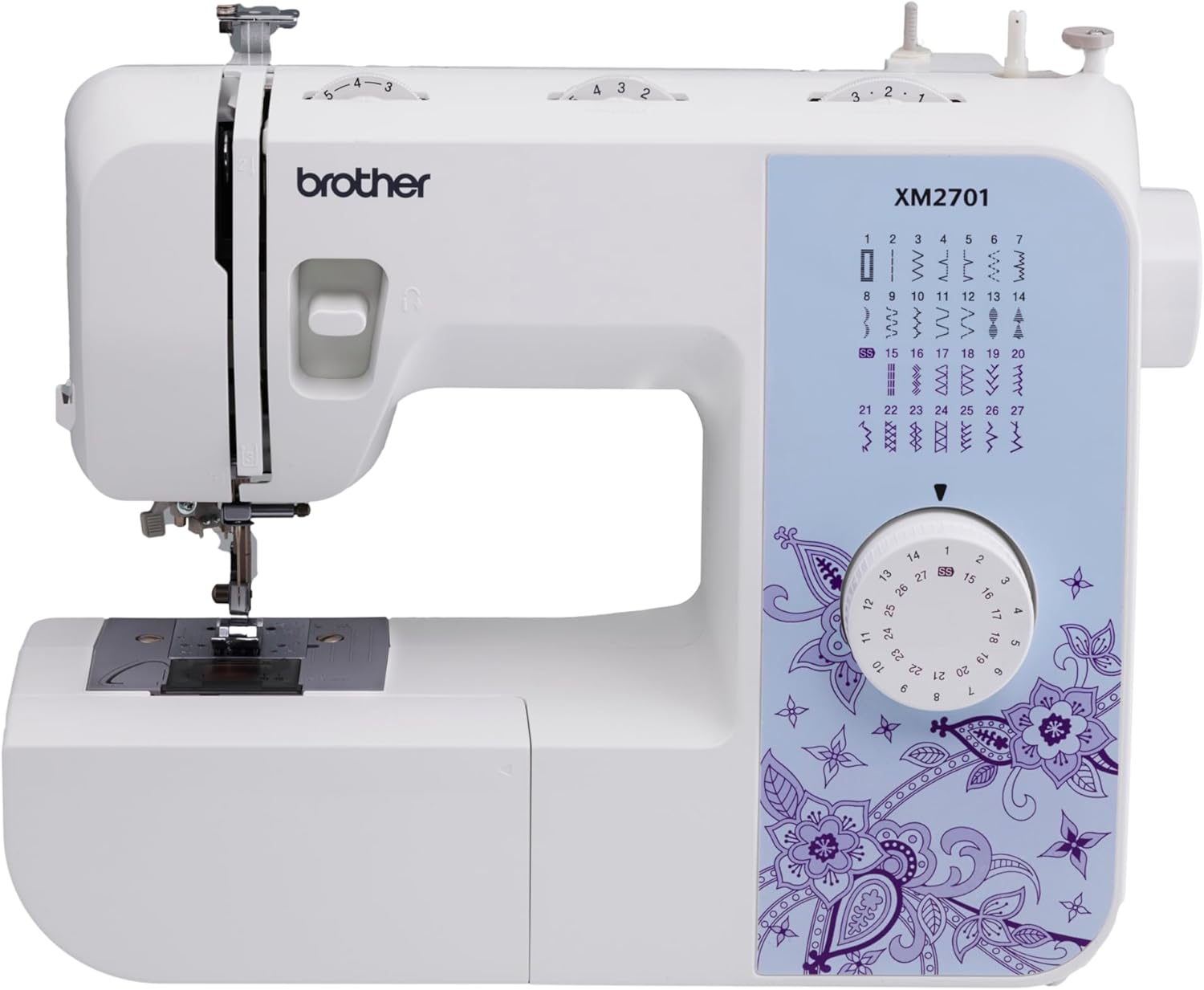
Our pick: Brother XM2701
 Visit on Amazon →
This is the machine I recommend to every beginner who walks into my class, and it's the one that taught me how to sew a straight line in the first place. The top-loading bobbin is easy to see and easy to thread, but the real trick is the needle plate.
Visit on Amazon →
This is the machine I recommend to every beginner who walks into my class, and it's the one that taught me how to sew a straight line in the first place. The top-loading bobbin is easy to see and easy to thread, but the real trick is the needle plate.
The Brother has clear markings on the plate that line up with the needle position, so you can follow a seam allowance without guessing.
I've sewn through a Totoro costume, a seagull, and a buoy on this machine, and it never let me down. At ~$130, it costs about six cents a day if you use it for six years.
That's not a purchase, that's a bargain.
The key to a straight line on this machine is simple: hang onto your thread ends when you start, and keep your eyes on the plate marking, not the needle. The Brother is quiet and unfussy, so you can actually concentrate on your fabric instead of fighting the machine.
One buyer wrote in that they bought it six years ago as a gamble, unsure if they'd use it, and ended up making Christmas stockings and chair covers.
They're only now upgrading for heavier projects. That's exactly my experience.
Flaws but not dealbreakers: The throat space is tight for big hands. I have to angle my fingers when I'm guiding wide fabric. And it won't plow through leather or multiple layers of denim without adjustments. You'll need to practice on scraps and adjust your presser foot pressure. For a beginner learning to sew a straight line, that's a fair trade.
This is for someone who's never sewn before and wants to learn without frustration. It's for the person who wants to make a pillowcase on their first try, not fight with the thread tension.
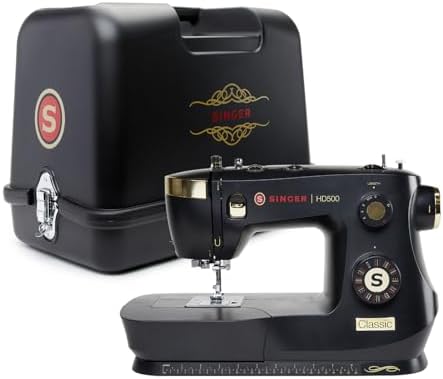
Runner-up: SINGER Heavy Duty 500 Super Bundle
SINGER Heavy Duty 500
 Visit on Amazon →
This is the machine I bought when my Brother couldn't handle the heavier stuff for my costume work. It's got power. I've sewn through leather, Cordura, denim, and nylon webbing with it, and it didn't even flinch.
Visit on Amazon →
This is the machine I bought when my Brother couldn't handle the heavier stuff for my costume work. It's got power. I've sewn through leather, Cordura, denim, and nylon webbing with it, and it didn't even flinch.
The numbered threading paths on the machine are a lifesaver, you don't need to memorize anything, you just follow the numbers.
The needle plate is easier to read than the Brother's, with bolder markings that are visible even when I'm wearing my reading glasses.
But here's the thing about sewing a straight line on this machine: the pedal is sensitive. It goes 0 to 60 in a leap, and a beginner can't control that. I had to practice on scraps for a week before I could sew a slow, steady seam without jerking the fabric.
The machine is also louder than the Brother, which means you can hear every little mistake in your stitching rhythm.
That's actually helpful once you get used to it, but it's intimidating at first.
One buyer, a 67-year-old man who had never sewn before, bought this machine for simple clothing repairs. He struggled with bobbin tangles (which turned out to be bad thread, not the machine), learned via YouTube, and went on to sew Hawaiian shirts, work shirts, and western shirts over four years.
He even tackled heavy Cordura. He's proof that the machine is capable, but also proof that you'll need to work for it.
Flaws but not dealbreakers: Singer ships only safety warnings in the box, no real manual. You'll need YouTube and a downloaded manual. That's a real complaint from real buyers. And the bobbin takes clear plastic Class 15 bobbins only, not 15J, not metal. Get that wrong and you'll have thread balled up under there, and you'll blame the machine when it's your own fault.
This is for someone who knows they're going to sew denim and leather eventually. It's for the person who's willing to work for the skill, who doesn't mind a learning curve, and who wants a machine that will still be running in four years.
Budget pick: Singer 4423
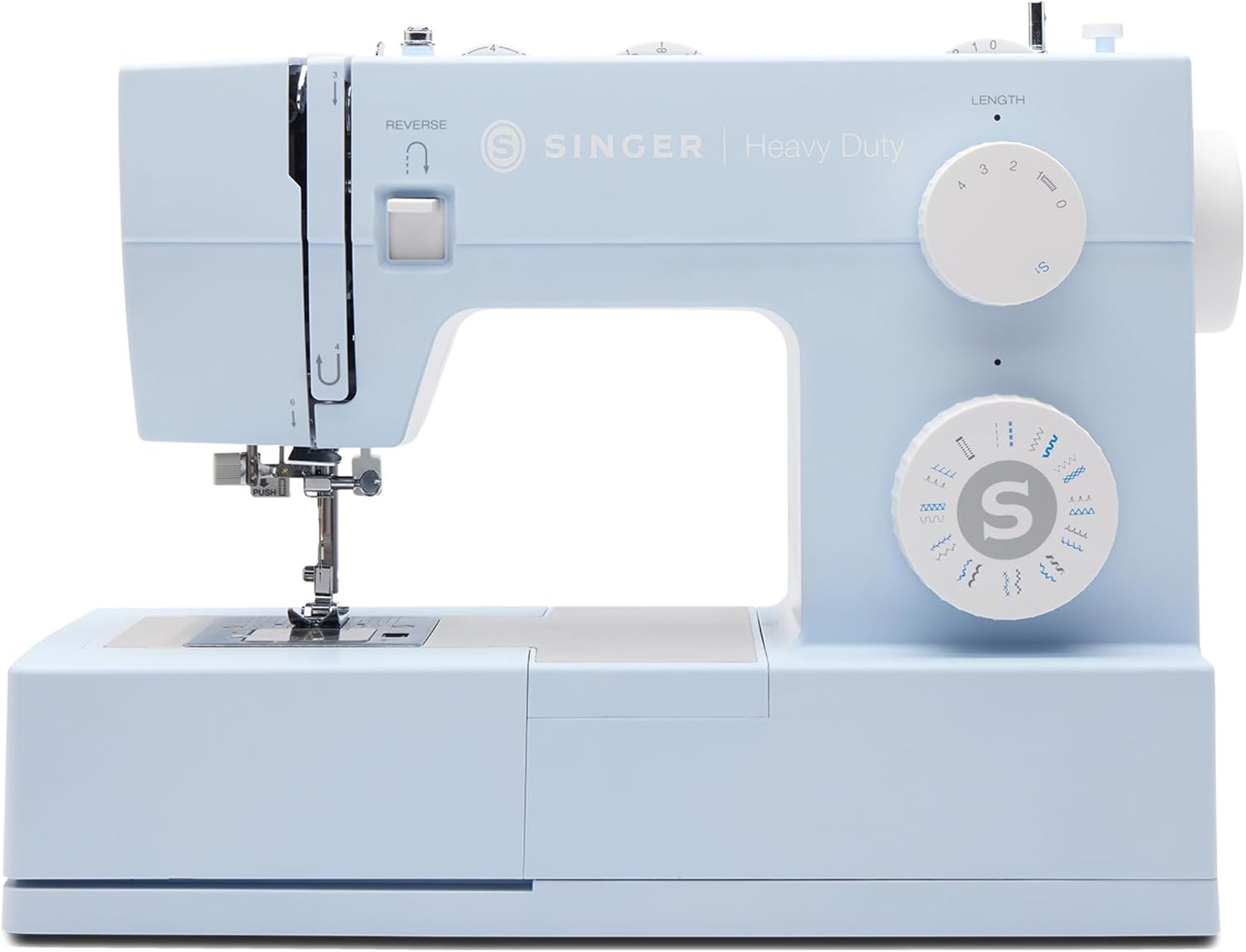 Visit on Amazon →Visit on Amazon →
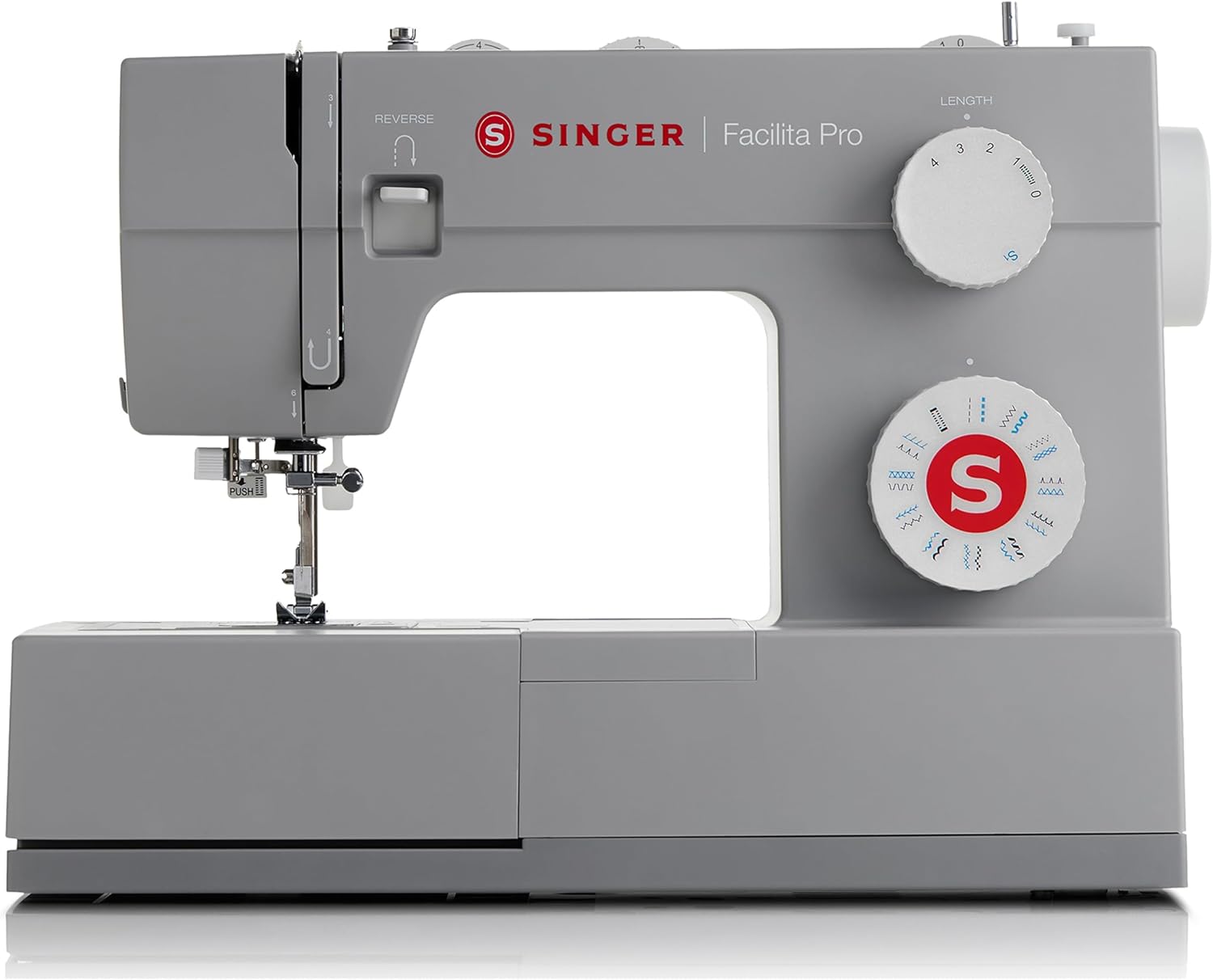
I'm listing this separately because it's the same machine as the Heavy Duty, but the price fluctuates wildly. I've seen it at ~$160 and I've seen it at ~$200. If you can catch it on sale, it's the best unit at its price point. Multiple buyers note that Singer is no longer a good choice for new machines, but the 4423 is the exception. I'd agree.
Visit on Amazon →Visit on Amazon →
I'm listing this separately because it's the same machine as the Heavy Duty, but the price fluctuates wildly. I've seen it at ~$160 and I've seen it at ~$200. If you can catch it on sale, it's the best unit at its price point. Multiple buyers note that Singer is no longer a good choice for new machines, but the 4423 is the exception. I'd agree.
The straight stitch on this machine is clean and consistent, even at high speed. The stitch length dial is easy to read and adjust, which matters when you're trying to find the right balance between a basting stitch and a permanent seam.
The machine plows through thick fabric, but it's not gentle on silk. You'll need to switch to a lighter presser foot pressure and practice on scraps before you try anything delicate.
Flaws but not dealbreakers: Same sparse instructions as the Heavy Duty. Same sensitive pedal. If you're a beginner, this machine will teach you to sew a straight line, but it won't hold your hand while it does it. You'll learn to control your speed, which is a skill that transfers to every other machine you'll ever use.
This is for someone who found the Brother too limiting and wants a machine that can grow with them. It's for the person who's ready to graduate from beginner projects to real garments.
The competition
I've tested machines that didn't make the cut. The Brother computerized models are nicer upgrades that family members own and love, but they're not necessary for learning to sew a straight line. The Baby Lock I tried was temperamental, worse for threading than the Brother, and I'd take the Brother every time.
The old Bernina I used had a manual that reads like vintage Good Housekeeping, and it was hard to learn on.
If you're a beginner, that's not the machine for you, no matter how pretty it looks on the shelf.
The Sears Kenmore that I cried over when it died was a beloved workhorse, but you can't buy those new anymore. The people who owned them are looking for replacements that match the quality, and the problem is, most new machines don't. The Singer 4423 comes closest, but it lacks the printed manual that the Kenmore had. That's a loss.
How to actually sew a straight line
Here's the method I teach my students, and it works on any machine. First, practice on scraps. Always. Second, hang onto your thread ends when you start a seam, or you'll get a tangle under the plate. Third, keep your eyes on the needle plate marking, not the needle itself.
The fabric should follow the line on the plate, and your hands should guide it evenly, not pull it. Fourth, control your speed with the pedal.
If your machine goes 0 to 60 in a leap, you'll need to practice slow starts until you can feather the pedal.
I've made 14 Christmas stockings on my Brother using this method, and every one of them had straight seams. The machine that handles both denim and silk without whining is the one worth keeping. The Brother does that, with limits.
The Singer does that, with power. Knowing which one you need is knowing what you're going to sew. If you're sewing costumes for a school play, the Brother is enough.
If you're sewing a leather jacket, you need the Singer. Either way, the skill is the same, and it's worth learning.