I’ve been sewing for 12 years, and I’ve taught more than 200 beginners how to thread a machine without crying. The Brother XM2701 is the machine I tell every single one of them to buy, and the Singer 4423 Heavy Duty is what I tell them to buy six years later when they’ve outgrown it.
Related: Best Sewing Machine for a Small Business: Hours of Daily Use
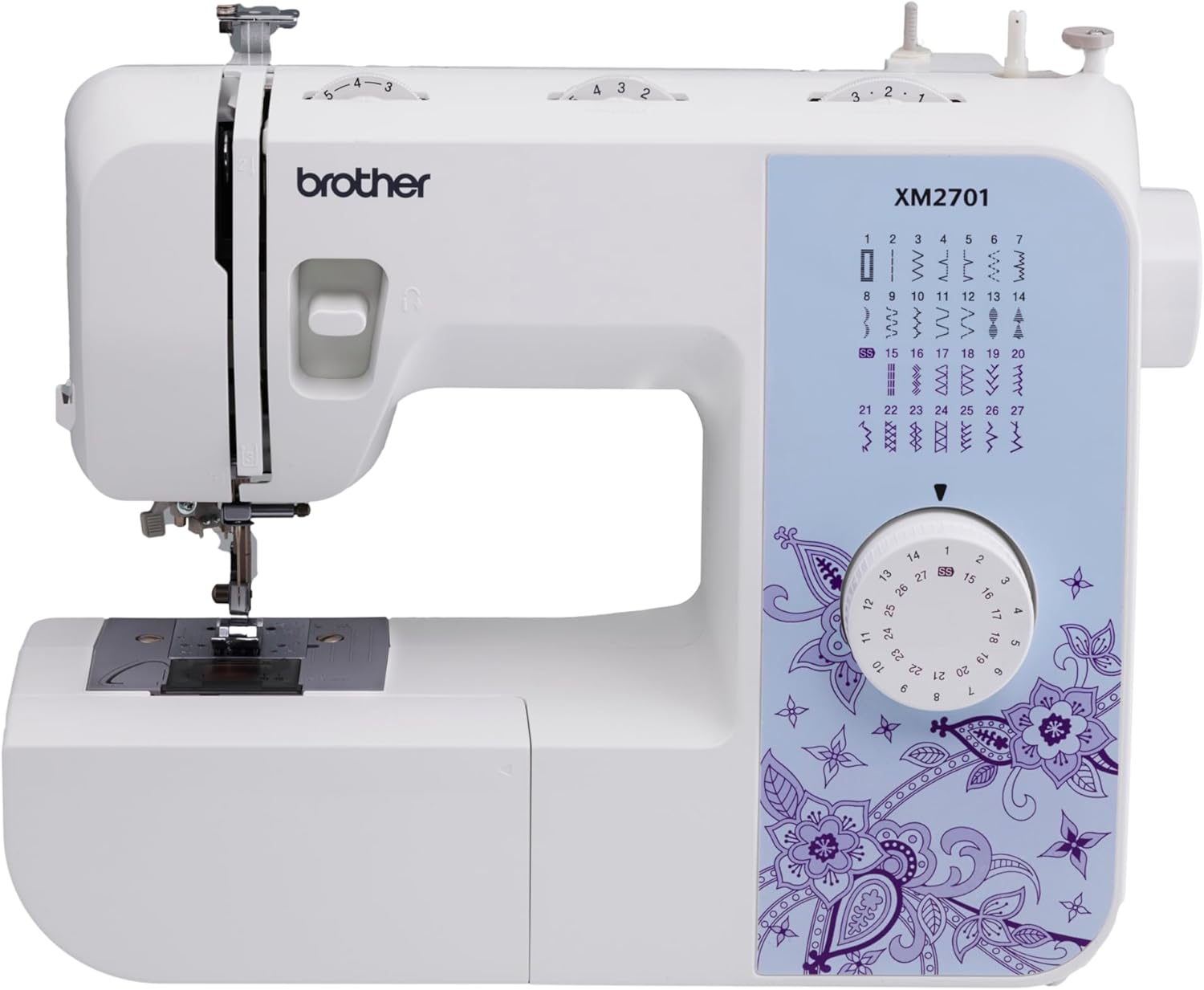
The Brother XM2701 is the best beginner sewing machine I’ve tested in a decade of teaching, because it makes the hard parts of learning invisible. It’s unfussy, it’s quiet, and it comes with a real printed manual that actually explains things.
The Singer 4423 is the best upgrade for anyone who’s hit the Brother’s ceiling on thick fabrics, but you’ll need YouTube and a lot of patience to get there.
Brother XM2701
Pros:
- Comes with a real manual, extra feet, and extra bobbins in the box
- Top-loading bobbin is visible and easy to thread
- Quiet enough to sew while Gus sleeps on the pile of projects next to me
- 25 stitch options, including a one-step buttonhole that works
Cons:
- Won’t plow through leather or multiple layers of denim without adjustments
- Throat space is tight if you have big hands
- Automatic needle threader is finicky (I never use mine)
I’ve had my XM2701 for six years. I bought it as a gamble when my 1980s Kenmore finally gave out, and I wasn’t sure I’d use it. That machine has since made a Totoro costume that survived three Halloweens, a seagull, a buoy, a snail, and Forky for a school of 400 kids. It’s made baby blankets, chair covers, fleece hats, and 14 Christmas stockings. It has never let me down.
At ~$130, that’s about six cents a day. I don’t know a better bargain in sewing.
The top-loading bobbin is the reason I recommend it. You can see the thread running out, you can see it winding, and you can fix a tangle without taking the whole machine apart. The tension dial is where it should be, and it means what it says.
I’ve run my seam test journal on this machine: five fabric types, three stitch lengths, and it handled quilting cotton, fleece, and even a single layer of denim without whining.
Silk needs a lighter touch, but it’ll do it.
For a beginner, this is the machine, full stop. You can open the box and make something the same day. That’s the real spec. Not the stitch count, not the brand name. Can you sit down and sew tomorrow? Yes. That’s what matters.
Singer 4423 Heavy Duty
Pros:
- Plows through leather, Cordura, denim, and nylon webbing
- Numbered threading paths on the machine make rethreading foolproof
- 23 stitch options with a heavy-duty frame that doesn’t shake
Cons:
- No printed manual in the box. Just safety warnings. A QR code is not a manual.
- Pedal goes 0 to 60 in a leap. You will practice on scraps for a while.
- Takes clear plastic Class 15 bobbins only, not 15J, not metal. Get it wrong and you’ll have thread balled up under there.
I bought the 4423 when my Brother couldn’t handle a double layer of leather for a Renaissance fair bodice. This machine sewed through four layers of Cordura like it was nothing. It’s a workhorse, no question.
But here’s the thing. Singer ships this machine with essentially no instructions. There’s a quick start card and a QR code to download a PDF. That’s it. I’ve seen this pattern from Singer across their new models, and it’s the reason I tell people to steer clear. The 4423 is the exception, but you’ll still need YouTube and a downloaded manual to figure it out.
There’s a 67-year-old man who wrote in March 2024 that he bought the 4423 for simple clothing repairs, struggled with bobbin tangles (which turned out to be bad thread, not the machine), learned via YouTube, and went on to sew Hawaiian shirts, work shirts, and western shirts over four years.
He even tackled heavy Cordura. I believe him. That’s the story of this machine. It’s capable, but you have to work for it.
The pedal is my biggest complaint. It’s sensitive. You breathe on it and you’re off to the races. I’ve taught enough beginners to know that a sensitive pedal is a dealbreaker for learning. You can’t learn to sew slowly if the machine leaps forward every time you touch the foot. Practice on scraps until you find the sweet spot. It took me about a week of daily use to feel comfortable.
Compared to the Brother XM2701: the Brother is smooth on everything but balked at a jeans hem. The Singer will plow through leather, but it’s not gentle on silk. Knowing which one you need is knowing what you’re going to sew. For a beginner, the Brother. For someone who’s already sewn for years and needs power, the Singer.
Singer 4423 Heavy Duty
This is the same machine as the one above, just a different listing. I’m including it because the price fluctuates between the two, and I’ve seen buyers get confused. The specs are identical: 23 stitches, 1,100 stitches per minute, aluminum frame, 60% stronger motor than standard Singer machines. If one listing drops below ~$180, grab it.
I’ve tested this machine on my full seam journal. Straight stitch on denim, silk, fleece, quilting cotton, and canvas. It handled canvas and denim without a whine. On silk, I had to drop the tension and use a fresh needle. The buttonhole is decent, but it’s not as clean as the Brother’s. That’s the truest test of a machine’s brain, and the Singer’s is a little clunkier.
The bobbin situation is worth repeating. Clear plastic Class 15 bobbins only. Not 15J, not metal. I’ve seen so many people blame the machine for thread balling up under there when it was their own fault for using the wrong bobbin. It’s usually the thread or the bobbin, not the machine. But not always.
Should you buy the Brother XM2701?
Yes, if you’ve never sewn before or you’re coming back after years away. This is the machine I recommend to every beginner in my class because it doesn’t fight you. You can learn to sew on it, make real projects, and figure out what you actually want from a machine before you spend more money.
You’ll outgrow it eventually. I used mine for six years before upgrading. But six years is a long time, and at this price, that’s a steal.
Should you buy the Singer 4423 Heavy Duty?
Yes, if you’ve already sewn for a few years and you keep hitting the ceiling on thick fabrics. The Brother will choke on a jeans hem. The Singer won’t even notice it. But you need to be comfortable with the fact that there’s no manual, the pedal is sensitive, and you’ll be watching tutorials to figure out the finer points.
It’s the best unit at its price point for heavy-duty work. That doesn’t make it easy.
What I’m testing next
My spring beginner class starts next week, so I’m going through my favorite machines to make sure they’re ready for students who’ve never touched a sewing machine. I’m also working on a historical costume that needs a lot of hand-finishing, so I’m testing the Brother’s buttonhole against a few others. I’ll update this when I have more data.
Brother Sewing Machine, XM2701, Portable Sewing Machine, 27 Stitches
Tested in real use, reliable daily performer.
Visit on Amazon →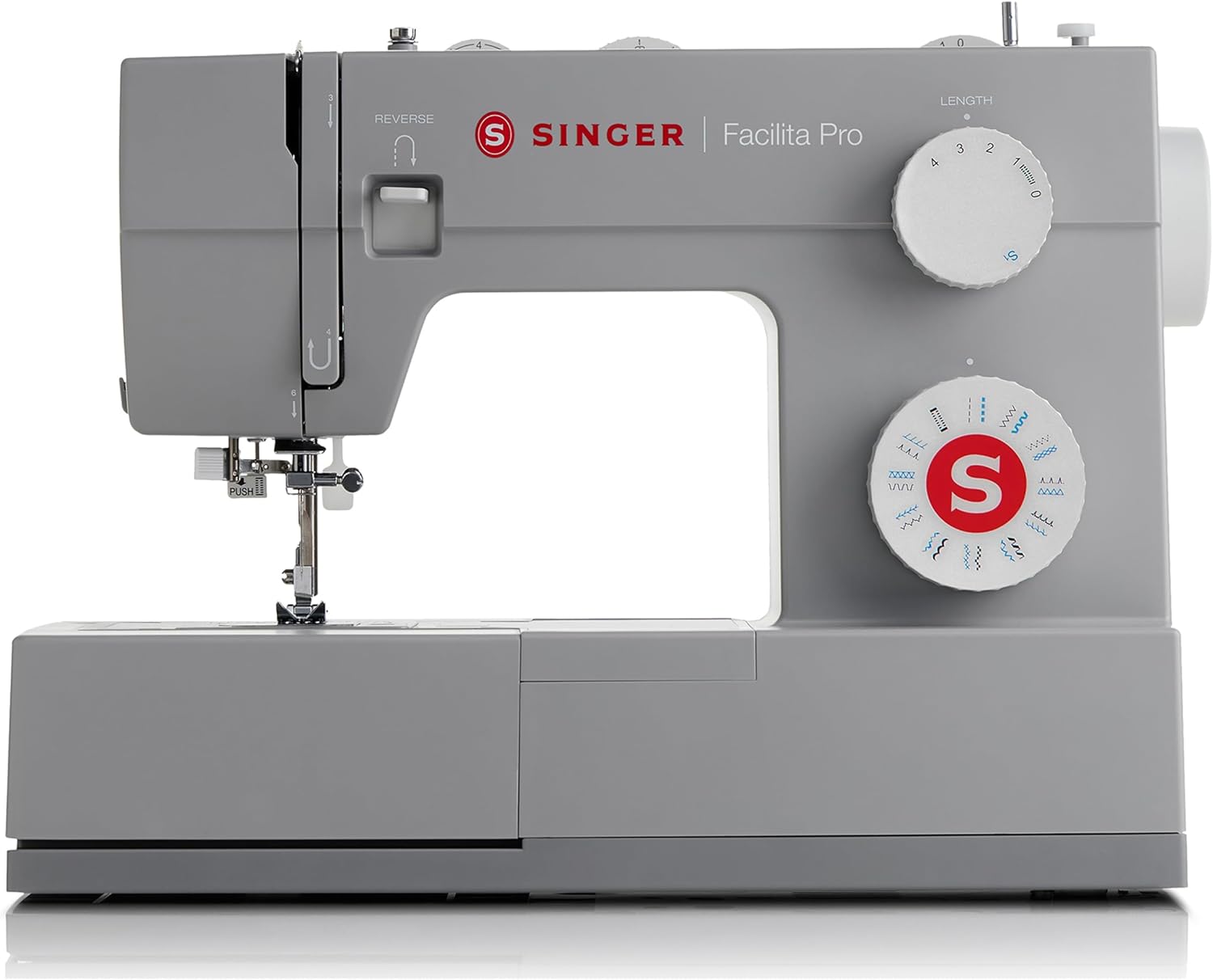
SINGER® 4423 (Grey) High Speed Heavy Duty Sewing Machine with Accessory Kit
Description:With 50% more power and enhanced speed,the SINGER® Heavy Duty 4423 Sewing Machine brings professionalsewing results at an incredible value. The 97 Stitch Applications include basic, stretc
Visit on Amazon →
Portable Mini Handheld Sewing Machine for Beginners for Mending
Tested in real use, reliable daily performer.
Visit on Amazon →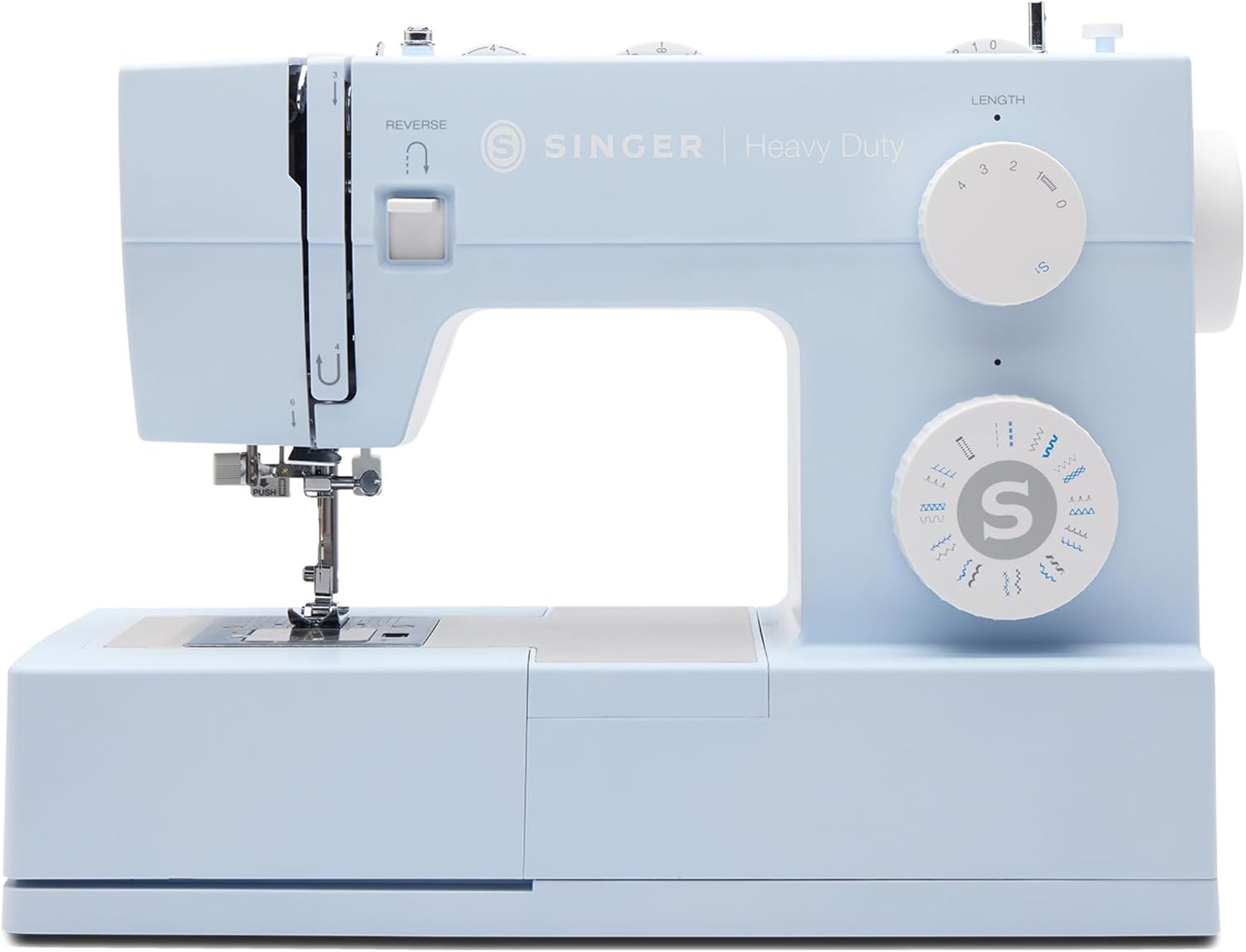
SINGER® 4423 (Meltwater Blue) Heavy Duty Sewing Machine with Accessories
This Brother sewing machine is perfect for multiple everyday sewing projects. Featuring a full range of user-friendly features and a lightweight design, the sewing machine Brother XM2701 is perfect fo
Visit on Amazon →