Related: Best Sewing Machine for Beginners: Start With Straight Stitch Quality
I teach beginner sewing classes in Portland, and I have watched a lot of people buy a machine and then spend their first month fighting it. Almost never is the machine the problem. It is the setup. The right sewing machine accessories, added in the right order, turn a machine that makes you sigh into one you want to sit down at tomorrow.
That is what this page covers. Two machines at very different levels, a 15-stitch beginner model and a computerized embroidery machine, plus the two accessories I tell students to sort out before anything else: an extension table built for the Singer Heavy Duty series, and a replacement pedal and power cord for the Janome and Kenmore machines still doing honest work in closets and basements.
I keep a seam test journal. Five fabric types, three stitch lengths, a verdict on every machine I have used. My rule is simple: no verdict without a straight stitch run on at least three fabric types, quilting cotton through denim. If a machine cannot hold a balanced seam on both, nothing else it does matters. And an accessory has to solve a problem I have actually had, not fill a drawer.
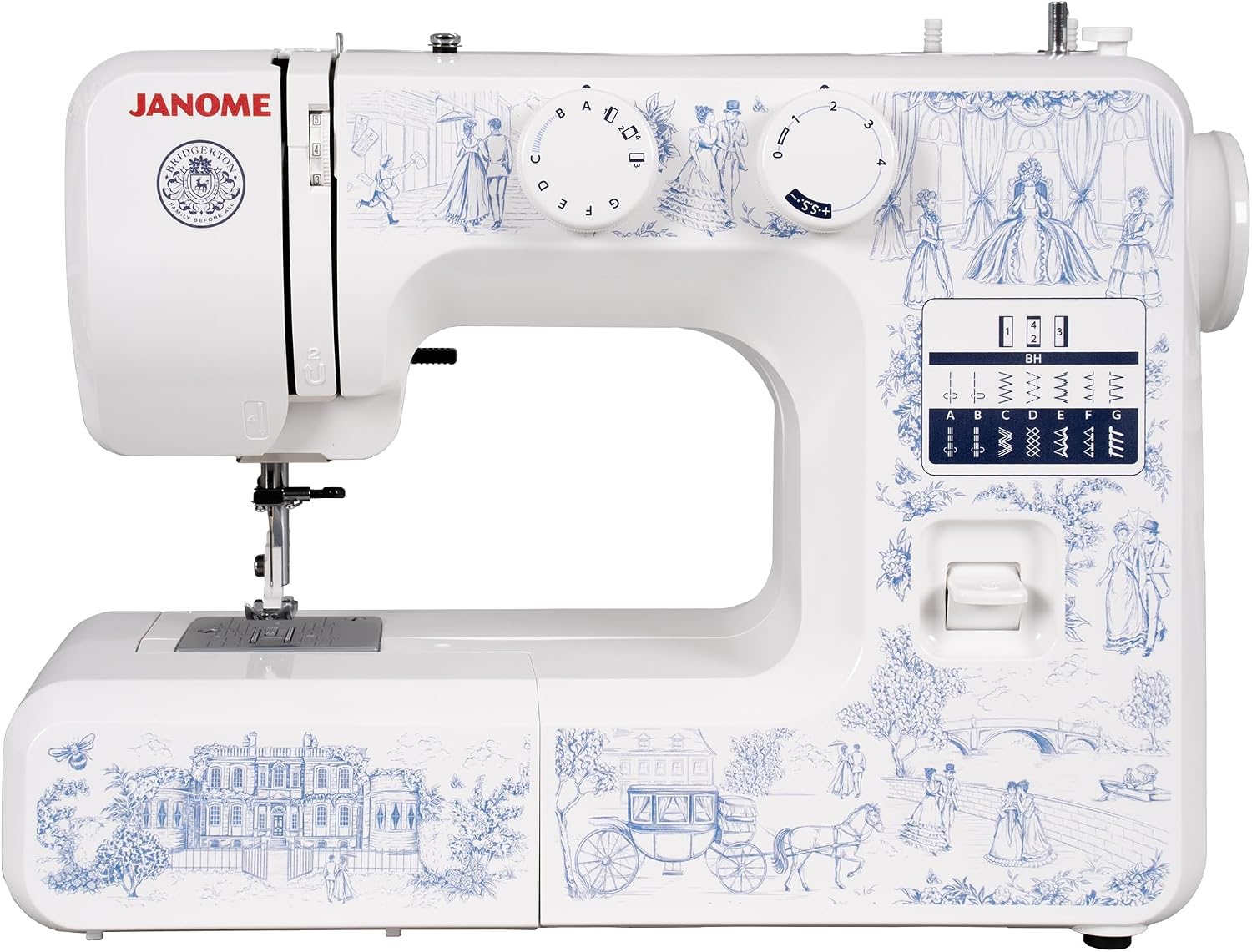
The beginner machine: Janome Toile Romance
This is a mechanical 15-stitch machine, dressed in an officially licensed Bridgerton print. Ignore the theme for a second and look at the spec sheet: 15 stitches, easy threading, a body aimed at someone who has never wound a bobbin.
Fifteen stitches sounds thin if you have been shopping by stitch count, which is exactly the marketing I tell students to ignore. A 100-stitch machine uses about ten of them. What you actually sew is a straight stitch, a zigzag, maybe a blind hem, and a buttonhole. The rest is decoration on a dial.
Janome is the brand I recommend for mid-range garment sewing because the stitch quality is consistent and the tension dials actually do something. A beginner machine has one real job: make you want to sew tomorrow. That means a straight stitch that does not pucker on quilting cotton, a zigzag that does not snarl, and a buttonhole that finishes without chewing the fabric. The buttonhole tells you more about a machine's brain than its stitch count ever will.
Fit matters more than features. This machine suits garment sewing, simple costumes, hemming, and kids' projects. If you are planning to quilt king-size tops, buy a machine with a bigger throat and a walking foot. Buy for the fabric you actually sew.
The machine that does more: Brother SE2000
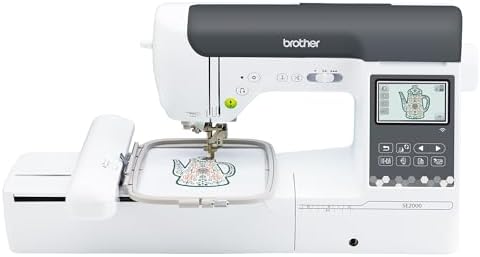
Embroidery is a different hobby bolted onto the same machine. The SE2000 sews and embroiders, which means one machine on the table instead of two, and in my apartment that matters because the serger already lives on the dining table.
Brother's computerized line is where a lot of people land after their first machine. The screen and the stitch selection are the appeal, and the embroidery arm is the reason to pay for this model over a plain computerized sewing machine. If you make costumes, monogrammed gifts, or anything with a name on it, embroidery stops being a novelty fast.
The honest caveat is the circuit board. Computerized features are wonderful until something dies on the board, and then the repair can cost a serious fraction of the machine. That is not a reason to avoid computerized machines. It is a reason to buy one knowing the math, and to keep it on a surge protector.
Also, an embroidery machine will make you want stabilizer, hoops, and thread in forty colors. Budget for the hobby, not just the machine.
The accessory that fixes a known flaw: extension table for Singer Heavy Duty
The Singer HD series is okay. The machines handle straight seams on heavy fabric, and the bed is small, which is the flaw nobody mentions in the listing photos. An extension table clips around the free arm and turns a narrow work surface into something you can actually manage a quilt or a hem on.
What it fixes: fabric diving off the edge of the bed, seams that curve because you are holding the weight of the project with one hand, and the general misery of wrestling a large piece through a small space. Level support is not glamorous. It is the difference between a straight hem and a wavy one.
Compatibility is the whole product here. This table is built for the Singer 4411, 4423, 4432, 4452, 5511, and 5523 Heavy Duty models. If your machine is not on that list, it is not for you, no matter how similar the shape looks.
The part nobody thinks about until it dies: pedal and power cord
Pedals fail. Cords get pinched under a table leg, chewed by a dog, or the plug loosens and the machine cuts out in the middle of a seam. When that happens, people assume the machine is dead and start shopping for a new one. Usually it is a small part.
This is a replacement foot pedal and power cord for Janome and Kenmore machines, and the compatibility list is long: Janome 033770217, 204D, 3125, 3128, 3434D, 415, 2212, 7318, 7933, 8002D, 11706, HD1000, HD3000, and YC-482J-1, plus Kenmore 385.11206300 and 385.15516000. Check your model number against that list before ordering. A pedal that does not match is a paperweight.
Two reasons to own one. First, a dead pedal on a working machine. Second, a spare on the shelf. A spare pedal means a mid-project failure costs you five minutes instead of a week of waiting.
How I judge a machine and its accessories
Machines: straight stitch quality on at least three fabric types. Tension behavior across a seam, meaning the dial should do something predictable. Buttonhole quality, because that is the truest test of the machine's brain. And repair math, because a machine you cannot afford to fix is a rental.
Accessories: does it solve a problem I have had, or does it fill a drawer? An extension table and a spare pedal pass that test. A specialty presser foot you use twice a year does not.
The sewing machine and accessory reference table
| Product | What it is | Best for | Price |
|---|---|---|---|
 Visit on Amazon → Visit on Amazon →Janome Toile Romance 15-Stitch |
Mechanical sewing machine, 15 stitches, licensed Bridgerton finish | Beginners, garment sewing, simple costumes, hemming | $199.00 |
 Visit on Amazon → Visit on Amazon →Brother SE2000 |
Computerized sewing and embroidery machine | Monograms, costume details, gifts, sewing plus embroidery in one machine | $1,499.99 |
 Visit on Amazon → Visit on Amazon →Extension table for Singer Heavy Duty |
Clip-on extension table, gray | Owners of Singer 4411, 4423, 4432, 4452, 5511, 5523 who need a bigger work surface | $23.90 |
 Visit on Amazon → Visit on Amazon →Replacement pedal and power cord |
Foot pedal plus cord for Janome and Kenmore models | Replacing a dead pedal or keeping a spare on the shelf | $21.96 |
Should you buy the Janome Toile Romance?
Yes, if you are a beginner who wants a machine that does the basics without a fight. Fifteen stitches covers what you will actually sew, and Janome's straight stitch is the reason I recommend the brand for garment work. The Bridgerton print is a bonus, not a spec. If you need embroidery or a bigger throat, keep reading.
Should you buy the Brother SE2000?
Yes, if you want sewing and embroidery in one machine and you accept the computerized trade-off. It is the machine for monograms, costume details, and gifts with names on them. Keep it on a surge protector and know what a board repair costs before you commit.
Should you buy the Singer extension table?
Yes, if you own one of the listed Heavy Duty models and you have ever wrestled a large project on that small bed. It is the cheapest fix for the most common complaint about those machines. Check the model list twice before ordering.
Should you buy the replacement pedal and power cord?
Yes, if your Janome or Kenmore pedal has died, or if you want a spare waiting on the shelf. Confirm the model number first, then it is the least dramatic and most useful purchase on this page.