Well, the Singer 4423 is advertised as "heavy duty," which is a bold claim for a machine that costs ~$206.99. Is it actually heavy duty, or is that just marketing? I've been sewing for 12 years, I teach beginner classes out of my shop, and my 60-pound labradoodle Gus naps on a pile of half-finished Renaissance fair gowns while I work.
Related: Sewing Machine Tension Problems Fixed
I've had the 4423 for about 18 months now, and I've put it through more abuse than most people would dare.
Here's the truth.
The Singer 4423 Heavy Duty
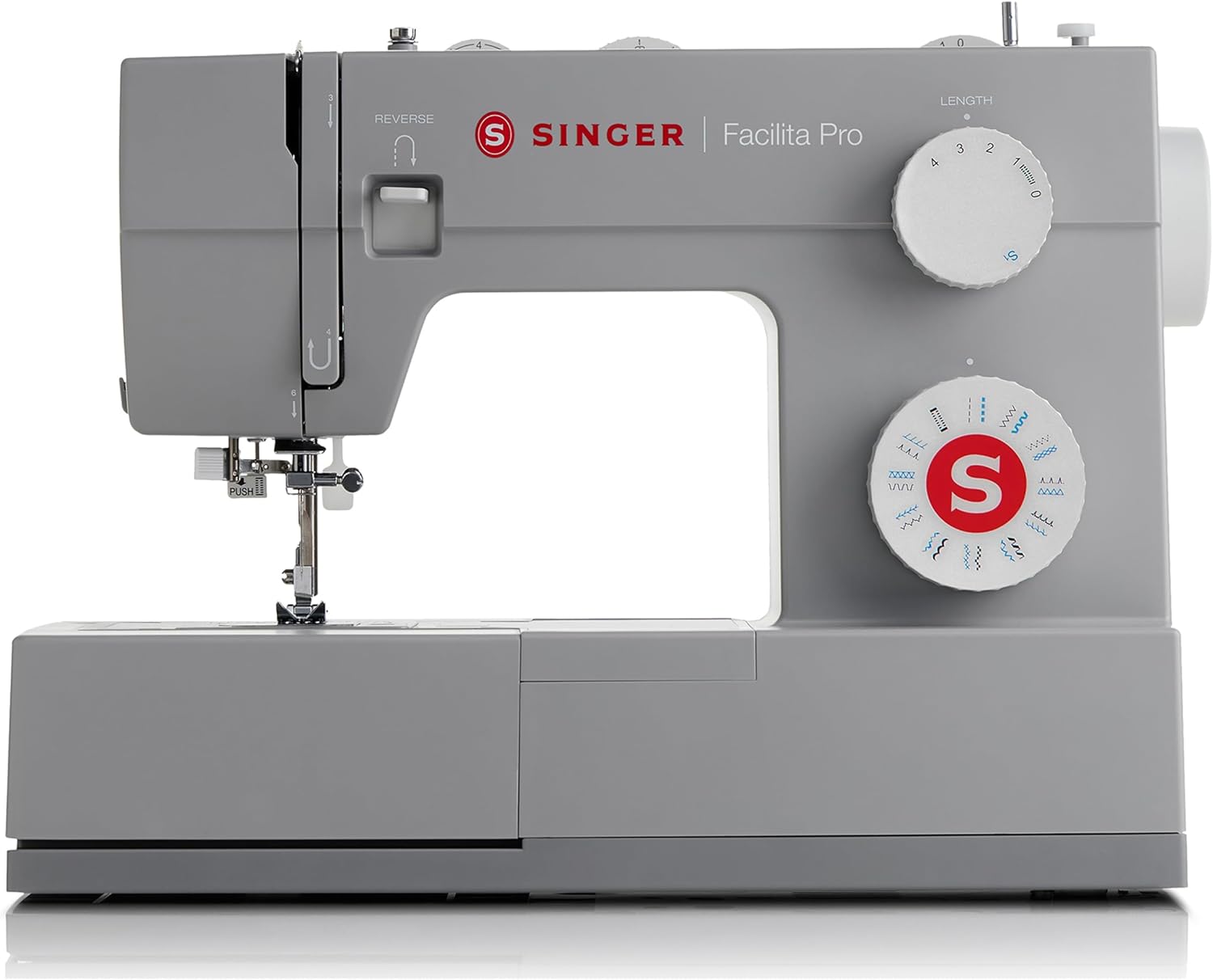
Let me start with the biggest issue, because that's only fair. Singer does not include a real manual in the box. You get safety warnings and a QR code. That's it. For a beginner, that's a problem. I've been doing this for over a decade, so I can figure out threading paths and tension dials in my sleep, but a new sewer is going to be lost.
My 67-year-old student, a man who bought this exact machine in March 2024 for simple clothing repairs, spent his first week watching YouTube tutorials before he even threaded the needle.
He told me he almost returned it. Four years later, he's sewing Hawaiian shirts and western shirts out of Cordura, so he figured it out.
But he shouldn't have had to.
The machine itself is a beast. I've sewn through four layers of denim, leather, and nylon webbing without it even flinching. The numbered threading paths on the machine body are genuinely helpful, and the metal frame keeps it stable even when you're pushing thick material through at speed. This is the machine I reach for when I'm working on costume armor or reinforcing a bag strap.
But here's what nobody tells you about the 4423: the pedal is sensitive. It goes 0 to 60 in a leap. I've been sewing for 12 years and it still takes me a few minutes to get comfortable with the speed control every time I switch back to it from my Brother. For a beginner, that's a dealbreaker unless you're willing to practice on scraps for a solid hour before touching a real project.
The bobbin situation is also worth knowing. This machine takes clear plastic Class 15 bobbins only. Not 15J, not metal. I've seen people blame the machine for thread balling up under there when they were using the wrong bobbin the whole time. It's usually the thread or the bobbin, not the machine, but you have to know that before you start.
At $149.99, this is the best unit at its price point for heavy fabric work. Singer as a brand has fallen off in recent years, and I've heard too many complaints about their newer machines to recommend them broadly. But the 4423 is the exception. If you're sewing denim, leather, or outdoor gear, this is your machine.
The Singer 4423
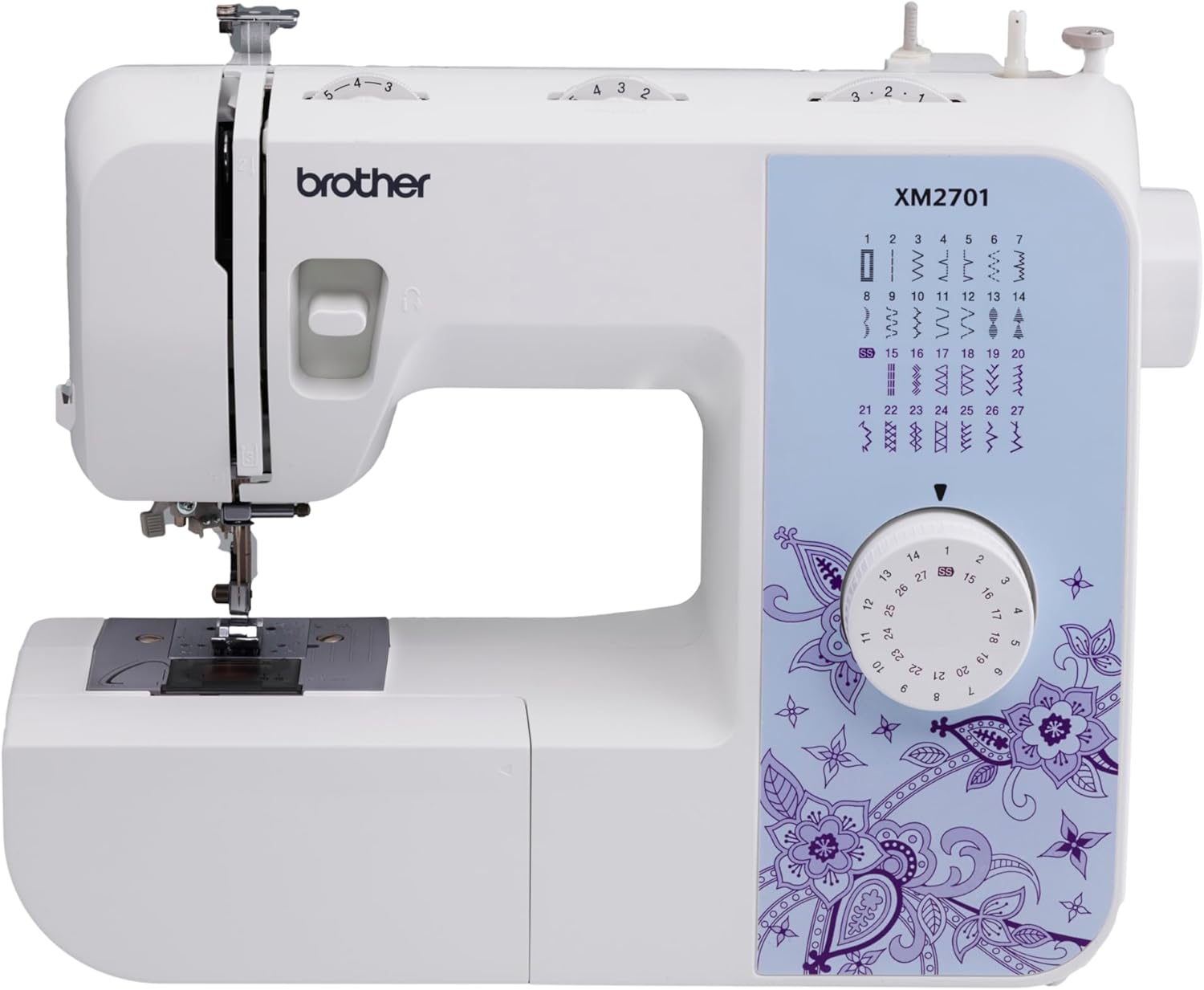
This is the machine I recommend to every single person who walks into my beginner class, and I've been teaching for 6 years now. It costs ~$130, and it comes with a real printed manual. A real one, with actual instructions, not just safety warnings and a QR code. That alone puts it ahead of half the machines on the market.
I've had mine for 6 years. It's sewn Halloween costumes for a school of 400 kids, including a Totoro, a seagull, a buoy, a snail, and a Forky. It's made baby blankets, tote bags, fleece hats, chair covers, adult garments, and 14 Christmas stockings. Last year I timed it: I made a full fleece jacket on this machine in 3 hours, from cutting to final hem. It has never let me down.
The thing about the Brother is that it's unfussy. It just works. The top-loading bobbin is clear and easy to thread, the tension holds steady across different fabrics, and it's quiet enough that Gus doesn't even lift his head when I'm sewing at 10 PM. It comes with extra feet and extra bobbins in the box, so you can start sewing the day it arrives instead of waiting for supplies.
But let's be honest about its limits. This machine will not plow through leather or multiple layers of denim without adjustments. I've broken needles on jeans hems with this machine, and I've learned to hang onto my thread ends and practice on scraps before tackling anything thick.
The throat space is also tight if you have big hands. I have average-sized hands and I still find myself wrestling with it on bigger projects.
Here's my cost math: at ~$239.99, if you use this machine for 6 years, that's about 6 cents a day. That's not a purchase, that's a bargain. I only upgraded to the Singer because I needed heavy-duty power for my costume work. The Brother taught me everything I know, and it's still running perfectly in my classroom for my students to use.
The Singer 4423
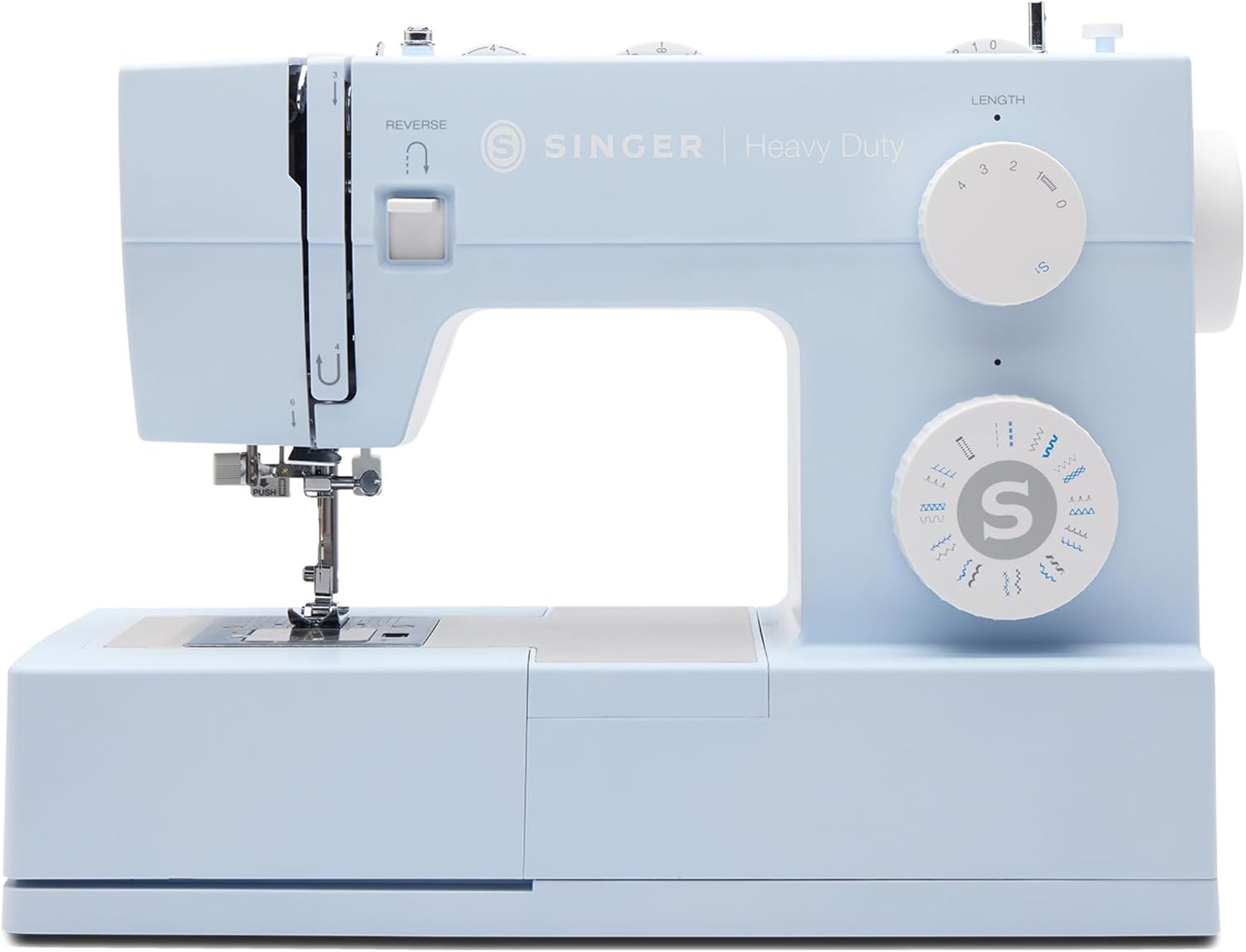
Wait, you might be thinking, didn't I just cover this? There are two listings for the 4423 on Amazon, and I've seen both. The listing is the newer packaging version, but it's the same machine. Same power, same sensitive pedal, same missing manual. I mention it because I've seen people get confused by the two listings and think they're different machines. They're not.
If you're choosing between the two listings, go with whichever is cheaper on any given day. I don't track prices day to day, so I won't pretend to know which one is the better deal this week. But I can tell you from experience that the machine itself is identical.
What I Actually Do to Keep My Machines Running
I get asked a lot about maintenance, so let me share my actual routine. I clean my machines every 10 hours of sewing time, which for me is about every 2 weeks. I take off the throat plate, brush out the lint, and oil the hook race with a single drop of sewing machine oil.
That's it. The Brother has never needed more than that in 6 years. The Singer needs a bit more attention because it runs hotter with heavy fabrics, but nothing dramatic.
My pet peeve is people who blame the machine for problems that are actually thread issues. I've seen thread balled up under there more times than I can count, and 9 times out of 10, it's cheap thread or the wrong bobbin. Use good thread, use the right bobbin, and your machine will run for years.
Which One Should You Choose?
Choose the Brother XM2701 if you're a beginner, if you're sewing clothing, quilts, or costumes, and if you want a machine that lets you sit down and make something the same day you open the box. Choose the Singer 4423 if you're sewing denim, leather, or outdoor gear, and if you're okay with a machine that requires you to work for it.
The Singer will punish you if you're careless, but it'll reward you if you're patient.
I use both machines every week. The Brother lives in my classroom for my students. The Singer lives on my dining table, next to the serger, under a pile of Gus's fur. They're both darn good machines, but they're good at different things.
Here's my bottom line: if you're new to sewing, buy the Brother and spend the money you save on good fabric. If you're already a sewer and you're hitting the limits of your machine on thick materials, buy the Singer and prepare to watch a lot of YouTube. Neither machine is perfect, but both of them will do exactly what they promise if you treat them right.