Related: Beginner Sewing Machine Checklist
Most sewing machine setup advice starts with stitch count, and that is the wrong end of the machine to look at. I have sewn costumes for twelve years, I teach beginner classes here in Portland, and I keep a seam journal with five fabric types, three stitch lengths, and a verdict on every machine that has crossed my table. My sewing machine setup essentials list is four items long: a machine whose straight stitch you can trust, a step-up option if embroidery is the real goal, the wear part behind most mystery snags, and a needle threader you can afford to lose.
Everything else is convenience stacked on top of those four things. A machine with 200 stitches that fights you on denim is worse than a machine with 37 stitches that feeds evenly. The tension dial is the dial everyone touches and nobody understands, and balanced tension is the whole craft.
This is not a list of the most features for the money. It is the list I would hand a student who wants to finish a costume before Halloween, plus the small parts that keep an existing machine running instead of sitting in a closet with a dust cover on it.
Best First Machine: Brother GX37
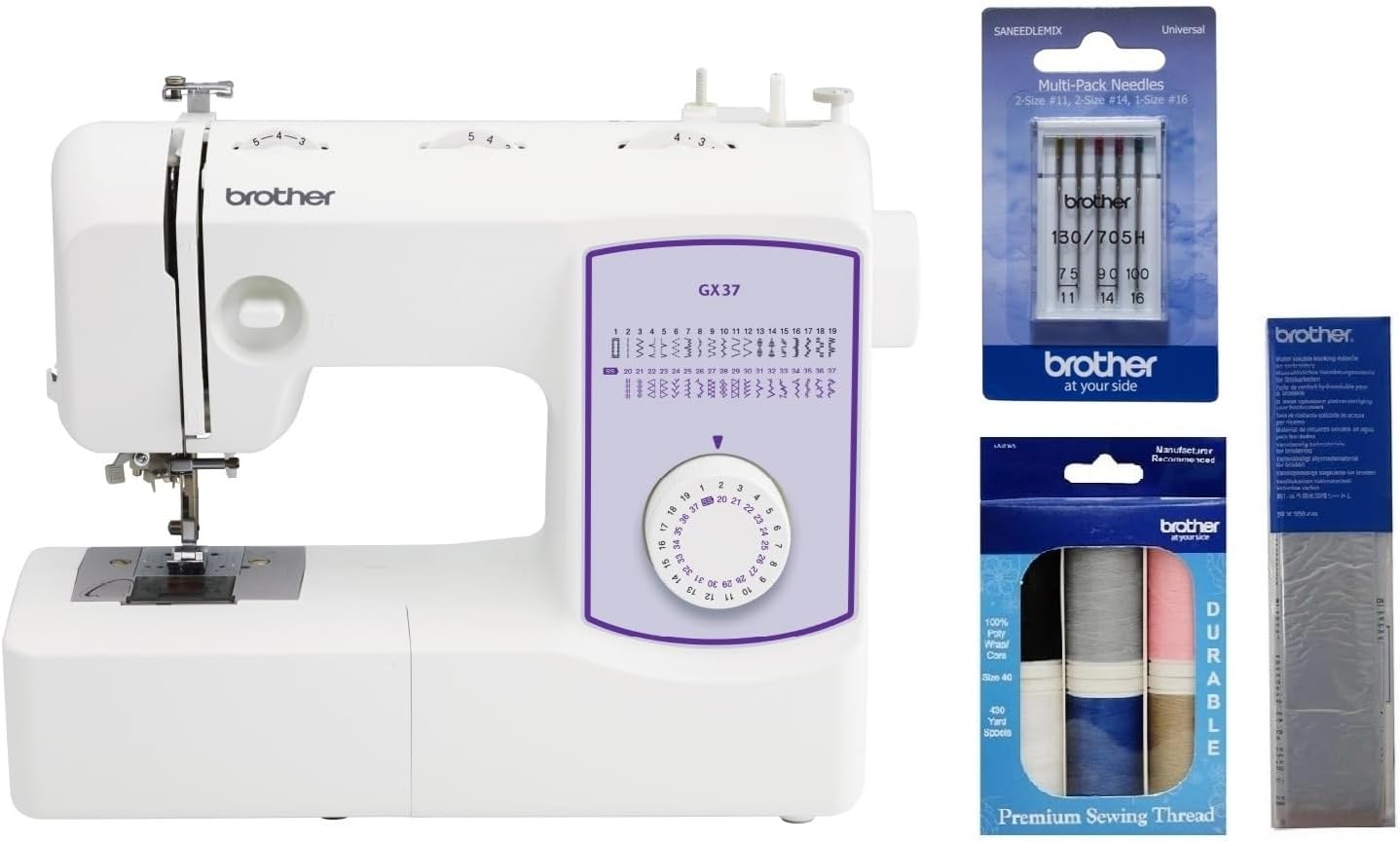
The GX37 is a 37-stitch mechanical machine, and it arrives as a bundle: a six-pack of premium thread, water-soluble stabilizer, and a five-pack of needles. That bundle matters more than it sounds. Half of the "my first project went badly" stories I hear in class are not machine problems at all. They are the wrong needle for the fabric, or thread that snaps because it was cheap and had been sitting in a drawer since 2011. A machine that shows up with needles and thread in the box removes an entire failure mode before you sit down.
Thirty-seven stitches is plenty, and I say that as someone who owns a machine with far more. Count the stitches you actually use on a garment: straight, zigzag, a stretch stitch for knits, a blind hem if you are feeling fancy, and a buttonhole. That is five. Stitch count marketing sells machines, but a 100-stitch machine uses about 10, and the other 90 are decorative variations you will scroll past forever. What I care about is whether the straight stitch holds a balanced seam from denim to silk without me chasing the tension dial, and whether the machine screams when it hits a thick seam. Those two things separate a machine you will keep from a machine you will resell in eight months.
This is also the tier where I point beginners rather than at the cheapest Singer on the shelf. The HD series is okay. The rest of the modern Singer lineup is disappointment with a brand name on it, and a plastic body stamped "heavy duty" is one of my least favorite phrases in this hobby. Brother's entry machines have been the more predictable choice for students for years, and the GX37 sits below the CS7000X in stitch count while keeping the same approach to the basics.
One honest note: mechanical machines like this one have fewer things to break, and that is a feature. No screen, no circuit board, no firmware. When the bobbin winder gets fussy, it is a mechanical fix, not a service bill.
The Step Up: Brother SE2000 Combo
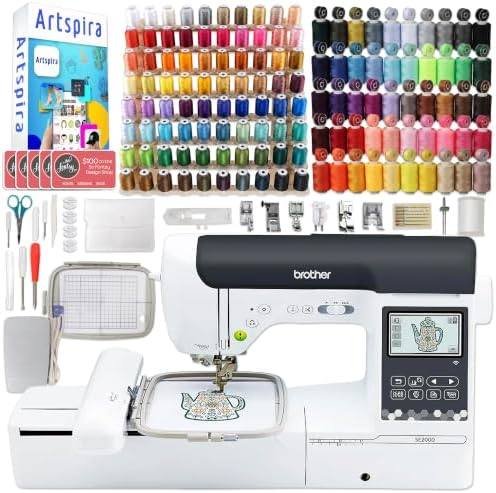
The SE2000 is a combo: a sewing machine and an embroidery machine in one body, with a 5 inch by 7 inch embroidery field, and it comes with a deluxe bundle of 130 thread spools plus accessories. If embroidery is genuinely the goal, this is the shortcut. You get one machine, one footprint, one learning curve, and a thread library that would cost real money to assemble piece by piece.
The thread bundle is the part people underestimate. Embroidery eats thread. A single design can pull through several colors, and if you are buying spools one at a time at retail prices, the hobby gets expensive fast. Starting with a full set means you can run designs on day one instead of ordering navy and waiting a week.
But I want you to be honest with yourself about which sewer you are. Buy for the fabric you actually sew, not the fabric you imagine sewing. If your plan is Halloween costumes, Ren faire gowns, and hemming your own pants, this machine's embroidery half will sit unused while you use it as a very expensive straight stitcher. If your plan involves monogrammed gifts, patches, and applique on costumes, the combo earns its place on the table.
The other thing to weigh is the computerized side. Computerized features are wonderful right up until the board dies and the repair costs half the machine. That risk is real at this price. It is not a reason to avoid the SE2000, but it is a reason to keep it covered, keep it dry, and not leave it plugged in during a power-flickering storm. Treat a machine like this the way you would treat a laptop that sews.
The Part That Wears Out: Needle Plate for Singer Machines
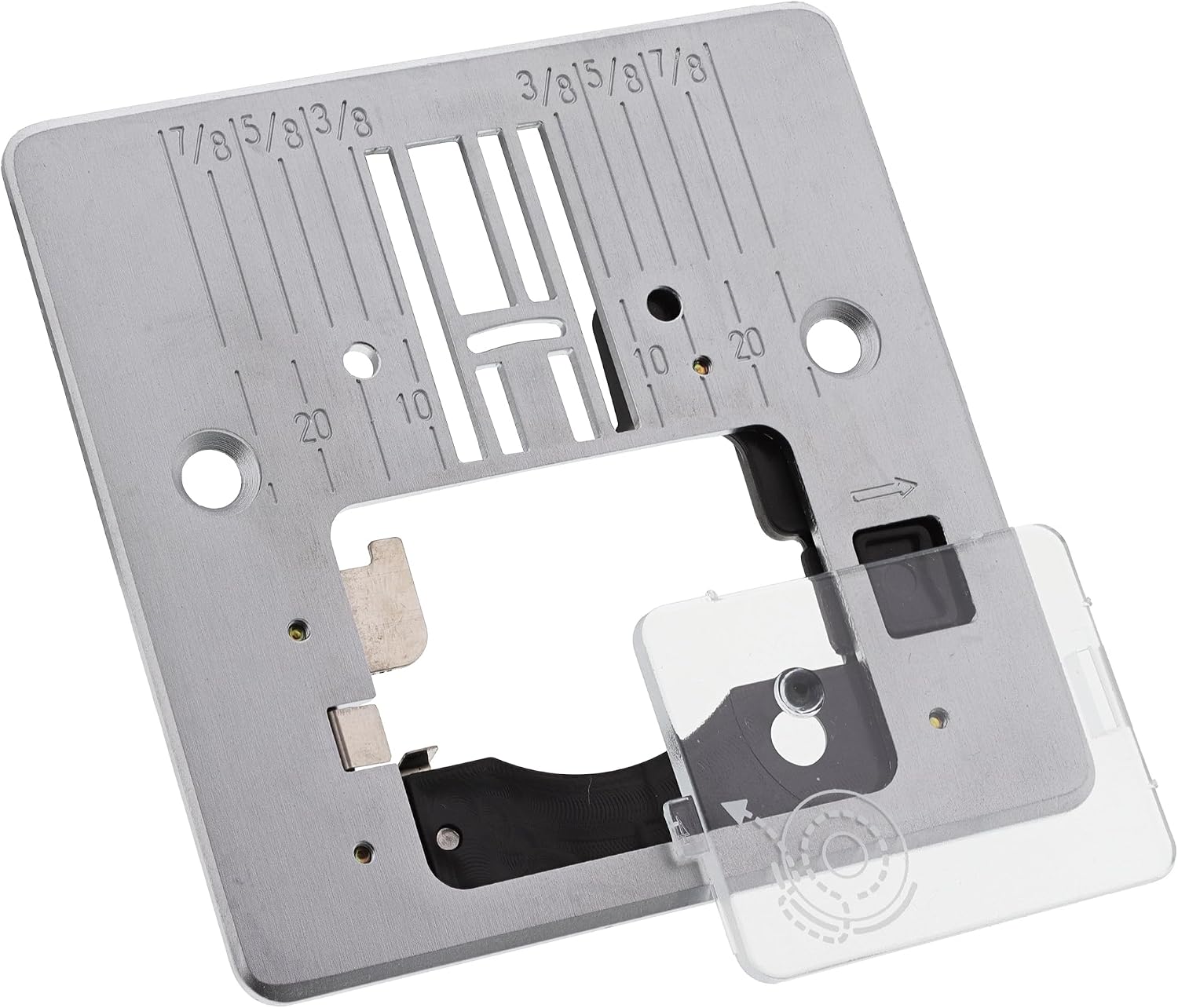
This is the least glamorous item in this guide and the one that solves the most frustrating problem. This needle plate is a replacement part for a long list of Singer machines, including the 3323, 4411, 4423, 4452, and 6380, with the covered models spanning Heavy Duty, Talent, and Scholastic lines.
Here is why a needle plate matters. The plate is the flat metal surface the fabric slides across, and the feed dogs poke through it to move your fabric. Every time a needle comes down and hits that plate instead of the fabric (and it happens, usually while you are pulling the work instead of letting the feed dogs do it), it can raise a tiny burr. A burr you cannot see will snag thread, catch fabric, cause skipped stitches, and make a perfectly good machine look broken. People chase that problem with tension adjustments, new bobbins, rethreading, and eventually a new machine. The fix is often a plate.
If you own a Singer in that model list and your stitches have started snagging or your fabric is puckering near the needle, inspect the plate with your fingernail before you blame the machine. Run your nail across the surface around the needle hole. If it catches, you found your problem. A plate is a cheap part and a straightforward swap, and it is far less expensive than replacing a machine because of a scratch you cannot see.
The Tool Everyone Loses: Fish Mouth Needle Threader 10-Pack
Automatic needle threaders break. That is not a brand problem, it is a physics problem: you are pushing a thin wire hook through a needle eye with a machine arm doing the aiming, and eventually the hook bends or snaps. The question is never whether yours will fail. The question is whether you can live without it when it does.
This set is ten fish mouth needle threaders, the kind you hold in your hand and use on any machine, in a green finish. Ten of them. That is the entire point. My pet peeve in this hobby is a threader that dies in month two and leaves a beginner squinting at a needle eye, deciding that sewing is too hard. A ten-pack means the broken one goes in the trash and you keep sewing.
Two technique notes that save more frustration than any tool. First, raise the needle to its highest position and put the presser foot up before you thread, because that releases the tension discs and lets the thread seat properly. Second, thread the needle from the front and pull a good long tail through, six inches or so. Half of the "my machine keeps unthreading" complaints end with a tail that was too short.
Keep one in your machine's accessory box, one in the drawer, one in the tin with your hand needles. If you have ever frogged a seam because your top thread popped out on the first stitch, you already know why a spare costs nothing.
How I Judge a Machine Before I Recommend It
I have a standing rule: no verdict without a seam test on at least three fabric types. If I cannot run a straight stitch on denim, on a mid-weight woven, and on a slippery knit, I do not have an opinion worth publishing. Here is the sequence I apply to any machine, and the same sequence you can run in a store or on your own table.
The straight stitch first. Not the decorative stitches, not the screen, not the auto thread cutter. Run a seam, look at it from both sides, and ask whether the thread sits in the fabric or lies on top of it. Then run it over a thick folded seam and listen. A machine that handles a jeans hem without whining is telling you something about its motor and its feed.
The tension dial second. A dial that has to go from 2 to 8 to get a balanced stitch is a dial that means nothing, and you will spend your sewing life adjusting instead of sewing. Balanced tension is the whole craft.
Buttonholes third. A machine's buttonholes tell you more than its stitch count ever will, because a buttonhole is the machine's brain running a four-step sequence and returning to the same place every time. Uneven buttonholes mean uneven everything else.
And last, the only test that really matters: would I trust it on a paid costume? If the answer is no, it is a hobby machine, and I say so. That standard is why I recommend fewer machines than most lists do.
The setup reference table
This is the table I keep in my class notes. It is the whole setup in four rows: the machine, the step-up, the wear part, and the small tool. Prices move, so check the listing for the current number. If you are building from nothing, the first row is where your money goes.
| Item | Role in the setup | Who it suits | Price |
|---|---|---|---|
 Visit on Amazon → Brother GX37 bundle |
The machine | First machine, garments and home sewing | $174.96 |
 Visit on Amazon → Brother SE2000 combo |
The step-up | Sewers who actually want embroidery | $1,569.98 |
| <img src="/images/products/B0DH9F7QWG.jpg" alt="Needle Plate for Singer Sewing Machines (416472401) - 3323, 4411, 4423, 4452, 6380, and More | Models Include Heavy Duty, Talent, & Scholastic" width="340" style="border-radius:8px;max-width:340px;width:340px;height:auto;max-height:420px;object-fit:contain"> Singer needle plate |
The wear part | Owners of the covered Singer models |
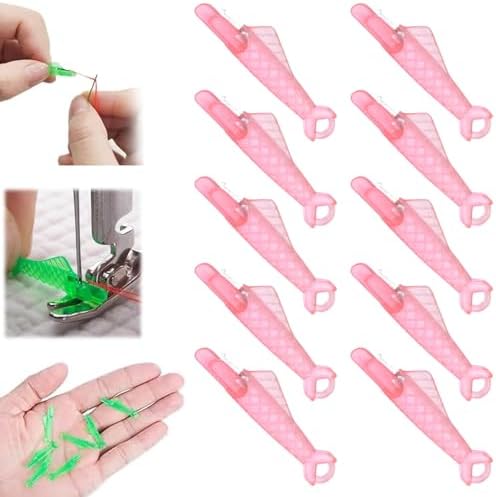 Visit on Amazon → Fish mouth threader 10-pack |
The small tool | Everyone, including people who think they do not need it | $4.99 |
Should you buy the Brother GX37?
For a first machine, yes. The 37 stitches cover what beginners actually use, the bundle puts thread, stabilizer, and needles in your hands on day one, and the mechanical build means fewer expensive things to break. The real spec for a first machine is whether it makes you want to sew tomorrow, and a machine that feeds evenly and holds tension does exactly that.
What would change my answer? If you already know you want embroidery, skip this and look at the combo below, because buying twice costs more than buying once. If you only ever sew heavy denim and canvas, a straight-stitch-focused machine is a different conversation. For everything in between, this is the one I would hand a student.
Should you buy the Brother SE2000 combo?
If embroidery is the goal, yes. A 5 inch by 7 inch hoop is a useful working field for patches, monograms, and costume details, and the 130-spool bundle means you can start stitching designs without a separate thread order. One machine doing two jobs also saves the counter space that a second machine would eat.
If embroidery is a maybe, no. Buy for the fabric and the work you actually do. A combo machine is a compromise between two tools, and it is a very good compromise, but a dedicated sewing machine at a lower price will out-sew it on plain seams. Be honest about which sewer you are before you spend this much.
Should you buy the Singer needle plate and the threader pack?
Both are cheap fixes for problems that feel expensive. If you own a Singer from the covered model list and your stitches started snagging, the plate is the first thing to check, and replacing it is far cheaper than replacing the machine. Run your fingernail around the needle hole and let the metal tell you.
The threader pack is the same logic in a smaller package. Ten of them means a broken threader never ends your sewing session. Keep one in the accessory box, one in the drawer, and one wherever you keep your hand needles. Small parts, big difference, and neither one will ever be the reason you stopped sewing.