Well, is the Singer 4423 really the "heavy duty" workhorse it claims to be? I've been sewing for 12 years, taught dozens of beginners, and I keep a seam test journal that would make a lab tech jealous.
Related: Common Sewing Machine Problems And Fixes
After six years of hard use on my Brother XM2701, I bought the 4423 to handle denim and leather for my costume work.
Here is the truth, straight from my dining table (where my serger currently lives, much to my family's annoyance).
The Tension Trap: Why Your Stitches Look Like Garbage
Let's talk about the thing that makes beginners throw machines out the window: tension. I've seen it a thousand times in my classes. A student brings in a machine, the thread balls up under the plate, and they blame the machine. Nine times out of ten, it's not the machine. It's the tension, the thread, or the bobbin.
I keep a seam test journal where I run every machine through five fabric types and three stitch lengths before I give it a verdict. My standard test starts with a straight stitch on quilting cotton, then denim, then silk. A machine that handles both denim and silk without whining is the one worth keeping. If it can't do both, it's a specialty tool, not a workhorse.
The first thing I teach my students is to hang onto their thread ends when they start a seam. That little tip prevents more tangles than any tension dial adjustment. The second thing I teach them is to practice on scraps before touching their real project.
The third thing is to check the bobbin. I have a whole lecture on bobbin types, which sounds boring until you've spent an hour picking thread out of a bobbin case because you used the wrong one.
Brother XM2701: The Unfussy Beginner's Best Friend
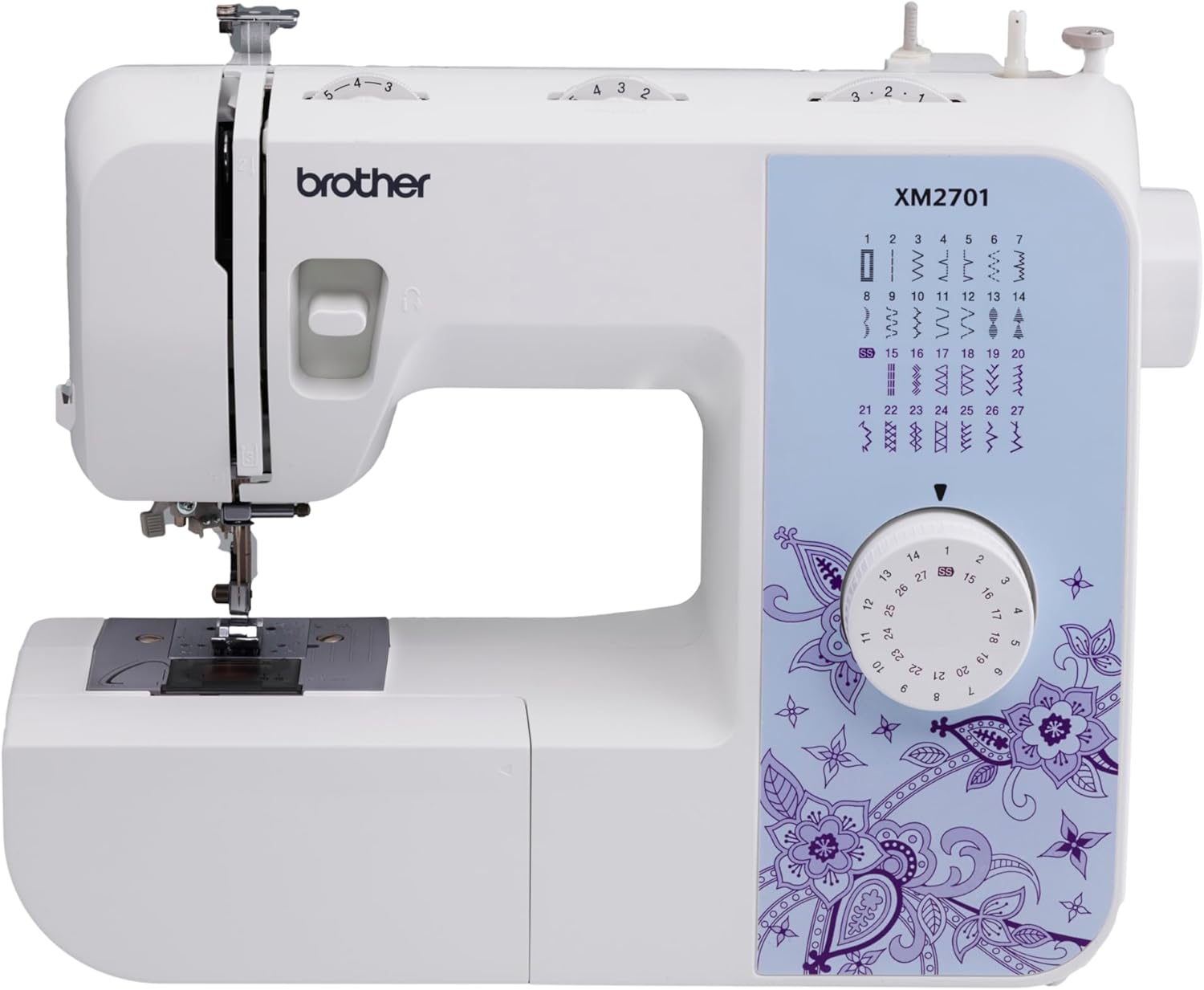
This is the machine I recommend to every single person who walks into my beginner class. It comes with a printed manual. A real one, not just safety warnings and a QR code. That alone puts it ahead of half the machines on the market. The Brother XM2701 is unfussy. It works without drama. You can sit down and make something the same day you open the box.
I've had mine for six years. It's made baby blankets, kids' clothes, Halloween costumes for a school of 400 kids (Totoro, a seagull, a buoy, a snail, Forky), tote bags, fleece hats, chair covers, adult garments, and 14 Christmas stockings. It's still running. I'm only upgrading now because I need to sew heavier fabrics for my costume work, but this machine taught me everything I know.
The top-loading bobbin is easy to see and easy to thread. It's quiet. It comes with extra feet and extra bobbins, which means you can start sewing the day it arrives instead of waiting for supplies. At ~$130, that's about six cents a day if you use it for six years. That's not a purchase, that's a bargain.
Here's the catch: it won't plow through thick fabrics like leather or multiple layers of denim without adjustments. You'll need to hang onto your thread ends and practice on scraps. But for a beginner on a budget, this is a darn good machine right here.
A buyer wrote in March 2024 that they bought it six years ago as a gamble, unsure if they'd use it. They fell in love with sewing, made all kinds of projects, and the machine is still going strong. That's exactly my experience. Will you outgrow it? Yes, eventually. I used mine for six years before upgrading. But six years is a long time.
Singer 4423 Heavy Duty: Power With a Price
 Visit on Amazon →
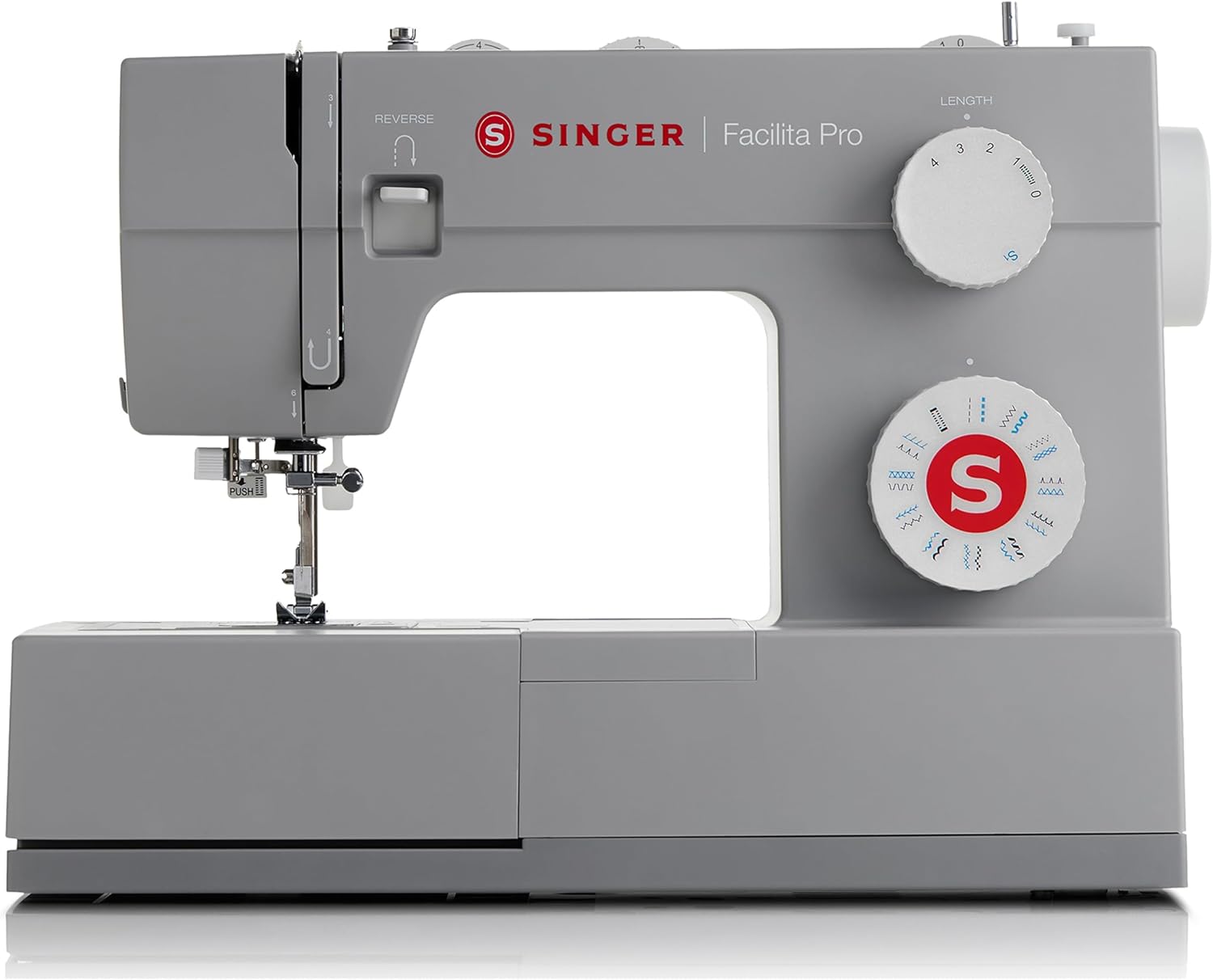
This is the machine I bought when my Brother couldn't handle the heavier stuff. It's got power. I've sewn through leather, Cordura, denim, and nylon webbing with it. The numbered threading paths on the machine are a lifesaver. You don't need to memorize anything, you just follow the numbers.
Visit on Amazon →
This is the machine I bought when my Brother couldn't handle the heavier stuff. It's got power. I've sewn through leather, Cordura, denim, and nylon webbing with it. The numbered threading paths on the machine are a lifesaver. You don't need to memorize anything, you just follow the numbers.
But here's the thing: the instructions are sparse. Singer ships only safety warnings in the box, no real manual. That's a real complaint from real buyers. A 67-year-old man who had never sewn before bought this machine for simple clothing repairs, struggled with bobbin tangles (which turned out to be bad thread, not the machine), learned via YouTube, and went on to sew Hawaiian shirts, work shirts, and western shirts over four years, even tackling heavy Cordura.
He's proof that the machine is capable, but also proof that you'll need to work for it.
The pedal is sensitive. It goes 0 to 60 in a leap. You'll need to practice on scraps before you're comfortable with it. And the bobbin takes clear plastic Class 15 bobbins only. Not 15J, not metal. Get that wrong and you'll have thread balled up under there, and you'll blame the machine when it's your own fault.
Singer is no longer a good choice for new machines, I've heard that from too many people to ignore it. But the 4423 is the exception. It's the best unit at its price point. If you're sewing denim and leather, you need this.
The Tension Problem, Fixed
So, how do you actually fix sewing machine tension problems? Here's what I tell my students, and what I do myself.
First, check your bobbin. Is it the right type? Is it wound evenly? Is it inserted correctly? I've seen more tension problems caused by bobbins than by any other single factor. A Class 15 bobbin is not a 15J, not metal, and if you use the wrong one, you'll get thread balled up under there.
Second, check your thread. Cheap thread is the enemy of good tension. I've cursed at thread tangles for years, and I've learned that the ~$1 spool from the discount store is not a bargain. It's a frustration tax. Swap out the cheap thread for something decent and see if your tension problems disappear. It's usually the thread, not the machine, but not always.
Third, check your upper tension dial. I've seen a stitch width dial arrive at the wrong setting cause more problems than any mechanical failure. Set it to the middle, sew a test seam, and adjust from there. One dial change at a time. Don't fiddle with everything at once or you'll never know what fixed it.
Fourth, hang onto your thread ends when you start a seam. I say this in every class, every time, and it never stops being true. It prevents tangles, it prevents skipped stitches, and it's free.
Which One Should You Choose?
Choose the Brother XM2701 if you're a beginner who wants to sew without frustration. It's the machine I recommend to every student who walks into my class. It's unfussy, it's quiet, and it comes with a real manual. You can make something the same day you open the box.
Choose the Singer 4423 if you're sewing denim, leather, Cordura, or multiple layers of fabric. It'll plow through things that would make the Brother balk. But be prepared to download a manual and watch some YouTube videos. Singer doesn't respect your time, but the machine itself is capable.
I don't track prices day to day, so I won't pretend to know next week's deals. But I do know what these machines are worth. The Brother at ~$130 is a steal. The Singer at ~$200 is worth every penny if you need the power.
I've sewn through Cordura and corduroy, cursed at thread tangles, and made a Totoro costume that held up for three Halloweens. I know what I'm talking about. Gus, my 60-pound labradoodle, sleeps on a pile of half-finished projects in my shop, which means I've learned which machines can handle a layer of dog hair in the bobbin case without complaint. Both of these machines can.
The Brother XM2701 taught me to sew. The Singer 4423 lets me sew what I want. That's not a failure of the Brother, that's a graduation. Start with the machine that makes you want to sew tomorrow. Upgrade when you know what you need. That's the honest bottom line. for the Brother XM2701 if you're starting out. for the Singer 4423 if you're ready for heavy duty. Either way, practice on scraps, hang onto your thread ends, and check your bobbin before you blame the machine.