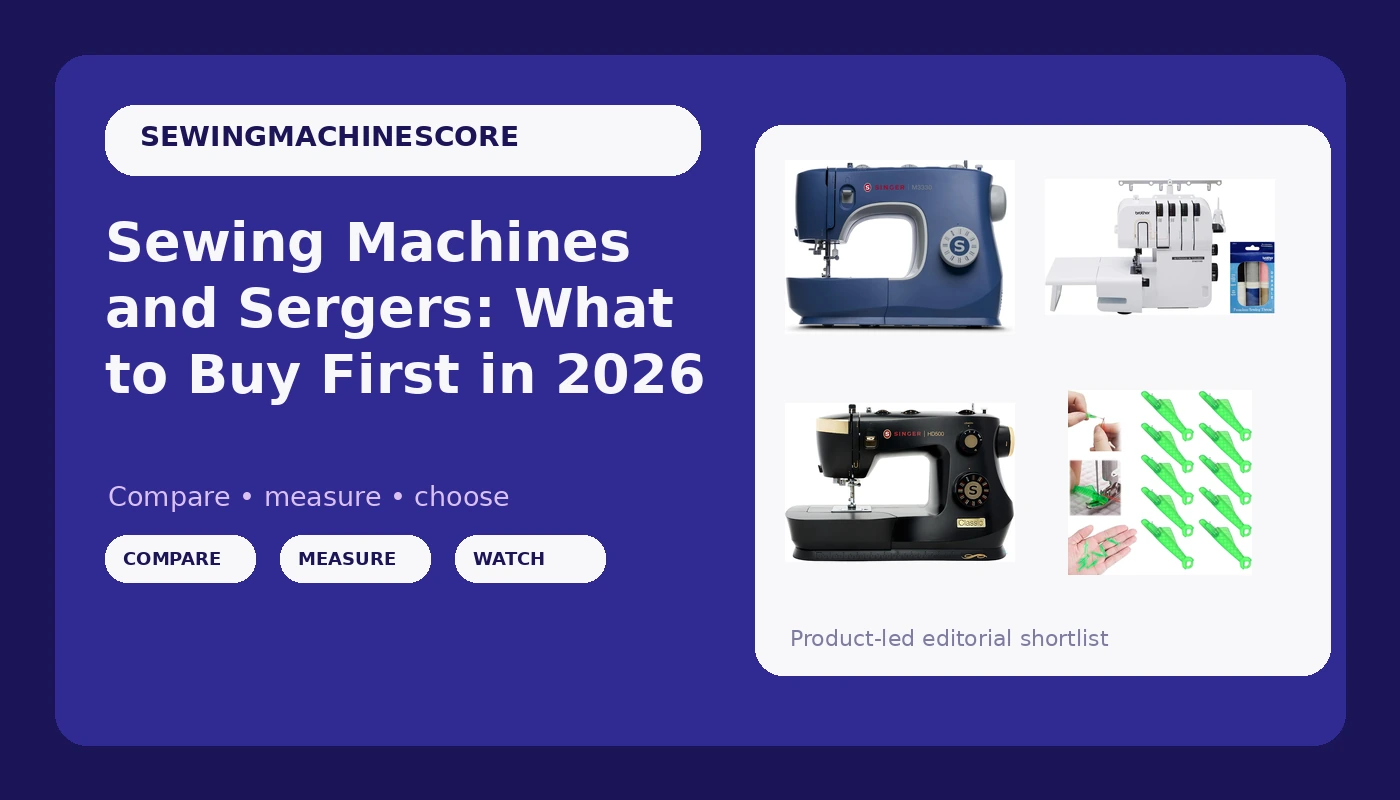
I have taught beginner sewing in Portland for six years, and every class opens the same way: a student has a machine in the car, a receipt in a bag, and a question they are almost embarrassed to ask out loud. Did I buy the right thing? My grandmother sewed on one machine for 40 years and made it last. Most of my students are lucky if their first machine survives four. The difference is almost never the brand name on the front. It is whether the machine matched the sewing they actually wanted to do.
This comparison covers four very different purchases: a beginner sewing machine, a heavy duty sewing machine, a serger, and a ten-pack of needle threaders. That is not a random list. It is the order most new sewists move through the hobby, from "can I sew a straight seam" to "can I finish a garment that survives a wash." If you are weighing sewing machines and sergers, the answer depends less on your budget than on what you plan to make in the next twelve months. Buy for the fabric you actually sew. A machine built for quilting will frustrate a garment sewer, and the reverse is just as true.
For most people starting out, the SINGER M3330 is the right first purchase, the Brother ST4031HD serger is the right second purchase about a year later once you know you are staying, and the fish mouth needle threaders are the cheapest quality-of-life upgrade in this entire list. The SINGER Heavy Duty 500 sits in an awkward middle: more speed and a bigger accessory kit, but a price that puts it close to a serger, which does something no sewing machine can do.
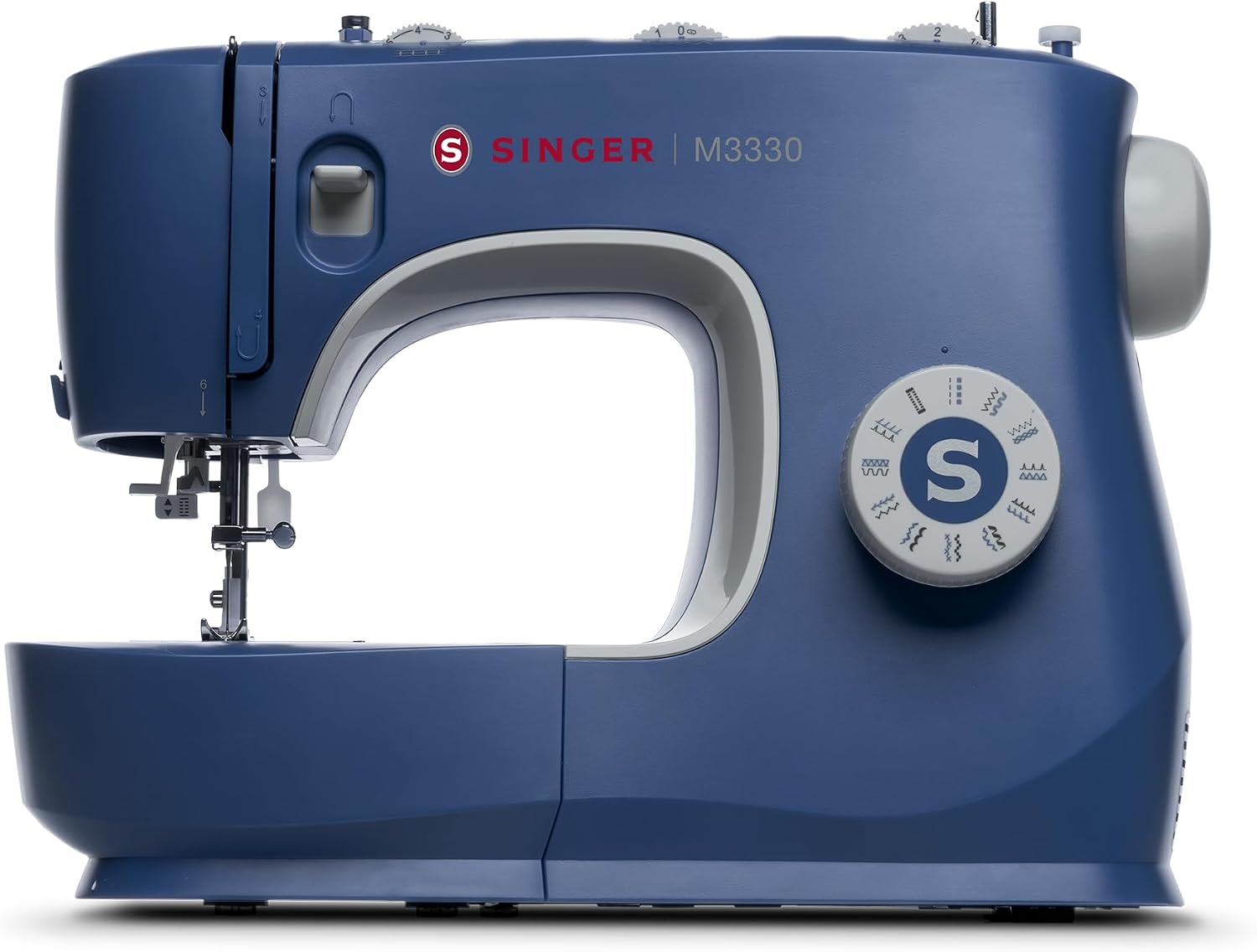
SINGER M3330 Navy Blue Sewing Machine with Accessories
The best first machine here: simple controls, accessories included, forgiving for someone who has never threaded a needle
Entry-level build, so a thick stack of denim will make it work harder than it wants to
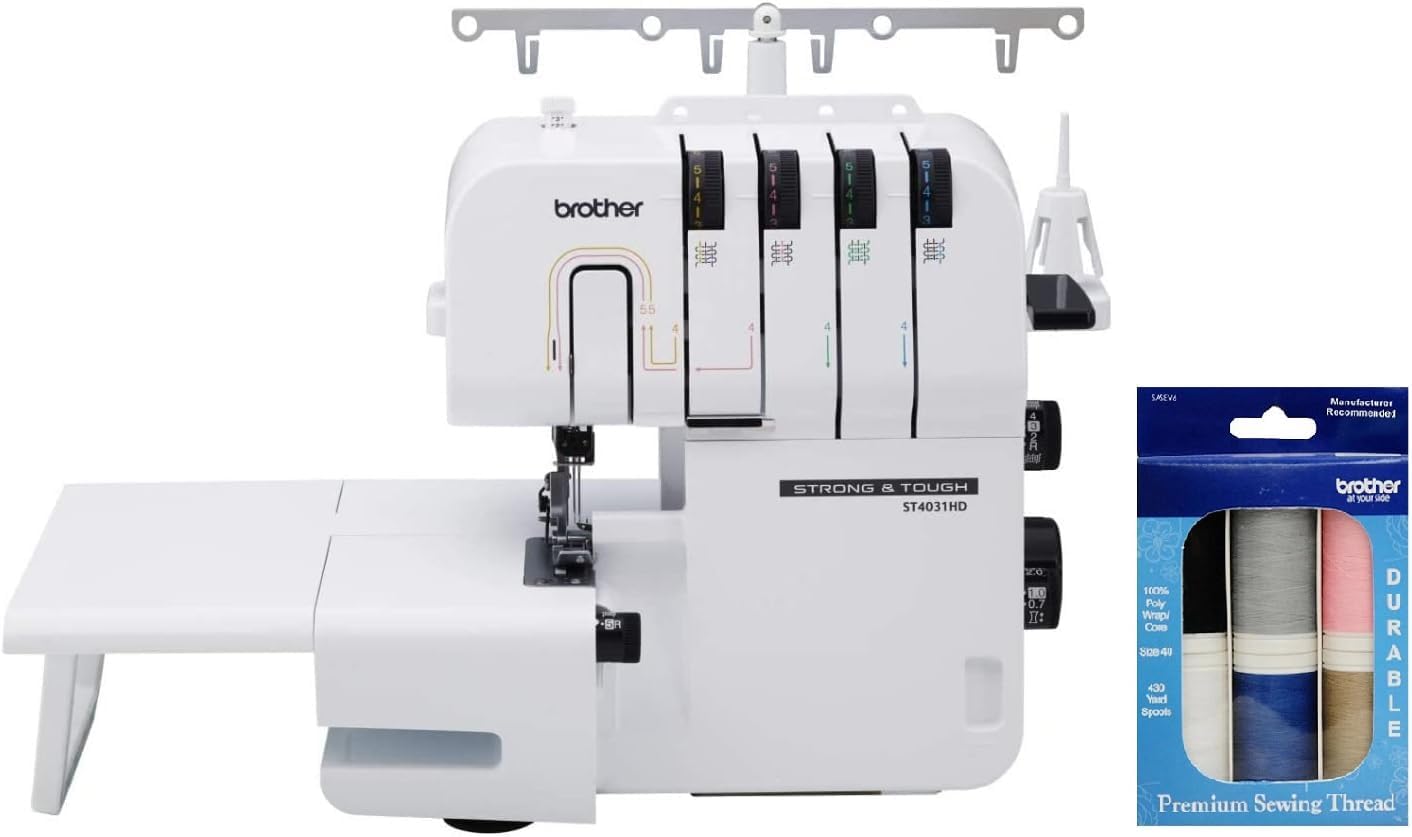
Brother ST4031HD Strong & Tough Serger Machine
Trims and overcasts a seam in one pass at 1,300 stitches per minute, and the thread six-pack gets you started
It is not a sewing machine, so it cannot replace one, and threading it is its own skill
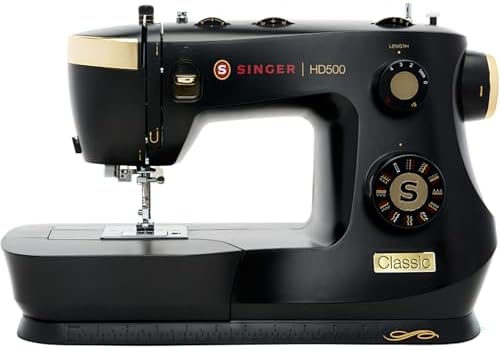
SINGER Heavy Duty 500 Classic High Speed Sewing Machine + Accessory Kit
High speed for long seams, and the accessory kit is worth more than most bundled extras
The "heavy duty" label is doing marketing work, and the price creeps toward serger territory
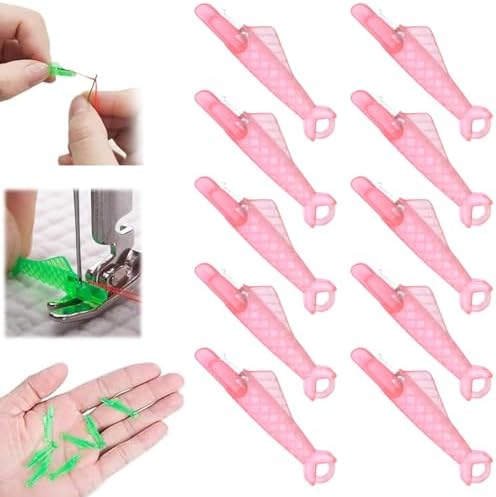
10 Pcs Fish Mouth Sewing Machine Needle Threader (Green)
Ten of them for less than a coffee, and they save your eyes on both hand and machine needles
Plastic, easy to lose, and no substitute for learning to thread your machine yourself
Prices and availability were captured from Amazon Creators API and may change.
The test I run before I recommend anything
Every machine that ends up on my table gets the same treatment, and it has nothing to do with stitch count. I run a straight stitch on five fabrics: quilting cotton, linen, a stable knit, denim, and satin. I sew a 12-inch seam and watch the tension dial across it, because a dial that does nothing is a dial you will fight for years. Then I do a buttonhole marathon, because buttonholes tell you more about a machine's brain than any spec sheet.
Four questions decide the verdict. Can I test the straight stitch on multiple fabrics? How does the tension behave across a seam? What do the buttonholes look like? Would I trust it on a paid costume? If a machine fails the first question, there is no verdict to give.
I did not run that full gauntlet on every machine in this list, so I am judging these four on what they are built to do and who they are built for, not on invented test numbers. What follows is how I would sort them for a student standing in my classroom with a credit card and a deadline.
The beginner machine: SINGER M3330
If you have never used a sewing machine, this is the one I would hand you first. It is an entry-level machine with accessories in the box, which matters more than it sounds: a beginner who has to shop for a second purchase before the first seam is a beginner who quits. The controls are simple, the learning curve is shallow, and the navy blue body is a nice change from the sea of white plastic.
What it is genuinely good for: straight seams on cotton and linen, simple garments, Halloween costumes, pillowcases, curtains, hemming. Straight stitch quality is the whole game, and everything else on a beginner machine is convenience layered on top of that foundation.
Where I would set expectations: this is an entry-level machine, not a Bernina, and a plastic-bodied machine with a "heavy duty" badge on it would still be a plastic-bodied machine. If you routinely sew through six layers of denim or upholstery fabric, you are asking an entry-level machine to do industrial work. It will complain. Machines that scream on thick fabric are one of my least favorite sounds in this hobby.
One more thing. The built-in automatic needle threader on any machine in this class will eventually break. That is not a knock on this specific model, it is a fact of the mechanism, and it is exactly why the ten-pack of fish mouth threaders further down this list is not a silly purchase.
The heavy duty question: SINGER Heavy Duty 500
The Heavy Duty series is the part of Singer's modern lineup I can actually defend, and this is the higher-speed end of it. High speed sounds like a marketing bullet until you sew a 90-inch curtain panel or piece a quilt, and then it is the difference between an afternoon and an evening.
The accessory kit is the real argument here. Bundled accessories are usually padding, but on a machine at this level a kit that covers the feet and basics you would otherwise buy one at a time is worth actual money, and it means fewer interruptions in your first month.
Where it loses ground: "heavy duty" is stamped on a lot of plastic-bodied machines, and I want you to read that label as "handles more than the cheapest model," not "will sew leather without flinching." The other issue is price positioning. Once you are near the cost of a serger, you have to ask whether you need speed or whether you need a second tool that does something your sewing machine fundamentally cannot. For a garment sewer working mostly in cotton and wool, the answer is often the serger.
If you are a quilter, or you sew long straight seams in volume, the speed argument gets much stronger. Buy for the fabric you actually sew.
The serger: Brother ST4031HD
I will say this plainly, because I see it argued about in every sewing forum: a serger is not a better sewing machine, and a sewing machine is not a worse serger. They are different tools, and I review them separately. No gatekeeping.
What a serger does is trim your seam allowance, overcast the edge, and lock it in one pass, at 1,300 stitches per minute on this model. That is how a seam survives forty wash cycles and how a knit garment stretches without popping. If you make costumes for a school of 400 kids, or you sew with jersey and French terry, a serger is the tool that changes what you are willing to attempt. The included premium thread six-pack is a thoughtful touch, because sergers eat cones of thread and threading a serger for the first time is easier when you are not also shopping.
The honest costs: threading a serger takes practice, and the first time you do it you will use language you would not use in front of a student. It also cannot do buttonholes, zippers, or a topstitched hem. You keep your sewing machine. This is an addition, not a replacement, which is why I would put it second on your list and not first.
The accessory: fish mouth needle threaders
This is the least glamorous item in the comparison and the one I replace most often. A fish mouth threader works like this: you push the little metal hook through the eye of the needle, lay your thread in the mouth, and pull it back through. It works on hand needles and on machine needles, and it is the difference between threading a size 11 needle on the first try and threading it on the ninth while your glasses fog up.
Why the ten-pack matters: they are plastic, they bend, they vanish into carpet, and they get borrowed by students who never give them back. At this price, having ten means losing one is a shrug instead of a crisis. The green color also makes them easier to find on a dark sewing table, which is a small thing that stops being small the third time you crawl around looking for one.
What they are not: a fix for a machine that is misthreaded, a substitute for learning the threading path on your machine, or a repair for a bent needle. A dull or bent needle causes more "my machine is broken" posts than any tension problem, and no threader solves that. Keep spare needles and change them.
Tension, buttonholes, and the specs that actually matter
Tension is the dial everyone touches and nobody understands. Balanced tension is the whole craft. On any machine, you should be able to move the dial one step and see a visible change in the stitch. If a full turn of the dial produces nothing, you are not adjusting tension, you are turning a knob that was installed to satisfy a feature list.
Bobbin issues sit behind half the "my machine is broken" posts I read, and almost all of them come down to a bobbin that was wound badly, dropped in the wrong direction, or is the wrong bobbin for the machine. Learn your bobbin. It is the lower thread, it is not an afterthought, and it costs nothing to get right.
Stitch count is the spec I trust least. A machine advertising 100 stitches uses maybe ten of them, and the rest are decorative variations of the same two mechanics. I say that as someone who tells beginners to buy cheap and then counts stitches in the middle of class. Do not pay for stitch count. Pay for a straight stitch that holds its tension and a buttonhole that comes out the same on the fourth try as it did on the first.
Speed is the one number that scales honestly. 1,300 stitches per minute on the serger is a real, usable figure for long seams and overcasting a whole garment's insides. On a sewing machine, a higher top speed only pays off if you actually sew long distances. If you sew ten-minute seams, you are paying for a spec you will never reach.
The walking foot deserves a mention here even though it is not in this comparison. If you quilt, or you sew layers that shift, that accessory stops the shifting. It is essential for quilting and nice for everything else, and it is the kind of add-on that beats a fancier machine with the wrong feet.
What I would buy first, second, and never
First, the beginner sewing machine. You cannot learn on a serger, because a serger cannot sew a plain seam or a buttonhole, and you will spend your first month learning to thread instead of learning to sew. The SINGER M3330 is the one I would hand a student on day one.
Second, once you have sewn enough to know you are staying, add the serger. That is when the Brother ST4031HD starts earning its place, because by then you know whether you sew knits, whether you make garments, and whether finishing seams is worth it to you. Buying a serger in month one is how people end up with a $400 dust collector.
The Heavy Duty 500 is the conditional pick. If you quilt, or you sew long seams in bulk, buy it and enjoy the speed and the accessory kit. If you make garments, put that money toward the serger instead. Same budget, more capability.
And the threaders? Buy them today, whoever you are. Automatic needle threaders break, and the question is never whether yours will, only whether you can live without it when it does. A ten-pack of fish mouth threaders means the answer is yes.
Never buy a machine because "heavy duty" is printed on the body. Buy it because it sews the fabric you sew without whining, holds its tension across a seam, and makes a buttonhole you would put on a paid costume.
The bottom line
Sewing machines and sergers are not competing purchases, they are sequential ones. Start with a machine that makes you want to sew tomorrow, which is the real spec for a beginner, and the SINGER M3330 fits that brief better than anything else in this list. Add the Brother ST4031HD serger when you have a reason: knits, garments, seams that need to survive real life. Consider the SINGER Heavy Duty 500 if speed and volume are genuinely your problem. And spend the few dollars on the needle threaders now, because your eyes will thank you and your built-in threader is living on borrowed time.