Related: Sewing Machine Tension: Why the Dial Matters More Than Stitch Count
I keep a seam journal. Five fabric types, three stitch lengths, and a verdict on every machine that has come through my classes. Twelve years of costume work and a Thursday night beginner class means I have watched a lot of people buy the wrong machine. Not a bad machine, usually. The wrong one.
Most sewing machines for beginners get picked by a number on the box. Three hundred stitches sounds three times better than a hundred. It is not. The straight stitch is the foundation, and every other feature is convenience stacked on top of it. A machine that runs a clean straight stitch through denim and then through silk without whining is worth more than a machine with a catalog of decorative stitches and a straight stitch that puckers.
So this is not a list of the fanciest machines. It is the short list I hand a student on a Thursday night, plus the small tool that prevents the most common beginner frustration before it starts. I have opinions about all four of these, and I will tell you where each one belongs and where it does not.
The First Machine to Buy: Brother XM2701
If you are buying one machine and you want to sew clothes, hem curtains, patch a backpack, and learn what a good seam is supposed to look like, this is where I point people. The XM2701 carries 27 built-in stitches, which is a real number rather than a marketing number. You get a straight stitch, a zigzag, stretch stitches for knits, and a handful of decorative options you will use twice and then forget about. That is the correct shape of a first machine.
The bundle is the part I care about. It arrives with a six-piece thread pack, water soluble stabilizer, and five sewing machine needles. That sounds like filler until you have taught beginners for a decade. A new sewer who has to stop and research which needle goes with which fabric does not sew tomorrow. A new sewer with thread, needles, and stabilizer already in the box sits down and makes something. Momentum is the most underrated spec in this hobby.
Where it fits: garments, home decor, mending, and the everyday sewing that fills a Saturday. Where it does not: if your plan is to quilt a king-size bedspread, that is a different machine and a different conversation, and I get to it below.
The Portable Mender: SINGER M1000
The M1000 is a portable mending machine, and I want you to read that word carefully, because it tells you exactly what this machine is for and what it is not for. It is the machine that lives in a closet and comes out for hems, patches, torn seams, and the school costume emergency the night before the parade. It ships in white with an accessory kit.
I keep a machine like this in rotation because hauling out a full-size setup to fix a two-inch seam is how repairs pile up in a laundry basket for six months. A mender's job is to be portable, to be quick to thread, and to lay a straight line of stitches into a hem without a ceremony. If that is what you need, this does it. If you want to cut a dress from a pattern and fit it, this is not that machine, and buying it as your only machine will frustrate you inside a month.
The honest framing: this is a second machine, or a first machine for someone whose sewing is genuinely repair work. That is a real category, not a consolation prize. Plenty of people sew nothing but hems, patches, and torn seams, and for them a full-size machine is overkill.
The Stitch Library: 1130 Computerized Sewing and Quilting Machine
The 1130 is a computerized sewing and quilting machine with 300 stitches, and it belongs to the person who has already decided they love decorative stitching, quilting, and the kind of work where a stitch library is the point rather than a bonus. Three hundred stitches on a machine you only run straight seams on is 290 stitches you never touch. Three hundred stitches on a machine where you quilt, monogram, and audition stitch patterns for a costume trim is a genuine toolkit.
My honest position on computerized machines comes from watching repair bills walk through my classroom: the features are wonderful until the board dies, and then the repair can cost half of what the machine cost. That is not a reason to avoid them. It is a reason to buy one because you will use what it offers, not because the number on the box was bigger.
Who it is for: quilters, decorative sewers, and anyone who wants to change stitches with a button instead of a dial. Who it is not for: a beginner who wants a tote bag and a pair of pajama pants. You would be paying for a library you will not open, and that money belongs in fabric.
The Small Tool That Saves the Most Patience: 4-in-1 Needle Threader and Seam Guide
This is the least expensive thing on this list and the one I replace most often, because I lose them. It is a four-in-one tool: an automatic quick threading tool, a stitch insertion seam guide, and two seam rippers, sold in red. For anyone whose eyes are over forty, or whose hands are tired after a long day, an automatic threader is the difference between sewing tonight and not sewing tonight.
The seam guide half is the underrated part. Holding a consistent seam allowance is the single hardest skill for a beginner, and a guide that keeps the fabric edge at a fixed distance does more for your seams than most features on a machine do. The seam rippers are the honest bonus: you will use them, because frogging is the most practiced skill in this craft, and anyone who tells you otherwise is lying about their seam ripper drawer.
I will say the thing I always say about automatic threaders. They break. The question is not whether yours will fail, it is whether you can live without it when it does. Every machine still threads by hand. Buy the tool, enjoy it, and know the manual path.
How I check a machine before I recommend it
I do not hand out an opinion on a machine until it has been through my seam journal. Five fabric types, three stitch lengths, a verdict. That is the entry fee for a recommendation in my classroom, and it is why this list is short.
The first check is the straight stitch, because it is the whole game. Quilting cotton first, then denim, then a knit, then something slippery. I am not looking for perfection on the first pass. I am looking for whether the machine can be brought to a balanced stitch without fighting me, because a machine that fights you on cotton will beat you on silk.
The second is tension behavior across a seam. The tension dial is the control everyone touches and nobody understands, and it should mean something. If a quarter turn takes you from a loose stitch to a birdnest, that machine will make you miserable for as long as you own it.
The third is the buttonhole, which is where a machine's brain shows up. A buttonhole is a dense, slow, direction-changing stitch. A machine that cannot hold density on a buttonhole cannot hold anything. I would rather own a machine with two good buttonholes than one with twenty mediocre ones.
The fourth question is the one that keeps me honest: would I trust this machine on a paid costume? Not "is it good for the money." Would I put a client's deadline on it.
Analysis: what these four picks actually tell you
Look at the shape of this list. One machine to learn on, one machine to keep for repairs, one machine for stitch-heavy work, and one small tool that removes the most common friction in the whole hobby. That is not a ranking. It is a division of labor, and it is how I would spend the money if I were starting over.
The bundle machine wins the beginner slot because it removes the two things that stop new sewers: an unfamiliar needle choice and a trip to the store. The mender wins the repair slot because portability is the feature that decides whether a repair happens. The computerized machine wins the quilting slot because a stitch library is the actual product. And the threader wins the accessory slot because threading a needle is the task that ends a sewing session early.
Notice what is not on this list. Nothing here is recommended because of a "heavy duty" badge, which is a phrase stamped on plastic-bodied machines that scream the moment you feed them a seam of denim. Nothing here is recommended for its stitch count alone. And nothing here is recommended for a fabric you do not actually sew. Buy for the fabric in your closet, not the fabric in the advertisement.
The four picks at a glance
| Pick | Best for | What comes with it | Where to get it |
|---|---|---|---|
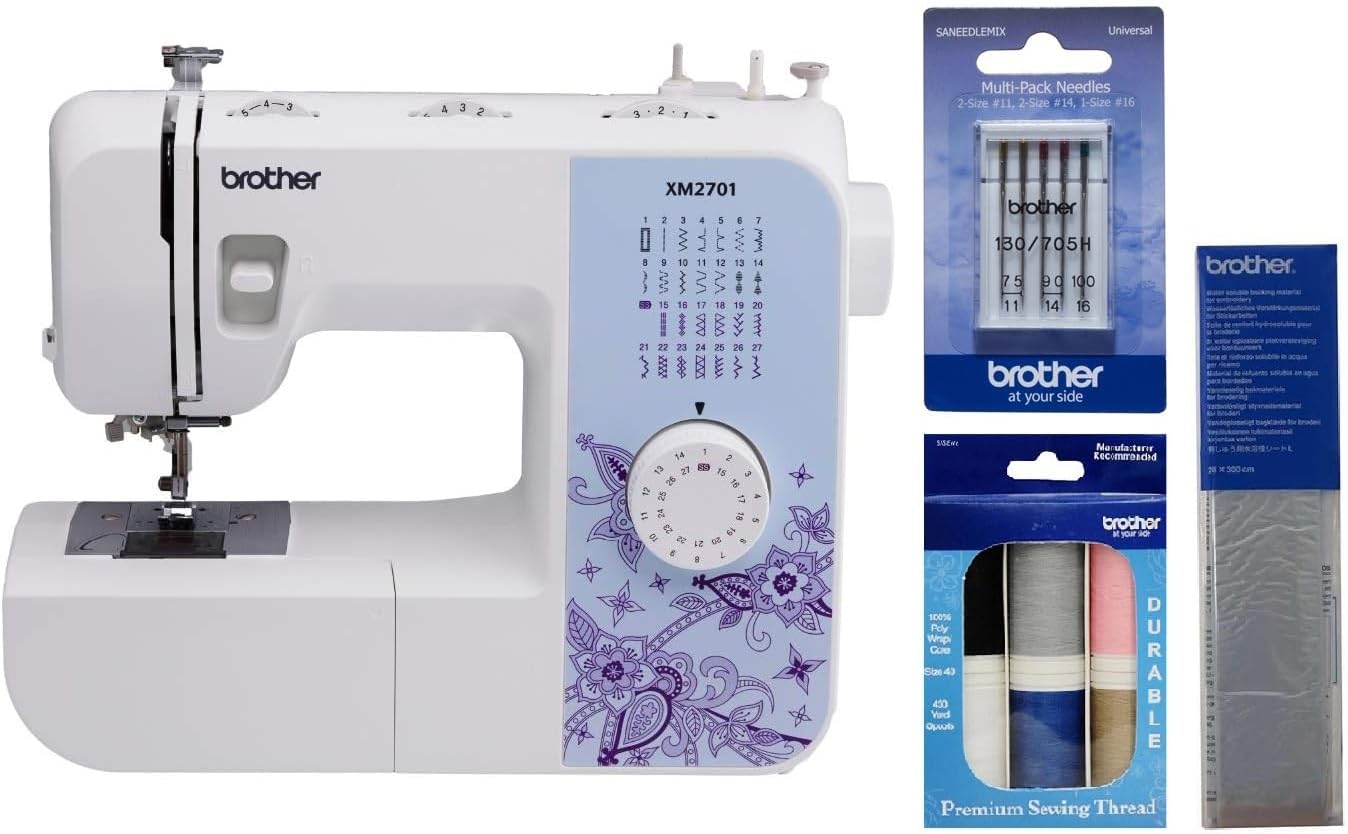 Visit on Amazon → Visit on Amazon →Brother XM2701 27-Stitch Sewing Machine, 6-Piece Premium Thread Pack, Water Soluble Stabilizer, 5-Piece Sewing Machine Needles |
A first machine for garments and everyday sewing | 27 stitches, thread pack, water soluble stabilizer, five needles | $129.99 |
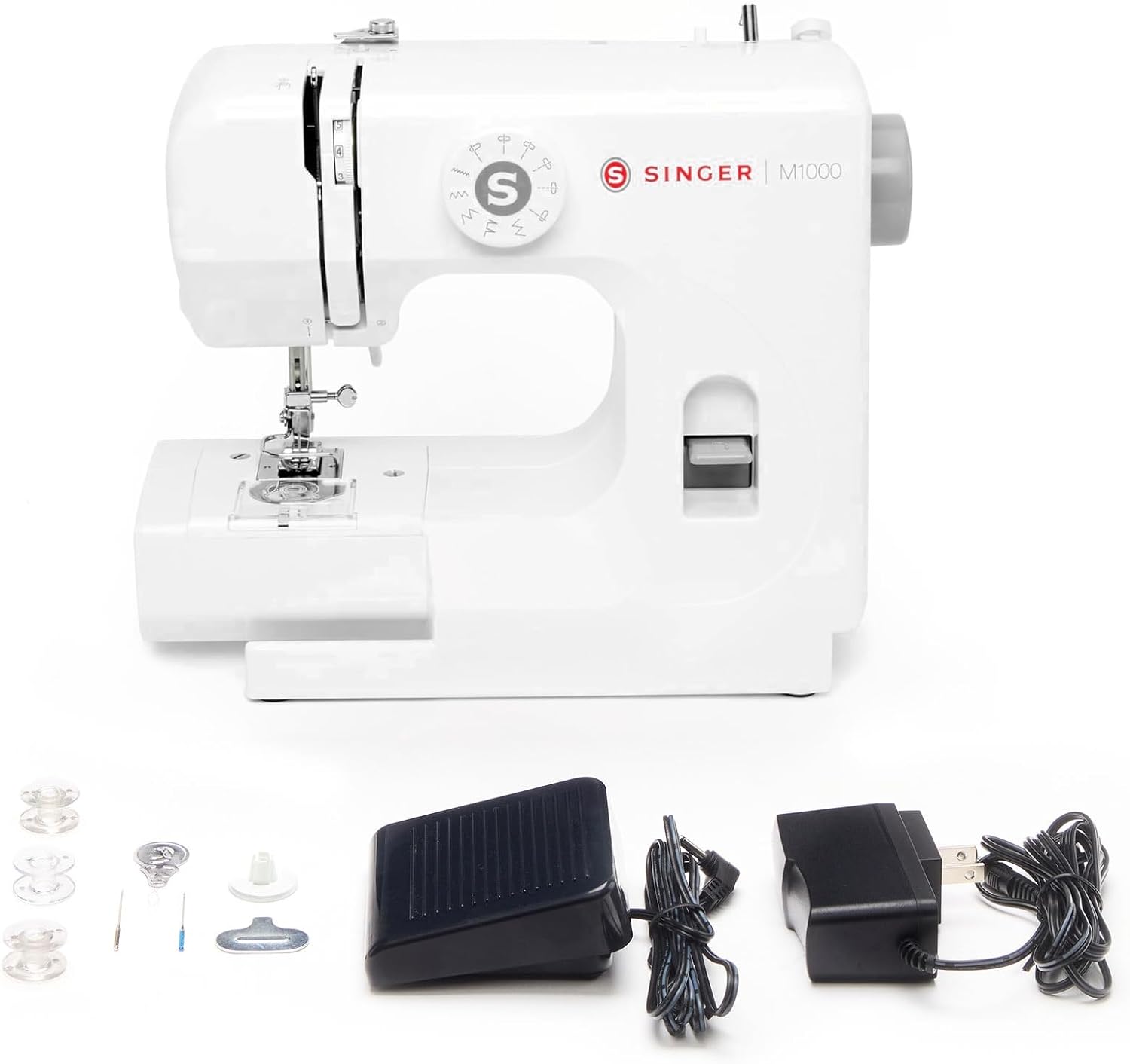 Visit on Amazon → Visit on Amazon →SINGER M1000 (White) Portable Mending Machine with Accessory Kit |
Hems, patches, and small repairs | Portable mending machine plus accessory kit | Visit on Amazon → |
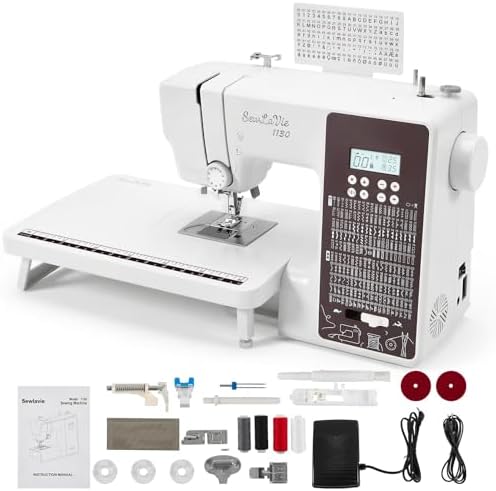 Visit on Amazon → Visit on Amazon →1130 Computerized Sewing and Quilting Machine with 300 Stitches |
Quilting and decorative stitch work | 300 stitches, computerized stitch selection | $239.99 |
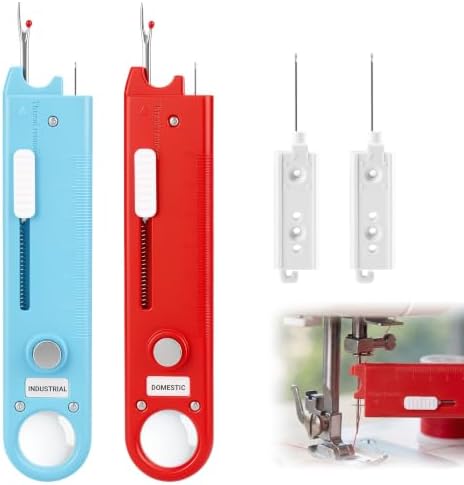 Visit on Amazon → Visit on Amazon →Sewing Machine Needle Threader, 4 in 1 Automatic Quick Threading Tool, Multifunctional Stitch Insertion Seam Guide with 2 Pcs Seam Rippers for Quilting Alterations Tailoring(Red) |
Threading, seam allowance, and ripping out mistakes | Threading tool, stitch insertion seam guide, two seam rippers | $8.99 |
If you are buying one thing today and you are brand new, the answer is the first row. If you already own a machine and you keep putting off repairs, the answer is the second row. If you quilt, the third. And the fourth row costs less than a yard of good wool, which is why it is on the list at all.
Should you buy the Brother XM2701?
Yes, if you are buying your first machine and you intend to sew garments, home decor, and repairs. Twenty-seven stitches is enough for years of work, and the included thread pack, water soluble stabilizer, and needles mean you can start the day it arrives instead of waiting on a supply order. That matters more than any feature on a spec sheet, because the beginner who sews tomorrow is the beginner who is still sewing in a year.
Skip it if your real goal is quilting large projects or if you want a stitch library at your fingertips. For that, read the next answer.
Should you buy the SINGER M1000?
Yes, if your sewing is genuinely repair work, or if you want a second machine that stays threaded and ready for hems and patches. A portable mender that lives near the laundry basket gets used. A full-size machine that has to be cleared off the dining table does not.
Do not buy it as your only machine if you plan to sew from patterns and fit garments. You will hit its limits in a month and blame the machine for a job it was never built to do.
Should you buy the 1130 Computerized Sewing and Quilting Machine?
Yes, if you quilt or you do decorative work and you will actually use the 300 stitches. A stitch library is only worth paying for if you open it. Go in knowing that computerized machines carry a repair risk that mechanical ones do not, and price that risk into your decision instead of being surprised by it later.
If you are a beginner who wants to sew a tote bag, no. Buy the bundle, spend the difference on fabric, and revisit this machine when your work asks for it.
Should you buy the 4-in-1 needle threader and seam guide?
Yes. It is the smallest purchase here and it solves the two most common beginner problems at once: threading the needle and holding a consistent seam allowance. The seam rippers are a bonus you will use whether or not you admit it.
Just know the automatic threader will eventually quit. Mine always do. The machine still threads by hand, and a sewer who can thread a needle without a gadget is never stuck.