I teach a beginner sewing class in Portland twice a month, and every session opens with the same question: which machine do I buy first? Twelve years of costume work, a dining table permanently occupied by a serger, and a seam test journal that has outgrown its third notebook have taught me that the answer depends almost entirely on the fabric you plan to feed under the needle. This comparison of beginner sewing machines covers four options that land in my inbox constantly: the Singer 4432, the Brother XR3774, the Brother ST371HD, and a handheld sewing kit that is not a sewing machine in any sense I would use the phrase.
Here is the uncomfortable part, stated early. Three of these four are real machines with a presser foot, a feed dog system, and a bobbin you can wind and load. The fourth is a handheld tool that stitches a seam while you hold the fabric in one hand and the device in the other. Both categories have a place in a sewing room. Confusing them is how beginners end up furious before their first hem is finished.
The short answer: for most people learning to sew garments, the Brother ST371HD is the most complete package of the three full-size machines, and the Brother XR3774 is the better pick if you plan to quilt. The Singer 4432 is a solid second machine for someone who already knows what they are doing. The handheld kit is a repair tool, not a first machine.
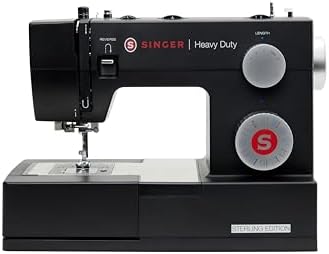
SINGER 4432 (Grey) High Speed Heavy Duty Sewing Machine + Accessory Kit
Arrives with an accessory kit, so you are not buying feet and bobbins separately in week one; the brand is everywhere and so are the parts
"Heavy duty" on a box is marketing, not a specification, and Singer's modern lineup is not the machine your grandmother wore out
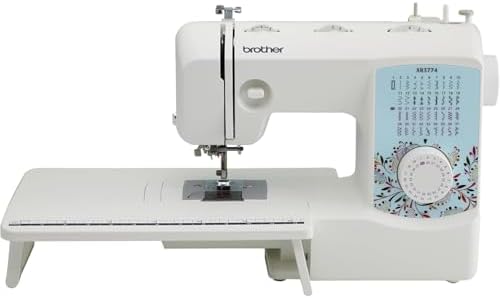
Brother XR3774 Sewing and Quilting Machine 37 Stitches
37 stitches and a quilting lean, which means the stitch set and the accessories are aimed at piecing and quilt work
A quilting machine frustrates a garment sewer, and the reverse is just as true
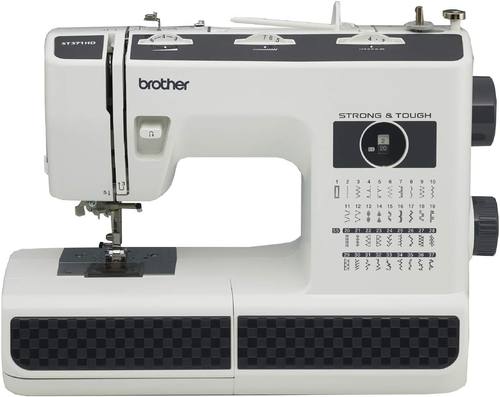
Brother Sewing Machine ST371HD, 37 Built-in Stitches, 6 Included Feet
37 built-in stitches plus six included feet, the widest accessory spread in this group and the most useful for general sewing
It costs more than the XR3774 while matching its stitch count, so you are paying for the feet and the bundle
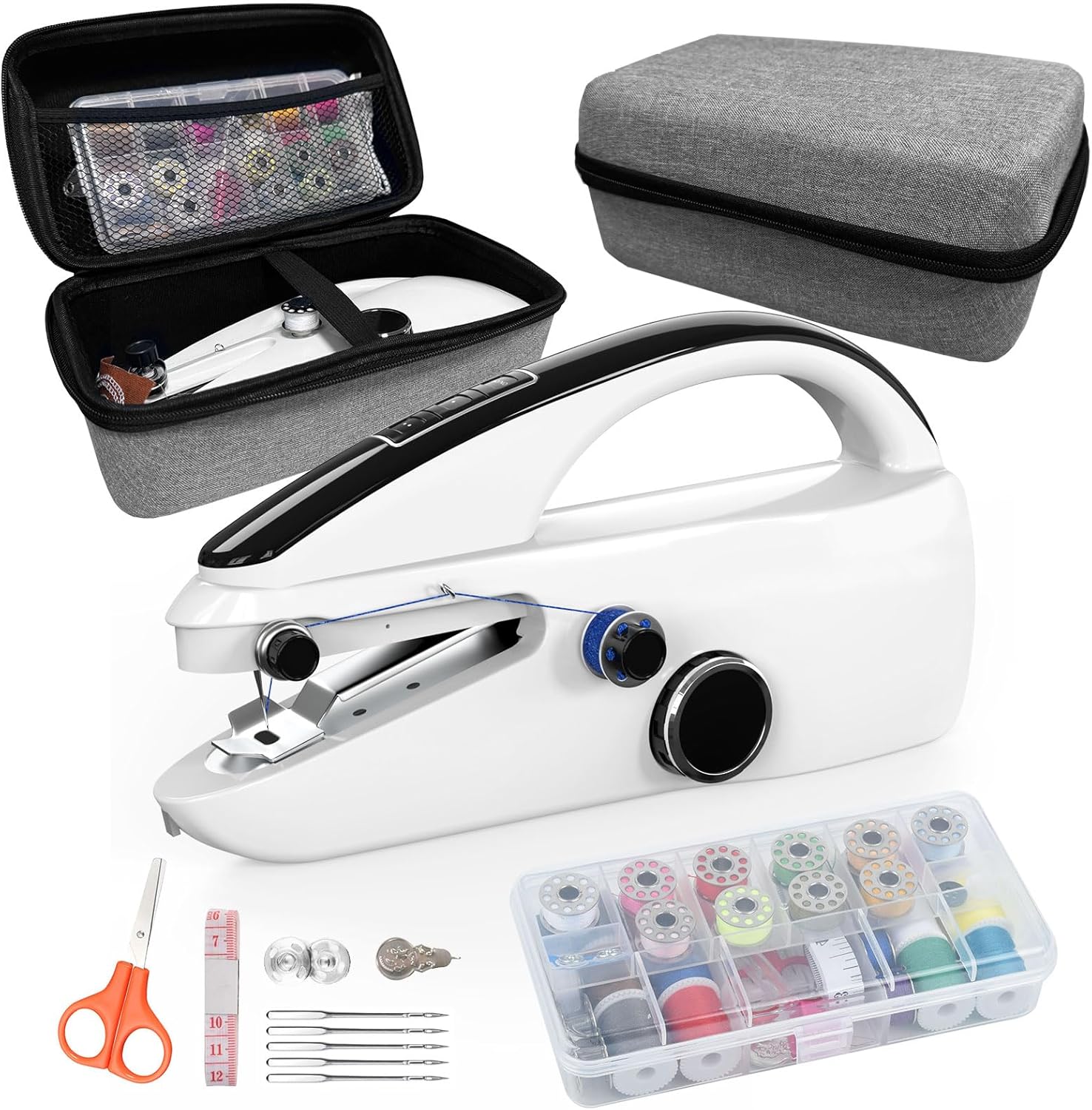
Sewing Kit: Sewing Bliss in One Box. Handheld Sewing Machine.
Small, self-contained, and genuinely handy for a dropped hem or a repair on something you cannot take off
No presser foot and no standard bobbin workflow, so long straight seams come out uneven
Prices and availability were captured from Amazon Creators API and may change.
What beginner sewing machines actually have to do
Strip away the packaging and a first machine has four jobs. It has to run a straight stitch on woven fabric, on knit fabric, and on something thick enough to matter. It has to hold tension consistently across a long seam. It has to make a buttonhole you would wear in public. And it has to not make you dread sitting down at it.
Everything else is convenience stacked on that foundation. Stitch count is the least honest number in the category. A machine advertising a hundred stitches is using about ten of them in real life, and six of those are variations on the same zigzag. I say this as someone who absolutely counts stitches when comparing machines, which is a contradiction I have made peace with.
Tension is the dial everyone touches and nobody understands. Balanced tension is the whole craft. If the dial does nothing across a full turn, that is a machine telling you the truth about itself. Bobbin issues are behind half the posts in every sewing forum I read, and most of them trace back to a machine that never held tension properly to begin with.
Buttonholes are the truest test of a machine's brain. A straight stitch is a motor and a feed dog doing simple work. A buttonhole is a sequence, timed and sized, and a bad one is visible on the outside of the garment forever.
The Singer 4432, and the word "heavy duty"
The Singer 4432 arrives as a bundle, with an accessory kit alongside the machine. That matters more than it sounds, because the hidden cost of a first machine is the second purchase: the feet, the bobbins, the needles, the seam ripper. A kit that lands in the same box saves you that trip.
It also carries the phrase "high speed heavy duty" on the label, and this is where I get cranky. "Heavy duty" is stamped on machines with plastic frames and on machines with metal ones. It is a marketing word, not a measurement. The only honest test is the one you can run yourself: take a scrap of denim and a scrap of silk to the machine, and see which fabric makes it complain.
Singer's modern machines are a shadow of the vintage ones. That is my opinion after years of teaching on them, and it does not make the 4432 a bad machine. It makes it a machine I would hand to someone who already sews and wants a second setup, or to a beginner who found it at a price that makes the bundle make sense. The brand's reach is real, and parts and feet are easy to find, which is worth something when a plastic piece cracks in year three.
The Brother XR3774, a quilting machine first
The Brother XR3774 is sold as a sewing and quilting machine with 37 stitches, and the quilting half of that name is doing real work. The stitch set leans toward the techniques quilters use, and the machine is built around the idea that you will be feeding layered fabric through it for long stretches.
If you quilt, this is the more natural fit of the two Brothers. If you sew garments, pay attention, because the two hobbies pull in different directions. A quilter wants a large flat bed, a walking foot to stop layers from shifting, and stitches that look good in a straight line over batting. A garment sewer wants a machine that handles curves, narrow seam allowances, and the occasional zipper. The same machine can do both, but it will be better at one.
The honest criticism: 37 stitches is a real number, but it is not 37 useful stitches. You will use the straight stitch, the zigzag, the stretch stitch for knits, and the buttonhole. The rest are there for the day you need them, which may be never. Buy this machine for the quilting geometry and the accessory ecosystem, not for the count.
The Brother ST371HD, the bundle that earns its price
The Brother ST371HD lists 37 built-in stitches and six included feet. Those two numbers tell you most of the story. Matching the XR3774 on stitch count while adding four more presser feet means the extra money is going into accessories, and accessories are where the real value hides in beginner machines.
Presser feet are the difference between a technique being possible and a technique being a fight. A zipper foot, a buttonhole foot, a blind hem foot, an overcasting foot: each one converts a skill you would otherwise fake into a skill the machine does properly. Six feet in the box means you can attempt a zipper and a hem and a buttonhole in your first month without ordering anything.
This is the machine I would point a garment-focused beginner toward. It sits in the middle of this group on price, it covers the widest range of everyday work, and the feet give you room to grow into techniques instead of outgrowing the machine in six months.
One caveat I give every class: the automatic needle threader. Threaders break. They break on expensive machines and cheap ones, usually in month two, usually on a Saturday. The question is never whether you will lose it, but whether you can live without it when you do. Learn to thread the needle by hand in your first week and the threader becomes a bonus instead of a dependency.
The handheld sewing kit, and what it is for
The Sewing Bliss in One Box kit with its handheld sewing machine is the odd entry here, and I want to be fair to it. A handheld stitcher is a genuine tool. It is for the hem that lets go on a pair of pants you are already wearing, the curtain you cannot take down, the costume repair ten minutes before a school show with four hundred kids waiting in the wings. It lives in a drawer, it runs on batteries or a cord, and it does one thing.
What it is not: a machine you learn on. There is no presser foot to hold the fabric flat, no feed dog system doing the work of moving the material for you, and no standard bobbin routine you can carry over to a real machine. Feeding fabric evenly with one hand while the other hand works the tool is a skill in itself, and long straight seams come out wavy. For a beginner trying to build muscle memory, that is the wrong first lesson.
Buy it as a kit for a traveler, a dorm room, a cosplay emergency bag, or someone who fixes things rather than makes them. Do not buy it as the machine that teaches you to sew.
The trade-offs I would weigh before buying
Fabric first, machine second. Write down the three fabrics you actually plan to sew this year. If the list is quilting cotton and flannel, the XR3774 makes sense. If it is denim, canvas, and costume velveteen, you want the machine with the feet and the general-purpose build, which is the ST371HD. If it is mostly repairs and small projects, the handheld kit plus a repair-shop relationship might honestly be enough.
Feet over stitches. Every time. A machine with ten stitches and six feet will take you further than a machine with fifty stitches and one foot. This is the single most useful thing I tell my students.
Mechanical over computerized at the entry level. Computerized features are wonderful until the circuit board dies and the repair costs half the machine. On a first machine, a dial that does something predictable beats a screen that does something clever.
Buttonholes before you commit. Ask how the machine makes one. If it is a four-step manual sequence, that is fine, but you should know that going in. If it is a one-step foot, better. Either way, test it on a scrap of the actual fabric you sew, because buttonholes behave differently on a shirt weight cotton and on a heavy coat fabric.
Where you buy matters for support. All four of these are mainstream products with wide availability, which means replacement feet, bobbins, and belts are not a treasure hunt. That is not glamorous, but it is the difference between a machine you keep for a decade and a machine that becomes a shelf decoration.
How to decide in five minutes
- You sew garments and want one machine to grow with: Brother ST371HD, for the six feet and the everyday stitch set.
- You quilt, or you want to learn to quilt: Brother XR3774, for the quilting-oriented stitches and setup.
- You already sew and want a second machine, or you want a bundle that includes the accessories: Singer 4432, with the caveat that "heavy duty" is a label, not a promise.
- You need emergency repairs, portability, or a gift for someone who travels: the handheld sewing kit, understood for what it is.
- You want the cheapest path to actually learning to sew: the handheld kit is not it. Save toward one of the three machines and take a class.
What I am testing next
I am partway through a tension-stability run on five beginner machines this fall, feeding each one a long series of test seams across five fabric types and logging how the tension behaves from the start of the seam to the end. The question I care about is simple: does the dial mean something, or does it just move? That is the difference between a machine you can learn on and a machine that teaches you bad habits.
The other thing on my bench is a buttonhole marathon, four steps and one step machines side by side on the same fabric. Stitch count is marketing. Buttonhole quality is a confession. I will report back on both.
If you take one thing from this comparison of beginner sewing machines, take this: buy for the fabric you actually sew, and buy the machine that makes you want to sit down tomorrow. That is the real spec, and no box has ever printed it.