Related: Sewing Machine Tension Problems and How to Fix Them
I teach beginner sewing classes in Portland, and every session ends with the same question: which machine do I buy first? After twelve years of costume work, a lot of frogging, and a seam test journal that has outgrown two notebooks, my answer has gotten shorter. The best beginner sewing machines are the ones that make you want to sit down and sew again tomorrow. That has almost nothing to do with the number printed on the box.
This guide covers four machines that show up in my classes and in my own sewing room: two Brothers and two Singers, mechanical and computerized, from a straightforward starter to a full quilting setup. I will tell you what each one is for, where it asks you to be reasonable, and which one I would hand a beginner on day one.
The thing I care about most is the least glamorous: a balanced straight stitch. If a machine can run a clean seam on cotton, then on denim, then on something slippery without the tension wandering, everything else is convenience layered on top. Stitch count, screens, and decorative patterns do not save a seam that puckers.
Best Overall: Brother CS7000X Sewing and Quilting Machine
This is the machine I recommend first, and I recommend it without a caveat. The Brother CS7000X is the best beginner machine I have used in the current crop, and the reason is boring in the best way: it feeds fabric evenly, the LCD makes stitch selection obvious, and the straight stitch comes out clean on the first try. Nobody in my Tuesday class has had to fight it.
It is set up for both garment sewing and quilting, which matters more than beginners expect. Most people who buy a machine for hemming curtains end up wanting to piece a quilt within a year, and this one does not make you buy a second machine to find out. The display walks you through stitch selection instead of leaving you to decode a dial with a magnifying glass.
Where it asks you to be reasonable is thick stacks. A home machine is a home machine, and if your project is four layers of canvas plus a zipper, you want a different tool or a walking foot and patience. For cotton, linen, jersey, fleece, and the occasional light denim seam, the CS7000X keeps the seam straight and the tension steady, which is what you actually bought it for.
If you read only one section of this guide, read this one.
Best Mechanical Pick: SINGER Heavy Duty 4511 Next Evolution Sewing Machine with Accessories
The words "heavy duty" on a home machine are marketing, and I say that as someone who has been burned by it. What it means in practice is a stronger motor and a sturdier build than the cheapest tier, not an industrial machine that will sew leather all day. Set that expectation and the Heavy Duty 4511 is a genuinely sensible buy.
The appeal here is simplicity. Fewer electronics means fewer things to fail, and the accessories that come in the box get you sewing without a second shopping trip. If you learned on your grandmother's machine and you like a machine that responds to your hands rather than a menu, this is the one in this group that feels familiar.
It is also the pick I would suggest for someone whose sewing is mostly utility work: hemming jeans, patching work clothes, mending bags, making curtains. Straight seams, thick-ish fabric, no interest in decorative stitches. That is a real category of sewing, and it deserves a machine that is not fussy.
The trade-off is that you give up the screen-guided stitch selection and the quilting-friendly range of the CS7000X. If you might want those later, start there instead.
Best for Stitch Variety: Brother HC1850 Sewing and Quilting Machine
185 built-in stitches and 8 included feet. I will be honest with you about stitch count: on almost any machine you will use ten stitches and forget the rest exist. I say that as a person who then counts stitches anyway. The HC1850 earns its place for a different reason, and that reason is the feet.
Eight included feet is real money you do not have to spend later. A zipper foot, a buttonhole foot, a blind hem foot, whatever the set includes, each one is a separate purchase if you buy a machine that ships with two. For a beginner who wants to try a lot of techniques in the first year, having the feet on day one is worth more than 175 extra decorative stitches you will never select.
The LCD keeps stitch selection manageable, and the machine is built for quilting as well as garment sewing. If you are the kind of person who wants to test every technique in the book, this is the machine that lets you do that without a shopping list.
What it is not: a shortcut past learning tension. No machine is.
Best Computerized Pick: SINGER Quantum Stylist 9960 Computerized Sewing and Quilting Machine
The Quantum Stylist 9960 is the most machine in this group: a computerized sewing and quilting machine that puts stitch selection, speed, and needle position on a screen instead of a dial. For a beginner who is comfortable with a menu, it flattens the learning curve considerably, and for quilting it is the most capable of the four.
I will give you the same warning I give every student looking at a computerized machine. The electronics are the part that fails, and when they fail, the repair can cost a serious fraction of what you paid. Mechanical machines can be nursed along for decades. Computerized machines eventually become a decision about whether the board is worth replacing.
That is not a reason to avoid it. It is a reason to buy it because you want the features, not because it looks impressive in a listing. If what you want is computerized convenience with quilting capability and you would rather buy once than upgrade in two years, the 9960 is the pick in this group. If you would rather keep it simple, the CS7000X gets you most of the sewing for a lot less money.
How I evaluate a sewing machine
Every machine that gets a verdict here runs the same gauntlet. A straight stitch on five fabric types, from quilting cotton to something slippery, at three stitch lengths. The tension dial moved through its full range on each fabric so I can see where the balance point sits and how wide the usable window is. A buttonhole marathon, because a machine's buttonholes tell you more about its brain than its stitch count ever will. And a long session on a thick seam, because a machine that screams on thick fabric is a machine you will learn to dread.
I also keep notes on the boring things: how loud it is, whether the light is usable, whether the bobbin winds evenly, and how the manual reads. Those are the details that decide whether you sew on a Tuesday night or leave the machine in the closet.
Then I ask the only question that matters at the end: would I trust this machine on a paid costume? That is the bar.
What actually matters when you are buying
Straight stitch quality. Everything else is convenience on top of it. Ask for a demo, bring your own fabric, and watch the seam instead of the sales pitch.
Tension dial behavior. The dial should do something across its whole range, not just at the extremes. A machine with a narrow window between loops on top and loops underneath will make you miserable.
Buttonholes. Run one before you buy if you can. A machine that makes a clean, even buttonhole has a well-behaved feed and a decent brain.
Stitch count. A 185-stitch machine uses about ten. Buy for the stitches you will actually select and the feet that come in the box.
The automatic needle threader. It is the first thing to break. Assume it will, and make sure you can thread the needle by hand without swearing.
Where you will sew. If your machine lives on a dining table, weight matters. If you have a dedicated table, stability is your friend.
Beginner sewing machine comparison table
Same four machines, sorted by who they are for. Each row links to its own listing so you can check the details yourself.
| Machine | Best for | Controls | Price |
|---|---|---|---|
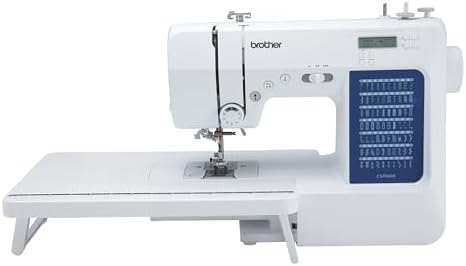 Visit on Amazon → Visit on Amazon →Brother CS7000X Sewing and Quilting Machine |
First machine, garment sewing and light quilting | LCD display | $249.99 |
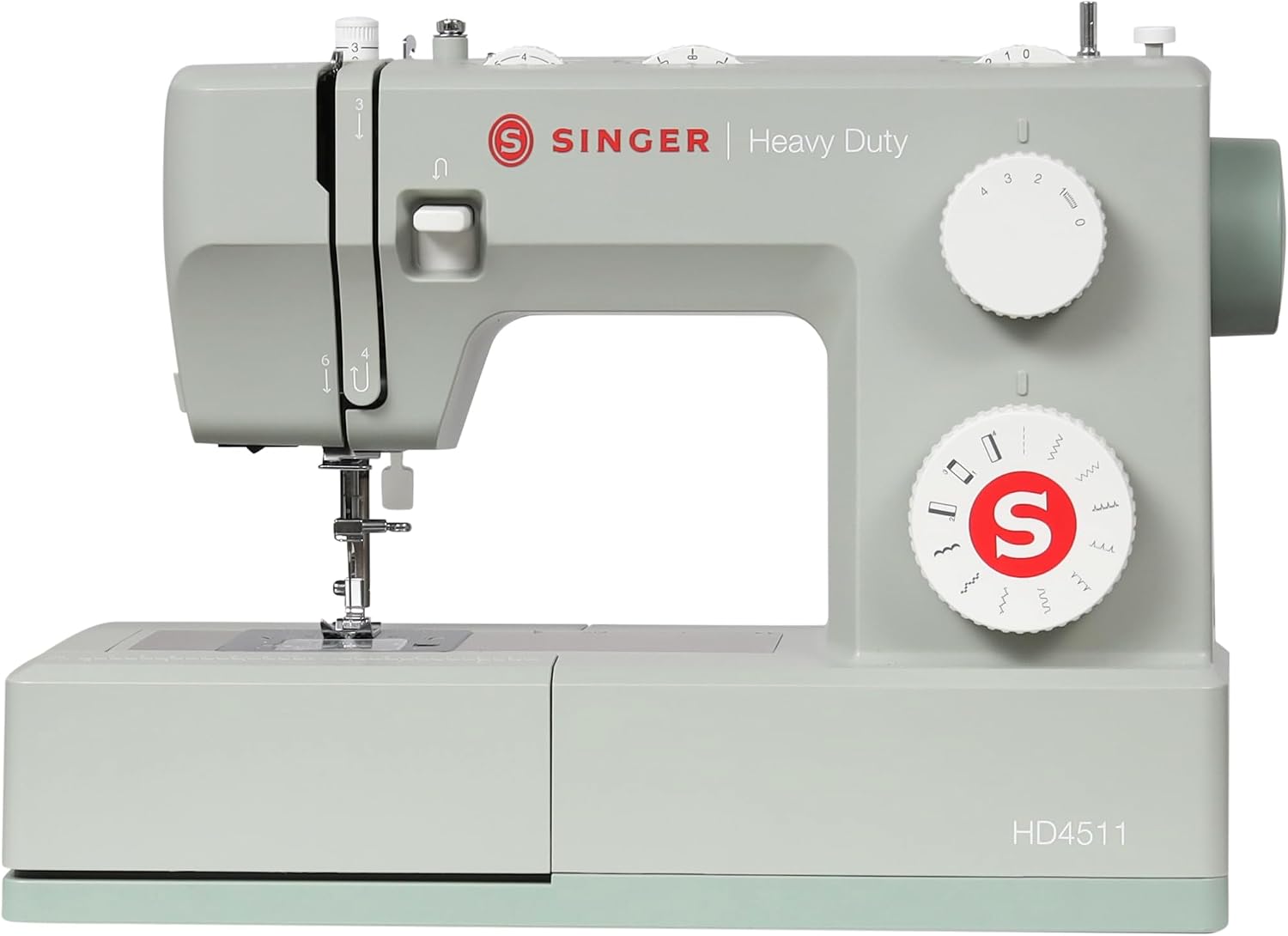 Visit on Amazon → Visit on Amazon →SINGER Heavy Duty 4511 Next Evolution Sewing Machine |
Utility sewing, mending, thicker fabric, fewer electronics | Mechanical controls, accessories included | $219.99 |
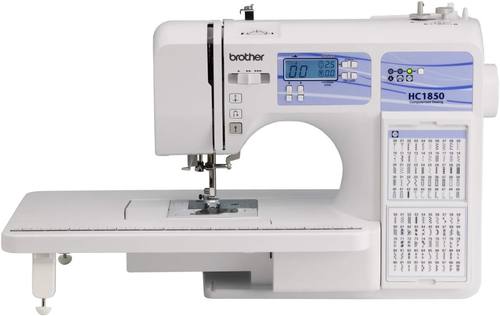 Visit on Amazon → Visit on Amazon →Brother HC1850 Sewing and Quilting Machine |
Trying every technique, decorative stitches, feet included | LCD display, 8 included feet | $249.99 |
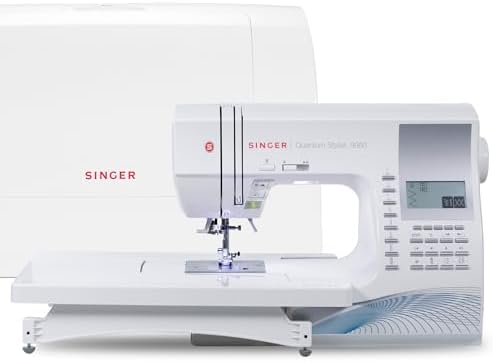 Visit on Amazon → Visit on Amazon →SINGER Quantum Stylist 9960 Computerized Sewing and Quilting Machine |
Computerized convenience and quilting | Computerized, on-screen selection | $546.99 |
The pattern in that table is simple. Mechanical machines are for people who want fewer things to break. Computerized machines are for people who want the features and accept the long-term risk. Quilting capability is the tiebreaker if you already know where your sewing is headed.
Do you need a quilting machine instead?
If you already know you are a quilter, buy for quilting: throat space, a walking foot, and a machine that holds a consistent stitch length over long seams. The CS7000X and the Quantum Stylist 9960 both do double duty, which is why they are here. A dedicated quilter will eventually want more room than any of these four, and that is fine.
What about buying a vintage machine instead?
A well-serviced vintage machine can out-sew a lot of new ones on straight stitch alone, and my grandmother's 1962 machine ran for forty years. What you give up is parts availability, a warranty, and anyone local who will service it. If you love the idea of restoring a machine, buy vintage. If you want to sew this weekend, buy new.
Should you buy the Brother CS7000X?
Yes. It is the machine I would hand a beginner on day one: solid straight stitch, an LCD that makes stitch selection obvious, and the range to cover both garment sewing and quilting. It is the safest first purchase in this group, and the one I would buy again with my own money. Check the listing details for yourself and confirm the current bundle.
Should you buy the SINGER Heavy Duty 4511?
If you want a mechanical machine with fewer electronics to fail, and the accessories in the box get you started, yes. Just go in with the right expectation: heavy duty on a home machine means a stronger motor and a sturdier build, not an industrial machine. For utility sewing on thicker fabric, it is a sensible buy.
Should you buy the Brother HC1850?
Buy it if you want to try everything. 185 built-in stitches and 8 included feet make it the machine for the person who wants to test every technique in the first year, and the feet alone justify the step up. If you only want to sew straight seams, the CS7000X is the better use of your money.
Should you buy the SINGER Quantum Stylist 9960?
Buy it if you want a computerized machine with quilting capability and you are comfortable with the long-term risk that electronics bring. It is the most capable machine in this guide. If you would rather keep things simple and save the difference, the CS7000X covers most of the sewing for a lot less.