Related: Sewing Machine Tension Explained: How to Read a Dial That Actually Works
I have taught beginner sewing classes in Portland for over a decade, and the same question lands in my inbox every August: which machine should I actually buy? This comparison covers the three machines that come through my classes most often, the Brother HC1850, the Brother ST371HD, and the SINGER M3330, plus the one accessory that solved a thread feed problem no dial could fix. I keep a seam journal with a verdict on every one of the beginner sewing machines that has passed through my hands, and each one earns its entry the same way.
Here is the test: five fabric types, three stitch lengths, a straight seam on each, and a buttonhole marathon at the end. If a machine whines on denim and skips on silk, that goes in the journal, no matter how many stitches the box promises. Straight stitch quality is the whole game. Everything else is convenience stacked on top of that foundation.
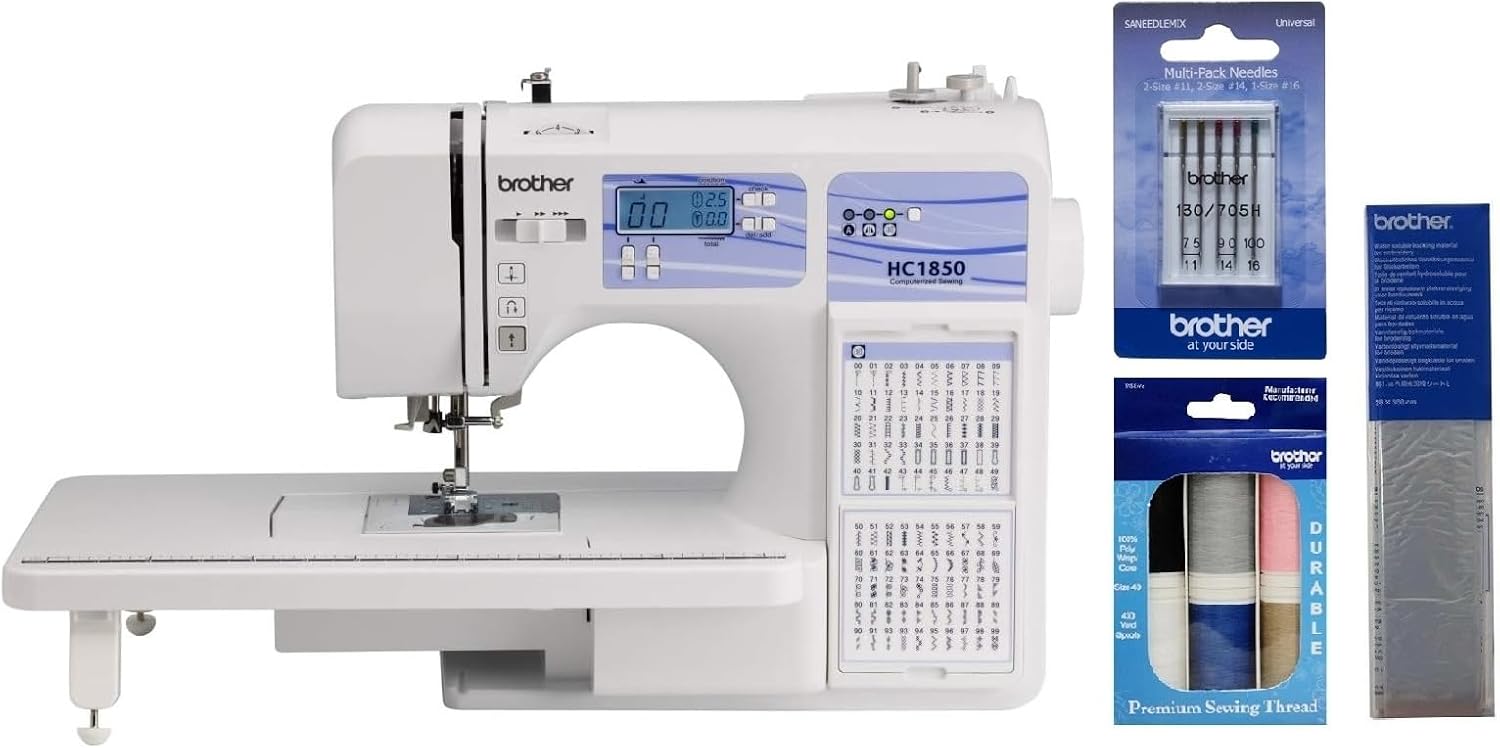
Best Overall: Brother HC1850 Sewing and Quilting Machine
The HC1850 is the machine I point a student toward when she wants to sew garments now and quilt later without buying twice. It carries 185 built-in stitches and an LCD display, and the display matters more than the stitch count. On a mechanical machine you memorize dial positions and hope you remember them. Here you read the stitch, the width, and the length on screen, which means a beginner spends the first month sewing instead of flipping through a manual.
The bundle does real work too. This listing includes a premium thread six-pack, water-soluble stabilizer, and a five-pack of needles, which is the exact short list that usually sends a new sewer back to the store on day one.
In my seam tests, the buttonholes were the part that convinced me. A machine's buttonholes tell you more than its stitch count ever will, because an even, cleanly spaced buttonhole means the feed dogs, the tension, and the timing are all agreeing with each other. I would trust this one on a paid costume, and that is not a sentence I write often about a machine in this class.
The trade-off is the one that comes with any computerized machine. More features means more electronics, and when a circuit board dies, the repair can cost half the machine. That is a real risk, not a scare tactic. If you would rather own fewer things that break, read the next section. If you want range and the easiest stitch selection here, this is the pick. Check current Amazon price.
Best Value: SINGER M3330 Navy Blue Sewing Machine
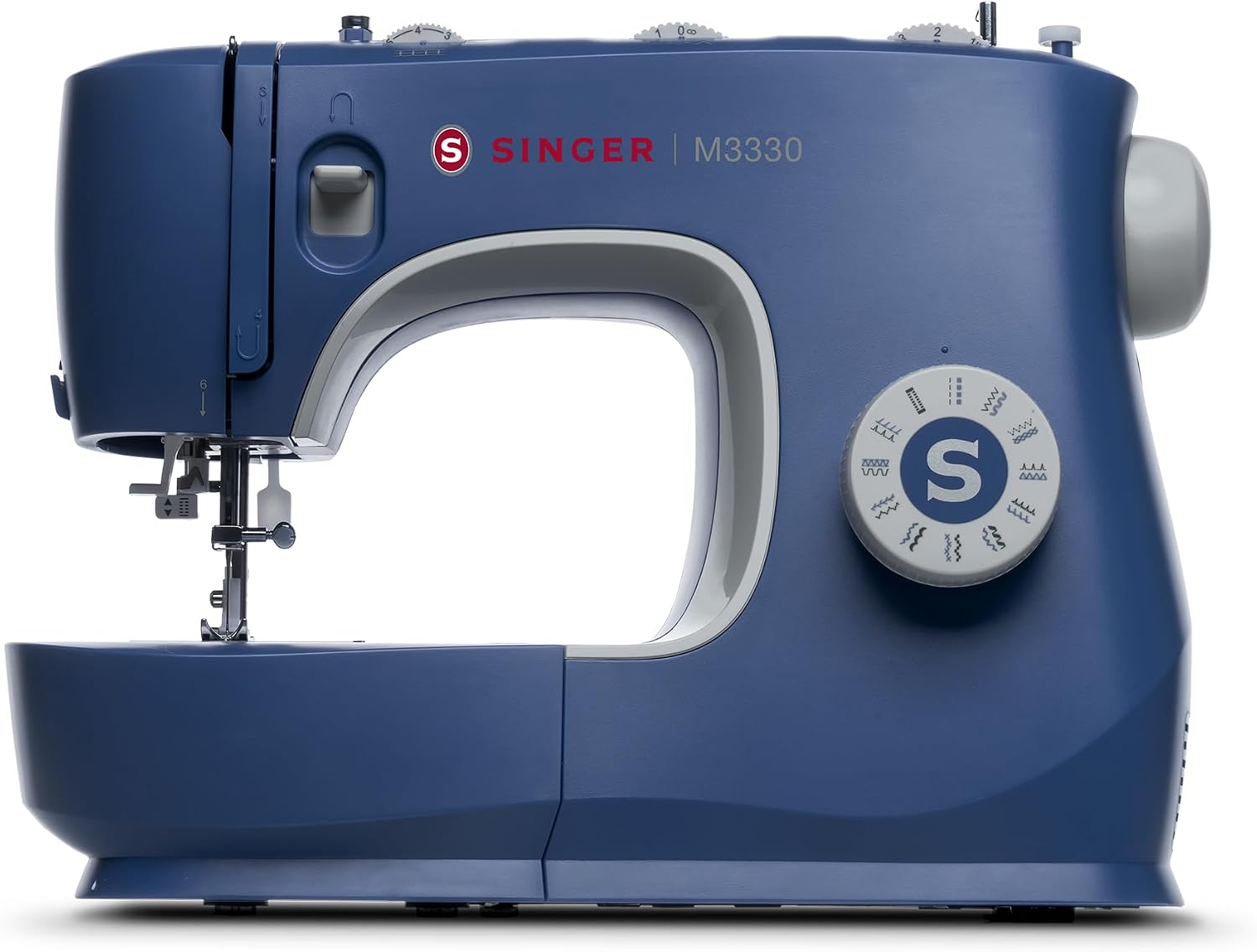
The M3330 is the budget entry in this group, and it is beginner-friendly in the way that actually counts. The controls are simple, the accessories come in the box, and nothing about the setup assumes you already know what a bobbin case is. If your first projects are tote bags, pillowcases, simple skirts, and Halloween costumes, it will get you through them.
Where I get cautious is fabric. I teach on modern Singers, and plenty of them handle light and mid-weight material without complaint. What I will not do is hand a beginner a stack of denim and upholstery and pretend the machine will enjoy it. Buy for the fabric you actually sew. If your shelf is full of quilting cotton and jersey, this is a fine place to start and a fine place to learn what tension even means. If you are planning a Renaissance fair gown with boning channels and heavy trim, save a little longer.
One more note I give every student with a budget machine: treat the needle as a consumable and change it more often than feels reasonable. Half the skipped-stitch complaints I hear are a dull needle, not a broken machine. Check current Amazon price.
The Mechanical Alternative: Brother ST371HD
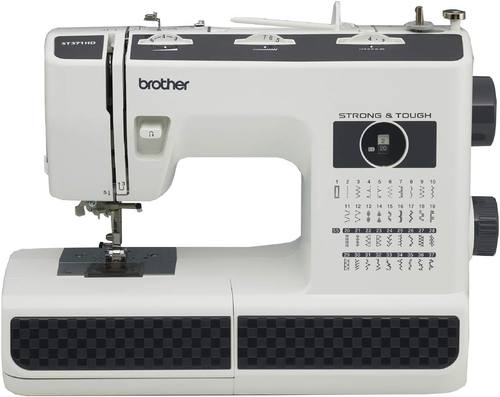
The ST371HD takes the opposite approach. It carries 37 built-in stitches and ships with six included feet, and it does its work with mechanical controls rather than a screen. That sounds like a downgrade until you remember what I said about circuit boards. Fewer electronics means fewer expensive failures, and a machine that still runs in ten years beats a machine with 185 stitches that quit in year three.
Thirty-seven stitches is not a limitation for most sewers. A straight stitch, a zigzag, a blind hem, and a stretch stitch cover the overwhelming majority of real projects, and the six feet in the box handle the first year of sewing without an extra purchase. The feet are the reason I recommend this one to students who sew mostly garments, because switching feet is the skill that unlocks zippers, buttonholes, and hems.
This is not the machine for someone who wants to explore decorative stitching or work from a big programmed pattern library. It is the machine for someone who wants to sew a seam, sew it straight, and not think about the machine at all. Check current Amazon price.
How I tested
Every machine gets the same treatment, and the treatment does not change because a listing is popular. Five fabric types, from quilting cotton to denim to a slippery silk, three stitch lengths on each, and a verdict written in the journal while the fabric is still in my hand. Then the buttonhole marathon, because the buttonhole is the truest test of a machine's brain.
I also do the boring work. I wind a bobbin on each machine and watch how the thread lays down. I run a long seam and listen for the pitch change that means the machine is straining. I check whether the tension dial does anything across its full range or whether it has two useful positions and a lot of decoration. Bobbin issues sit behind half the "my machine is broken" posts I read, so that is where I start.
Then I ask the question that ends every test: would I trust this on a paid costume? Not a tote bag, not a pillowcase, a garment someone is paying for. That question sorts machines faster than any spec sheet.
Analysis and test results
Stitch count is marketing. A machine with 185 stitches uses maybe ten of them, and the rest live in a menu forever. What separates these three is not the number on the box, it is whether the straight stitch holds the same quality at the start of a seam and at the end, on thin fabric and thick.
The computerized HC1850 wins on range and on stitch selection, and the LCD is genuinely useful for a beginner. The mechanical ST371HD wins on simplicity and on the odds that it still runs in a decade. The SINGER M3330 wins on entry cost and on being unthreatening to someone who has never threaded a needle. Those are three different answers to three different questions, which is why I do not hand every student the same recommendation.
Thread tension is where all three separate from a genuinely bad machine. The dial should mean something. When I turn it, the stitch should change in a predictable direction, and it should hold that balance across a seam that goes from two layers to six. A machine that screams on thick fabric is telling you the truth about its motor, and no "heavy duty" stamp on the housing changes that.
The beginner sewing machine reference table
This is the table I keep in my class binder. It is the short version of the journal, and it is built the same way for every machine I test.
| Machine | Best for | Setup | What to know |
|---|---|---|---|
 Visit on Amazon → Brother HC1850 |
Garments and quilting, one machine for both | 185 built-in stitches, LCD display, thread, stabilizer, and needles in the box | The widest range here and the easiest stitch selection. Computerized, so repairs cost more if the board fails. Visit on Amazon → |
 Visit on Amazon → Brother ST371HD |
Garment sewing on a machine you want to keep for years | 37 built-in stitches, 6 included feet, mechanical controls | Fewer stitches, fewer electronics, more feet out of the box. Visit on Amazon → |
 Visit on Amazon → SINGER M3330 |
First projects on light and mid-weight fabric | Beginner-friendly setup with accessories included | The lowest entry point in the group. Keep it on cotton, jersey, and simple garments. Visit on Amazon → |
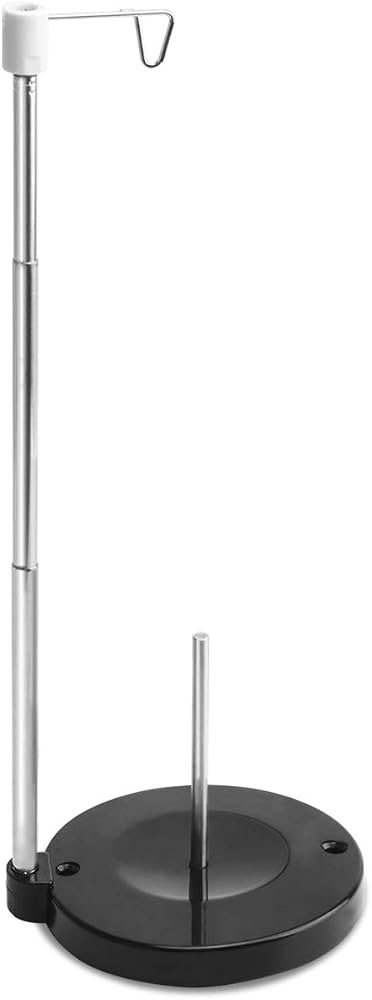 Visit on Amazon → Sew Tech cone thread stand |
Cones and large spools that will not sit on the machine pin | Adjustable single stand with a heavy plastic base | Not a machine. It fixes thread feed when the spool is the problem. Visit on Amazon → |
The accessory that fixed my cone feed
The Sew Tech adjustable cone thread stand is the least glamorous item here and the one I recommend most often. A cone will not sit on a machine spool pin, and if you improvise with a mug or a bowl you get uneven tension, thread that catches on the spool edge, and a seam that looks fine until it does not. The stand holds the cone upright, the thread feeds off the top smoothly, and the heavy plastic base stays where you put it instead of walking across the table.
If you sew with cones or large spools for quilting, embroidery, or serging, this is the cheapest fix in the guide. It will not make a bad machine good, but it removes one whole category of tension problems before they start. Check current Amazon price.
Should you buy the Brother HC1850?
Yes, if you want one machine for garments and quilting and you accept the computerized trade-off. The 185 built-in stitches and the LCD display make it the easiest of the three to learn on, and the included thread, stabilizer, and needles mean you can start a project the day it arrives. The risk is the electronics, and that risk is real. If you accept it, this is the machine I would buy with my own money for a beginner who wants room to grow.
Should you buy the Brother ST371HD?
Yes, if you sew garments and want a machine that will still be running when your taste in patterns changes. Thirty-seven stitches and six feet cover what most sewers actually use, and mechanical controls mean fewer expensive failures. It will not wow you with a stitch library, and it is not the machine for decorative work, but it will sew a straight seam on denim without drama.
Should you buy the SINGER M3330?
Yes, if it is your first machine and your projects are cotton, jersey, and simple garments. It is beginner-friendly, the accessories are in the box, and it does not punish you for not knowing the vocabulary yet. Buy it for the fabric you actually sew, not the fabric you imagine sewing. If you already know you want to quilt or work with heavy material, put the money toward one of the Brothers instead.
Should you buy the Sew Tech cone thread stand?
Yes, if you use cones or large spools. It is a small purchase that removes a whole class of tension problems, and it works with whichever machine you end up buying. Mine lives next to my serger, and it is the accessory I replace first when one wears out. Match the machine to the fabric, add the stand if you sew from cones, and you will spend your evenings sewing instead of troubleshooting.