Related: Beginner Sewing Machine Checklist: What to Buy First
I have taught beginner sewing classes for years, and the same question lands on my cutting table in every session: spend the money on the heavy duty Singer, or start with the cheaper Brother? The Singer 4452 vs Brother FB1757X question is the one I answer most often, and I answer it with fabric instead of a spec sheet. Both machines will sew a straight seam. Only one of them is the right machine for your table, and the difference usually shows up on the third fabric, not the first.
I keep a seam test journal. Five fabric types, three stitch lengths, and a verdict on every machine that passes through my classes. This guide covers the four things I actually recommend to students: two full size machines, one handheld kit for mending, and one small replacement part that rescues a heavy duty Singer when the throat plate gets chewed up.
Here is the short version. The SINGER 4452 is the machine for denim, canvas, and anything with weight. The Brother FB1757X is the machine for a beginner who wants to sew tomorrow without reading a manual twice. The handheld kit lives in a drawer for hems and buttons. The throat plate is the cheapest repair in sewing.
Best Overall: SINGER 4452 (Grey) High Speed Heavy Duty Sewing Machine
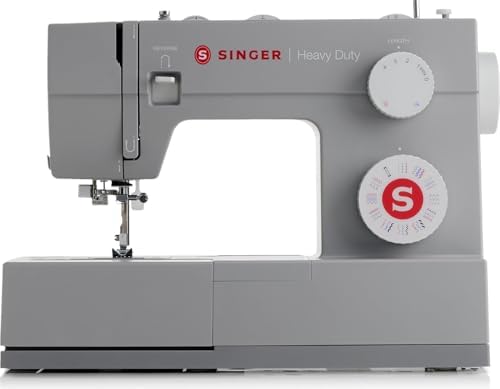
This is the machine I point at when a student says "I want to sew jeans" or "I want to make a corset." The 4452 has a metal interior frame, and that is why the heavy duty label on this one means something. I have a standing complaint about the phrase heavy duty stamped onto a plastic-bodied machine. This is not that. The frame is metal, the machine has some weight to it, and it does not walk across the table when you push through a thick seam.
The straight stitch is the reason to buy it. Run it on quilting cotton and the stitch is clean and even. Run it on two layers of denim and the motor keeps its pitch instead of screaming. Run it on silk and it will behave, though you will want to slow down and adjust the tension dial for a lighter fabric. The drop-in bobbin is easy to load, and the tension dial actually does what the numbers suggest, which is rarer than it should be at this price.
The one-step buttonhole is the other thing I check on every machine, because buttonholes tell you more about a machine's brain than a stitch count ever will. A hundred stitches means nothing if ten of them are useful. The 4452's buttonhole comes out consistent enough that I would trust it on a paid costume, and that is my highest bar.
The accessory box is genuinely useful rather than filler: feet, needles, and the small pieces you would otherwise buy separately in your first month. Check current Amazon price.
Best Value: Brother FB1757X Mechanical Sewing Machine
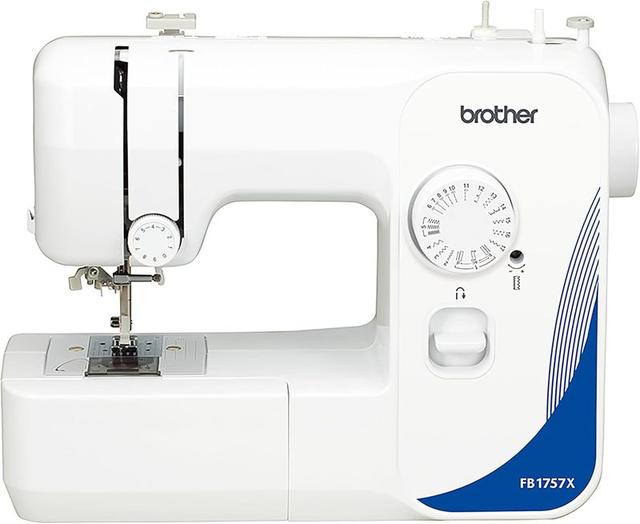
Mechanical means dials, not a circuit board. For a beginner, that is a feature and not a compromise. There is no screen to learn, no menu to scroll, and no board to fail in year four. You turn the dial to the stitch you want, set the length and the width, and sew. When something goes wrong, the answer is almost always threading or the bobbin, and both are fixable in five minutes.
The Brother FB1757X is the machine I hand to a student who has never touched a sewing machine. The learning curve is short. Threading is straightforward, the bobbin winds without drama, and the straight stitch is solid on cotton and mid-weight fabric. On thick denim it still works, but you feel it working, and you should hand-turn the first stitch to get the needle started through the seam.
Brother is the brand I trust at the beginner end of the market. My pick for the best beginner machine overall is still the Brother CS7000X, and I say that knowing it costs more and gives you more stitches. If your budget stops here, the FB1757X will teach you to sew and it will not fight you while you learn. Your first machine should make you want to sew tomorrow. That is the real spec.
Where it gives ground is fabric weight. This is not a machine for canvas tote bags or multiple layers of upholstery. It is a machine for garments, quilts, and everyday repairs, and it is very good at all three. Check current Amazon price.
Best for Mending: Handheld Sewing Machine Kit
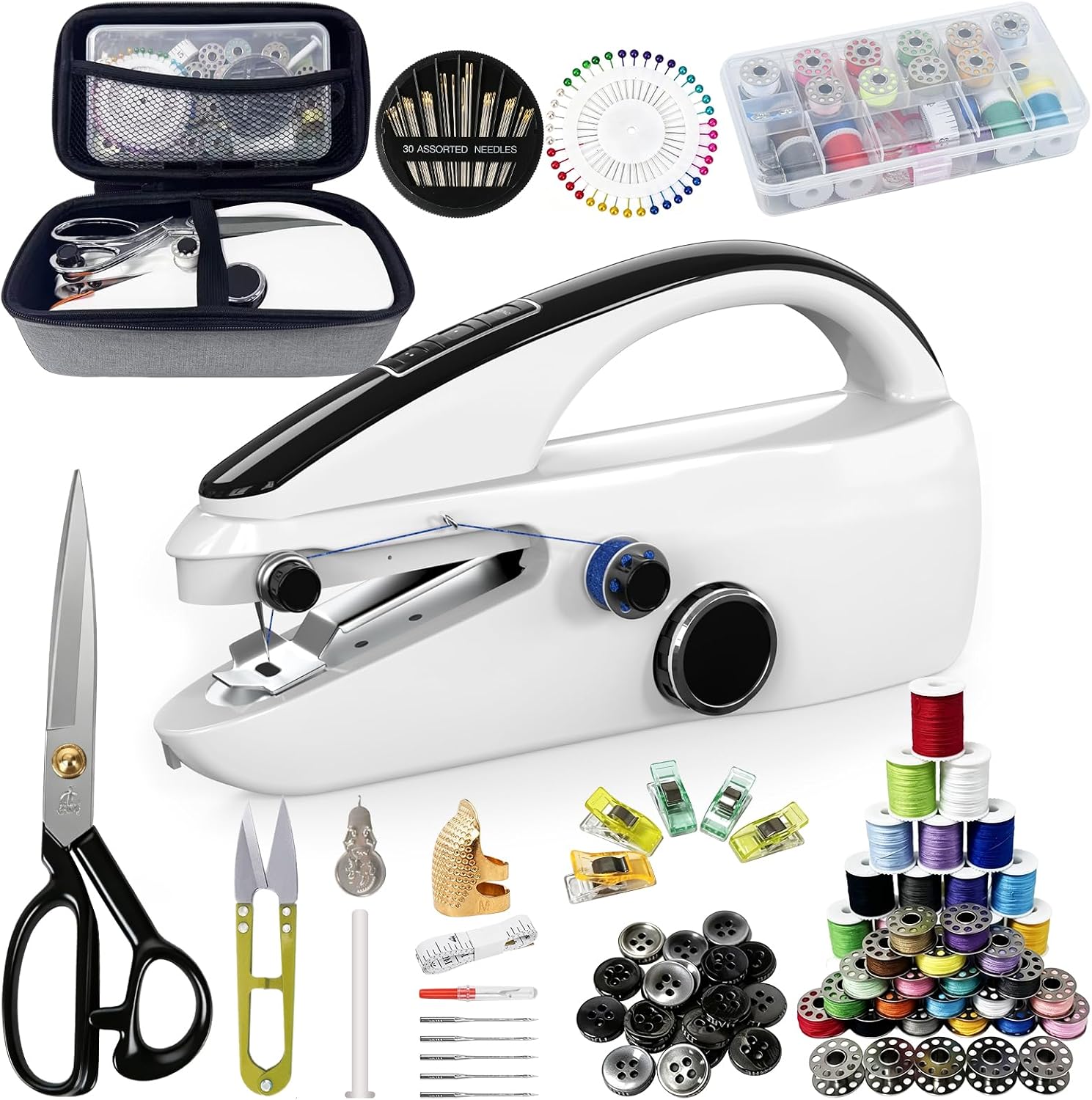
I resisted handheld machines for years, because I did not think a plastic unit could do anything my Singer could not. Then I started keeping one in the drawer next to the iron, and now I use it more than I expected. This kit arrives with 150 pieces in a gray storage case: the handheld unit, thread, needles, scissors, a thimble, and the small notions you always lose between projects. Dual speed and dual power mean you can run it on batteries or plugged in, which matters when the outlet is behind a couch.
It is not a sewing machine in the sense that my Singer is. It is a mending tool. Curtain hems, a ripped seam on a backpack strap, a quick fix on a costume the night before a show. It sews a light chain-style seam on light fabric and it does it in ninety seconds, which is exactly what you want at 11 p.m. before a school performance.
For a beginner, it is also a low-risk way to find out whether you enjoy sewing at all before you spend real money on a full size machine. For a parent teaching a kid, the lower speed setting matters, and the case keeps everything in one place instead of scattered across a dining table. Check current Amazon price.
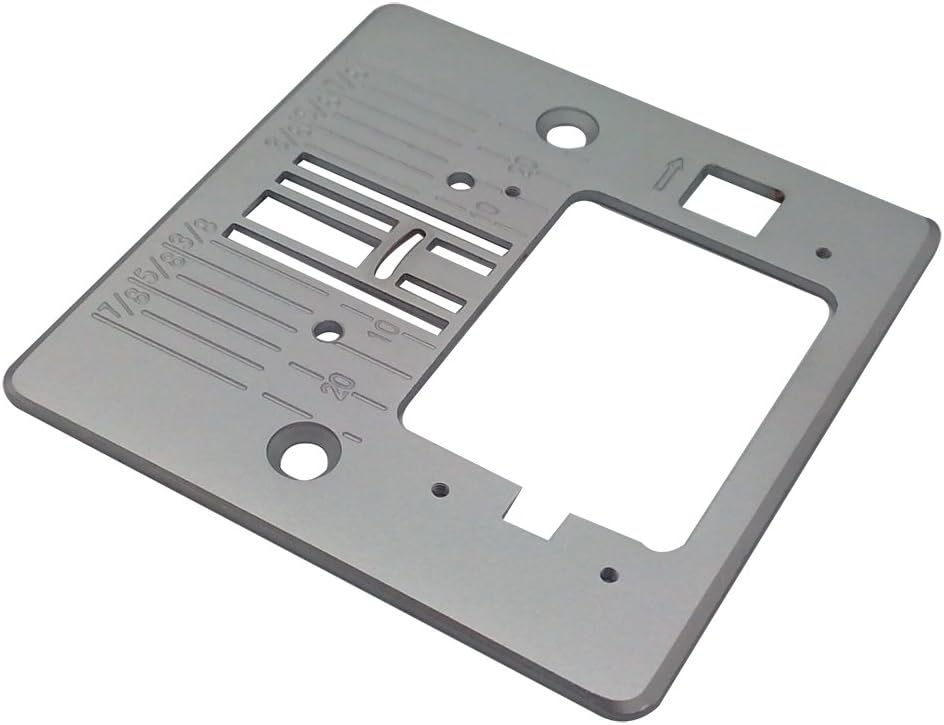
The Replacement Part: HONEYSEW Needle Throat Plate Q60D
This is the least exciting item in this guide and the one that saves the most money. The throat plate is the metal plate under the needle, and the hole in it takes a beating. When the hole widens or the surface gets scratched, fabric catches, seams pucker, and you start blaming your tension when the plate is the actual problem.
The HONEYSEW Q60D fits a long list of heavy duty Singers, including the 4411 Heavy Duty, the 4423 Heavy Duty, the 4452, the 5511 Scholastic, the 5523, and the 5532, along with the 3321, 3323, and 44S. The part number is 416472401. If you own one of those machines and your stitches have started snagging on the underside, check the plate before you pay for a service visit. It is a screwdriver job, and it takes less time than winding a bobbin. Check current Amazon price.
How I tested
Every machine I write about gets the same seam test, because a machine that only sews cotton is not a machine I can recommend to a garment sewer.
Five fabrics: quilting cotton, mid-weight denim, silk charmeuse, jersey knit, and fleece. Three stitch lengths on each. Straight stitch first, because straight stitch quality is the whole game and everything else is convenience built on top of it. Then the buttonhole, twice, on cotton and on denim. Then a session of real work: a hem, a zipper, a seam that has to hold weight without popping.
I write the verdict in the journal with the fabric name, the needle, the stitch length, and what the tension did. A machine that needs a different tension setting for every fabric is not broken, but you should know that going in. A machine that cannot hold a balanced stitch across two fabrics in a row is a machine I will not recommend, no matter how many stitches it advertises.
Analysis and test results
Straight stitch quality separates these machines more than any feature list does.
The SINGER 4452 has the most power and the most stable straight stitch of the group. It holds tension across the transition from cotton to denim without a full dial reset, and that is the thing I care about most. Its buttonhole is consistent. Its weaknesses are weight and noise: it is a heavier machine, and it sounds like it means business, which is fine at home and less fine in a shared apartment at midnight.
The Brother FB1757X is the easier machine to live with. Lighter, quieter, and friendlier to a beginner's hands. The straight stitch is clean on light and mid-weight fabric and starts to show strain on heavy layers. It wants a tension adjustment when you move between fabric families, and that is normal for a mechanical machine at this level. Learn the dial and you will be fine.
The handheld kit is a different category. Judge it as a mending tool and it performs well. Judge it as a sewing machine and it will disappoint you, which is true of every handheld unit I have tried, including the ones that cost twice as much.
Tension is the dial everyone touches and nobody understands. Balanced tension is the whole craft. On all three machines, the fix for most problems is the same: rethread the top, check the bobbin, and sew a test seam on scrap before you touch the dial. Bobbin issues are behind half the "my machine is broken" posts I see in class, and the machine is usually innocent.
The throat plate matters more than people think. A chewed plate will make a good machine sew badly, and a replacement plate costs less than a service visit. If you own a heavy duty Singer and your stitches have started catching, that is where I would look first.
What about computerized machines?
Computerized features are wonderful until the circuit board dies, and then the repair can cost half the machine. For a first machine, I would rather you spend the money on a better straight stitch than on a screen. If you sew professionally or you want decorative stitches for costume work, the math changes. For a beginner learning on cotton and flannel, dials are enough.
The reference table: fabric, needle, and settings
This is the chart taped inside my sewing cabinet. Needle sizes and stitch lengths are starting points, not gospel. Always sew a test seam on scrap from the actual project fabric before you commit to a long seam.
| Fabric or item | Needle | Stitch length | Notes |
|---|---|---|---|
 Visit on Amazon → Visit on Amazon →HONEYSEW Needle Throat Plate Q60D |
Replacement part | Not a fabric | Fits the heavy duty Singers listed above |
| Quilting cotton | Universal 80/12 | 2.5 mm | Baseline for every test seam |
| Denim, two layers | Denim 100/16 | 3.5 mm | Hand-turn the first stitch |
| Silk charmeuse | Sharp 70/10 | 1.8 mm | Ease off the tension, test on scrap |
| Jersey knit | Ballpoint 80/12 | 2.5 mm | Narrow zigzag or stretch stitch |
| Fleece | Universal 90/14 | 3.0 mm | Lengthen to avoid tunneling |
| Canvas or upholstery | Denim 100/16 | 3.5 mm | Singer 4452 territory |
 Visit on Amazon → Visit on Amazon →Handheld sewing machine kit |
Handheld unit | Not a fabric | Hems, buttons, quick repairs |
| Buttonhole on cotton | Universal 80/12 | Machine default | Test twice before the real one |
| Zipper insertion | Zipper foot | 2.5 mm | Baste first, then sew |
The key is the test seam. Every problem in this chart is cheaper to solve on a scrap of fabric than on the finished garment, and every one of them is a threading or tension issue before it is a machine issue. That is also how you decide between these two machines: sew the same seam on the fabric you actually use, and the answer picks itself.
Should you buy the SINGER 4452?
Yes, if you sew garments with weight. Denim, canvas, corsets, costumes that have to survive a school year. It has the power, the metal frame, and the straight stitch quality to justify the price, and its buttonhole would not embarrass me on a paid job. It is heavier and louder than the Brother, and if you carry a machine to class every week you will feel that. Check current Amazon price.
Should you buy the Brother FB1757X?
Yes, if you are a beginner and you want a machine that makes you want to sew tomorrow. Mechanical, simple, forgiving, and light enough to move around. No, if your projects are denim, canvas, or heavy layers. Buy the Singer instead. Check current Amazon price.
Should you buy the handheld kit or the throat plate?
The handheld kit: yes, as a mending tool and as a first taste of sewing before you spend real money. It will not replace a full size machine and it is not supposed to. Check current Amazon price.
The throat plate: yes, if you own one of the heavy duty Singer models listed above and your stitches have started catching underneath. It is the cheapest fix in this entire guide. Check current Amazon price.